10 signs you’re raising kids like it’s 1999

Hey everyone,

Team Human is slowly winning the war against social media and cell phone addiction!

There was the landmark ​verdict in March where Instagram and YouTube were found liable for social media addiction​. Countries like ​Canada​ and ​England​ are following ​Australia​’s lead to ban social media below age 16.

Progress! Slowly. But we’re making progress.

I loved this recent email I received from ​Smartphone Free Childhood​ sharing 10 signs you’re raising kids like it’s 1999 again. (Pair it with their recent YT video called ​"We remade a 90s video shop for the smartphone era."​)

I found it a helpful reminder to model great behaviors for my kids and hope you enjoy it too.

Neil


10 signs you’re raising kids like it’s 1999

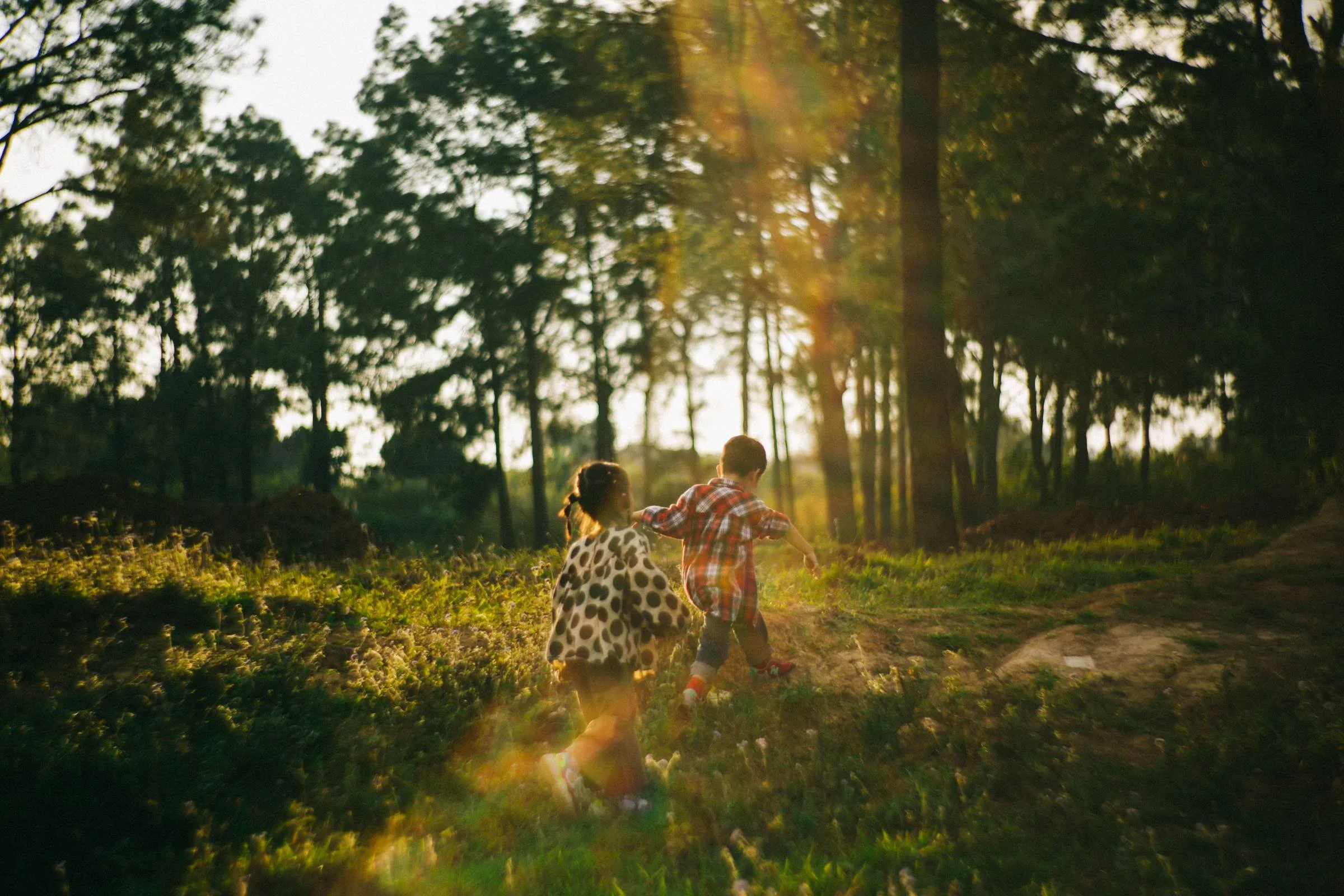
1. Sending them outside at every opportunity

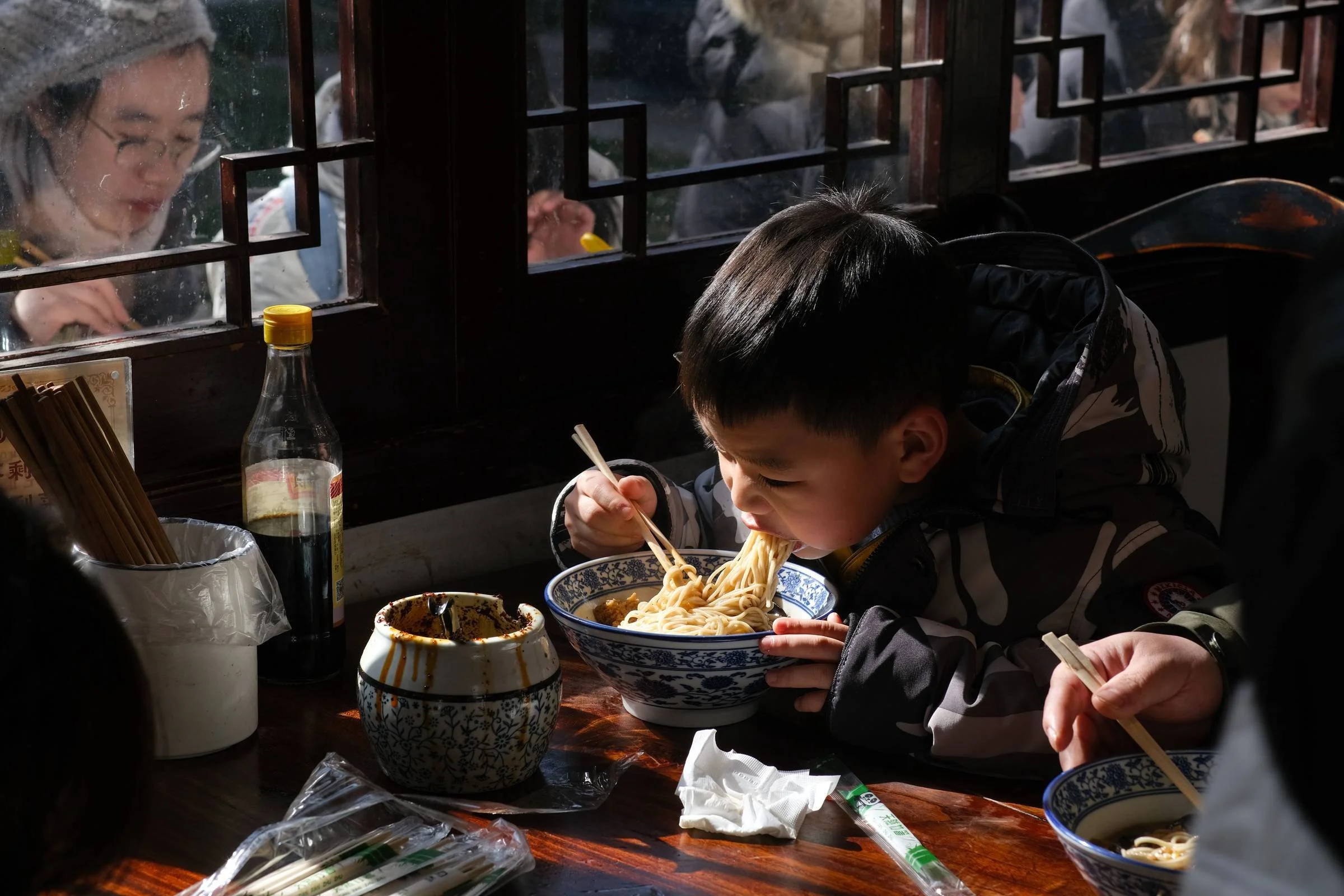
2. Eating out without iPads (even if you question your life choices halfway through)

3. Letting them be bored (and trusting something will come of it)

4. Encouraging independent play with friends (and saying yes to a bit more risk)

5. Books, comics and magazines instead of scrolling

6. Giving them real responsibility – helping, exploring, figuring things out

7. Holding off on smartphones and social media

8. Digging out old tech – Gameboys, iPods, Walkie Talkies

9. Watching the slower films and TV we grew up with

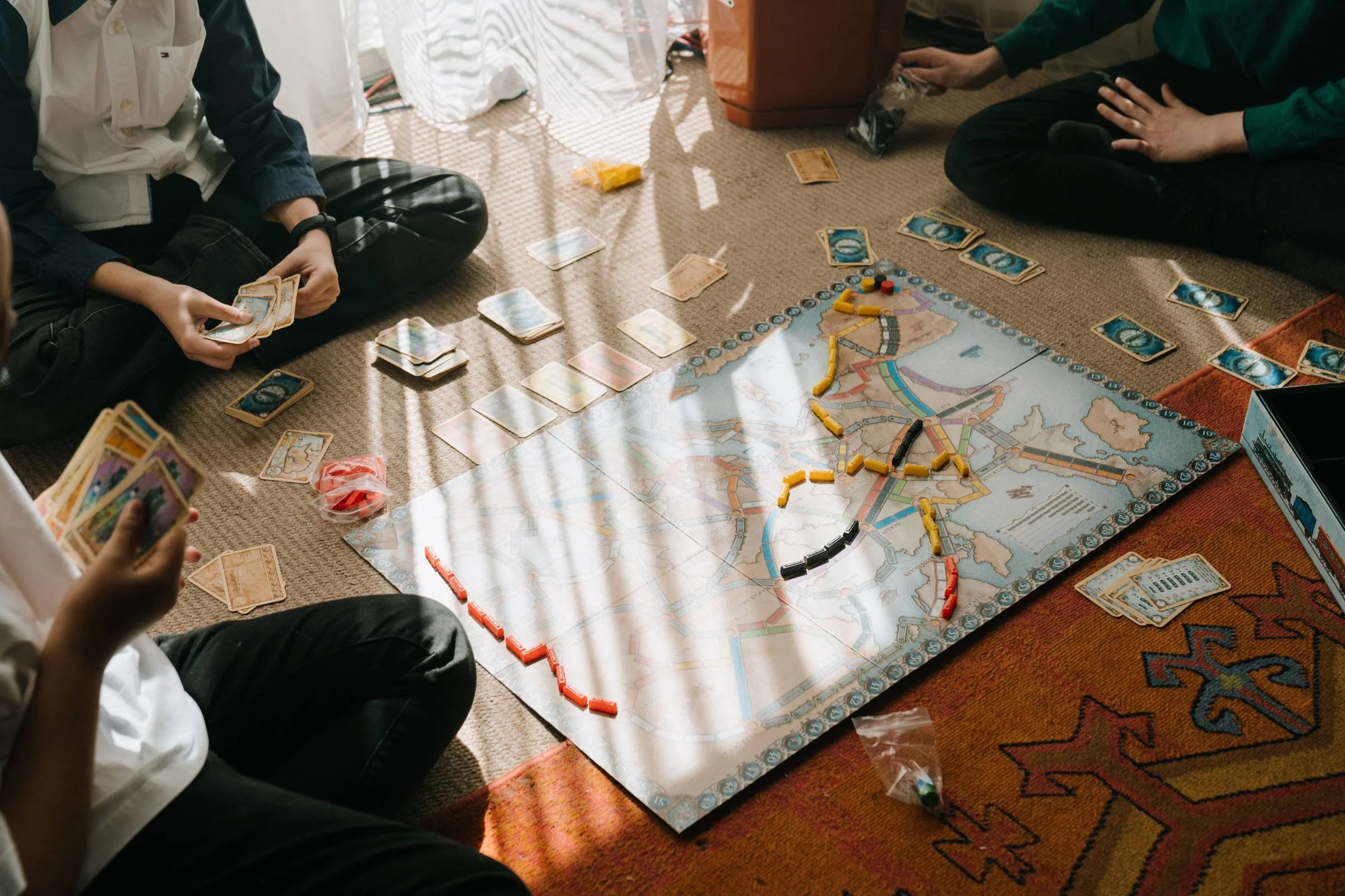
10. Board games, crafts and making things – not just consuming


Need more parenting advice?

Check out my piece on ​cell phone addiction​.

And listen to my podcast chapter with clinical psychologist and author of three incredible ​parenting books​, ​Dr. Laura Markham​.


Sign Up for a Dose of Inspiration:

Every other week, I send an email out with an article I’ve written, or one of my favorite speeches, essays or poems. No ads, no sponsors, no spam, and nothing for sale. Just a dose of inspiration or beauty!

Cup or no cup, the world is already here by Marcus Gee

Hey everyone,

We have World Cup fever in Toronto!

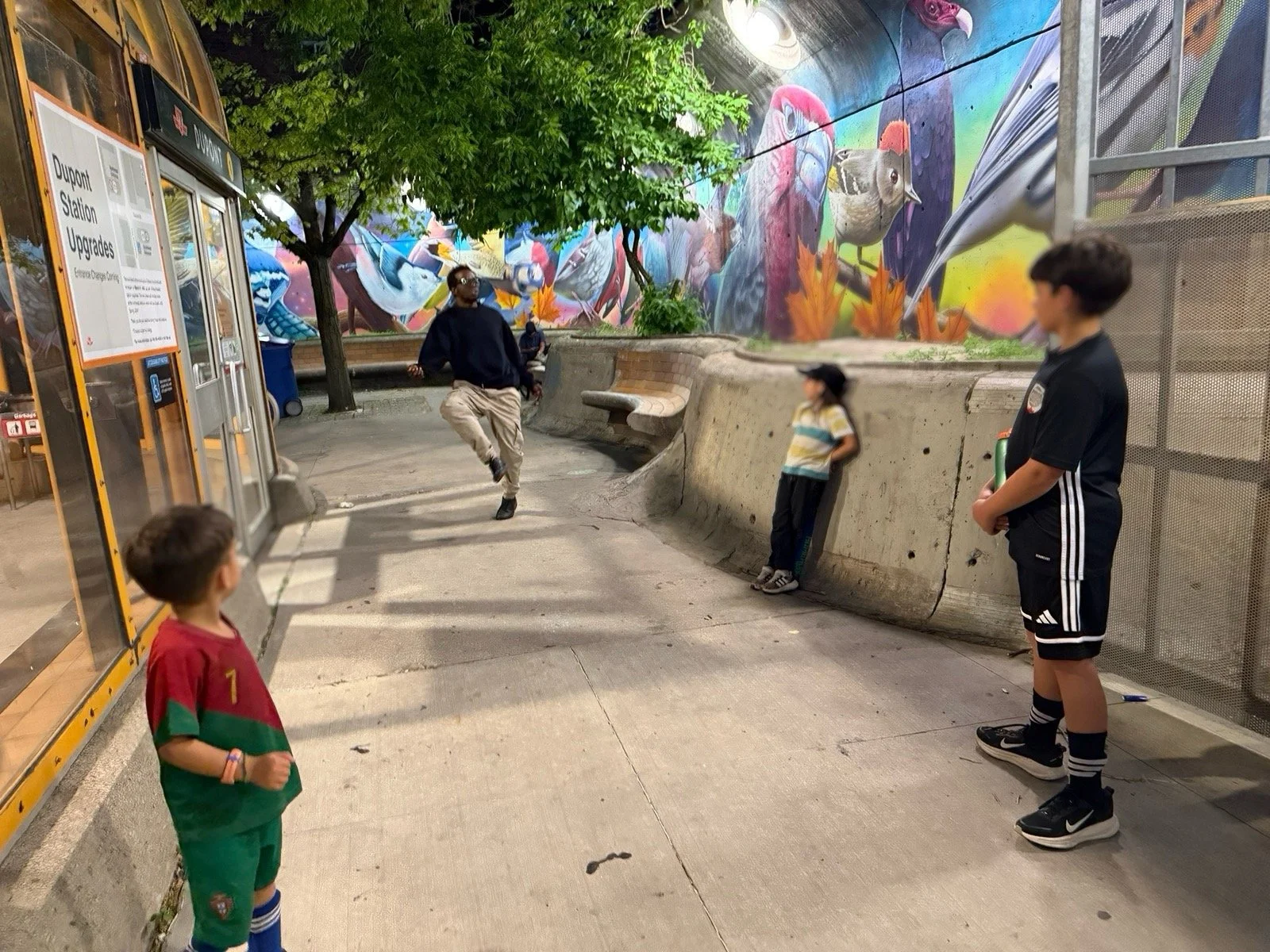
Last night my kids played soccer with a professional Angolese football player outside a subway station.

On the way there we met a raucous group of South Korean superfans on the train. (“Cheer for ​Son​!”)

Giant displays going up everywhere.

Signs popping for parades, road closures, and parties.

Our first ever World Cup home game ... ever! ... takes place in (checking watch) 56 hours.

And yes, yes, I know, FIFA is corrupt, taxpayers are on the hook for billions. I get it. I get it! But, also, how often do we—humans, I mean—throw big parties across our entire planet?

Not often enough!

So let’s get into it.

We just bought four flags to put in the four windows of our minivan.

A Canada flag, of course.

But also Portugal for my 5 year-old who has been dressing up in a full Ronaldo kit for three straight months. Every single day. Including shin pads. And he saved up months of his allowance to buy this Portugal soccer ball which he carries with him everywhere. Why? “Because Ronaldo is the best.”

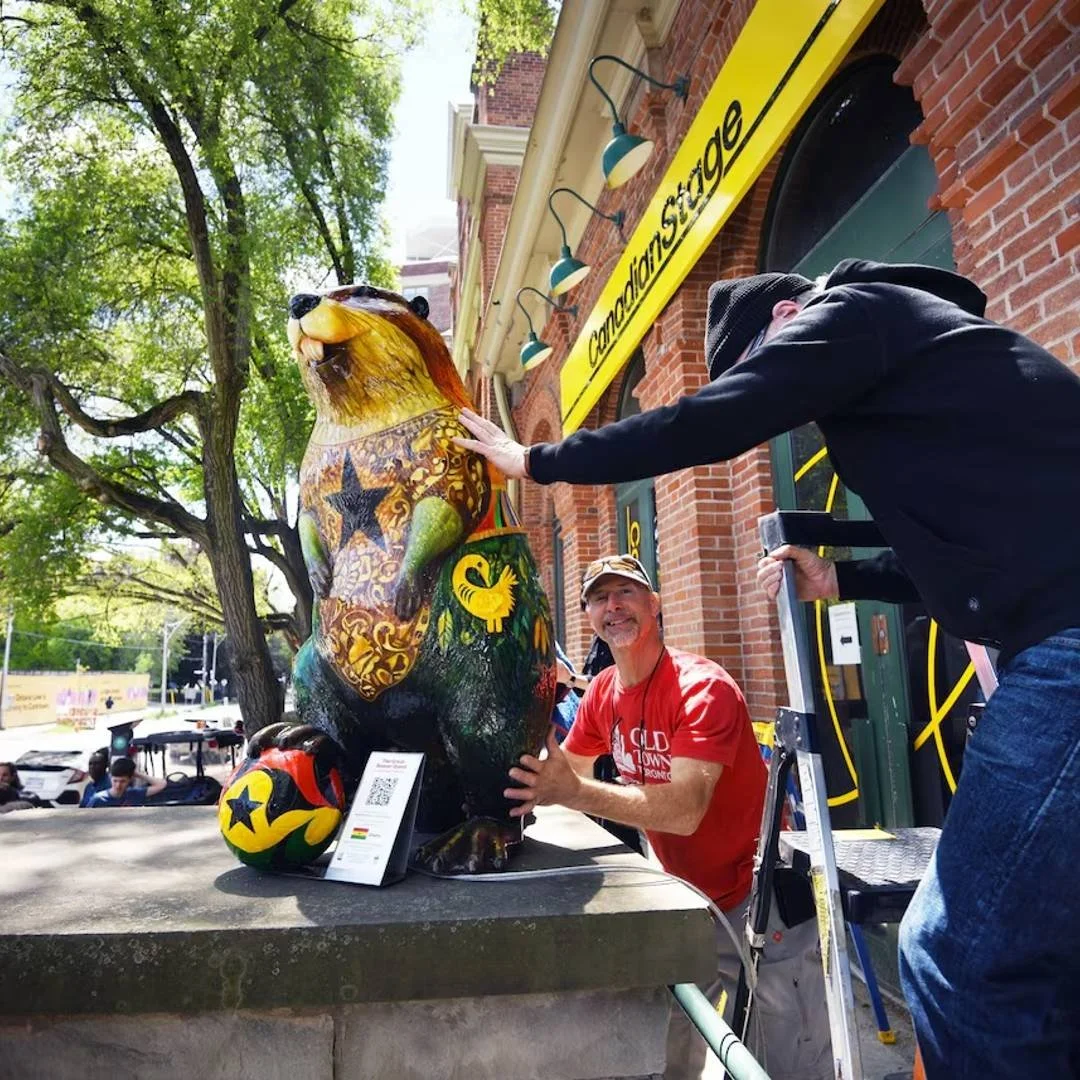
We also bought Croatia and Ghana flags to honour their games in Toronto and because we just love Croatia—is any city as beautiful as ​Rovinj​ (“Ro-veen”)?—and because I’m finally starting to explore my half-African heritage. Since there’s no Kenyan team, I’m cheering for the ​Black Stars​! I just helped Nurudeen, the Ghanaian man who ubered me across town yesterday, find tickets for Ghana-Panama (​$594 CDN on StubHub for him and his son​) and he’s encouraging me to come too because “It will be the best match of football you ever see! The players, they are so good. The supporters are coming! We will stand, we will have the Afro Beat, we will sing ​High Life​, we will have a Soccer Calypso the whole game!”

We have World Cup Fever in Toronto!

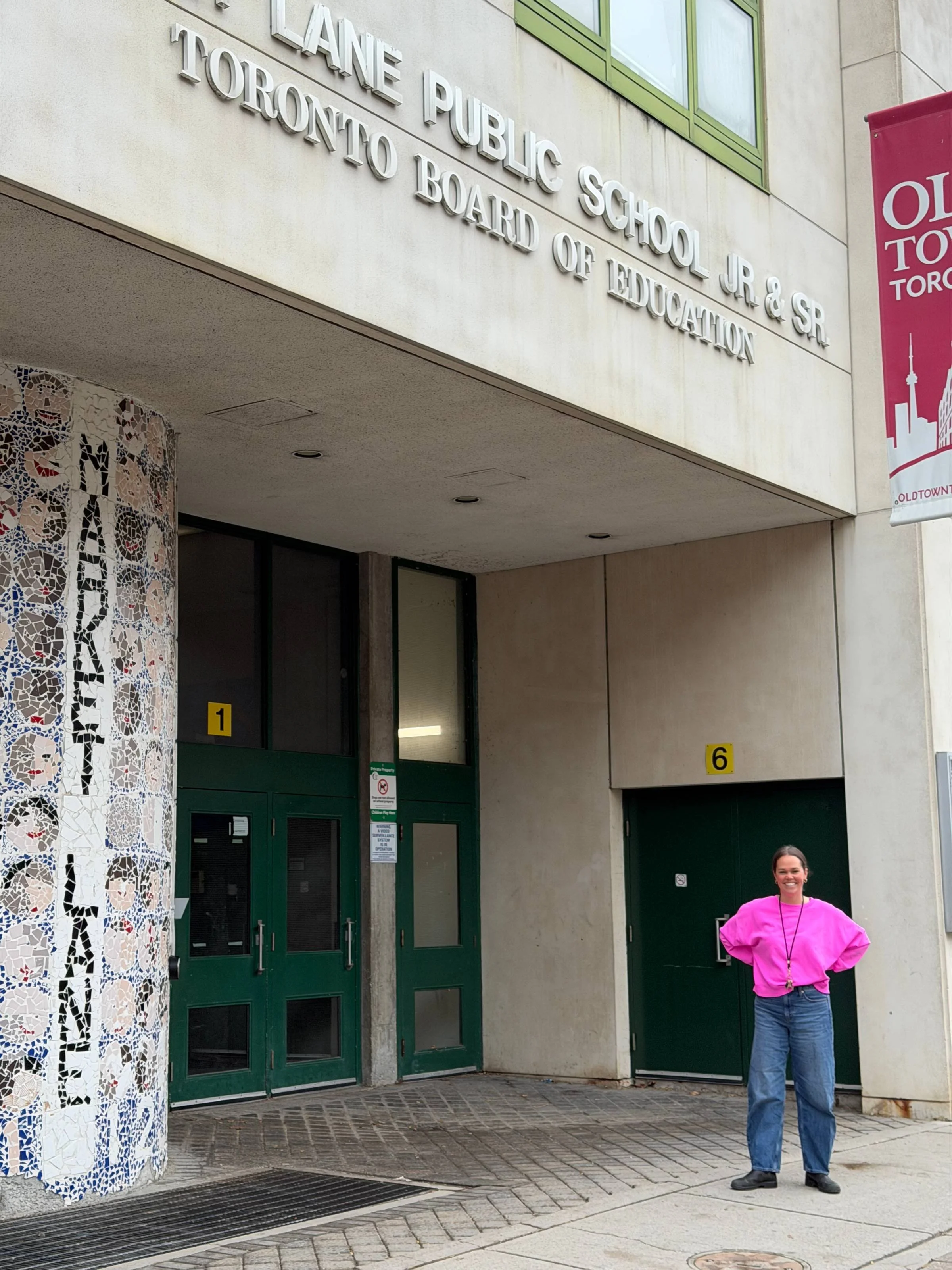
One of the best reflections of our World Cup energy right now comes in this ​incredible feature piece in The Globe and Mail​ about Market Lane Public School. Yes! The very public elementary school Leslie began teaching at in 2011. I love the name, too: “Cup or no cup, the world is already here.”

I got a Saturday Globe subscription for my parents last year—​get yers today!​—so their brains weren’t being firehosed with solely algorithmic news (puke emoji) and as a result I am able to log in and gift two articles a month.

So I gift this article to you.

I am so lucky that every day after work I see Leslie come home energized by the vitality, connection, and love shown in her school.

Last week, she drove the Sudanese refugees mentioned in this piece to a Newcomers Assessment and the mom said to her, through Google Translate on the phone they were swapping in our van, “Canada is the dream. I wish every mother in the world was able to have her children be safe in a country like Canada.”

Amen!

What a glorious reflection of our multicultural heritage, roots, and identity. Kudos to you, Marcus Gee!

Let’s continue to celebrate, amplify, and share our glorious nation—​so glorious!​—as the world comes to watch.

Let us all feel and relish in our shared humanity and love over the next few weeks.

Let us enjoy and experience much collective effervescence.

Here is the piece pasted in full below and you can also read it on my blog, too.

Neil

PS. Someone forward you this? ​Join us right here!​ All my stuff online is 100% handwritten from me to you—no ads, no AI—since 2008.


Cup or no cup, the world is already here

June 6, 2026

By ​Marcus Gee​

Photography by Fred Lum

​Read on The Globe​ | ​Subscribe to The Globe

Canada is going through a rough patch. Our best friend in the world is suddenly acting like an enemy. Our economic productivity and standard of living are lagging. Our famously livable cities are looking ragged around the edges. In two of our provinces, separatism is rearing its ugly head again.

But there is one way in which, for all our faults, we are doing exceedingly well. Over the past couple of generations, we have welcomed and absorbed millions of newcomers. It is the greatest success of our recent history, a glowing example in a world torn by renewed tribalism, prejudice and conflict. The ​2026 World Cup​ is the perfect occasion to celebrate it.

The World Cup is the biggest event in the planet’s most popular sport. This year, as co-host with the United States and Mexico, Canada is putting on 13 matches: seven in Vancouver, six in Toronto.

The country that welcomed the world is welcoming the world’s game. It will be something to behold.

For a few weeks, this country will be part of a global extravaganza followed by billions. Watch parties, fan fests and victory celebrations will make Canadian streets teem with life. Throngs of visitors from soccer-mad nations as disparate as Germany and Senegal will flock to our shores. The first match, in Toronto on June 12, will feature Canada’s own national team, playing in the tournament for only the third time, this one on home soil.

Yes, the ticket prices are obscene and, yes, the cost to taxpayers is outrageous: more than $1-billion, according the federal government’s Parliamentary Budget Officer. But we need this. The world needs this.

At its best, says Franklin Foer, the American author of How Soccer Explains the World: An Unlikely Theory of Globalization, the World Cup is “this incredible, beautiful, joyous festival of nationalism. Whatever rivalries and historic hatreds exist are expressed in a mostly harmless way.”

We will see that truth up close on the streets of Canada this month. Generations of mass immigration on a scale few nations have ever seen made sure of that.

You can find people from every corner of the world in Vancouver and Toronto – or Calgary, Halifax and Kitchener, for that matter. The captain of Canada’s team himself, Alphonso Davies, was born in a refugee camp in Ghana after his parents escaped a civil war in Liberia.

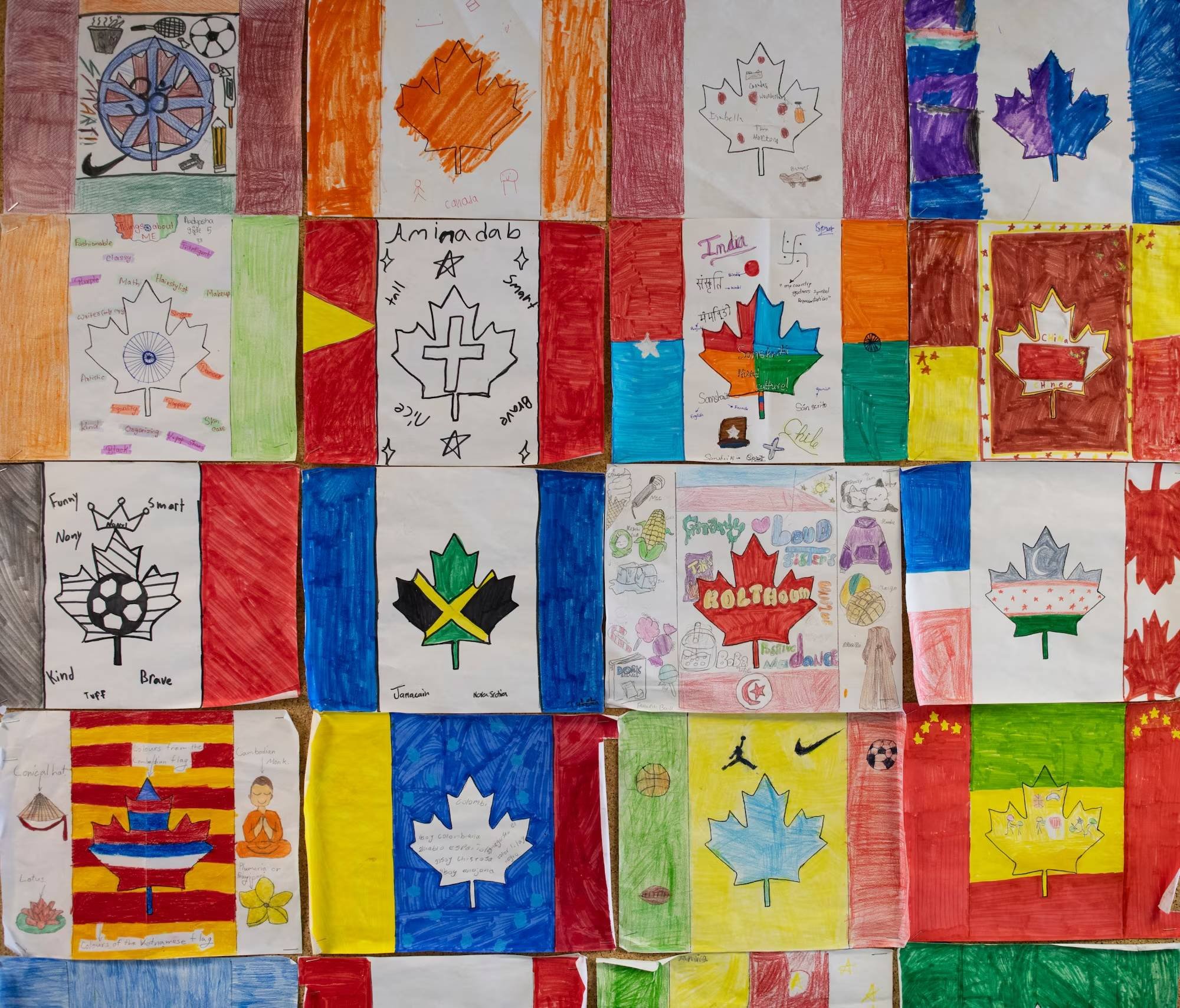
The result will be a multinational celebration of the world’s most multinational sport. In France, they will be flying the French flag to support their national team; in Algeria, the Algerian. Canadians will be waving 48 flags this World Cup: one for each contender – Canada included.

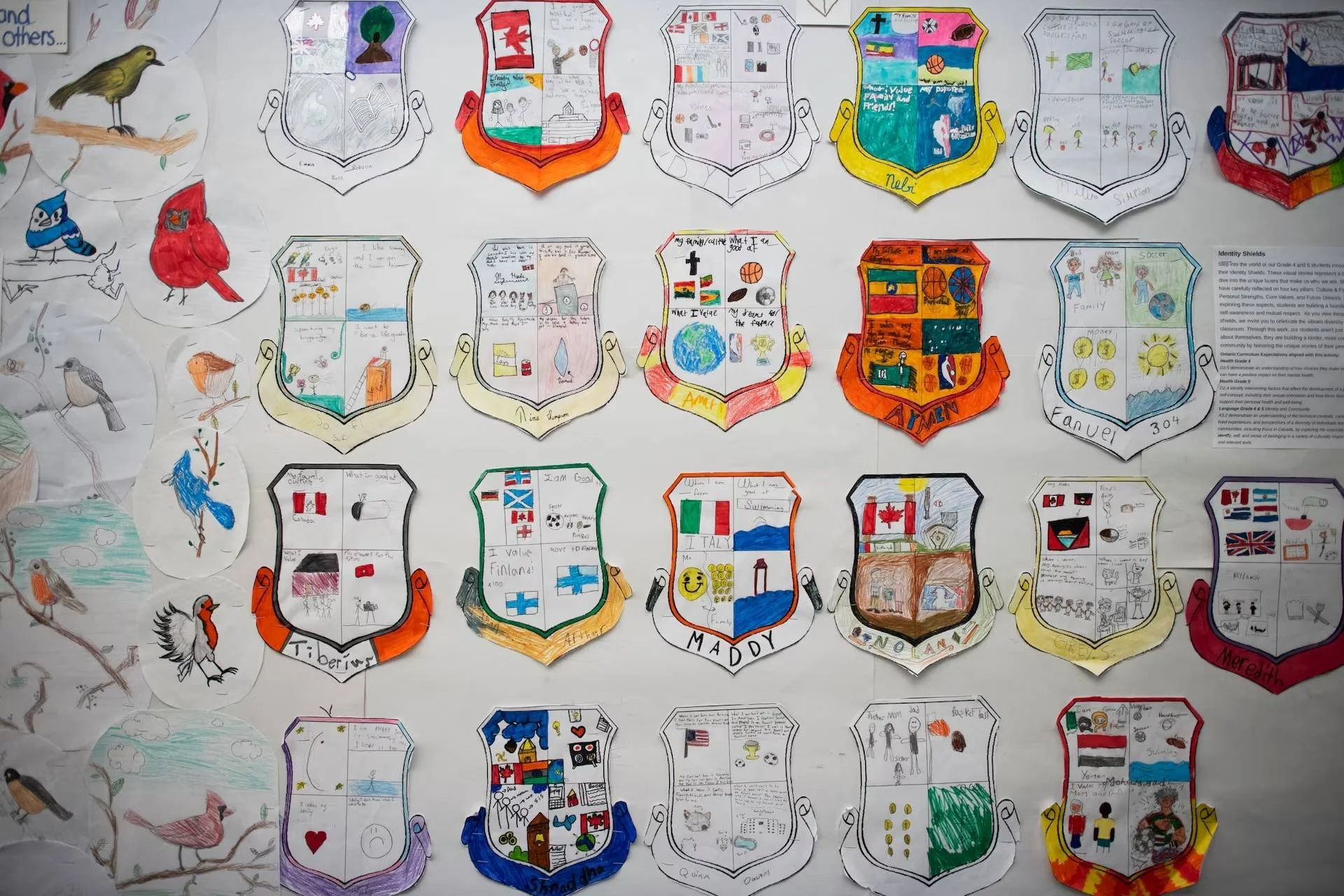
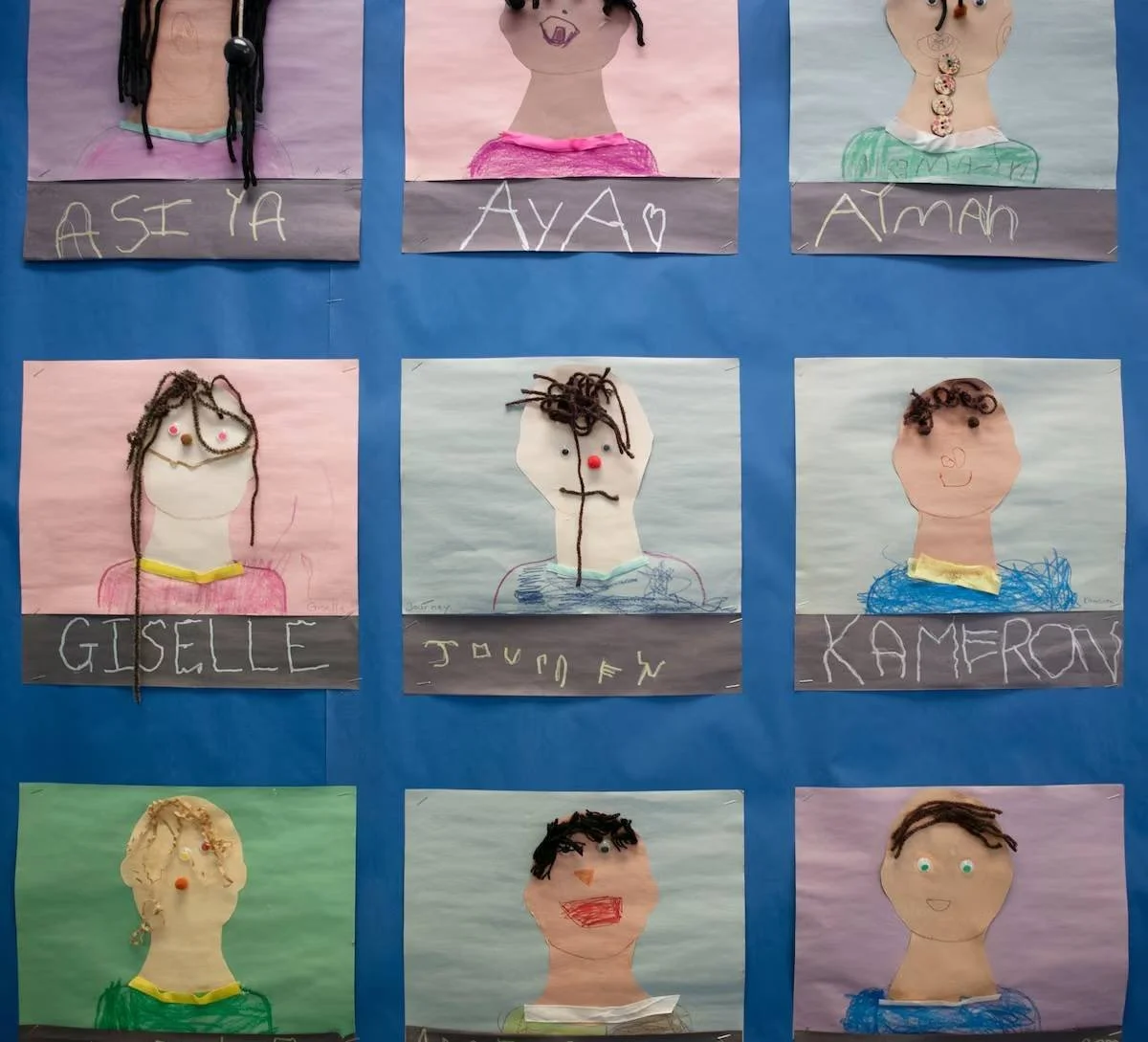
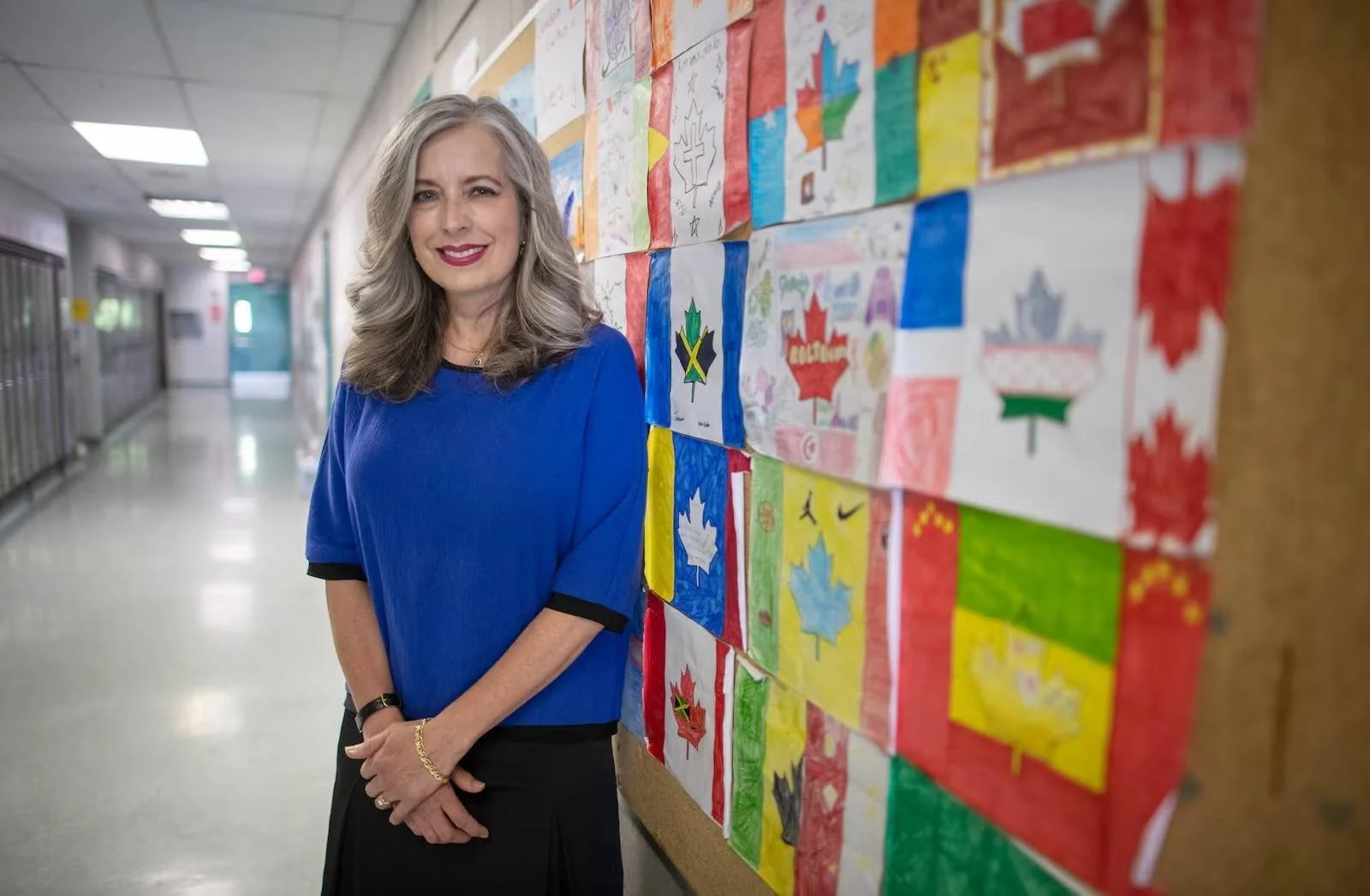
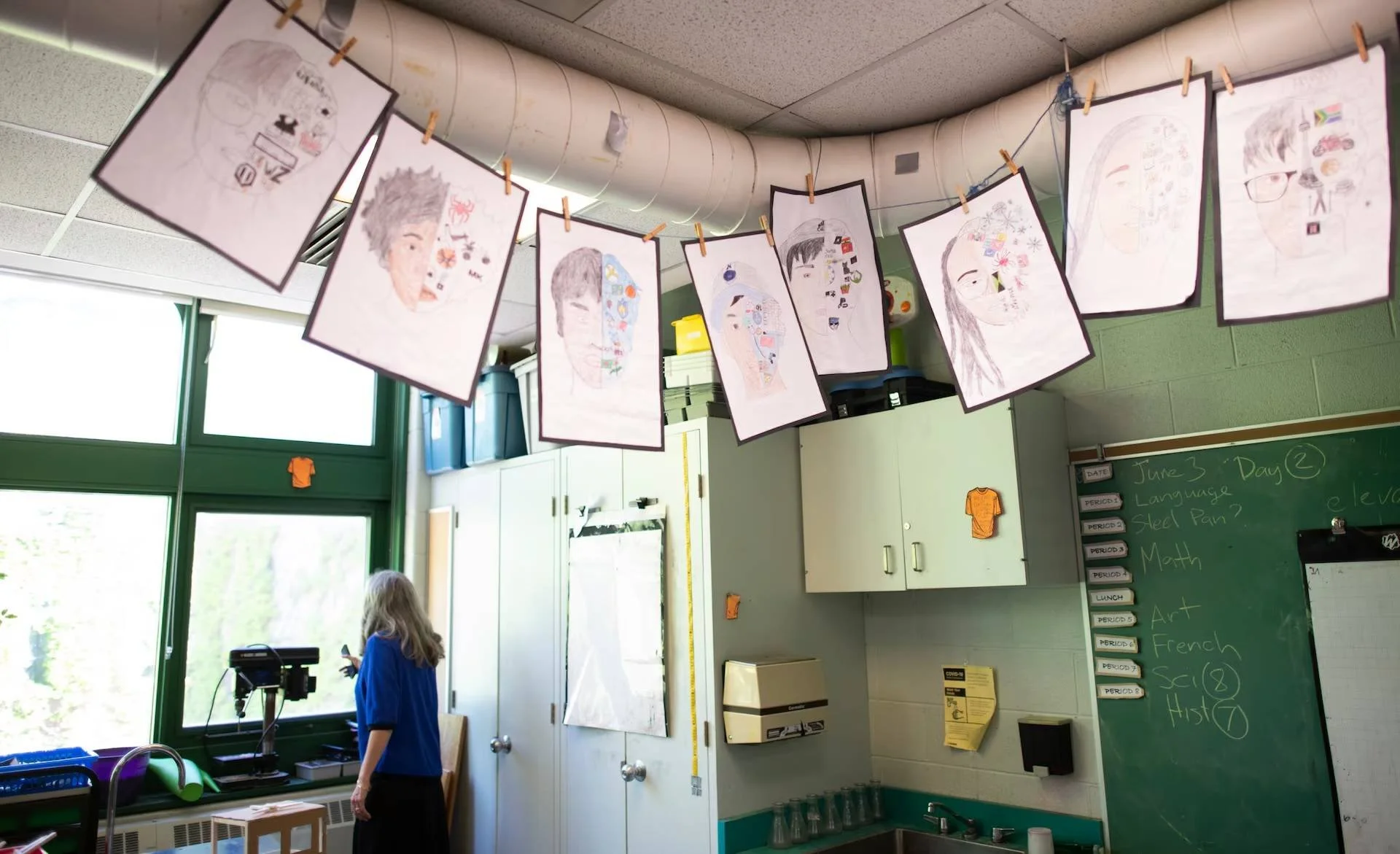
When asked to make their own ‘identity shields,’ Grade 4 and 5 pupils added symbols of their heritage to the mix at Toronto’s Market Lane Junior and Senior Public School. There are flags from Yemen, Antigua and Barbuda, Finland and, of course, Canada.

Twenty-first century Canada is a different kind of homeland. Not a “post-national state,” in Justin Trudeau’s mushy formulation – our sense of nationhood is strong – but a place where people can celebrate both their ancestry and their country without fear.

You don’t have to look hard to find the proof. I found it in a remarkable Toronto neighbourhood called the Esplanade, just around the corner from the headquarters of The Globe and Mail.

Tucked into a historic nook of downtown, steps from where the city was first established two centuries ago, it is a pleasant mix of townhouses, condos, apartments and co-ops holding people from all manner of incomes and backgrounds.

Its variety is astounding. The sandwich board for a local lunch spot offers chop suey, chicken soup, garlic bread and biryani, according to your taste.

New arrivals from places like the Philippines or the Punjab mix with older residents from Russia, Italy, Poland and Scotland.

Toronto has a Little Italy, a Little Portugal and a Little India, not to mention at least two Chinatowns. The Esplanade is more like Little Everywhere.

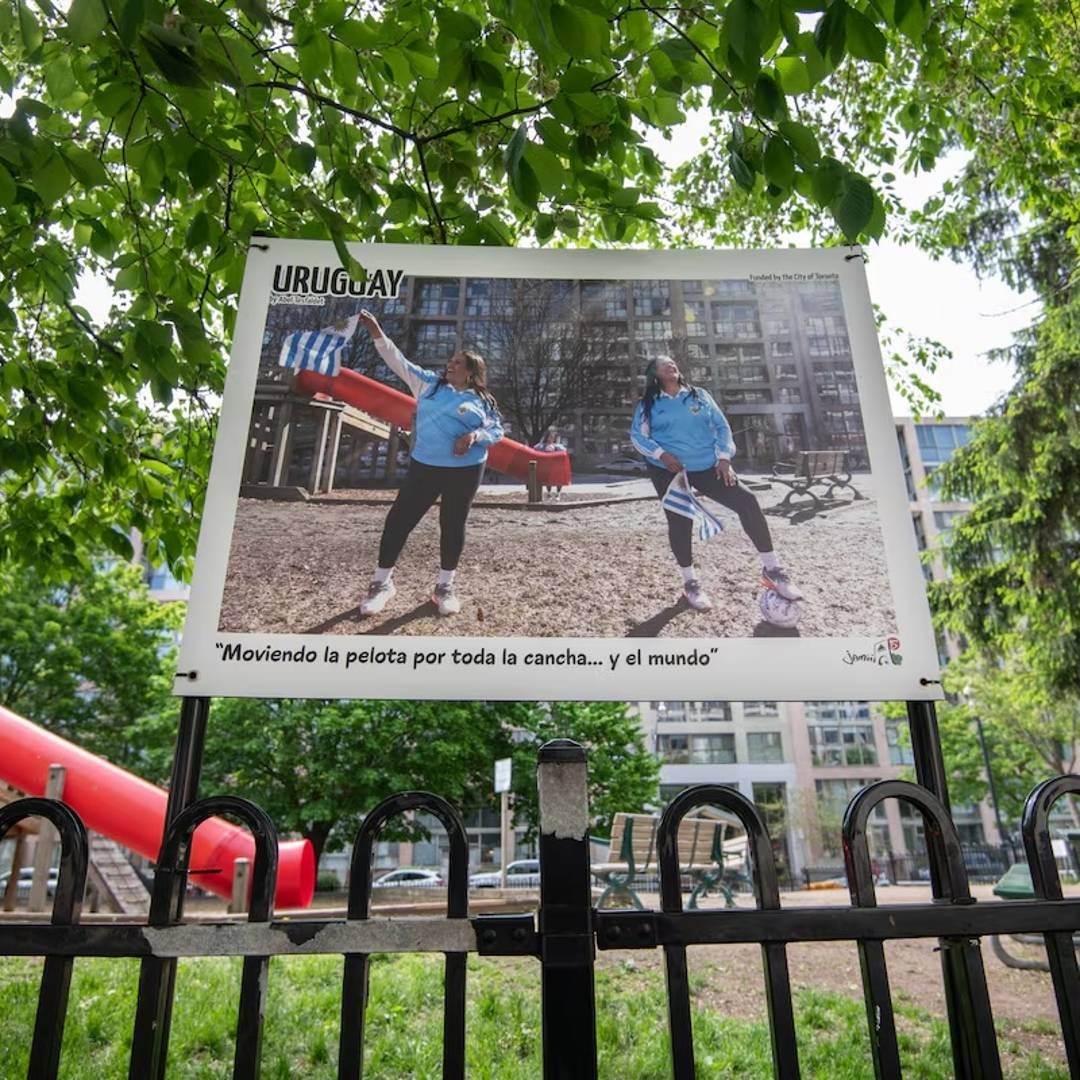
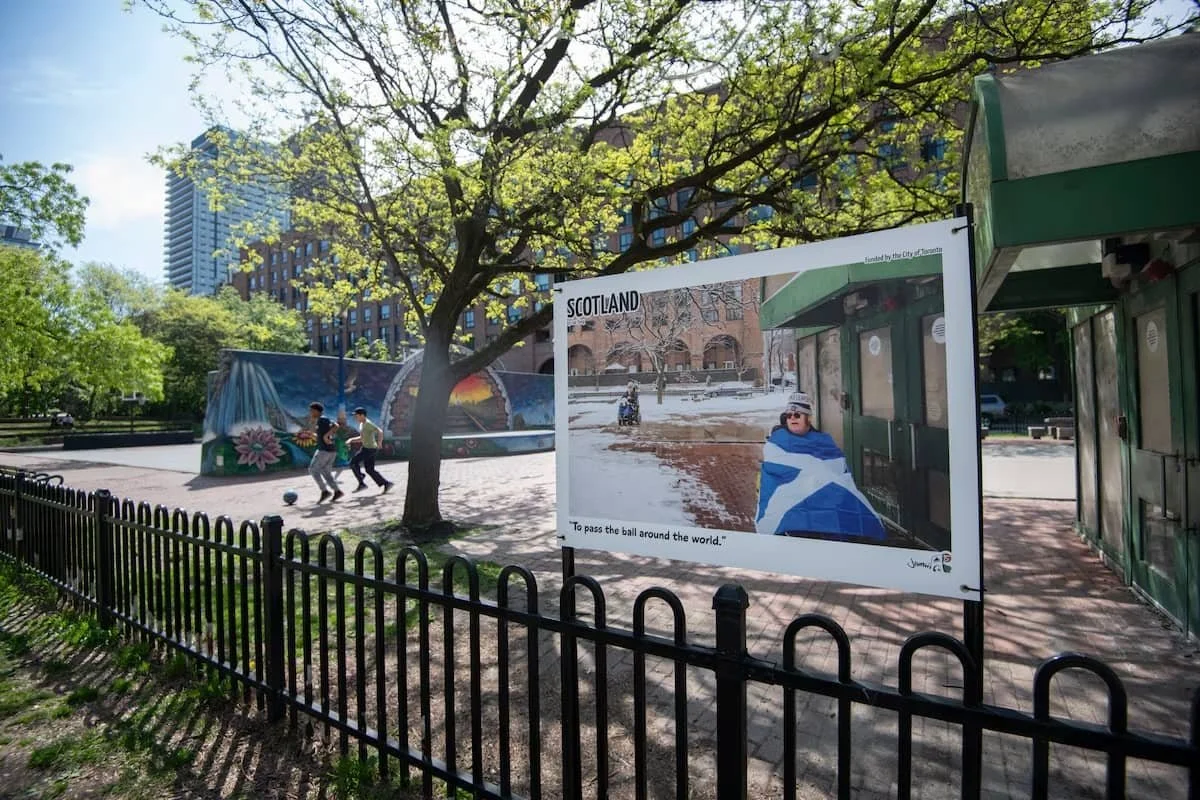
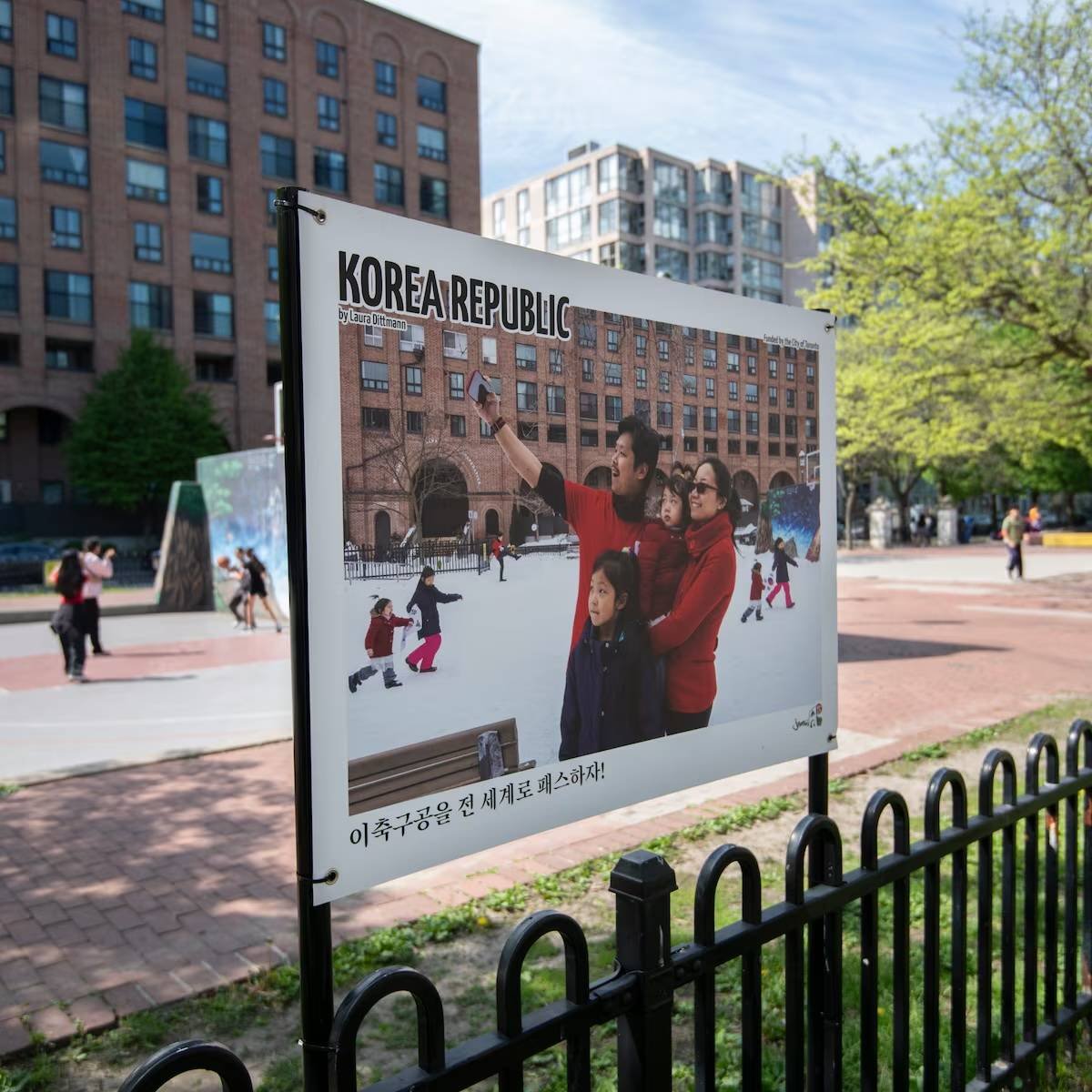
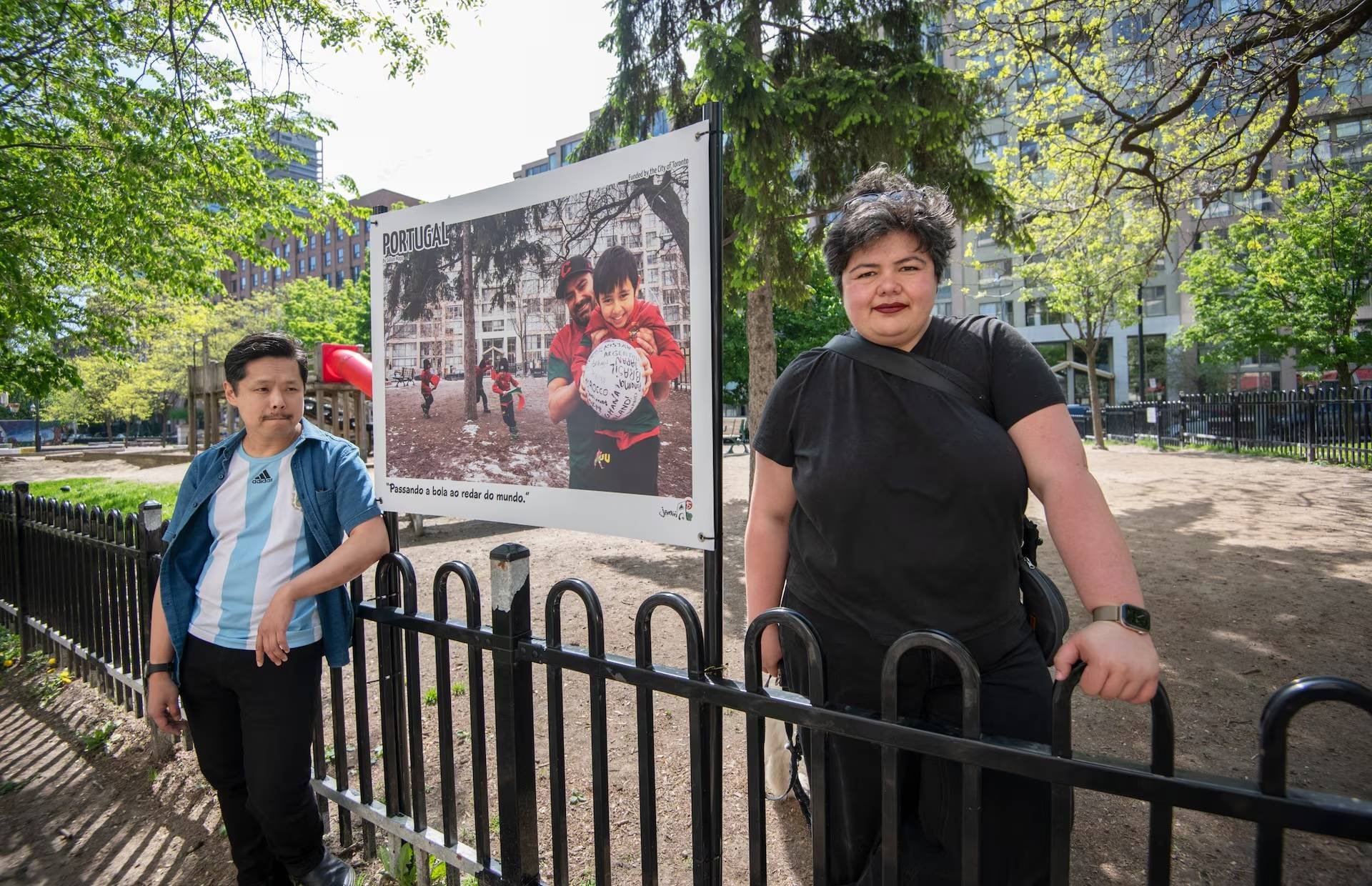
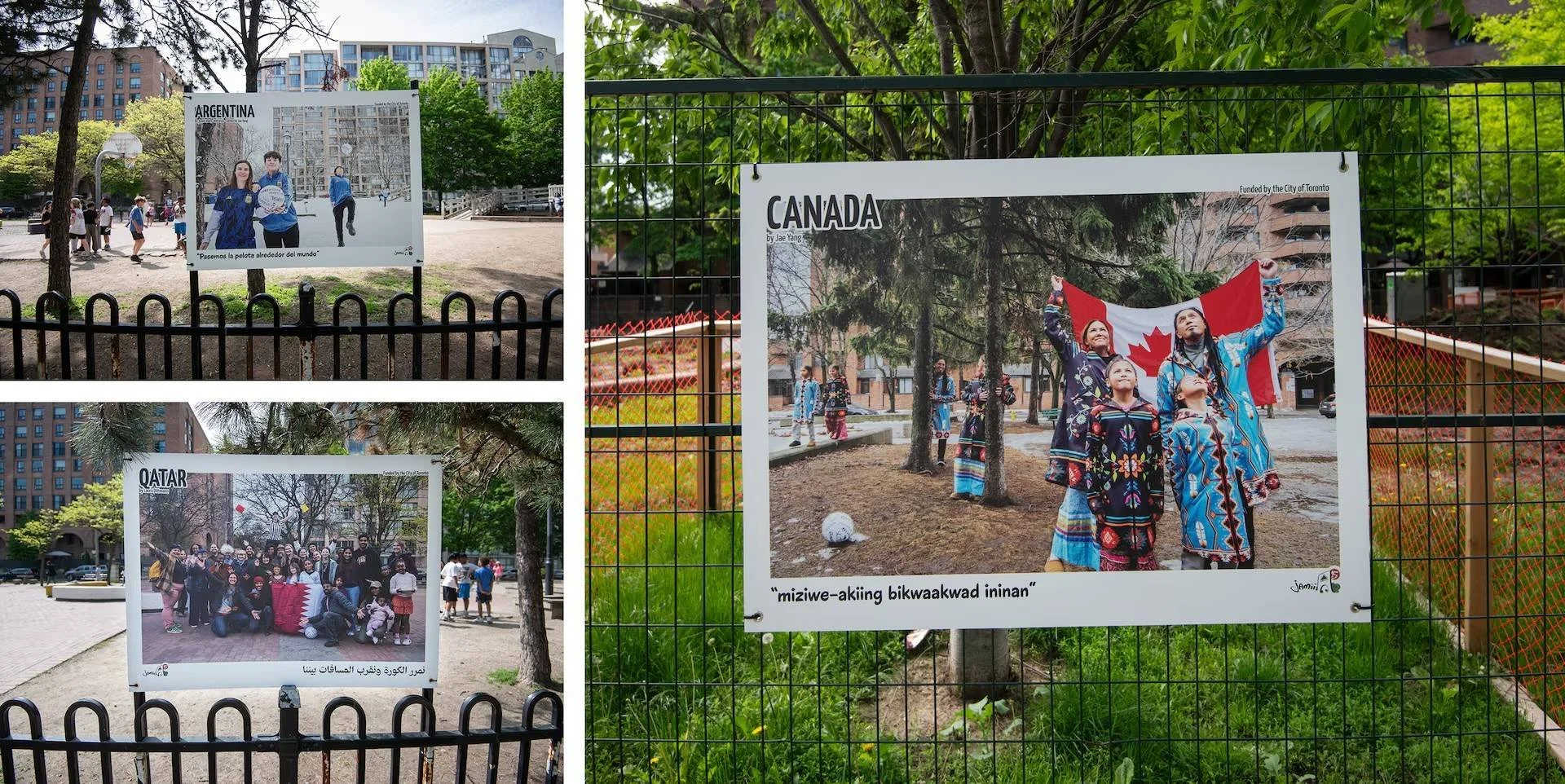
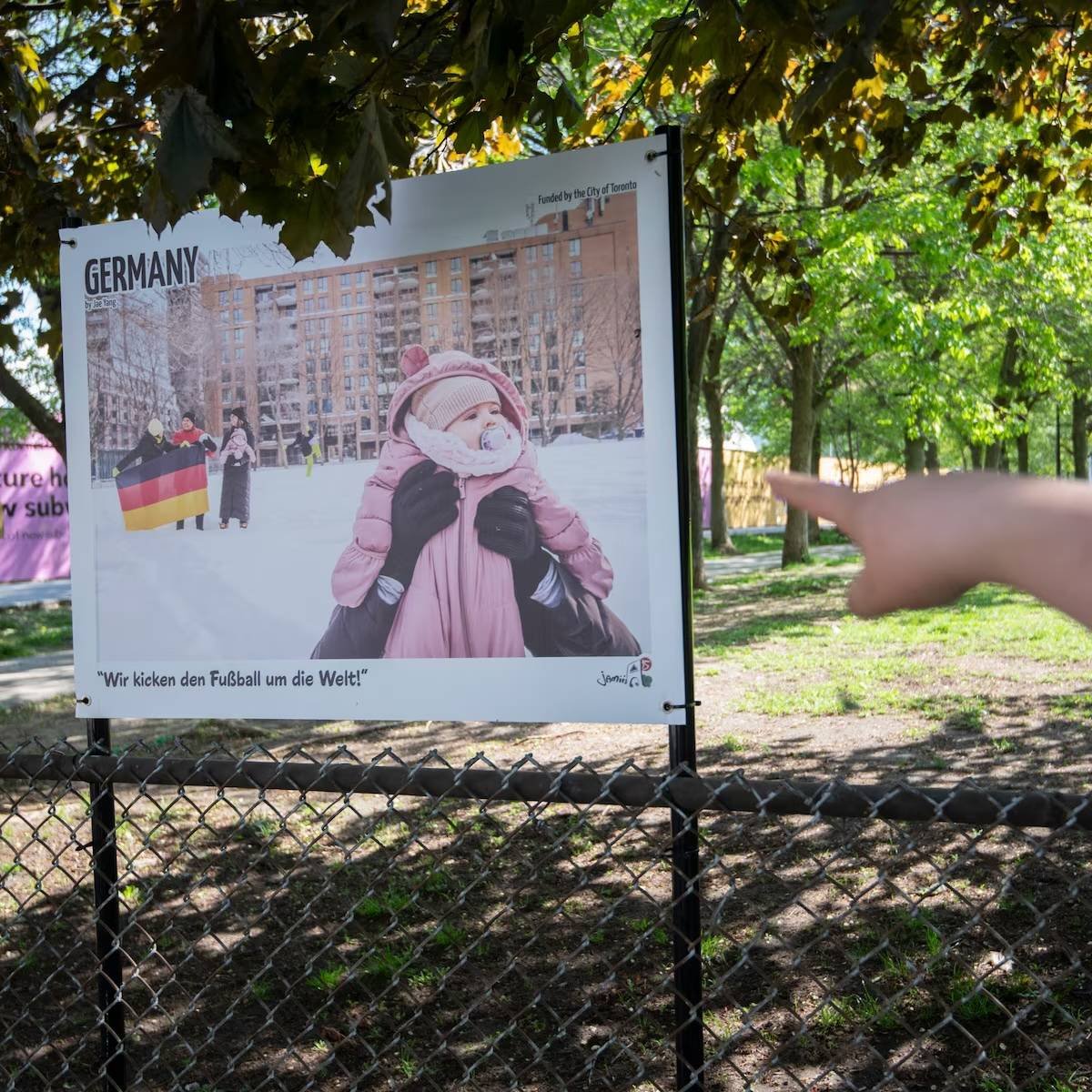
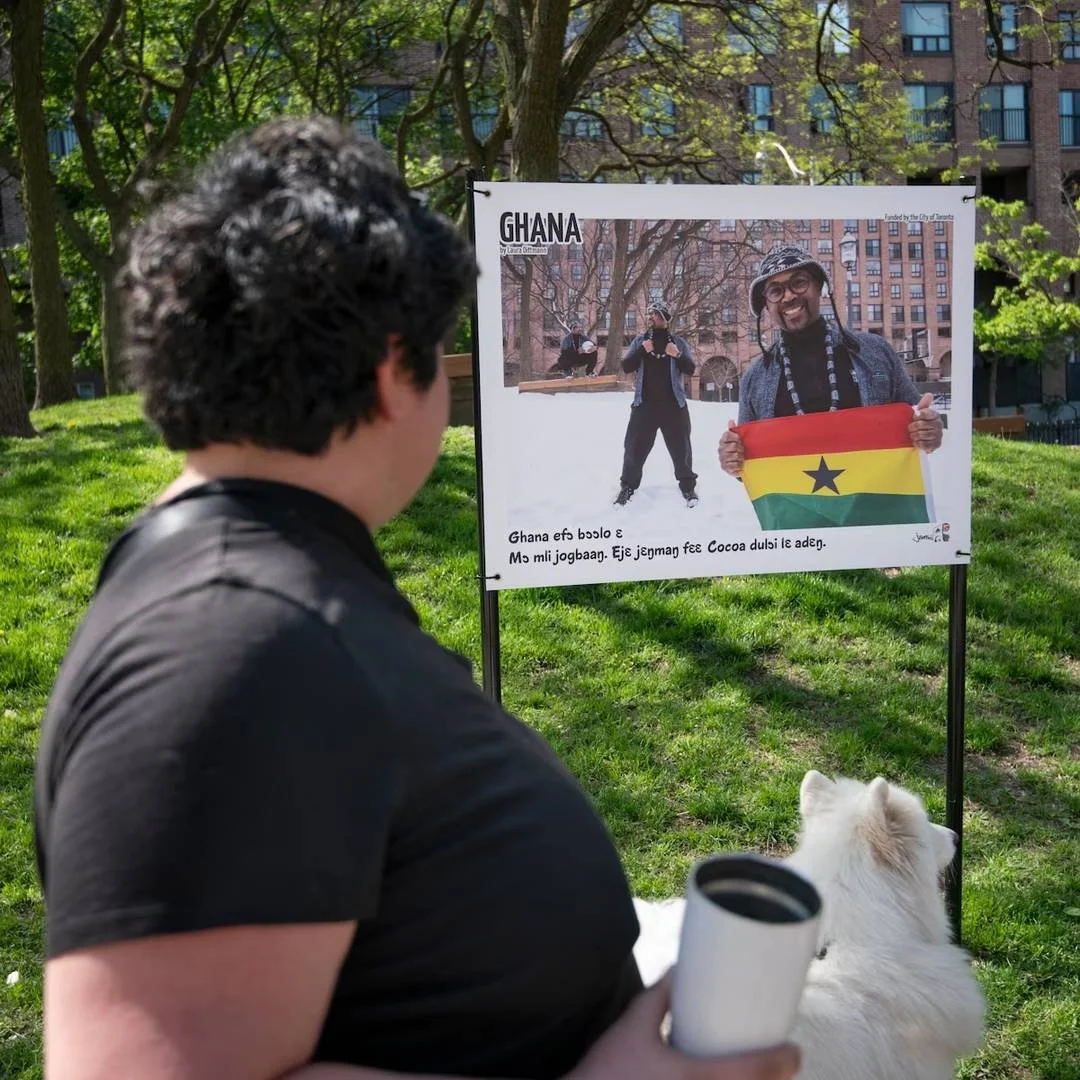
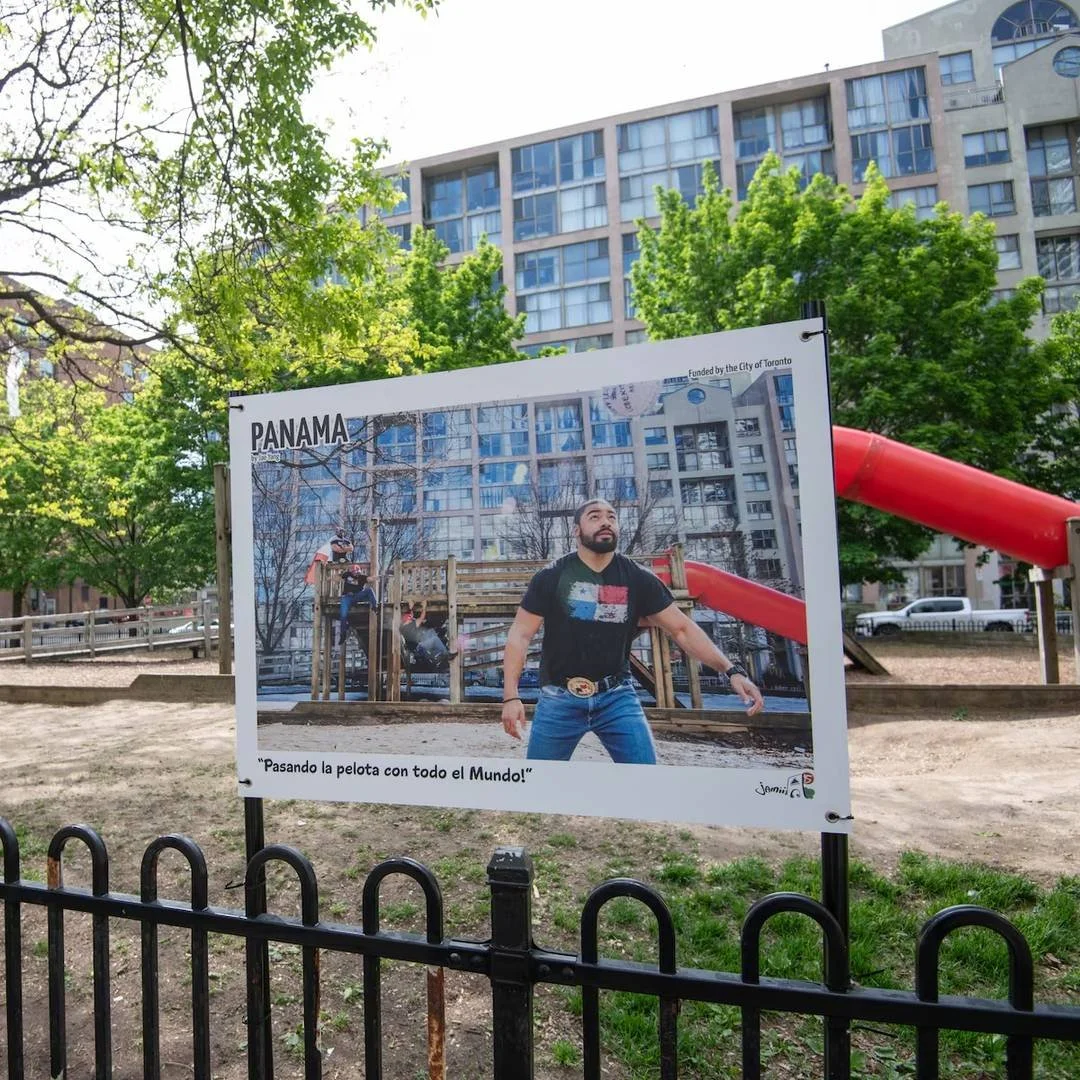
To mark the World Cup, a local arts group called Jamii (Swahili for “community”) had an ambitious idea: take photos of people representing each of the four dozen countries playing in the tournament and put them up in the neighbourhood – something that would be impossible in most places. The photos are now arrayed along the edge of a park named after a popular Toronto mayor, David Crombie.

The Scots are represented in the photo exhibit around the Esplanade.

One of them shows Jae Yang, 44, a photographer who took some of the shots in the series himself. His parents are Korean by origin. They moved to Argentina and he grew up there, living and breathing soccer the way people from the land of Maradona and Messi do. In Canada, where he moved two decades ago, he met a woman of Chinese ancestry who grew up in Peru. When this Asian-looking pair go up to Hispanic people and start speaking Spanish, says Mr. Yang, “they look at us like we have three heads.”

Jae Yang, featured in one of the photos around the Esplanade, took some of the other photos with people from the community.

He will cheer for all of his “home” teams this month: South Korea’s, Argentina’s and Canada’s. He has a jersey for each. He just hopes South Korea and Argentina don’t end up playing against each other: “That would be bad.”

Another picture in the series shows Iris Unlu, 35. She came to Canada from Turkey in 2015, intending to stay a few months and improve her English. She is still here, living happily with her Toronto-born partner and her big fluffy white dog. She relishes the freedom she has here to live her life as an openly gay woman, something she says she could not have done in Turkey.

Countries from every populated continent are represented in the photo project, from Austria to Australia, Sweden to Ecuador. The organizers even found a couple to represent Curaçao, an island in the Dutch Caribbean with a population of just 158,000 – the smallest country ever to compete in the World Cup.

To Ms. Unlu, “it’s kind of crazy mind-blowing” that they could track down people from so many places. But that is Toronto; that, increasingly, is Canada.

‘If Canada is a little bit smug, I think it deserves it,’ says Iris Unlu, with Jae Yang at one of the installations. Ms. Unlu moved here from Turkey more than a decade ago and says she enjoys the greater freedom.

Mr. Yang grew up in Argentina, which won the last World Cup in Qatar four years ago. That was the first tournament in more than three decades where Canada qualified to compete. This time, the host cities and First Nations will return the hospitality.

The scale of this change is monumental. The Toronto that I grew up in in the 1950s and 1960s was a hidebound, provincial city where a dinner out meant spaghetti, checked tablecloths and wine bottles wrapped in straw. My North Toronto high school class had precisely one Chinese guy, who stuck out like a sore thumb in the sea of kids with names such as Rogers or Roberts.

By the time I was starting to raise a family of my own, the city, and the country, had changed beyond recognition. The waves of migrants from Southern Europe who settled in Canada after the Second World War were followed by new waves from Asia: India, Pakistan, China, the Philippines, Vietnam.

The downtown school my own children attended had kids from 32 countries. In today’s Toronto, seven out of 10 students in the public-school system list their race as something other than white. They and their families speak more than 100 languages.

In the Esplanade, the local elementary school, Market Lane, has kids from every background under the sun. When one teacher asked his pupils to show on a world map where their families came from, they placed stickers from Myanmar to Ukraine, Tanzania to Chile. In the school’s senior grades, 24 per cent identify as white, 19 per cent South Asian, 16 per cent East Asian, 12 per cent Black, 7 per cent Middle Eastern, 5 per cent Southeast Asian and 3 per cent Latino. Fourteen per cent list their background as “more than one.”
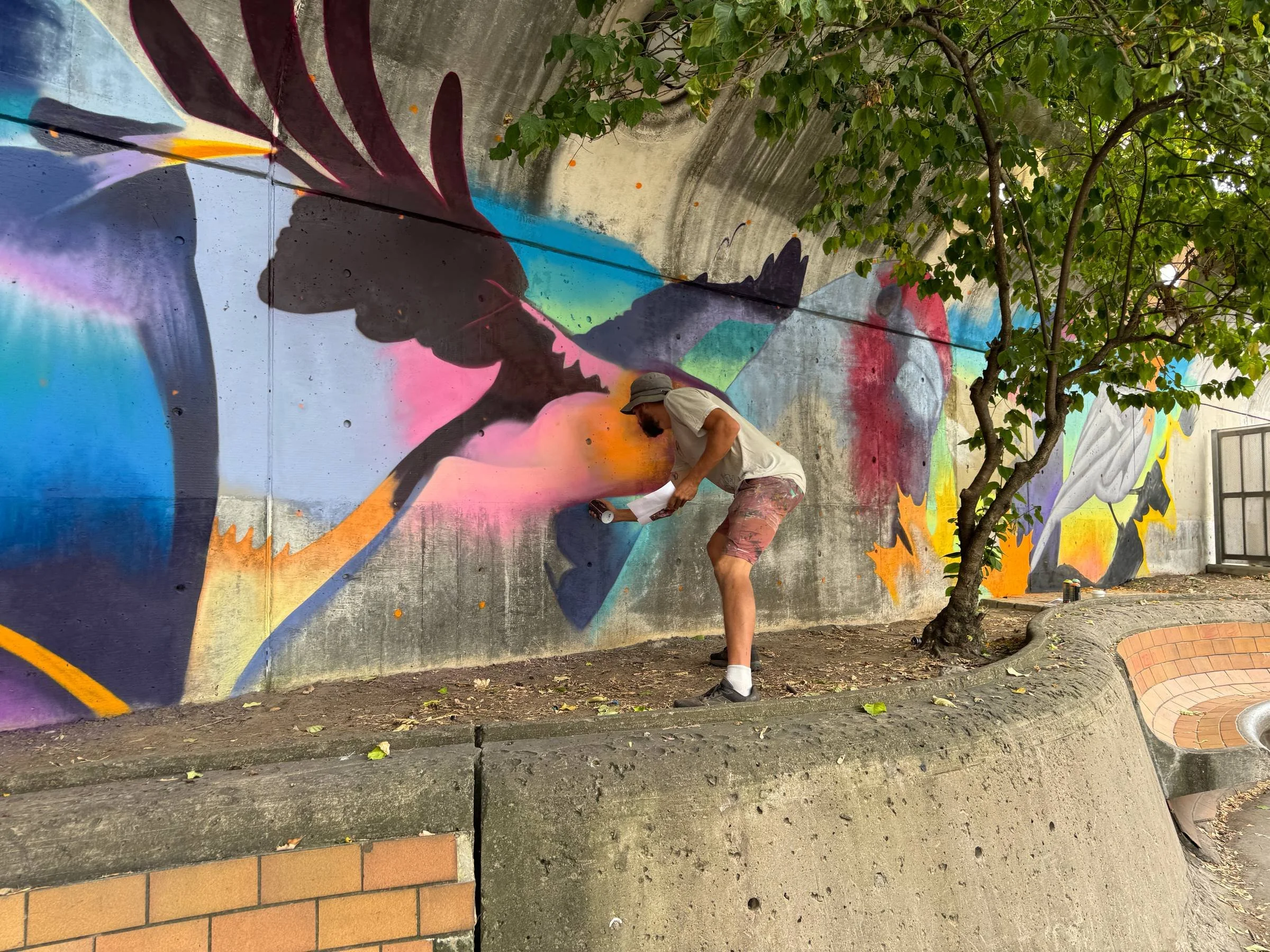
Pupils come from diverse backgrounds at Market Lane Junior and Senior Public School.

Two kids whose families fled the conflict in Sudan as refugees just enrolled. The school paired them with other Arabic-speaking students, but they are already picking up English. “Good morning,” one of them, a boy, sang out to Principal Laurie Jantzi in the stairwell this week.

Many of the kids are soccer fanatics, constantly kicking a ball back and forth at recess. One teacher wants to use the school foosball table to stage a kind of mini World Cup for them.

Laurie Jantzi is the principal at Market Lane, where soccer is a passion and a pastime for many pupils.

Food writer Suresh Doss never stops being dazzled by this country’s diversity. For 25 years, he has been exploring it with his taste buds.

He came to Canada when his Sri Lankan family settled in the Toronto suburb of Scarborough. His mother and grandmother were great cooks, so he learned to love food. He made his name talking about the great restaurants you can find in strip malls on the edges of town.

Today, Mr. Doss says, diners can sample fantastic dishes from all over the world in every corner of Toronto. And no wonder. In the 2021 census, close to half of the city’s residents (47 per cent) said they were immigrants. He is helping to organize a World Cup festival featuring art, music and more than 20 kinds of food, from Armenian to American.

One Scarborough supermarket that Mr. Doss likes to visit has a whole aisle just for mangoes: the big, juicy ones preferred by many Indians and Sri Lankans; crunchy, semi-ripe ones for Thais and Jamaicans; little baby ones for Colombians.

The mingling of many cultures, he says, is producing a whole range of new food offerings, from the jerk-chicken samosa to mutton-curry pizza. That mingling reaches a peak at World Cup time.

“Everyone’s cheering for their team, but they’re cheering as they’re rubbing shoulders, they’re cheering as they’re literally sharing drinks,” says Mr. Doss. If their team loses, they may start rooting for another squad they like. It’s all good in the end. Who hasn’t cheered for Brazil’s renowned crew at some point or admired the artistry of France’s Kylian Mbappé?

Simon Kuper, a columnist for London’s Financial Times and author of the just-published World Cup Fever, says the spirit of the tournament is “ecumenical.” In other words, “it’s a celebration of your own nation and it’s a celebration of the whole world, both in one.” Canada is just the place for such a party.

Near the students’ artwork at Market Lane, orange shirt symbols honour Indigenous children who suffered in residential schools. Pupils across Canada observe Orange Shirt Day each Sept. 30.

This country has not always been so welcoming. Our history is pockmarked with episodes of exclusion and racism – against the Chinese who came to build the transcontinental railroad; against the Japanese Canadians interned during the Second World War – not to mention the suffering visited on Indigenous peoples.

Even in recent years, we have seen appalling hate crimes such as the murderous assault on a Quebec mosque in 2017 and the fatal truck attack on a Muslim family in London, Ont., in 2021. Antisemitism has surged since the start of the war in Gaza. Public support for immigration has fallen from its usual robust levels, in part because of the way Ottawa botched the international-student program.

But the broad backlash against immigration that you see in much of the Western world simply hasn’t happened here. Though Canada has taken in more immigrants per capita than any other major democracy, it has no anti-immigrant political party of any note. That sets it apart from Germany, France, Britain, Italy and Australia, not to mention Donald Trump’s United States.

The fear of some skeptics that newcomers would fail to become “real Canadians” – huddling for generations in isolated, clannish pockets – has not materialized. Kids not long off the plane from some faraway place are soon sporting Raptors caps and listening to Olivia Rodrigo. In fact, one of the biggest complaints of immigrant parents is that their kids blend in too quickly, refusing to speak the language or observe the customs of the old country.

While some diasporas are anxious about rising far-right influence back home, the Esplanade exhibit aims to strike a note of hope.

Christmas trees have not disappeared. Hockey is still the king of Canadian sports. Canadians across the board, whatever their background, banded together in anger and defiance when an orange-coloured former reality-TV star threatened to make this country the 51st state. A survey last year showed that foreign-born citizens are more likely than homegrown ones to feel proud to be Canadian.

In Canada’s Ghanaian community, they will be waving Ghana’s red, yellow and green flag when its team, the Black Stars, takes on Panama at Toronto’s BMO Field on June 17. But the Maple Leaf will be flying, too. Emmanuel Duodu, president of the Ghanaian-Canadian Association of Ontario, says the tournament is a chance for members of his community to celebrate their culture and heritage without for a moment forgetting their allegiance to Canada, which he calls “the greatest country in the world.”

This Canadian success story has meaning beyond our shores. There was a time, not long ago, when it was thought that the world’s divisions would ease as the spread of trade, technology and democracy brought us all closer together. Today, common wisdom sees that as a naive, outdated notion. Countries will pursue their interests with ruthless resolve. Borders will harden. It’s not a small world after all.

Canada’s experience suggests otherwise. It is a flicker of hope in a darkening glass.

If that sounds smug or prideful, try asking someone who has come to Canada from somewhere else what they think. I did. Is it wrong to pat ourselves on the back?

Most of those I talked to were bewildered by the question. Of course Canada should be proud, they said. Places like the Esplanade are a delight to live in. Canada, for all its faults, is so much better than where we came from. Stable, free. We love it (except for the cold).

“If Canada is a little bit smug, I think it deserves it,” said Ms. Unlu, the woman with the big white dog.

The rest of us have become so accustomed to Canada’s brilliant human mosaic that it doesn’t impress us any more. Like a guy who works in a cafe overlooking Niagara Falls, we no longer see the marvels outside our window. But there is really nothing quite like it anywhere else.

The Canada that will be on display during the World Cup is a wonder of the modern world. Let’s not grumble about the crowds and the noise. Let’s share a drink, wave a flag and cheer.


Sign Up for a Dose of Inspiration:

Every other week, I send an email out with an article I’ve written, or one of my favorite speeches, essays or poems. No ads, no sponsors, no spam, and nothing for sale. Just a dose of inspiration or beauty!

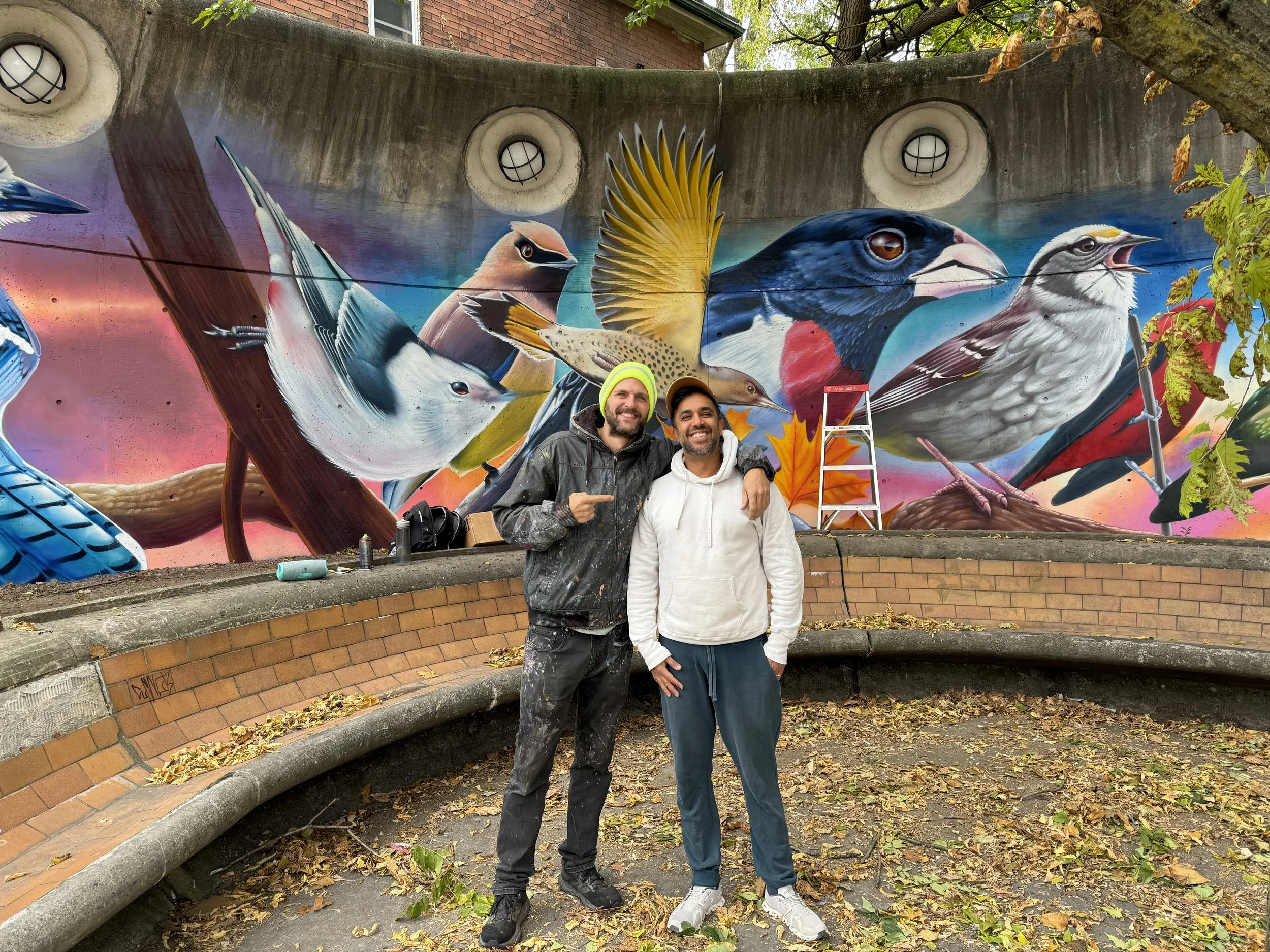
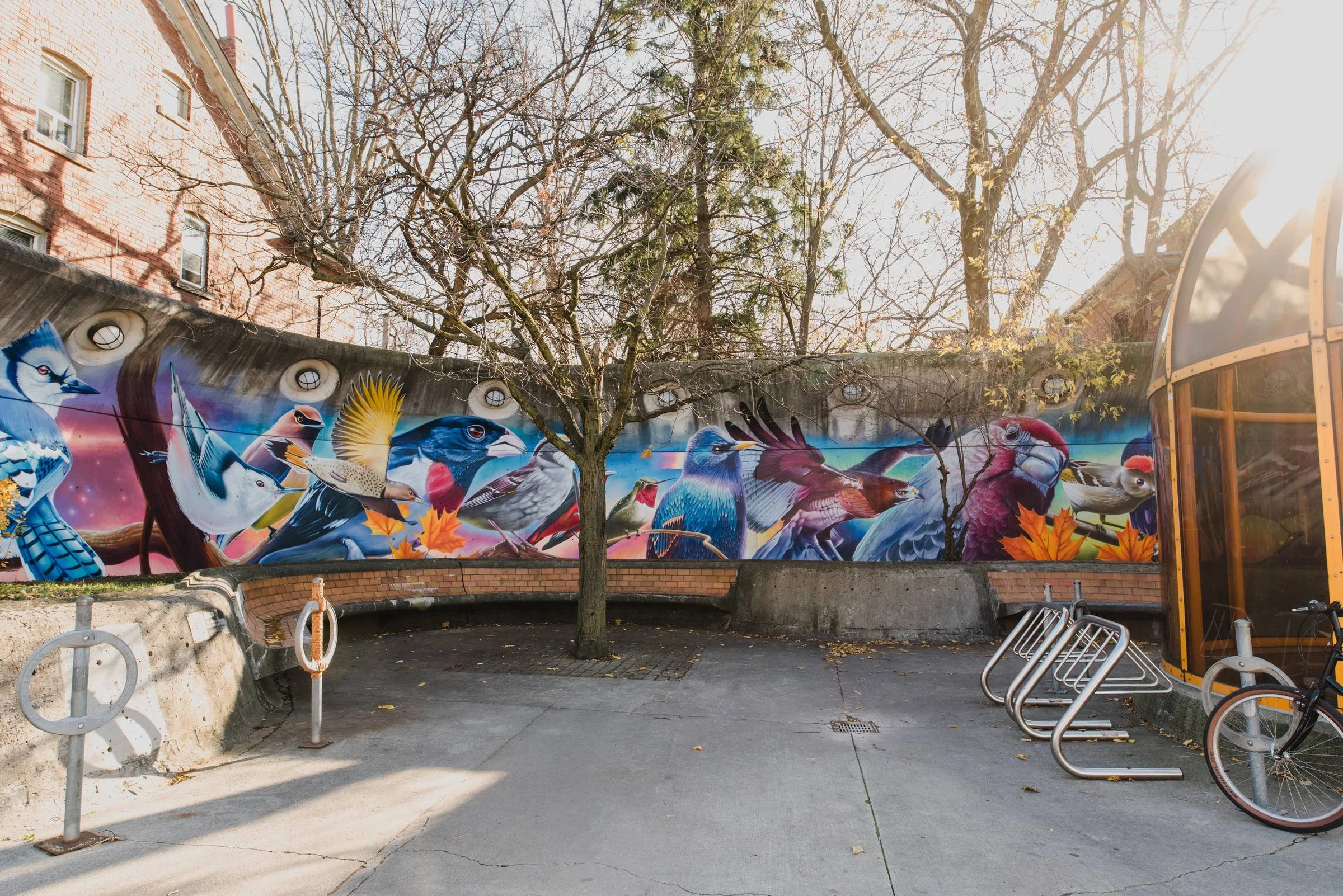
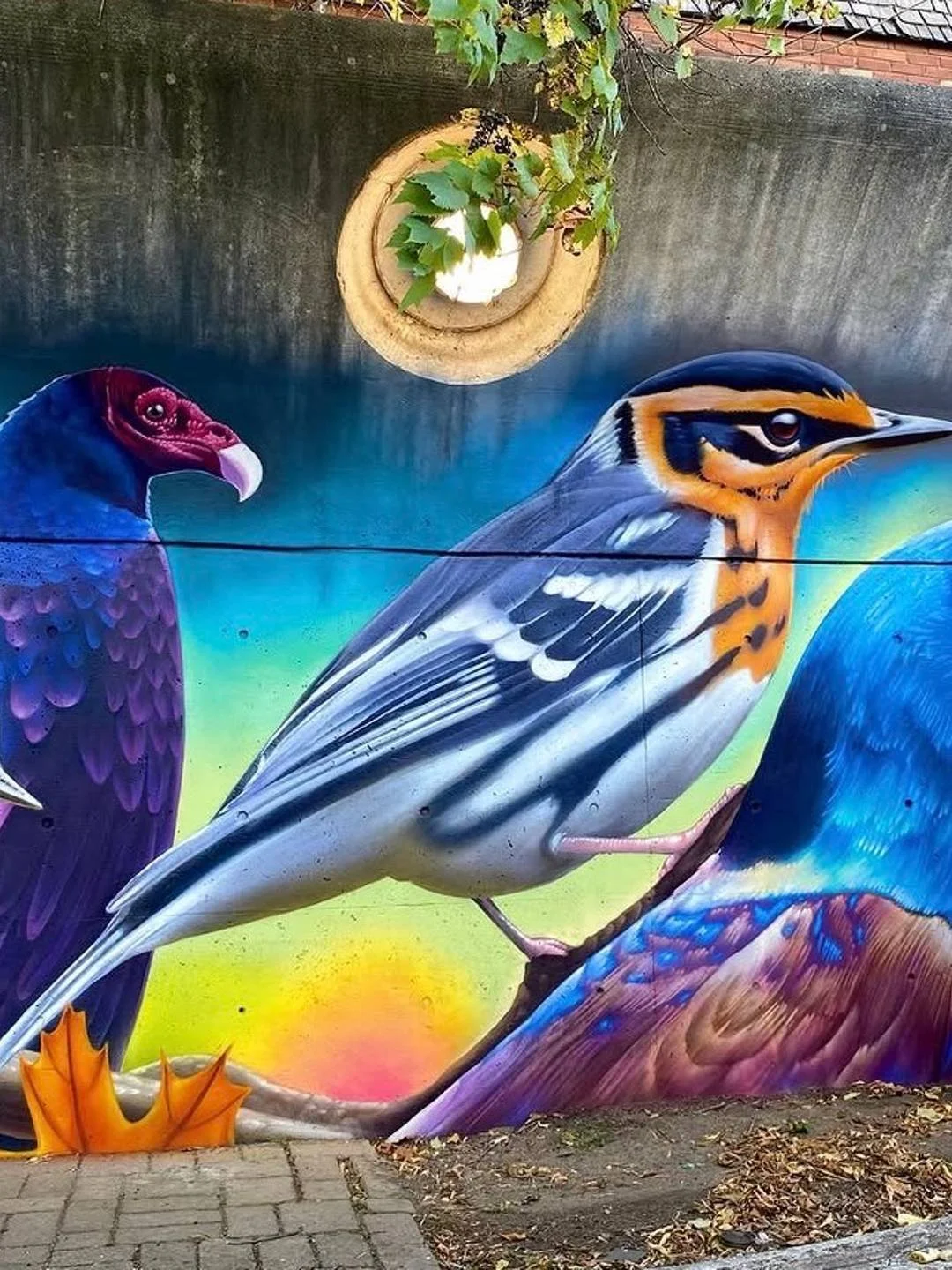
Why I Bought A 750 Square Foot Bird Mural At A Busy Downtown Subway Station

So, uh...

Last year I bought a 750 square foot painting.

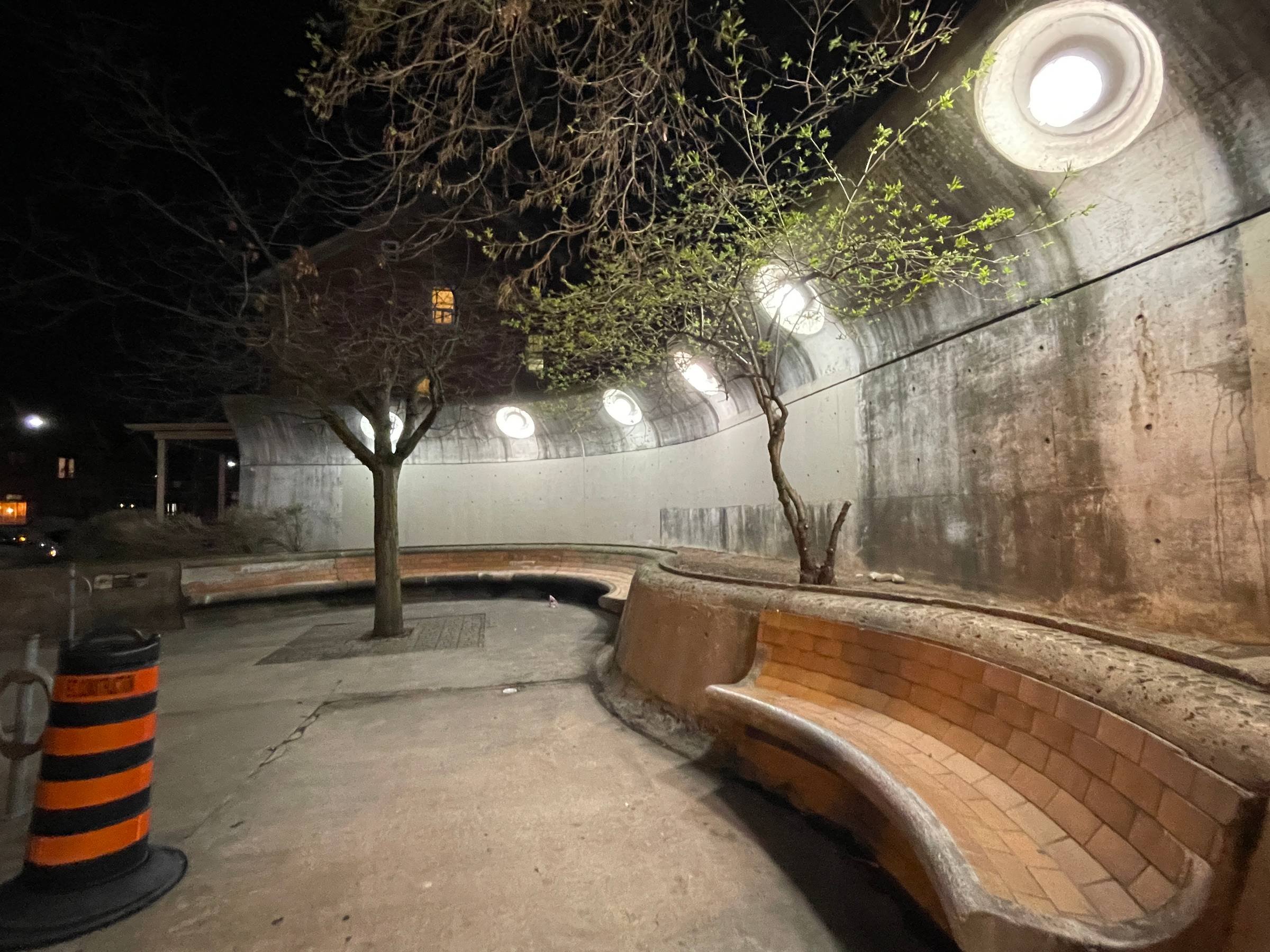
10’ tall, 75’ long, on a lonnnng strip of curved concrete outside a busy downtown subway station.

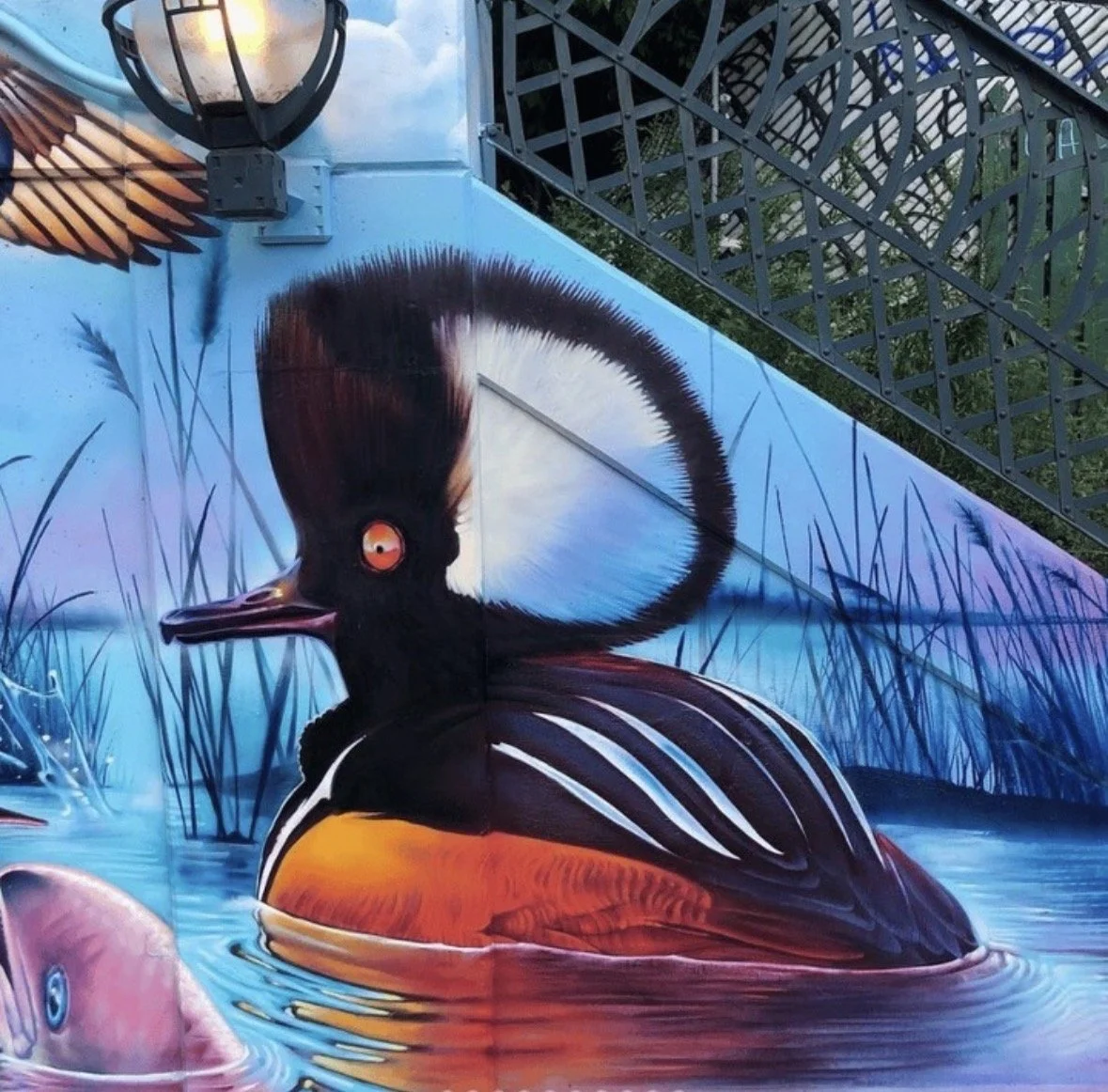
Few months earlier I was walking on a freezing night with my friend ​Michael Bungay Stanier​ when we stumbled on a stunning spraypainted Hooded Merganser. I was shook!

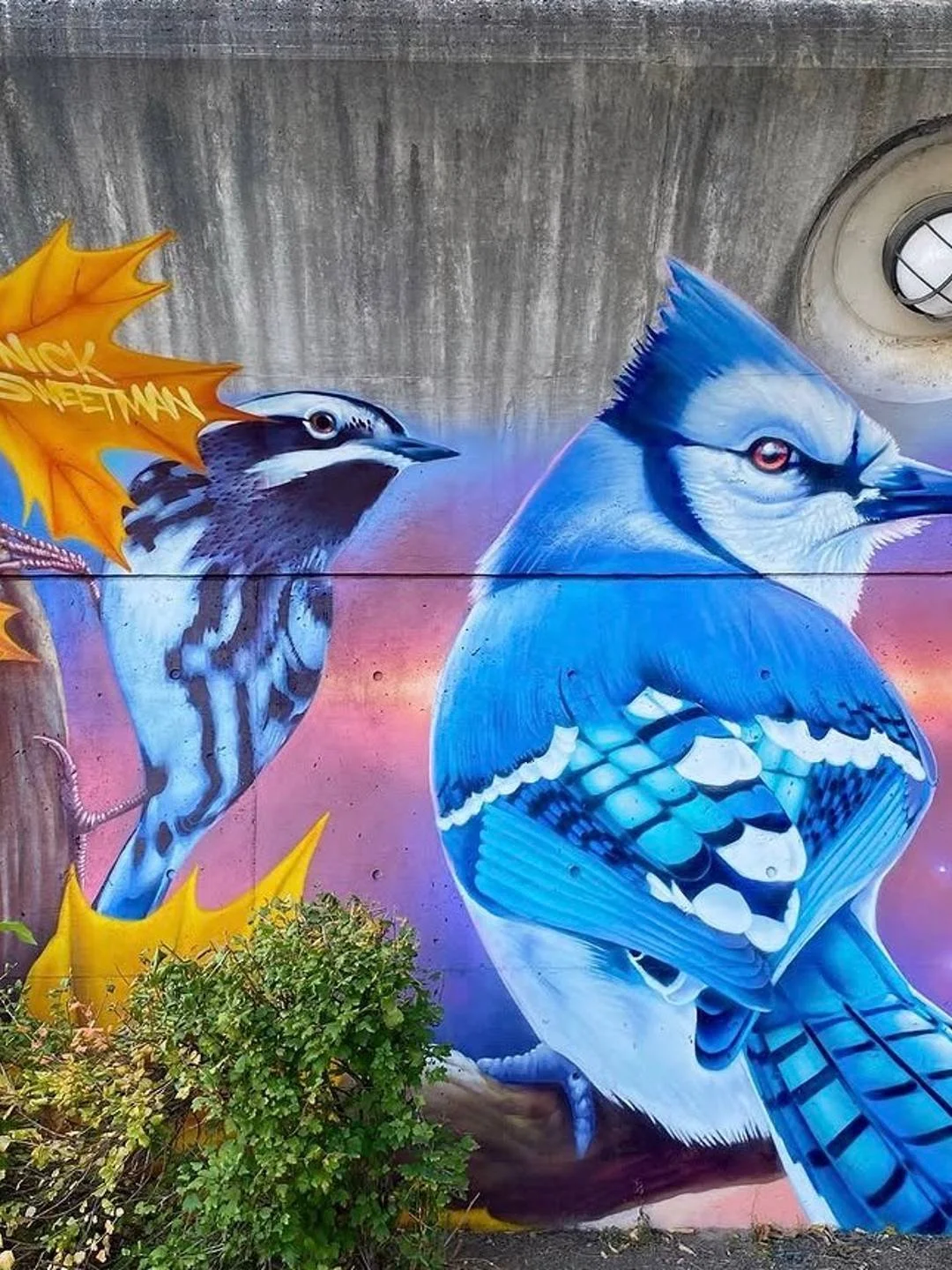
I noticed a small word in the corner—Sweetman—and then googled “sweetman toronto” with the first link taking me to the Instagram page of ​Nick Sweetman​ who became my favorite graffiti artist.

For months, I kept wondering how I might work with Nick till one night I walked past a brutalist concrete wall behind Dupont Station.

The station is packed! Thousands of people pass that wall every day—students, office workers, Casa Loma tourists, subway trains rolling under, buses blaring past.

I learned the Toronto Transit Commission was paying to paint over tags on that wall 2-3x a week!

So I began organizing meetings with TTC folks and local associations to work through questions about paint, access, maintenance, and timelines.

Then I hired Nick for the the art!

I gave him my two-word vision—local birds!—and he did the rest.

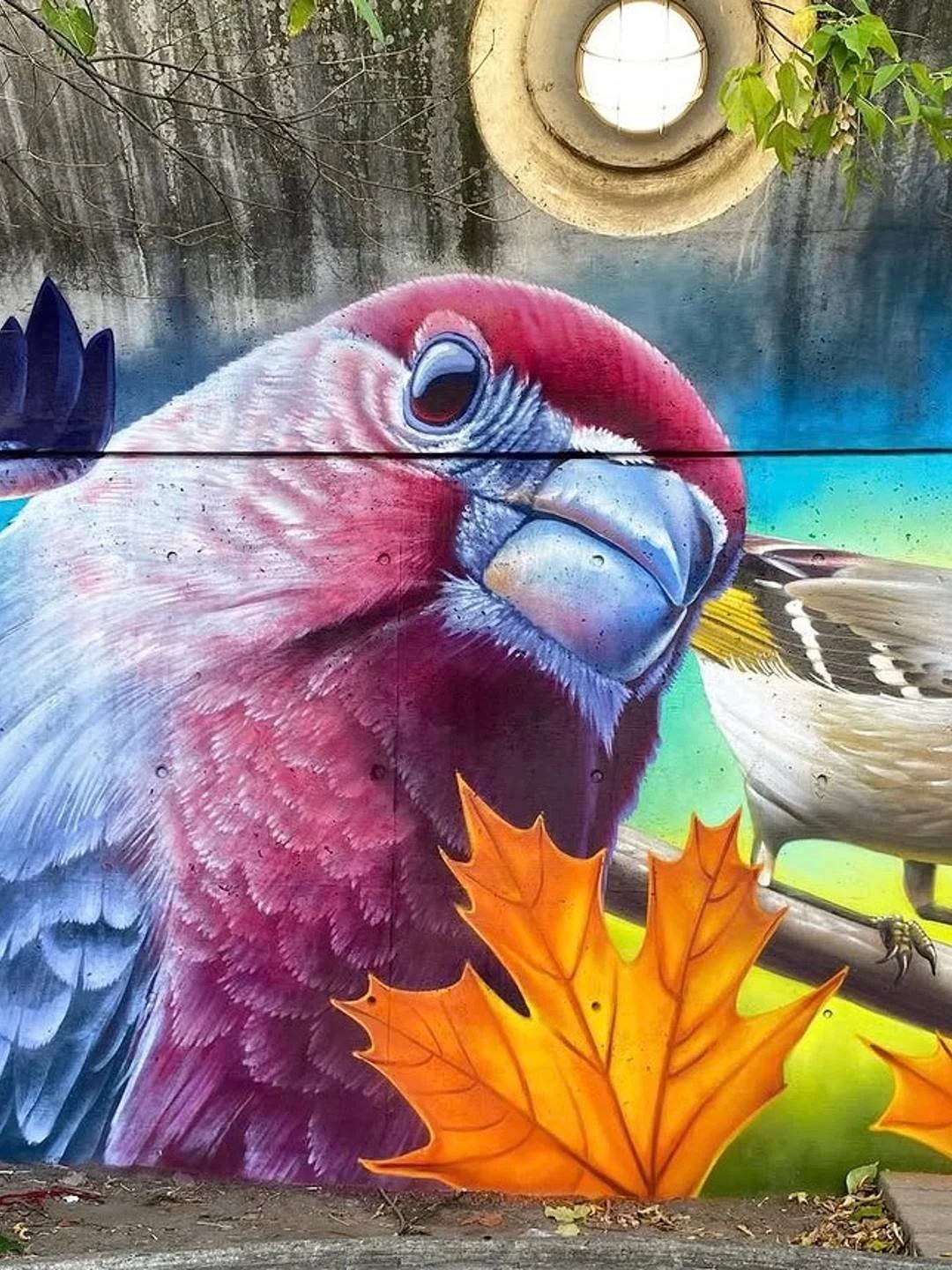
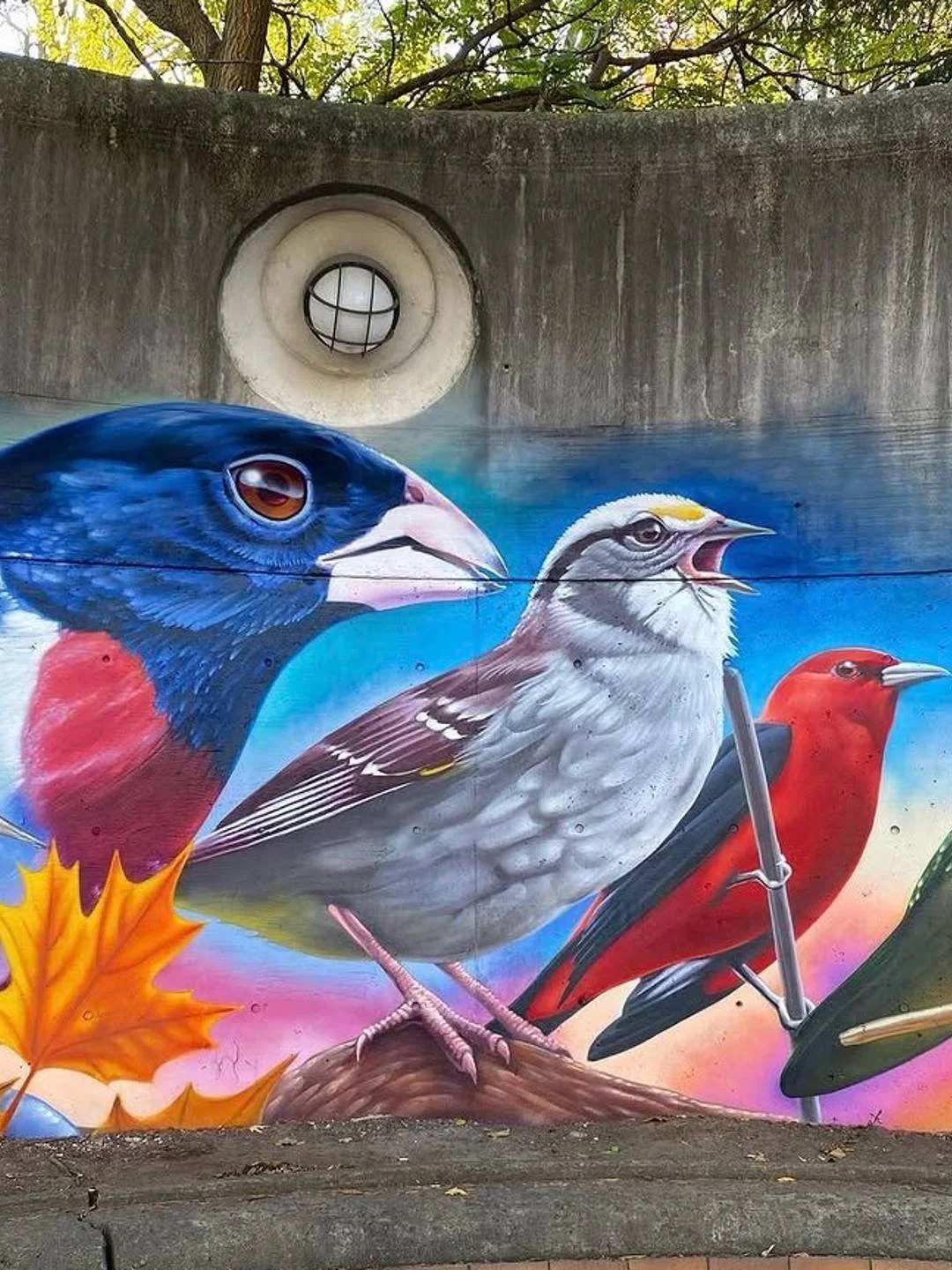
There are 16 species on the wall and all have been seen within 333m of Dupont Station within the past 3.33 years according to data from ​eBird​.

Nick truly made magic!

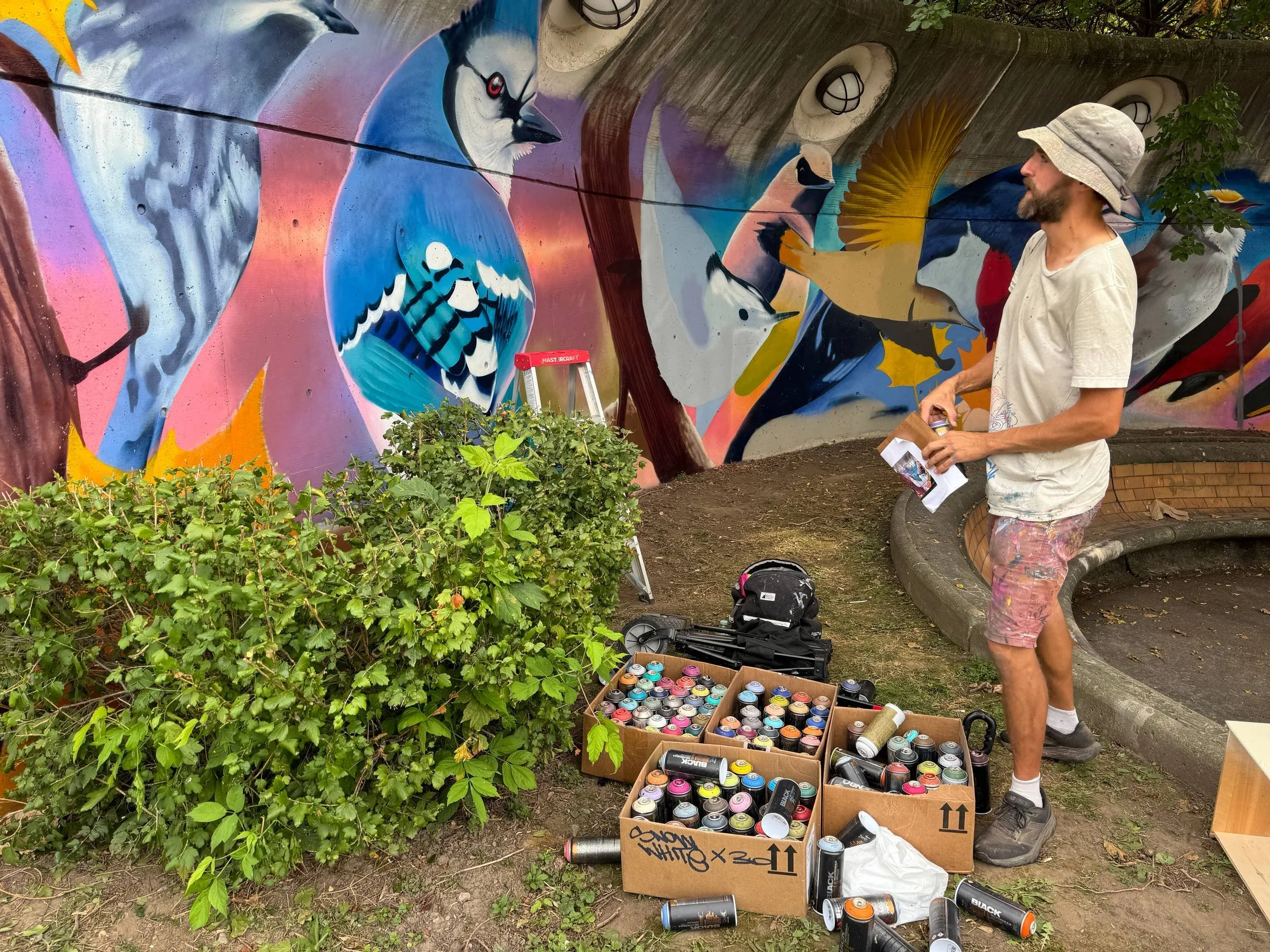
He started painting on September 17th (my bday!) and worked on it tirelessly—no stencils! no AI! no aids except a ladder!—until November.

Nick and I did ​a 3 Books podcast from the wall​, made ​a little documentary​, and his incredible art added some beauty to a slightly dreary corner.

Now we’re already talking about doing another one. (If you have a specific species of bird you'd like to see on the wall just let me know.)

Why did I do such a nutty project?

Well, honestly, the reason is pretty simple:

We all need little moments of happiness.

More beauty, more love, more energy, more awe.

More giant colorful things to walk by when you least expect them.

Research unsurprisingly shows interacting with art in city spaces ​helps make us happy​.

From the study: “After interacting with the artistic intervention in an urban environment, the participants reported reduced feelings of anxiety, stress, and negative mood ....”

Anxiety?

Stress?

Negative mood?

We feel these things every day.

I do!

You do, too.

But let’s remember we have the power to add beauty to the world.

Shutting off the news.

Stepping outside to find green space.

Picking up a piece of trash we’re walking past.

Planting a couple flowers or a tree in our garden or backyard.

Adding a splash of paint to a forgotten wall or alley.

The bird wall was one of the most fun projects I’ve ever done and it brings me—and hopefully many others—joy every time I see it.

Remember:

Every action we take is a vote for the world we want to live in.

Things feel heavy.

Intense!

Overwhelming.

But we retain the choice—every day, every moment—to make the world a little bit better.


Sign Up for a Dose of Inspiration:

Every other week, I send an email out with an article I’ve written, or one of my favorite speeches, essays or poems. No ads, no sponsors, no spam, and nothing for sale. Just a dose of inspiration or beauty!

My Favorite David Sedaris Essay: "You Can't Kill The Rooster" [Explicit]

Click here to read the full text of ‘You Can’t Kill The Rooster’

Hey everyone,

One night last week I just couldn’t sleep.

I couldn’t!

I could not sleep.

I did all the proper evening routines, too.

No food and no screens a few hours before bedtime.

Dark room.

Cold room!

I know ​so many evening routines​.

Even had my new CPAP mask Darth Vadering onto my face ...

No luck.

No dice.

I just couldn’t turn my brain off.

That has happened to me a lot ​since I was a baby​. I’ve gotten better at it! But sometimes: Pow! Just killer no-sleeping.

So what did I do?

I started ​journaling​ with my ​Glocusent book light​ (not an ad) on orange, lying pointing upwards on my chest.

Then: deep breathing.

Then: writing all my ideas and things I’m thinking about on little cue cards beside my bed.

Then: reciting little mantras.

Then: counting backwards from 1000 by 7s. (Seriously.)

Nothing did it!

Somewhere between 2 and 3am I gave up and figured I just needed to read again—but on my beside table right now are ‘​Vigil​’ by ​George Saunders​, ‘​A Little More Social​’ by Nicholas Epley, and ‘​The Dark Half​’ by Stephen King.

Uh ... not exactly lulling.

Then, suddenly: I knew what I had to do!

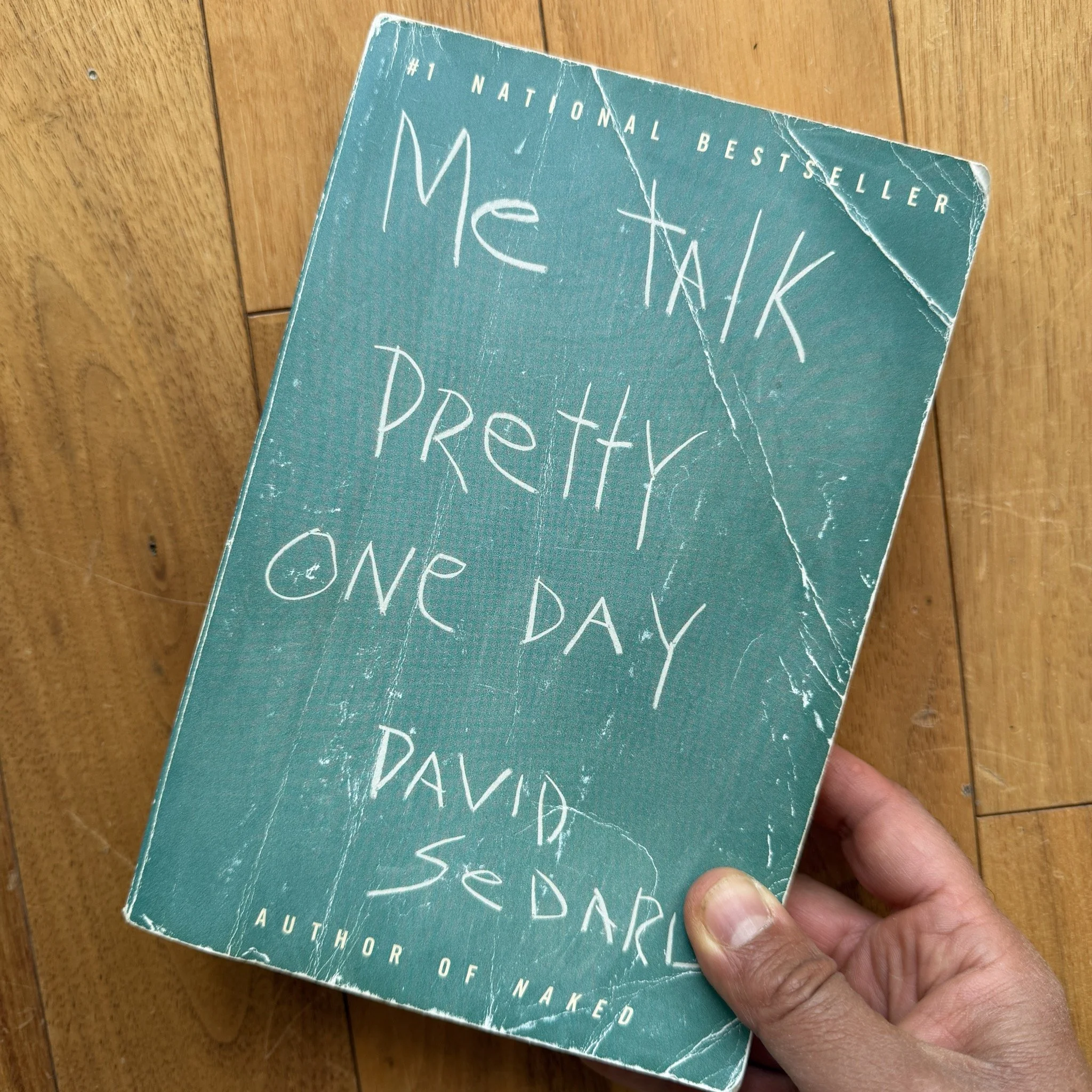
I got up, in my boxers, in the pitch black, in my freezing cold house, and tiptoed all the way down to the basement where, filed under ‘Essays’ (808.4 in my Dewey Decimal organized home library, of course) I plucked ‘​Me Talk Pretty One Day​’ by David Sedaris off the shelf.

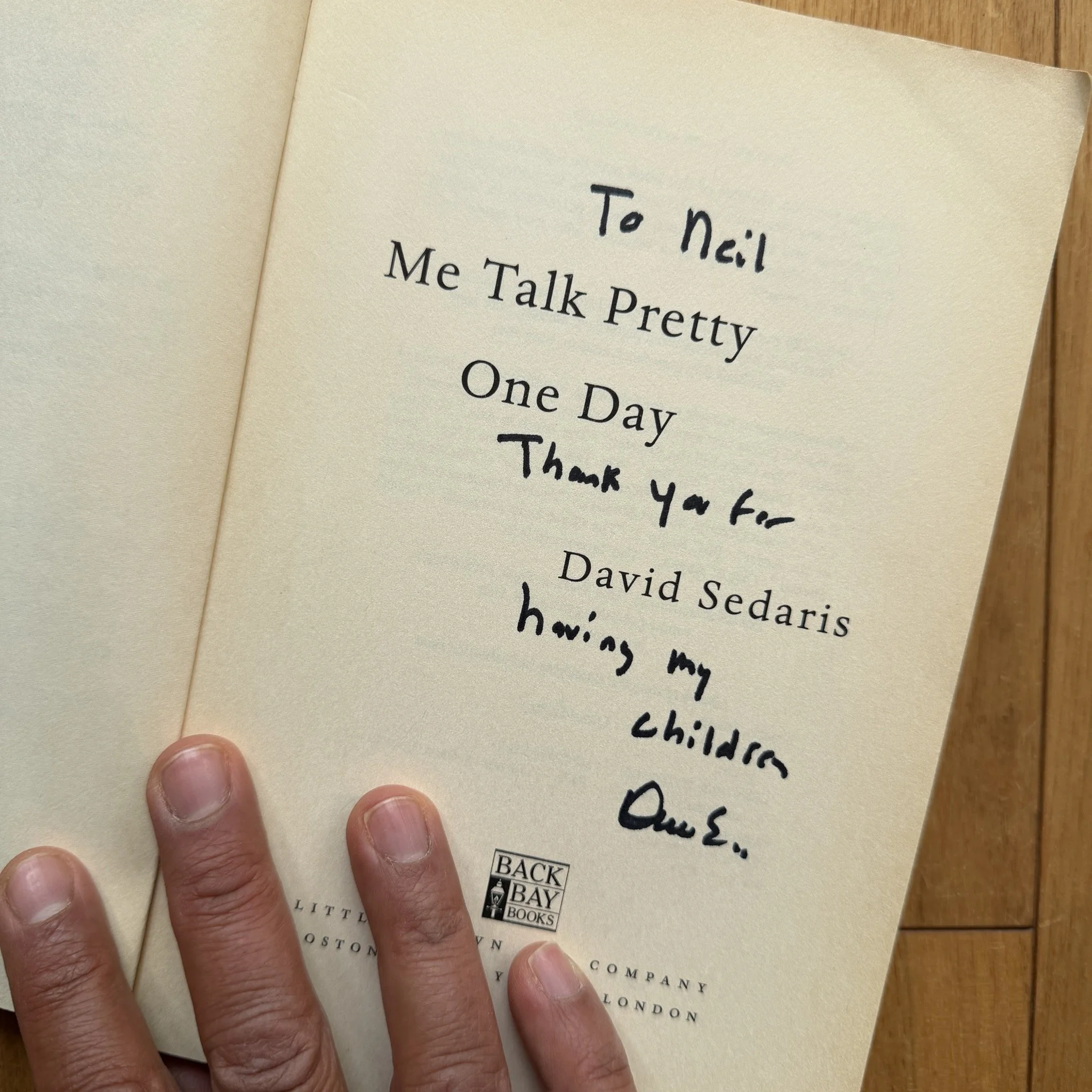
I took it back upstairs, flipped to the title page, read the autograph I forgot David left in my book—“To Neil, thank you for having my children, David S”—just before I ​got out of his limo way back in 2018.

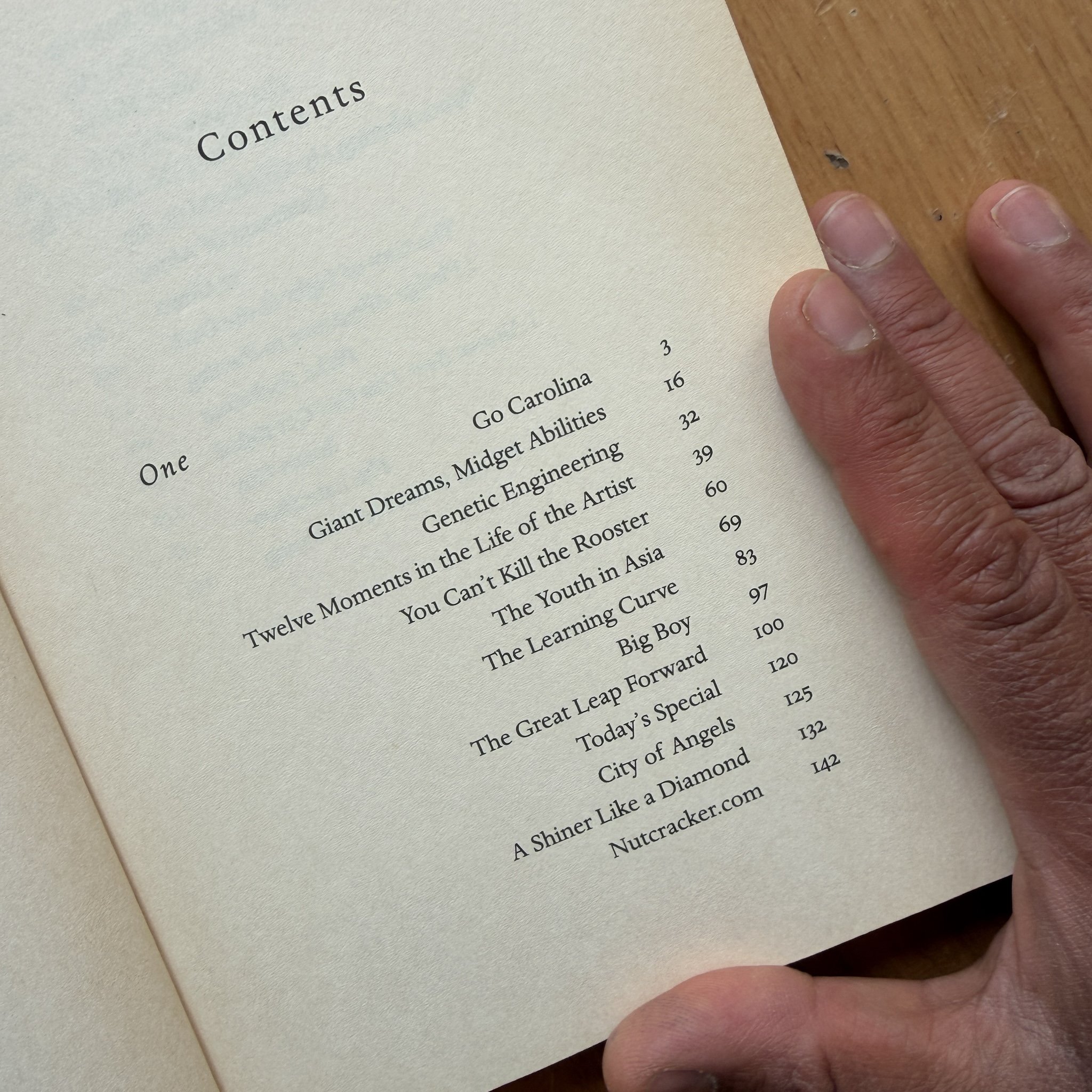
I flipped to the Table of Contents ...

And then, yes, I knew!

Every essay in the book is a gem.

Of course it is! This is David Sedaris’s bestselling book of all time with ​three quarters of a million (!) ratings on Goodreads​.

But, of course, the essay I picked to read was ‘You Can’t Kill The Rooster’, which first appeared in Esquire in June, 1998, because ... I knew ... I just knew ... it would be the most unconventionally motivational and hilarious 8-page send up to untwist my now-anxious stomach and finally help me relax and nod off.

I smiled, I squeezed in silent laughs so I didn’t wake up Leslie, and I once again found myself inspired by the attitude of one Mr. Paul Sedaris.

I now share the full essay of “You Can’t Kill The Rooster” by David Sedaris.

Warning! It’s explicit. Um, very explicit. Like, you know that little [E] they put beside explicit songs on Spotify?

Imagine this essay has three of those.

Deeply human, wildly surprising, but, yeah [E] [E] [E].

You’ve been warned!

All rights very much reserved by arguably the funniest writer alive, the one and only Mr. David Sedaris, and Little, Brown & Company, with their full copyright from 2000. If you liked this, please do grab a copy of ‘​Me Talk Pretty One Day​’ right here on ​Amazon​, ​B&N​, ​Bookshop​ or ​Indigo​.

Sweet dreams,

Neil


'You Can’t Kill the Rooster'

By David Sedaris

When I was young, my father was transferred and our family moved from western New York State to Raleigh, North Carolina. IBM had relocated a great many northerners, and together we made relentless fun of our new neighbors and their poky, backward way of life. Rumors circulated that the locals ran stills out of their toolsheds and referred to their house cats as “good eatin’.” Our parents discouraged us from using the titles “ma’am” or “sir” when addressing a teacher or shopkeeper. Tobacco was acceptable in the form of a cigarette, but should any of us experiment with plug or snuff, we would automatically be disinherited. Mountain Dew was forbidden, and our speech was monitored for the slightest hint of a Raleigh accent. Use the word “y’all,” and before you knew it, you’d find yourself in a haystack French kissing an underage goat. Along with grits and hush puppies, the abbreviated form of you all was a dangerous step on an insidious path leading straight to the doors of the Baptist church.

We might not have been the wealthiest people in town, but at least we weren’t one of them.

Our family remained free from outside influence until 1968, when my mother gave birth to my brother, Paul, a North Carolina native who has since grown to become both my father’s best ally and worst nightmare. Here was a child who, by the time he had reached the second grade, spoke much like the toothless fishermen casting their nets into Albemarle Sound. This is the grown man who now phones his father to say, “Motherfucker, I ain’t seen pussy in so long, I’d throw stones at it.”

My brother’s voice, like my own, is high-pitched and girlish. Telephone solicitors frequently ask to speak to our husbands or request that we put our mommies on the line. The Raleigh accent is soft and beautifully cadenced, but my brother’s is a more complex hybrid, informed by his professional relationships with marble-mouthed, deep-country work crews and his abiding love of hard-core rap music. He talks so fast that even his friends have a hard time understanding him. It’s like listening to a foreigner and deciphering only shit, motherfucker, bitch, and the single phrase You can’t kill the Rooster.

“The Rooster” is what Paul calls himself when he’s feeling threatened. Asked how he came up with that name, he says only, “Certain motherfuckers think they can fuck with my shit, but you can’t kill the Rooster. You might fuck him up sometimes, but, bitch, nobody kills the motherfucking Rooster. You know what I’m saying?”

It often seems that my brother and I were raised in two completely different households. He’s eleven years younger than I am, and by the time he reached high school, the rest of us had all left home. When I was young, we weren’t allowed to say “shut up,” but once the Rooster hit puberty it had become acceptable to shout, “Shut your motherfucking hole.” The drug laws had changed as well. “No smoking pot” became “no smoking pot in the house,” before it finally petered out to “please don’t smoke any more pot in the living room.”

My mother was, for the most part, delighted with my brother and regarded him with the bemused curiosity of a brood hen discovering she has hatched a completely different species. “I think it was very nice of Paul to give me this vase,” she once said, arranging a bouquet of wildflowers into the skull-shaped bong my brother had left on the dining-room table. “It’s nontraditional, but that’s the Rooster’s way. He’s a free spirit, and we’re lucky to have him.”

Like most everyone else in our suburban neighborhood, we were raised to meet a certain standard. My father expected me to attend an Ivy League university, where I’d make straight A’s, play football, and spend my off-hours strumming guitar with the student jazz combo. My inability to throw a football was exceeded only by my inability to master the guitar. My grades were average at best, and eventually I learned to live with my father’s disappointment. Fortunately there were six of us children, and it was easy to get lost in the crowd. My sisters and I managed to sneak beneath the wire of his expectations, but we worried about my brother, who was seen as the family’s last hope.

From the age of ten, Paul was being dressed in Brooks Brothers suits and tiny, clip-on rep ties. He endured trumpet lessons, soccer camp, church-sponsored basketball tournaments, and after-school sessions with well-meaning tutors who would politely change the subject when asked about the Rooster’s chances of getting into Yale or Princeton. Fast and well-coordinated, Paul enjoyed sports but not enough to take them seriously. School failed to interest him on any level, and the neighbors were greatly relieved when he finally retired his trumpet. His response to our father’s impossible and endless demands has, over time, become something of a mantra. Short and sweet, repeated at a fever pitch, it goes simply, “Fuck it,” or on one of his more articulate days, “Fuck it, motherfucker. That shit don’t mean fuck to me.”

My brother politely ma’ams and sirs all strangers but refers to friends and family, his father included, as either “bitch” or “motherfucker.” Friends are appalled at the way he speaks to his only remaining parent. The two of them once visited my sister Amy and me in New York City, and we celebrated with a dinner party. When my father complained about his aching feet, the Rooster set down his two-liter bottle of Mountain Dew and removed a fistful of prime rib from his mouth, saying, “Bitch, you need to have them ugly-ass bunions shaved down is what you need to do. But you can’t do shit about it tonight, so lighten up, motherfucker.”

All eyes went to my father, who chuckled, saying only, “Well, I guess you have a point.”

A stranger might reasonably interpret my brother’s language as a lack of respect and view my father’s response as a form of shameful surrender. This, though, would be missing the subtle beauty of their relationship.

My father is the type who once recited a bawdy limerick, saying, “A woman I know who’s quite blunt / had a bear trap installed in her… Oh, you know. It’s a base, vernacular word for the vagina.” He can absolutely kill a joke. When pushed to his limit, this is a man who shouts, “Fudge,” a man who curses drivers with a shake of his fist and a hearty “G.D. you!” I’ve never known him to swear, yet he and my brother seem to have found a common language that eludes the rest of us.

My father likes to talk about money. Spending doesn’t interest him in the least, especially as he grows older. He prefers money as a concept and often uses terms such as annuity and fiduciary, words definitely not listed in the dictionary of mindless entertainment. It puts my ears to sleep, but still, when he talks I pretend to listen to him, if only because it seems like the mature thing to do. When my father talks finance to my brother, Paul will cut him off, saying, “Fuck the stock talk, hoss, I ain’t investing in shit.” This rarely ends the economics lecture, but my brother wins bonus points for boldly voicing his uninterest, just as my father would do were someone to corner him and talk about Buddhism or the return of the clog. The two of them are unapologetically blunt. It’s a quality my father admires so much, he’s able to ignore the foul language completely. “That Paul,” he says, “now there’s a guy who knows how to communicate.”

When words fail him, the Rooster has been known to communicate with his fists, which, though quick and solid, are no larger than a couple of tangerines. At five foot four, he’s shorter than I am, stocky but not exactly intimidating. The year he turned thirty we celebrated Christmas at the home of my older sister Lisa. Paul arrived a few hours late with scraped palms and a black eye. There had been some encounter at a bar, but the details were sketchy.

“Some motherfucker told me to get the fuck out of his motherfucking face, so I said, ‘Fuck off, fuckface.’”

“Then what?”

“Then he turned away and I reached up and punched him on the back of his motherfucking neck.”

“What happened next?”

“What the fuck do you think happened next, bitch? I ran like hell and the motherfucker caught up with me in the fucking parking lot. He was all beefy, all flexed up and shit. The motherfucker had a taste for blood and he just pummeled my ass.”

“When did he stop?”

My brother tapped his fingertips against the tabletop for a few moments before saying, “I’m guessing he stopped when he was fucking finished.”

The physical pain had passed, but it bothered Paul that his face was “all lopsided and shit for the fucking holidays.” That said, he retreated to the bathroom with my sister Amy’s makeup kit and returned to the table with two black eyes, the second drawn on with mascara. This seemed to please him, and he wore his matching bruises for the rest of the evening.

“Did you get a load of that fake black eye?” my father asked. “That guy ought to do makeup for the movies. I’m telling you, the kid’s a real artist.”

Unlike the rest of us, the Rooster has always enjoyed our father’s support and encouragement. With the dream of college officially dead and buried, he sent my brother to technical school, hoping he might develop an interest in computers. Three weeks into the semester, Paul dropped out, and my father, convinced that his son’s lawn-mowing skills bordered on genius, set him up in the landscaping business. “I’ve seen him in action, and what he does is establish a pattern and really tackle it!”

Eventually my brother fell into the floor-sanding business. It’s hard work, but he enjoys the satisfaction that comes with a well-finished rec room. He thoughtfully called his company Silly P’s Hardwood Floors, Silly P being the name he would have chosen were he a rap star. When my father suggested that the word silly might frighten away some of the upper-tier customers, Paul considered changing the name to Silly Fucking P’s Hardwood Floors. The work puts him in contact with plumbers and carpenters from such towns as Bunn and Clayton, men who offer dating advice such as “If she’s old enough to bleed, she’s old enough to breed.”

“Old enough to what?” my father asks. “Oh, Paul, those aren’t the sort of people you need to be associating with. What are you doing with hayseeds like that? The goal is to better yourself. Meet some intellectuals. Read a book!”

After all these years our father has never understood that we, his children, tend to gravitate toward the very people he’s spent his life warning us about. Most of us have left town, but my brother remains in Raleigh. He was there when our mother died and still, years later, continues to help our father grieve: “The past is gone, hoss. What you need now is some motherfucking pussy.” While my sisters and I offer our sympathy long-distance, Paul is the one who arrives at our father’s house on Thanksgiving day, offering to prepare traditional Greek dishes to the best of his ability. It is a fact that he once made a tray of spanakopita using Pam rather than melted butter. Still, though, at least he tries.

When a hurricane damaged my father’s house, my brother rushed over with a gas grill, three coolers full of beer, and an enormous Fuck-It Bucket — a plastic pail filled with jawbreakers and bite-size candy bars. (“When shit brings you down, just say ‘fuck it,’ and eat yourself some motherfucking candy.”) There was no electricity for close to a week.The yard was practically cleared of trees, and rain fell through the dozens of holes punched into the roof. It was a difficult time, but the two of them stuck it out, my brother placing his small, scarred hand on my father’s shoulder to say, “Bitch, I’m here to tell you that it’s going to be all right. We’ll get through this shit, motherfucker, just you wait.”


Do your sides hurt like mine? For more from David Sedaris ​check out my long-form conversation​ with him which is the most popular chapter of 3 Books ever recorded.

Did you find Paul motivational? I love counterintuitive motivational advice. ​Oliver Burkeman​ ​has a lot of that​, too!


Sign Up for a Dose of Inspiration:

Every other week, I send an email out with an article I’ve written, or one of my favorite speeches, essays or poems. No ads, no sponsors, no spam, and nothing for sale. Just a dose of inspiration or beauty!

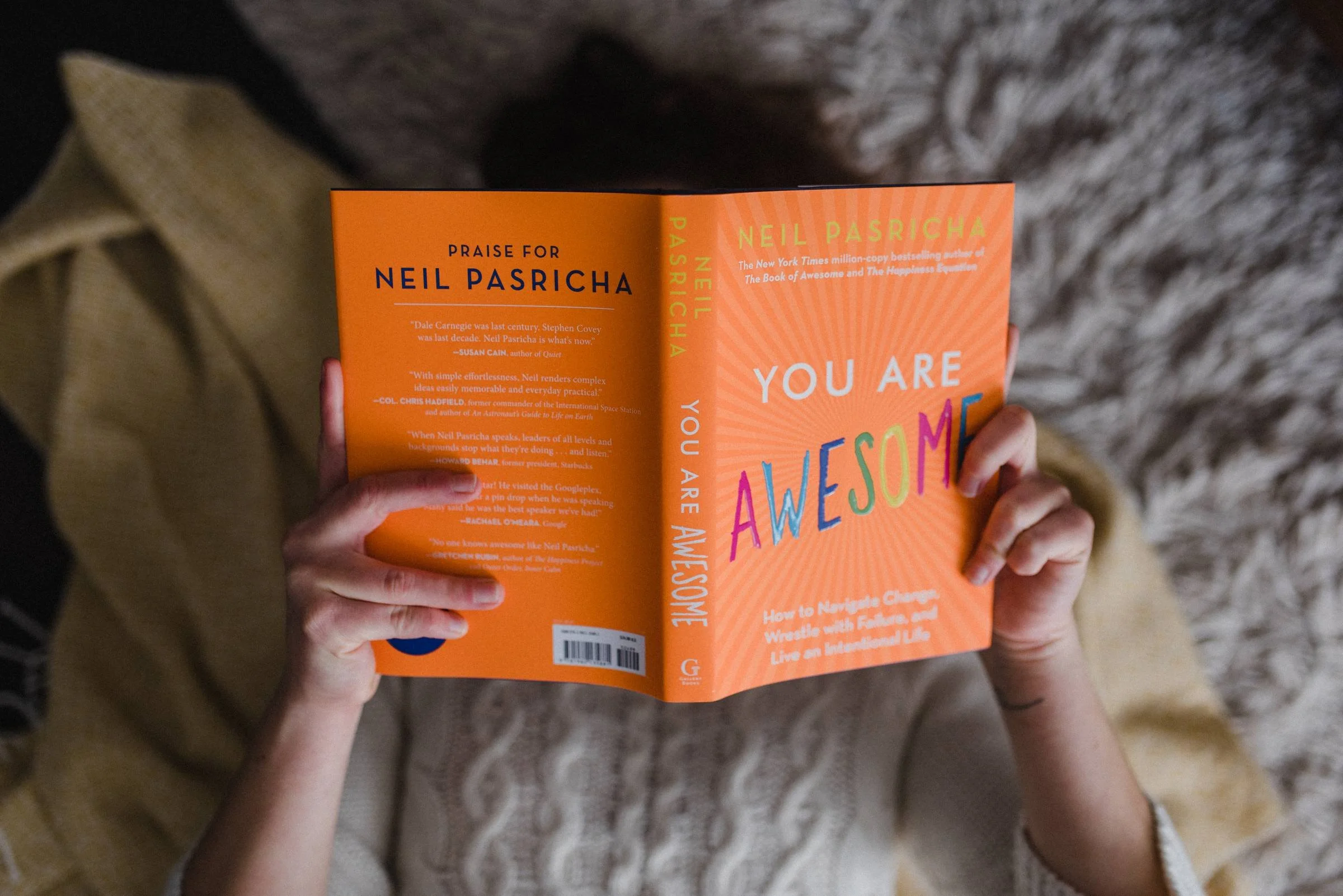
Chapter 1 from ​'You Are Awesome: How to Navigate Change, Wrestle with Failure, and Live an Intentional Life'​

Hey everyone,

How’s your April going?

Feels like every day there’s a new challenge out there.

I’m getting notes from you telling me about feeling overwhelmed by the news, relationship frictions, battling addictions, and feeling generally overwhelmed.

I hear you!

I feel it, too.

I’m right there with you.

A couple weeks ago I wrote ​a letter to the Prime Minister ​protesting our Premier’s autocratic takeover of our lake, ​posted it on Twitter​ (lots of hate!), ​posted it on Instagram ​(mostly love!), and then turned it into a ​Change.org petition ​(please sign!).

Of course, then people started saying it needs to be a ‘federal petition’ and that I should to have got MP support first, etc, etc.

Argh!

Sometimes when we work so hard ... we just hit new walls.

But what do we do then?

Well, that’s why I thought I’d share a chapter from ​my book on resilience​ today. It’s the story of my mum along with a few mental models I’ve learned from her. When life tries to give you a period ... add a dot-dot-dot. When you catch yourself saying you can’t do something add a ... yet.

Forward this email to a friend who’s going through a tough time.

Remind them they aren’t alone!

And neither are you.

As always, you can invite others to join our tribe ​right here​.

Neil


My mum was born in Nairobi, Kenya in 1950.

Growing up the youngest of eight kids in a small house off the downtown core, she was quiet, shy, and always the baby.

Back when my mum was born, Kenya had a black majority, a brown minority, and a white cream on top. Kenyan natives, the East Indian class imported to get the economy chugging, and the British colonialists who ran the whole show.

That East Indian class included my mum’s dad who moved from Lahore, India, to Nairobi in the 1930s to help build the railroad.

The Brits took over Kenya in the late 1800s and the country didn’t gain independence until the mid-1960s so it was very much a British-ruled country when my mum was born. White people running the show. White people running the government. White people running the best schools.

My mum wasn’t born a white person.

So she wasn’t born the right person.

And she wasn’t born the right gender, either.

What do I mean?

I mean my grandparents had seven kids before my mum was born. Four girls and three boys. As my mum and her sisters tell it, my grandparents were desperately hoping for a final boy to even their numbers out and give them a solid four-four split.

Boys were the prized possession in the culture. All everybody wanted.

For generations there was more money for male education and training, which meant men were financially self-sufficient. Women, on the other hand, were dependent on husbands opening wallets every Sunday to dole out shillings to buy groceries and clothes for the family. Women also traditionally “married out” and joined their husbands’ families, taking care of their in-laws instead of their own parents. So having a son provided a cultural pension long before real pensions existed. No old-age checks once a month! Just your daughter-in-law cooking you curried lentils and serving you chai.

Even worse, the culture compensated men further by providing a dowry. What’s a dowry? I didn’t understand it growing up but a dowry is an ancient and archaic gift given by the bride’s parents to the groom’s parents as if to say “Thank you for taking our daughter off our hands.”

By the way, I really do mean ancient. Even one of the world’s oldest texts, the Code of Hammurabi, dating from almost four thousand years ago, discusses dowries in this way, as gifts for the groom’s family. And I do mean gift. A dowry often includes jewelry, property, and big piles of cash, resulting in a massive financial burden for anyone with a daughter to marry off.

When my grandparents had my mum, all those additional costs and burdens sank in. It breaks my heart to think about my mum opening her newborn eyes, slowly soaking in the sea of faces in front of her, and what was the first thing she probably saw?

Everyone’s disappointment.

How was that family burden, that sense of not being wanted, communicated to my mother? The way deep cultural norms are often communicated—like a heavy, invisible blanket pushing down on her, a force she couldn’t see but felt in her bones.

When a boy was born, friends and neighbors would say “Badhaee ho!” It meant “Wonderful, great, congratulations!” And when a girl was born? “Chalo koi nahi.” What’s the translation? “Keep going. Soldier on. Oh well—you have to keep moving.”

As my mum described it, there was a fatalist feeling of closure and finality over everything. “My life was set out,” she told me. “It was decided.” Gender, culture, and traditions all pointed to a well-worn finish line she could see in her future. Her life seemed like a sentence. Something preordained and punishing.

No sense of possibility, no options . . . no dot-dot-dot.

Just the end. A full stop.

As she got older, my mum watched her older sisters finishing the same sentence ahead of her, plucked from the family home one by one, married off to a man chosen by her parents, to provide him with children and home cooking while taking care of him and his parents. In the face of a life sentence ending in a full stop, my mum had a choice to make: Would she ever see past the period?

What about you?

Do you ever feel like you don’t have options?

Do you ever feel like you don’t have a choice?

Do you ever see the period at the end of your sentence?

We all have this feeling sometimes.

We all sometimes feel a fatalist feeling of closure and finality in the sentence of our lives. Maybe it’s growing up in a male-dominated culture without any visible options. Maybe it’s taking care of a sick family member and always putting yourself last. Maybe it’s feeling trapped in your job after twenty years of education and a suffocating pile of debt. Maybe your family is living in a country where your visa application to join them keeps getting rejected. Maybe they won’t promote you. Maybe they won’t release you.

What do you do when you can see the future on the path you’re walking on but you don’t like where it’s leading?

Well, there’s a crucial mindset to adopt. It’s not about giving up. And it’s not about turning around and running away. Because we both know life isn’t that simple. Commencement speech advice doesn’t always work. Follow your heart! Do what you love!

“My heart said follow him. And he dumped me.”

“I want to do what I love. But I have bills, responsibilities, and other people.”

Sometimes the hardest thing to do is simply making the decision to keep going.

Sometimes the hardest thing to do is simply making the decision to continue to breathe, continue to move, continue to function, continue to operate.

A period means giving in to life’s circumstances, relenting in the face of things that look immovable, things that look impossible, things that look too painful.

A period is giving in.

What we need to hold on to in our hearts is the quiet courage to change the punctuation. What we need to hold on to is the idea that resilience means seeing the free will that exists just past the period.

We need to hold on to a desire to see past that full stop.

To see past the period.

And add a dot-dot-dot.

A 500-year-old invention we can use today

In grammatical terms, that dot-dot-dot is called an ellipsis.

Dr. Anne Toner is a Cambridge University academic who spent years studying the history of the ellipsis. No, I’m not joking. But there is good news. She found it! Yes, the first time the famous dot-dot-dot appears is in the 1588 English translation of Roman dramatist Terence’s play Andria.

Let’s pause for a moment to stare at a bit of blurry calligraphy from half a millennium ago. The first-ever ellipsis. Fellow history and trivia nerds, let’s all pause to look in wonder upon this amber-encapsulated marvel ...

Look like small potatoes? Well, let’s see if we can come up with a new punctuation mark the whole world will use in five hundred years. It’s not easy. But there was help. Ben Jonson began using it in his plays soon after and then that old bard Bill Shakespeare joined in the fray. Boom! That was the Middle Ages equivalent of getting retweeted by Oprah. The ellipsis then moved from there all the way up to Virginia Woolf and Joseph Conrad. Today, even Adele uses the dot-dot-dot when teasing the first few chords of her new album in TV ads.

No joke, Dr. Toner even wrote a whole book about the ellipsis called Ellipsis in English Literature: Signs of Omission and in it she wrote that the ellipsis was “a brilliant innovation. There is no play printed before . . . that marks unfinished sentences this way.”

Unfinished sentences?

What else is an unfinished sentence?

The answer is everything.

Everything you do, every path you take, every diagnosis you get, every wall you hit, every setback, every failure, every rejection. All of these experiences are part of the unfinished sentence of your life story.

Sometimes the best thing you can do is learn to add that dot-dot-dot . . . and keep going.


What happens when you see past the period?


Let’s get back to Kenya.

In my mum’s case, there were massive political, cultural, and family pressures all around her, so she kept her mouth shut and her head down rather than rail against cultural norms. She added a dot-dot-dot by finding a way to keep going. She didn’t shave her head and start smoking by the train tracks. No, while her three older brothers received the bulk of the family’s praise, attention, and money for education, she joined her sisters sweeping floors, working the stove, and scrubbing the work clothes clean.

To keep her mind challenged, she sat on her front porch and memorized the license plates of cars driving by. She was craving a mental challenge. So she found a safe space where she could satisfy it silently.

Why license plates? “There was nothing else to memorize,” she told me later. “It was a game for myself. Just to see if I could do it.” She’d see a familiar car and guess the numbers from a distance, quietly congratulating herself when she got one right. At night, in the corner of the clattery kitchen, she’d study math under dim lights and curious gazes. None of her sisters worked so hard on schoolwork. Who needed to study so much just to cook curried lentils and serve chai?

Given she had seven older siblings all growing up and out of the house, the majority of her education was self-taught. Her parents didn’t have time for picture books before bed or late nights patching together a volcano for the school science fair. That would have been laughable. No, it was pile of textbooks, pile of paper, pile of pencils. Fend for yourself. Rinse and repeat.

All of her studying came to a head in 1963 when she took the government’s standard National Exam with every other thirteen-year-old in the country.

And what happened?

She got the highest mark.

In the country!

Suddenly a fat scholarship dropped into her lap and she was whisked away from her family home to a preppy English boarding school in the countryside with all the white British kids of the colonialists. She was the youngest of eight kids and the first one to leave home for boarding school. Nevermind on a scholarship.

She added a dot-dot-dot to her story throughout her upbringing. Memorizing license plates. Extra homework. Always after cooking and cleaning.

And then?

She got past the period. Her story continued . . .

But there are always more periods up ahead.

There always are.

“I couldn’t believe it,” my mum told me. “The school was a heaven on Earth. The grounds were so beautiful. We knew there were schools just for white people. For the rulers. But when I got there, everybody was so rich, coming in the best cars with chauffeurs. I was overwhelmed. I was scared. I never imagined I would be allowed to go in. I didn’t feel like I was equal to the other students. I just wanted to go home.”

How many times have you gotten past a period and then just wanted to go home?

“I never imagined I would be allowed to go in. I didn’t feel like I was equal to the other students.”

How many times have you felt this way? I feel this way all the time. Finally get the promotion? Now it’s new job, new boss, new way of doing things—and here comes that feeling of wanting to run for the hills. Sick family member gets better? Now you really have to confront the future you said you didn’t have time for. Visa gets approved? Great! Now how do you really feel about leaving your culture and aging parents behind to start all over again?

When we get past the period, the struggle starts all over again. You may dream of tapping out, stopping before you start, sticking a big period on the end of the new sentence so you don’t have to keep moving, fighting, working, trying. But it’s back to doing the same thing we’re talking about here.

What if you add a dot-dot-dot and keep your options open instead?

There is power in moving slowly through the motions.

There is power in letting the story continue.


“I don’t waltz . . . yet”


For the next few years, my mum’s life was full of reciting the Lord’s Prayer, memorizing Shakespeare passages, and eating soft-boiled eggs in the corner of the school cafeteria. After hitting the books away from friends and family, she graduated at seventeen and started to feel like her life was back on the rails, like she had made it, like everything was slowly coming together.

And then the phone rang.

And it was her father.

And he asked her to come home right away.

“I’m dying,” he told her. “Go make something of yourself.”

He passed away within days, just as violence and political instability were growing in East Africa. The dictator Idi Amin was ordering all East Asians out of neighboring Uganda and fears were growing that Kenya would be next.

My mum had added the dot-dot-dot as a kid but was now given new tests as a teen: her father suddenly dying, her home country unsafe, and those same heavy cultural pressures now falling onto my grandmother to scrape together a dowry and find her a husband.

“It’s great you managed to get an education . . . but now we really need to marry you off.”

So my mum fled to England with her mother and lived with her in London as her older siblings scattered and settled into their own married lives. And then my dad visited from Canada on summer vacation, the families introduced them, they had one date (one!) and then an arranged marriage a couple weeks (weeks!) later. Then? He moved my mum back to his home in a small, dusty suburb an hour east of Toronto, Canada.

And it suddenly felt like another period.

My mum’s global migration happened so quickly. She landed with a thud in that dusty suburb, with no Indian people around, suddenly married to a guy she’d met twice—including at their wedding—with her parents, siblings, and friends all an ocean away.

I can’t imagine how scary that must have been.

Another challenge, another wrench, another kink in the garden hose, another place where it felt like the end of a sentence.

But she kept moving, kept going, kept adding a dot-dot-dot.

When she came to Canada my mum had eaten meat only a handful of times. My dad was a teacher and started bringing her to after-school barbecues and roast beef dinners at the Rotary Club, where they’d hang out with a couple dozen white people.

Indian food wasn’t widely available so it was meat, meat, and more meat. And this was the suburbs in the 70s. Saying you were a vegetarian meant picking bacon bits off your Caesar salad and going home hungry. What did my mum do? She went along with the crowd.

When she came to Canada, my mum had never been ballroom dancing in her life. She’d never heard of ballroom dancing. But my dad’s idea of fun was going to Club Loreley, the local German club, and waltzing her around the room. So she let herself be waltzed. I remember hearing this story growing up and jumping in.

“But you don’t waltz!” I said.

And she said, “I didn’t do anything Dad did. But what was I supposed to do? Sit at home? I just told myself I don’t waltz . . . yet.”

I would ask her how she had navigated so many hairpin turns: new country, new husband, new job, new friends, new foods, new pastimes. She always seemed to keep moving. But how could she change everything so quickly?

Was it survival?

She told me she was just keeping her options open. Adding a dot-dot-dot to the end of the sentence. Letting things happen so she could navigate forward from a position of strength rather than feeling like all her doors had closed.


Keep your options infinite


An ​MIT study​ confirmed the value of adding a dot-dot-dot.

Researchers Dan Ariely and Jiwoong Shin showed that the mere possibility of losing an option in the future increases its attractiveness to the point that people will invest money to maintain that option. As they put it in their study: “The threat of unavailability does make the heart grow fonder.”

What’s the point?

The point is that although it may be hard to admit it and hard to see it and certainly hard to do it, we really do subconsciously crave adding that dot-dot-dot.

Life is a journey from infinite possibilities when you’re born—you can be anything, do anything, go anywhere—to zero possibilities when you die. So I’m proposing that the real game is trying to keep those options open as long as you can.

Like the farmer, we need to add a “We’ll see” when life blasts us into the stratosphere or sends us screeching wildly into the ravine beside an icy road.

We need to remember and constantly work on developing the muscle of continuing to move forward and always adding a dot-dot-dot . . .


The single word that makes it happen


Add a dot-dot-dot.

Sounds snappy.

But how? How can we really do that? Right as we’re falling, as we’re feeling it, as we’re looking up at the light disappearing above us, how? What is the tool we can use to try to put this theory into practice?

Well, it comes down to adding one word to our vocabularies.

It’s the word I heard my mum use over and over growing up.

And the word is “yet.”

“Yet” is the magic word to add to any sentence that we begin with “I can’t,” “I’m not,” or “I don’t.”

Wait! Yuck! Who talks like this? Who is that negative? Well, we all do this. We do! We declare things about ourselves to ourselves. We issue proclamations!

Pitch gets rejected? “I’m not creative.”

Cut from the team? “I’m not good at sports.”

Bad blood test from the lab? “I don’t take care of myself.”

And it’s not only when we’re falling, either.

Our negative talk is even more insidious when we’re just moving through the motions. Just walking down the path. Painting in the paint-by-numbers. Hopscotching the chalky boxes.

Why get married if you’re not in love?

“I can’t meet new people.”

Why put yourself last as you take care of someone you love?

“I don’t have any better options.”

Why go to law school if you don’t want to?

“I’m no good at anything else.”

We talk like this. And every time we do, we’re inserting periods at the ends of sentences that we might have kept going.

I use my mum’s story to show how easy it would have been for her to just stop and give up, to shut off the taps. It’s much harder to keep the taps on. It’s harder to add a “yet” to the end of a self-judgment.

How does the magic word look in practice?

“I can’t meet new people . . . yet.”

“I don’t have any better options . . . yet.”

“I’m not good at anything else . . . yet.”

“I don’t waltz . . . yet.”

When we gain the courage to add a “yet” to statements about ourselves, we leave our options open. Adding the word “yet” is empowering. It wedges a little question mark into the negative certainty we hold on to so fiercely in our minds. It lets us hold both ideas. The idea that we can’t. And! The idea that we can.

It leaves the door open.

It adds a “To be continued . . .”

Growing up, my mum never let her story finish.

And over the years ahead she continued to face many challenges. Sudden onset mental illness. The shocking death of her closest sister. Many moments where she could have closed things off with a period. But she always added a dot-dot-dot instead.


This is the first step to building resilience as you’re falling.

Resilience is being able to see that tiny little sliver of light between the door and the frame just after you hear the latch click.

Prom invite shot down? I haven’t got a date . . . yet.

Passed over for promotion? I’m not a manager . . . yet.

Cholesterol way out of whack? I don’t exercise . . . yet.

My mum never added a period in the brand new continent she found herself living in in her midtwenties.

“This doesn’t feel like home . . . yet.”

She never added a period in the arranged marriage her family ushered her into.

“I don’t know this man . . . yet.”

She never added a period at the boarding school where she was asked to pray to a new God in a new religion in a new language.

“I’m not confident at this school . . . yet.”

She never added a period when she was born the fifth girl in a family praying for a fourth boy.

“I don’t know what I’ll do . . . yet.”

Setbacks didn’t kill her spirit.

She just saw that sliver of light.

So when you feel like you’re falling, don’t just end the sentence.

Add a dot-dot-dot instead . . .

Thank you so much for reading. This was Chapter 1 from my book on resilience ​'You Are Awesome: How to Navigate Change, Wrestle with Failure, and Live an Intentional Life​'. I honestly think it’s the best book I’ve written! If you liked this chapter, ​check out the book​.


Sign Up for a Dose of Inspiration:

Every other week, I send an email out with an article I’ve written, or one of my favorite speeches, essays or poems. No ads, no sponsors, no spam, and nothing for sale. Just a dose of inspiration or beauty!


An Open Letter to Mark Carney: Please don't pave Lake Ontario to expand Billy Bishop Airport

April 4, 2026

Dear Prime Minister Mark Carney,

I was on the Toronto Ferry last year staring at our majestic waterfront.

I saw paddlers, kayakers, dragon boaters, sailors, windsurfers, fishers, paddleboarders, water taxis, and cruisers all sharing the space in harmony.

When we docked at Hanlan’s Point on the Toronto Islands I was surrounded by hikers, joggers, cyclists, birders, picnickers, swimmers, photographers, beachgoers, frisbee golfers, naturalists, and thousands of tourists and locals enjoying this lush ecological paradise surrounded by our sparkling freshwater lake.

Please don’t destroy this by paving Lake Ontario.

Three weeks ago, Ontario Premier Doug Ford announced he will “seize” Toronto’s Billy Bishop Airport (YTZ) in order to expand runways into Lake Ontario (1), bring in jets against the legal contracts governing the airport (2), and nix 14,000 mixed-use homes slated to go up on the shore (which taxpayers have already spent $1.4B developing). (3,4)

Although this decision is not his to make—Billy Bishop is governed by the City of Toronto and the federal government (5)— Premier Ford says he will overrule the City to “bring in jets one way or another.” (6,7)

Premier Ford says he has the “full support” of your federal government to do this. (8)

Prime Minister Carney:

It is not too late.

Please say no to expanding Billy Bishop airport into the lake.

We don’t need this, we don’t want this, and we can’t afford this.

We don’t need this.

We can already go anywhere we want to go.

I live right in downtown Toronto.

I can be anywhere I want in the world, tomorrow.

I can walk to bus, subway, streetcar, and UP express stations from my house and I fly 40x per year.

In the past year I have been to over 35 airports on 3 continents and YYZ is one of the absolute best. In fact, in the past month it has won “Best Airport Staff in North America” (9), been ranked 4th in all of the Americas in efficiency (out of 50 airports) (10), and won Best Large Airport on the entire continent (an award it’s won eight times in nine years.) (11)

Right this second, checking Uber, I can get from my house by car to Toronto’s Pearson International Airport (YYZ) in 21 mins and to Toronto’s Billy Bishop Island Airport (YTZ) in 14 mins.

Right this second, if someone at Union Station wanted to get to YYZ on public transit it would take 28 minutes (UP Express) and to YTZ would take 22 minutes (TTC streetcar).

We are talking about a 6 minute time savings here.

If we want to serve southwestern Ontario’s population with expanded jet service we simply need to use the 7000m of existing, high-capacity, under-utilized jet runways within 2 hours of Toronto at Hamilton, Waterloo, and London versus entertaining a “special economic zone” to force a jet-strip into the most environmentally sensitive and densely populated waterfront in the country.

We don’t want this.

This tiny speck of ecological paradise provides critical respite from our dense and urban concrete jungle and is vital for mental health, community, and happiness.

Over 400 peer-reviewed studies show urban forests and parks mitigate depression and anxiety and enhance overall mental well-being. (12)

I know you agree because four days ago on March 31, 2026 you announced your “Force of Nature” strategy with the vision of “protecting, restoring, and valuing nature.” This wonderful program declares a federal investment of $3.8 billion dollars into “protecting critical habitats and aligning industrial strategies with biodiversity conservation.” (13, 14, 15)

Also, I looked into the runway expansion into the lake that Premier Ford has promised.

Right now the shortest jet runway in Canada is 1832m (YHM Hamilton, ON) and the shortest jet runway in the world is 1508m (LCY London City Airport, UK). There are also new Canadian Aviation Regulations (RESA) stating all runways need to add 150m on each end for safety. (16, 17, 18)

Today the Billy Bishop runway is 1216m. (19)

Even the most conservative assumption—building the shortest jet runway in the entire world!—still requires a minimum of 600m more runway to land jets.

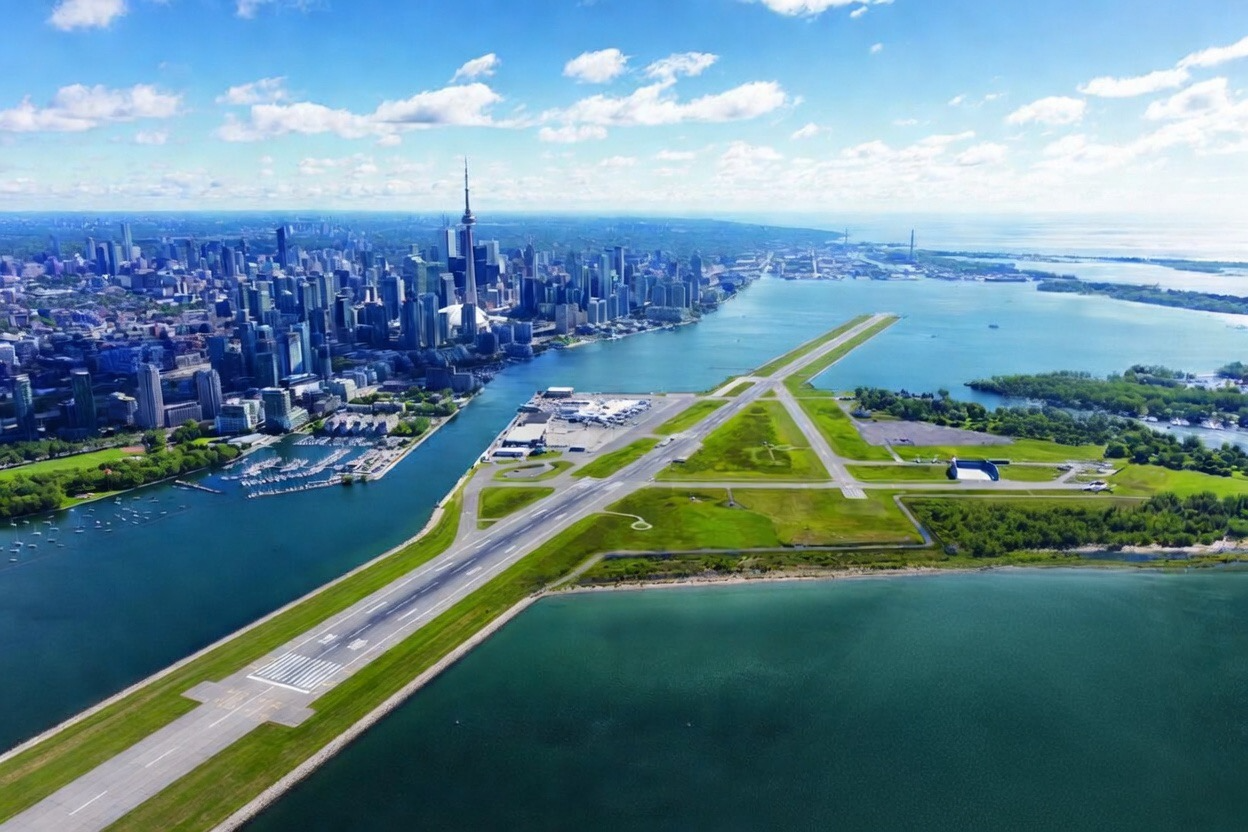
Here is a current aerial view of Billy Bishop Airport.

Here is an aerial view of Billy Bishop Airport with the smallest possible runway extension of 600m added.

(Of course this photo doesn’t include additional parking, hangers, gates, aprons, tarmacs, fueling stations, de-icing stations, blast fences, control towers, baggage carousels, taxi pickups … )

We can’t afford this.

Premier Ford was first elected in 2018 as the right wing candidate (PC) with 40.5% of the vote (left wing side of NDP and Liberal was 53.2%) and campaigned as a fiscal conservative. He attacked the Liberals for their $6.7B deficit and vowed a “return to balanced budgets” that would “begin in 2019.” (20, 21)

Since then, Premier Ford has won two more elections—with a nearly identical right / left vote split and record lows in voter turnout—and has now presided over 8 budgets. (22, 23)

In order from 2019 to 2026 those eight budgets have been for *deficits* of $8.7B, $16.4B, $13.5B, $5.9B, $5.6, $1.1B, $12.3B, and, most recently, just announced last week on March 26, 2026, coming in at a 77% increase on his own 2025 forecasts, $13.8B. (24, 25)

Since Premier Ford was elected he has *increased* Ontario’s debt from $338B to $485B. Ontario now pays $17.2B a year … just in interest payments. (26, 27, 28)

Notably, Premier Ford’s most recent $13.8B deficit budget does not include any money for the projected $1-2B cost of expanding Billy Bishop airport.

(Prime Minister, you and Premier Ford are both 61 and have a seemingly warm relationship despite wildly different education and business paths. (29, 30, 31, 32) Might you have time for some evening finance tutorials?)

Prime Minister Carney:

We don’t need this, we don’t want this, we can’t afford this.

Please say no to this expansion plan.

Please allow the legal agreements governing the airport to remain in the hands of those who legally own it—the City of Toronto and the federal government—and not with Premier Ford’s provincial government who is attempting to autocratically rule something in which it has no stake.

At the Junos six days ago on March 29, 2026 you praised 82-year-old Joni Mitchell and justifiably called her “one of the greatest artists of all time.” (33)

Joni warned us about “paving paradise to put up a parking lot” and now that’s exactly what Premier Ford is proposing we do.

The Toronto Harbour, Toronto Harbourfront, and Toronto Islands are a crown jewel for the functioning of our great city, our great province, and our great country.

Would New York City pave over Central Park?

Would Paris put runways on the Seine?

We absolutely should not pave the paradise of Lake Ontario to put up runways and parking lots we don’t need, don’t want, and can’t afford.

It’s not too late.

Please say no.

Thank you,

Neil Pasricha

//

(1) https://theglobeandmail.com/gift/08407f44d908aed2eadc6d
(2) https://portstoronto.com/wp-content/uploads/RESA-Tripartite-Amending-Agreement-January-28-2025.pdf
(3) https://environmentaldefence.ca/2026/03/24/
(4) https://thestar.com/news/gta/tens-of-thousands-are-expected
(5) https://billybishopairport.com/wp-content/uploads/2023/04/
(6) https://theglobeandmail.com/canada/article-ford-mulls-taking-over-torontos-stake-in-billy-bishop-airport-as-he/
(7) https://cbc.ca/news/canada/toronto/ford-billy-bishop-takeover-9.7138456 https://theglobeandmail.com/
(8) https://theglobeandmail.com/canada/article-ontario-ford-billy-bishop-airport-special-economic-zone/
(9) https://torontopearson.com/en/corporate/media/press-releases/2026-03-19
(10) https://britishaviationgroup.co.uk/knowledge/toronto-pearson-ranked
(11) https://nowtoronto.com/news/pearson-billy-bishop-awards/
(12) https://nature.com/articles/s44284-025-00286-y
(13) https://pm.gc.ca/en/news/news-releases/2026/03/31/prime-minister-carney-launches-new-nature-strategy-protect-canadas
(14) https://canada.ca/en/services/environment/nature/nature-strategy.html
(15) https://audubon.org/news/audubon-applauds-canadas-commitment-protect-nature
(16) https://en.wikipedia.org/wiki/John_C._Munro_Hamilton
(17) https://en.wikipedia.org/wiki/London_City_Airport
(18) https://toronto.ca/legdocs/mmis/2024/ex/bgrd/
(19) https://en.wikipedia.org/wiki/Billy_Bishop_Toronto
(20) https://en.wikipedia.org/wiki/2018_Ontario_general_election
(21) https://occ.ca/rapidpolicy/ontario-pc-party-platform-2018/
(22) https://en.wikipedia.org/wiki/2022_Ontario_general_election
(23) https://en.wikipedia.org/wiki/2025_Ontario_general_election
(24) https://globalnews.ca/news/11746458/ontario-budget-2026/
(25) https://budget.ontario.ca/2026/brief.html
(26) https://ofina.on.ca/borrowing_debt/debt.htm
(27) https://budget.ontario.ca/2026/chapter-4.html
(28) https://ontario.ca/page/public-accounts-ontario-past-editions
(29) https://en.wikipedia.org/wiki/Mark_Carney
(30) https://proquest.com/docview/301464456/
(31) https://en.wikipedia.org/wiki/Doug_Ford#Early
(32) https://theglobeandmail.com/news/toronto/globe-investigation-the-ford-familys-history-with-drug-dealing/article12153014/
(33) https://youtube.com/watch?v=6pbVWyjlgRg

//

If you support this blog post please:

1) Send an email to your Member of Parliament (MP). Find your MP here:

https://www.ourcommons.ca/members/en

2) Send an email to your Member of Provincial Parliament (MPP). Find your MPP here:

https://www.ola.org/en/members/current

3) Send a letter in the mail to Mark Carney and/or your MP (no postage is necessary if mailed in Canada):

(Name of Member of Parliament)
House of Commons
Ottawa, Ontario
Canada
K1A 0A6 

10 Inspirational Email Newsletters To Help You Live A Better Life (2.0)

Hey everyone,

Sloppy AI spam is turning my inbox into a travesty.

I am spending more time deleting, blocking, and filtering than ever before—

You too?

I honestly wondered about abandoning email completely!

Do I run away from the spammer monsters and retreat back into my Cave of Texts?

But then again ... they’re there, too!

No.

I need to stay.

I need to fight!

One weapon in the ongoing battle are the beautiful email newsletters sent to me from actual human beings with faces who seem to continuously send me little nuggets of inbox gold.

Seven years ago I wrote an article for Fast Company called ​“10 Inspirational Email Newsletters That Will Help You Live A Better Life.”​

Well now it’s time for Version 2.0!

Btw, I just checked ​that article​ and only 1 of my 10 below was on my original list...

So now: I proudly present the antithesis of AI spam.

The drops of dish soap that help the inbox grease scatter!

Here are 10 inspirational email newsletters that help me live a better life.

I open these emails every single time I see them and I highly recommend them all.

Team human forever,

Neil

PS. Invite others to join us here​​.


1. FIX THE NEWS BY ANGUS HERVEY

Political economist ​Angus Hervey​ believes “progress is something woven into the fabric of human experience, and not just a collection of statistics.” Fix The News is an actual good news newspaper with an ‘​Enlightenment Now​’ (​BO 2018​) / ​Our World In Data​-style zoom out on what’s going well in the world today.

Frequency: Weekly on Thursdays
Perfect for:
Anyone interested in stories of human progress and those looking for an antidote to bad news...

2. THE RED HAND FILES BY NICK CAVE

I was really taken by ​‘Faith, Hope, and Carnage’​ (​06/23​) by Nick Cave. I knew so little about him other than I loved the song ​“Into My Arms”​. This email picks up where the book leaves up by simply answering 1 question from fans with the most giant-hearted, giant-minded replies. My friend ​Susan Cain​ told me she wants to “curl up inside every one of these emails” she loves them so much.

Frequency: Intermittent
Perfect for:
Deep souls looking for inspiration, advice, and a unique form of global community...

3. THE 3-2-1 NEWSLETTER BY JAMES CLEAR

Every Thursday ​James Clear​, author of Atomic Habits (​10/18​) shares 3 ideas, 2 quotes from others, and 1 question for you. A 30-second snack of entrepreneurial wisdom.

Frequency: Weekly on Thursdays
Perfect for:
Anyone looking for quick motivation for growth, productivity, and self-improvement...

4. AUSTIN KLEON’S NEWSLETTER

One of my all-time favorite humans on the Internet, Austin is a former reference librarian turned bestselling author (Steal Like an Artist, Dont Call It Art) who points my brain at all kinds of fascinating articles, visual art, “ear candy”, quotes, and fun ideas every Friday morning. From a wise and ​dreaming doodler​, this email always helps me challenge my own ideas and helps me explore endless cerebral squiggles.

Frequency: Weekly on Friday mornings
Perfect for: Anyone who likes getting their brain poked with art, and those who feel a bit uncultured (like me) in big broad areas of music, painting, and film...

5. RICH ROLL’S NEWSLETTER

I was first introduced to ​Rich Roll ​by ​Jonathan Fields​, and ​his story​ of addiction, empowerment, sobriety, veganism, and athletic endurance marries so well with the wonderful psychological feast that is ​his podcast​ and newsletters. I love his mind, his words, his outlook, and, of course, his ​pod​, but if you can’t listen to 4-6 hours of Rich per week (I wish I was a trucker sometimes!), then ​his newsletter​ is a kind of flyover of what’s happening in the world through his uniquely articulate lens of upper echelon self-improvement.

Frequency: Weekly on Monday mornings with occasional Thursday supplements
Perfect for: Anybody who wants to grow...

6. THE MARGINALIAN BY MARIA POPOVA

I love Maria Popova. Love! I was so chuffed when ​she joined me on 3 Books because she’s done like 3 ... ever. (Similar to ​Dave Eggers​, ​Jenny Lawson​, and ​Bryan Stevenson.​) Why so few? Maybe because she’s crafting like FIVE GIANT MIND EXPANDING ESSAYS A WEEK and publishing them on her grandaddy-of-them-all blog ​The Marginalian​. She is the most prolific writer I know. Her Sunday morning newsletter is an expansive summary—like doesn’t even fit in the email sometimes!—of the blog posts she’s published the previous week. They explore everything bibliophilic, creative, and meaning-of-life. Popova’s intentional and expressive words are “an act of resistance to the tyranny of algorithms,” making this newsletter a thought-provoking and much needed addition to your inbox.

Frequency: Weekly, Sunday mornings
Perfect for: Thinkers leading an examined life and fans of out of print literature, poetry, outer space, children’s books, and intellectual exploration...

7. THE LINDY NEWSLETTER BY PAUL SKALLAS

An intriguing, challenging, counterintuitive feed of blog posts by writer Paul Skallas, who goes by the moniker “LindyMan”, and who leads a life centered on the ​Lindy Effect​—a concept refined by ​Nassim Nicholas Taleb​ (The Black Swan, ​04/21​)—which suggests the longer something has endured ... the longer it will endure. So the newsletter examines current trends through the lens of what’s worked since ancient times. Here’s an ​NYT profile on Paul ​and ​our 3 Books chat​, too.

Frequency: Intermittent
Perfect for:
Fans of Stoicism, philosophy, and viral TikTok videos...

8. MORE TO THAT BY LAWRENCE YEO

Lawrence Yeo is an illustrator and writer who creates cartoon-based stories reflecting on the human experience. ​Morgan Housel​ calls him ​one of his favorite writers​. Yeo’s newsletter ​More To That​ offers a unique exploration of our existence and challenges through cartoon drawings, clear prose, and wonderful storytelling.
Frequency: Intermittent
Perfect for: Curious thinkers who grew up on ​Wait But Why​...

9. DOUGLAS RUSHKOFF’S NEWSLETTER

Lecturer, journalist, podcaster, media analyst, and author of ​‘Team Human’​ (​05/24​), ​Douglas Rushkoff​ never sugarcoats his step-ahead observations on the state of the world. His newsletter shares strong-voiced thoughts on how technology is steering us today. Steer or be steered! Rushkoff helps.

Frequency: Intermittent
Perfect for:
People who think of themselves on “Team Human” and who those who want to counterbalance views from tech optimists and pessimists...

10. THE ED’S UP BY ED YONG

Ed Yong steered me through the pandemic! His ​science writing in The Atlantic won a Pulitzer for a reason. He went on to write ​‘An Immense World’​, ​‘I Contain Multitudes’​, and has a new book coming called ​‘The Infinite Extent’​. These days his emails are mostly bird photos WHICH IS JUST FINE TO ME since it seems like me and Ed are falling into (rising up to?) birding at ​exactly the same time​. (His pics are a zillion times better than mine, though!). A science genius, activist, and photographer extraordinaire, his emails provide deep beauty to my inbox.

Frequency: Intermittent
Perfect for: Bird nerds, nature lovers, and anyone wanting to view the world through an erudite-but-accessible science lens...

Annnnnnnnd that’s it for now!

I subscribe to a ton more that I love so maybe I’ll do a 3.0 if you guys loved this one.

Most importantly:

I believe we can wrestle our inboxes back from the beast.

I hope you enjoyed or will enjoy a few of my 10 favorite newsletters currently filling me with joy.


Sign Up for a Dose of Inspiration:

Every other week, I send an email out with an article I’ve written, or one of my favorite speeches, essays or poems. No ads, no sponsors, no spam, and nothing for sale. Just a dose of inspiration or beauty!

How messy your face is after eating shawarma

Pitas aren’t waterproof.

Crusty bread sacs are not built for vast swirling ponds of garlic, tahini, hummus, and hot sauce pooling at the bottom of your heavy two-handed shawarma.

You know this. I know this. The guy sawing the moist crunchy chicken off the spit knows this. Everybody knows this! So what do we do? Assemble armors of twisted wax and tissue papers, tight aluminum foils, and skinny paper bags so we might briefly delay . . . the gushing.

It happens slowly at first.

A little white drop with an orange oil spot inside it lands on the tray. And just as you notice it . . . there is another. Suddenly you’re Malcolm in Jurassic Park staring at the plastic cup of water on the dash. Thump, thump, now a drip, now a stream. The wax paper overflow compartments are filling up and you know your shawarma is sinking.

What do you do?

For the love of all that is holy you frantically bite, bite, and bite some more. Close your eyes and stab that shawarma like a frenzied shark. Bite that pink pickled turnip, bite that vinegary tabouli, bite those hot crispy fries. Garlic sauce drips down your chin, hummus mascaras your eyelashes, and two tiny cubes ofchopped tomato briefly clog your nostrils till you lurch back and gasp at the ceiling for air.

Gushing liquids coat your hands and slide down your arms but you keep going and going and going—turning your head sideways for air like you’re doing a front crawl—until yes, yes, yes, yes, you are biting bits of wet pita because you successfully made it to the final folds.

Congratulations!

You made it to the end of the shawarma without the whole thing falling into a pathetic wet pile of slop.

Now look up and smile slowly at me as I smile slowly at you. Let’s lean back and twirl on our plastic bolted chairs and laugh because our faces look like they’re coated in cake batter and blood.

Let’s stare into the dark, past the glass, past the flashing neon sign, past the barren parking lot, up and over the empty main drag in this quiet town and the dark, dark forests beyond.

It’s late, late, late on a Tuesday and everyone is quiet and sleeping but we’re out and we’re moving and we’re wild and we’re grooving and we both know this is totally

AWESOME!

A reflection on becoming: Kurt Vonnegut's final piece of advice to students

Hey everyone,

Years ago I stumbled upon a wonderful collection of commencement speeches given by ​Kurt Vonnegut ​called ‘​If This Isn’t Nice, What Is?​’ Although Vonnegut’s fiction never really hit me—I’ve only read ‘​Slaughterhouse-Five​’ and ‘​Breakfast of Champions​’ at the behest of ​Elan Mastai​ and ​Daniels​—this collection of speeches really did.

Vonnegut was clearly a master of distilling bits of pithy wisdom into actionable advice for youngsters. That’s what made it quite profound, at least to me, when I came across the very last piece of advice he left behind. Written at age 84, this little letter might be titled ‘How to Become’ or ‘The Life-Changing Magic of Trying Really Hard at Something for Nobody’s Sake But Your Own.’

Either way, I liked this letter.

I hope you do, too.

Neil

Dear Xavier High School, and Ms. Lockwood, and Messrs Perin, McFeely, Batten, Maurer and Congiusta:

I thank you for your friendly letters. You sure know how to cheer up a really old geezer (84) in his sunset years. I don’t make public appearances any more because I now resemble nothing so much as an iguana.

What I had to say to you, moreover, would not take long, to wit: Practice any art, music, singing, dancing, acting, drawing, painting, sculpting, poetry, fiction, essays, reportage, no matter how well or badly, not to get money and fame, but to experience becoming, to find out what’s inside you, to make your soul grow.

Seriously! I mean starting right now, do art and do it for the rest of your lives. Draw a funny or nice picture of Ms. Lockwood, and give it to her. Dance home after school, and sing in the shower and on and on. Make a face in your mashed potatoes. Pretend you’re Count Dracula.

Here’s an assignment for tonight, and I hope Ms. Lockwood will flunk you if you don’t do it: Write a six line poem, about anything, but rhymed. No fair tennis without a net. Make it as good as you possibly can. But don’t tell anybody what you’re doing. Don’t show it or recite it to anybody, not even your girlfriend or parents or whatever, or Ms. Lockwood. OK?

Tear it up into teeny-weeny pieces, and discard them into widely separated trash recepticals. You will find that you have already been gloriously rewarded for your poem. You have experienced becoming, learned a lot more about what’s inside you, and you have made your soul grow.

God bless you all!

Kurt Vonnegut


Are you a sucker for commencement speeches like me? Pair this one with ‘​What I regret most in my life are failures of kindness​’ by ​George Saunders​ and ‘​Invent your own life’s meaning​’ by ​Bill Watterson​.

5 ways you can be happier (in 2 minutes or less!)

Hey everyone,

I think happiness is a skill. I think there really are simple things we can do to help cultivate more positivity in our brains. Here are five of my favorite practices!

Neil


We can choose our own happiness by engaging with habits proven to promote greater feelings of well-being and positivity.

Studies show these "happiness habits" do slowly shift our brain to being more positive. Over the years I’ve collected these habits and today I want to share five with you that each take only 2 minutes or less to do!

1.Two-Minute Mornings

Let's start right when we open our eyes.

What's the first thing you do? Grab your phone? Check the time?

My argument is that you need to move the phone out of the bedroom and nurture this sacred liminal state between your subconscious and conscious by doing the simple "two-minute morning" practice of writing out your answer to three science-backed prompts:

1. I will let go of…

2. I am grateful for…

3. I will focus on…

I wrote a paper ​for Harvard Business Review​ about the story and research behind the practice and even put out a ​Two-Minute Mornings journal​ around the method that's become a big bestseller. These simple 3 prompts provide a two minute push to help you win the morning ... and get rolling for the day.

2. Commit An Act Of Kindness

Carrying out a conscious act of kindness dramatically improves happiness.

Sure, it might not be natural to hold a door open as a meeting exits, buy a coffee for a stranger, or shovel your neighbor's sidewalk—but it's powerful.

Professor ​Sonja Lyubomirsky​, author of '​The How of Happiness'​ and (her new book!) '​How To Feel Loved​', did a study asking Stanford students to perform five acts of kindness over a week. Not surprisingly, they reported much higher happiness levels than the test group. Why? They felt good about themselves! People appreciated them.

In his book '​Flourish​', Professor ​Martin Seligman​, co-founder of positive psychology, says “we scientists have found that doing a kindness produces the single most reliable momentary increase in well-being of any exercise we have tested.”

When a generous impulse strikes—act!

Send homemade chili to your friend with a kid in the hospital, a romantic thank you text to your spouse, or a little 3-line email expressing gratitude to your kid's teacher. You'll make their day ... and yours!

3. Two Pages Of Fiction

Next up!

Reading 2 pages of fiction.

There’s a George R.R. Martin quote I love that says:

“The man who reads lives a thousand lives before he dies … the man who never reads lives only one.”

We need to read books—real books on real paper—more than ever. We spend over five hours a day on our phone right now. In a world of endless dings and pings we need to get back to single-tasking and give our eyes a break from screens.

A 2011 study published in the Annual Review of Psychology showed that reading triggers our mirror neurons and opens up the parts of our brain responsible for developing empathy, compassion and understanding.

Also known as EQ!

And what does EQ help with?

Becoming a better leader, teacher, parent, sibling, husband, wife, mother, father...

Another study from Science in 2013 showed ​reading literary fiction​ helps improve empathy and social functioning.

Recently, investor Paul Graham shared the image below with the tweet: "This bodes ill. Readers used to outnumber non-readers 2 to 1. Now non-readers outnumber readers 3 to 1. It's hard to imagine a change of that magnitude not having significant effects."

Reading books is under threat!

Yet the researched benefits remain.

Pick up a book!

(And sign up for my ​completely free Book Club email​ if you'd like my suggestions on what to read...)

4. Phone A Friend

​Robert Waldinger​ is the Director of the ​1938 Harvard Adult Development Study​, the longest study ever on happiness, and he says:

"... it’s not career achievement, money, exercise, or a healthy diet. The most consistent finding we’ve learned through 85 years of study is: Positive relationships keep us happier, healthier, and help us live longer. Period."

Professor Sonja Lyubomirsky, who I already quoted above, says: "Perhaps most critical to improving and maintaining happiness is the ability to connect with other people and to create meaningful connecting moments and even chemistry..."

Professor ​Daniel Gilbert​, author of '​Stumbling on Happiness​,' says: "We are happy when we have family, we are happy when we have friends and almost all the other things we think make us happy are actually just ways of getting more family and friends."

And yet: ​we are reporting fewer friends and fewer best friends than ever before​.

Friendship is the number one driver to happiness!

But we have less of it in our lives than we used to.

Why?

Online too much? Not connecting IRL? Upwardly mobile and geographically separating?

Could be all of those things.

What’s one solution?

Phone a friend!

Take 2 minutes in the middle of your day to send a quick voice note to a friend, cousin, or old roommate … doing 3 simple things:

State: State the value of the relationship. "I was thinking about your mentorship at our last job and how much it meant to me", "I was remembering our road trip after graduating", "I'm reaching out to all my dear cousins", etc.

Share: Share something going on with you. Something you're thinking about, wrestling with, struggling with. A relationship that's taken a turn, a tough situation at work, or a challenge you're having with a child. We all have lots and vulnerability breeds connection.

Seek: Seek something. Ask a question! Basically, give them something to respond to—so they have a reason to reply with a 2-minute voice note of their own.

Okay, that's four.

And now finally:

5. Play Rose, Rose, Thorn, Bud

A perfect game for the dinner table or before you turn out the lights.

Because one truth from our brains is that: If you can be happy with simple things it will be simpler to be happy.

​Researchers Emmons and McCullough​ asked groups of students to write down five gratitudes, five hassles or five events that happened over the past week for 10 straight weeks. What happened? The students who wrote five gratitudes were happier and physically healthier than the other two test groups.

I’ve ​given keynote speeches​ sharing this research for years but was always left with a nagging question: What if you just don’t have the willpower to write down five gratitudes? I mean, when was honestly the last time you did that?

Well, today I want to share a game my wife Leslie and I play most nights that completely solves this problem.

It’s called ​Rose, Rose, Thorn, Bud​.

A Rose: A highlight, a gratitude, something that went well.

A Second Rose: Another highlight, little win, or small pleasure from the day.

A Thorn: Something that didn’t go well. A chance to vent, process, and be heard.

A Bud: Something you’re looking forward to—small or big, soon or in a long time.

What does Rose, Rose, Thorn, Bud do in practice?

Well, as long as the Thorn doesn’t become a 45-minute argument about who didn’t do the dishes (LOL) it’s a perfect 2-minute exercise to swap four gratitudes right before bed. I wrote a ​blog post​ and ​Toronto Star article​ about the concept and also put it into ​a little journal​, too.

As Charles Dickens said: “Reflect upon your present blessings, of which every man has many, not your past misfortunes, of which all men have some.”

So we did it!

Those are The Big 5.

Five of the most powerful studies distilled into 2-minute habits you can do any time you need a positive nudge.

Now the goal with all of these practices is not to be perfect.

Nobody is perfectly happy!

It's just to be a little better than before.

Which one will you do today?

Leadership Lessons: Chrystia Freeland’s Goodbye Letter

Hey everyone,

The news is currently dominated by expansionism. Russia wants Ukraine, U.S. wants Greenland. I try to focus my attention on books, books, books—"Read not the Times, read the Eternities", said Thoreau—but I do inevitably put my head up and periscope around, too. I’ve been thinking a lot about our shared humanity. The community and connection between all of us. "Close relationships, more than money or fame, are what keep people happy throughout their lives", says the ​longest-running study​ ever on human happiness. One thing I’m always trying to do with these newsletters and ​the podcast​ is create community in a more analog way. Last year Elon Musk tweeted that:

It irked me so much I wrote and self-published a ​10,000 word essay about Canada​.

Then last year I travelled to Ottawa to interview 91-year-old​ Jean Chrétien​, the highest-approval-rating-after-leaving-office Prime Minister in Canadian history who my wife calls "the grandfather of Canada."

And now I thought I'd share the wonderfully-penned goodbye letter from Chrystia Freeland—Canada's deputy prime minister between 2019 and 2024—who officially resigned January 9th 2026 in order to act as an unpaid economic adviser to Ukraine and to become CEO of the ​Rhodes Trust​, which underwrites the famous ​Rhodes Scholarships​. To me this letter is a short and sweet lesson in leadership. Honest, vulnerable, real, and yet also leaves you with hope.

I hope you enjoy,

Neil


Thank You from Chrystia Freeland

Dear Neighbours,

Today is my last day as your Member of Parliament.

Thank you for the privilege of serving you over the past twelve years, and therefore for the privilege of serving all Canadians and of raising Canada’s voice in the world.

These are dark and difficult days, at home and abroad. Thanks to the sacrifices of Canada’s greatest generation, we Canadians have helped to build, and been sheltered by, the rules-based international order. It is now broken, and has given way to an era of jungle rules, where might makes right.

In this new chapter in my life, I will be dedicated to lighting candles in this darkness, and to fighting for a world in which our True North Strong and Free can prosper. I will do so rooted in the certainty that our wonderful Canada is the best country in the world, and that we will continue, as we have at every testing moment in our history, to rise to today’s challenges.

Thank you to every friend who has knocked on doors with me, to every dedicated staffer I have worked with, and to every Canadian who has taken the time to vote in the past five elections when my name was on the ballot.

There is no higher honour in the world than being freely and fairly elected by your neighbours to serve them. I hope my experience will encourage a new generation of Canadians - especially women and girls - to stand up for our country at this critical time.

One of the great strengths of Canada’s representative democracy is that we live next door to people we elect. On runs in the ravine, in coffee shops, and at the grocery store, you have stopped me to offer critiques and compliments, and I have been guided and inspired by both. I have loved being your MP, and I am so lucky to be your neighbour.

With gratitude,

Chrystia


Want to engage more deeply with Canada's role in today's world? Listen to my conversation with ​Jean Chrétien​ (​YouTube​ / ​Spotify​ / ​Apple​), listen to my audiobook '​Canada Is Awesome​' (​YouTube​ / ​Spotify​ / ​Apple​) or download it for free as a ​PDF​...

Why Gratitude is a Leadership Superpower: My Interview with the Smith School of Business

Hey everyone,

Happy new year!

I was ​recently interviewed​ by the ​Smith School of Business​ (my alma mater!) about my thoughts on gratitude. I thought I'd share it with you below as a way to refresh some thoughts as we get into the new year.

Neil


Why Gratitude is a Leadership Superpower

Interview by Deborah Aarts

Neil Pasricha, BCom ’02, knows he has plenty to be thankful for. Yes, there’s the highlight-reel career stuff. He has ​11 wildly popular books​, including 2010’s smash The Book of Awesome, last year’s Our Book of Awesome and, most recently, Canada is Awesome—which have collectively sold more than two million copies and spent more than 200 weeks on bestseller lists. He also has a ​thriving speaking business​ that takes him around the world, firing up audiences to live happier, more fulfilling and more resilient professional and personal lives. And then there’s his podcast, which gets him talking to fascinating people (ranging from ​Seth Godin​ and ​Brené Brown​ to ​Temple Grandin​ and ​Quentin Tarantino​) about the books that formed their sense of self.

Pasricha appreciates all of it. But in a phone interview on a sunny fall day, work accomplishments are not what first come to mind when asked what he’s grateful for. Instead, he shares a laundry list of tiny, beautiful wins that have lit up his day: That his seven-year-old woke him up with snuggles. That his wife is finally recovering from a concussion. That he has a square of dark chocolate waiting for him in his backpack. That he is able to have the conversation while going for a walk, which doubles his daily step count, and that the weather is fine enough to allow him to go jacket-free.

Taking note of little things like these might seem frivolous, but in Pasricha’s view, it’s anything but. That’s because he’s studied the science and therefore knows that people who make gratitude a regular, everyday practice are proven to be happier and healthier individuals. They’re also better leaders, prone to building more engaged, resilient and innovative teams.

Indeed, gratitude can be a competitive advantage, even in the cutthroat realm of commerce. That’s why—as Pasricha explains to Smith Business Insight contributor Deborah Aarts—it’s a practice leaders should actively cultivate.

Deborah Aarts: Let’s start by going back in time. What first got you into gratitude?

Neil Pasricha: It was 2008. I was going through the end of my first marriage, around the same time that my best friend—who had attempted suicide once before—ended up taking his own life. I was living in Mississauga, managing leadership development in Walmart’s HR department, and I remember driving home from work one day and thinking, “I need a way to focus on something positive.”

I had always liked to write, and I thought that might be a way in. So I got home, Googled 'how to start a blog' and, about 10 minutes later, set up a little website called ​1000awesomethings.com​ and set a goal to writing about one awesome thing every weekday for 1,000 days.

In the beginning it wasn’t overly positive. I was writing about things like when the ​cashier opens a new checkout lane for you at the grocery store​. But I tapped into something: How great it feels when a little moment of victory happens, even amidst a negative situation. That’s how I started. It’s been nearly 18 years and I still make a point to write one new awesome thing every single day.

Deborah Aarts: How has your understanding of gratitude changed since, as you’ve amassed more and more success?

Neil Pasricha: When the blog finished in 2012, I’d been doing it every day for four years. It had become far more popular than I ever expected and had led to three ​books​. I kind of thought, “mission accomplished.”

But it turns out that you can’t really turn off gratitude once it’s a practice.

The reason is biological. We each have an amygdala in our brains—it’s the oldest part of the brain, preceding our species. It’s about the size of a walnut, and it secretes fight-or-flight hormones all day. The amygdala is a vital part of species survival: It’s why we look at the questions we got wrong when we get a math test back, why we seek out one-star reviews of the item we want to buy on Amazon. Instinctively, we are wired to seek out the negative.

I’ve learned that we really do have to battle this biological, root part of our psyche all the time. It really does have to be a daily practice. You can’t stop. You don’t ever get to a place of being “done” with gratitude.

Deborah Aarts: How does the practice of gratitude square with the world of business and the tendency to constantly seek new, better and bigger ways of doing things? Is gratitude always at odds with modern capitalism? Or can it be complementary?

Neil Pasricha: I don’t disagree that late-stage capitalism can have all kinds of negative externalities. We’re seeing wealth becoming extremely concentrated. We’re seeing so much of our ability to enjoy things become contingent on 10 different sign-ups, 12 different accounts and endless subscription fees. We’re seeing our streets filled with delivery vans. We’re seeing a lot of people whose default mode is “Go, go, go.”

We’re also all exposed to extremely sophisticated, billion-dollar research algorithms that are far smarter than we all are. It’s hard to scroll anything online without coming across anger-producing drips meant to make us upset. It’s happening at a rate that’s faster than what we can process and at a level that is beyond our understanding.

So yes, many parts of modern life make gratitude harder to practice than ever before, but I’d argue that we also have a greater need for it. Furthermore, gratitude is not something that slows you down or gets in the way of accomplishment. In my experience, it can only help you. Even in business.

Deborah Aarts: How so?

Neil Pasricha: Leaders right now have a very challenging set of circumstances. Markets are uncertain, which makes employment feel uncertain for a lot of people. Yet as a leader, your role is to inspire and motivate a team by setting a direction and helping support people towards their goals. You need a workforce that is engaged in their work, and trusting of one another, and that can be hard to create when things feel so uncertain.

But there are real benefits to be reaped if you can show up with positivity at work, even when things feel stressful and overwhelming.

We know from research that when you can help your employees feel grateful for both the work that they’re doing and for the team that they’re part of, the benefits are myriad. Engagement improves. Productivity goes up. People are more likely to feel that what they do is important. Trust goes up among teams, absenteeism goes down, and fewer people look for other jobs. This is all exactly what you want as a leader.

Deborah Aarts: So, is it the job of the leader to model appreciative behaviour?

Neil Pasricha: I think so. I worked at Walmart for 10 years and one of the projects I led was trying to understand how two similarly sized, structured and situated stores had such varying degrees of standards. One store had a completely clean parking lot. The floors were spotless. Everything on the shelves was tidy. The standards were really high. The other store often had garbage in the parking lot, gum on the carpet, shelves that were askew. We did an analysis. Guess what? At the first store, the store manager would often put the carts away, pick up garbage and straighten shelves as they walked by, so everybody else did too. At the other, the manager wouldn’t do those things, so no one else did.

Your work as a leader is observed, mimicked and reflected in the workforce at all times. So if you can be brave and say, “I want to start or finish a meeting with a gratitude exercise,” that behaviour gets reflected throughout the organization. And when people recognize and see one another and show gratitude towards each other, everything gets easier and better for the person leading them.

Deborah Aarts: What are some practices leaders can employ to stoke gratitude in their teams?

Neil Pasricha: One practice I like is to create a “Wall of Awesomes” in the office. You just leave a pile of cards or sticky notes and pens or markers beside it. Encourage people to write down something that they appreciate whenever they feel like it. Maybe they love it when there’s still hot water left in the kettle in the office kitchen. Or when they’re late to a meeting, but their boss is even later. It can and should be organic. But when people start writing things like that down, you end up having this physical manifestation of gratitude in the office atmosphere. It becomes impossible to walk by without seeing some positivity reflected at you.

You can also start a meeting with “​Rose, Thorn, Bud​,” which is a classic gratitude practice in which people share a success, a challenge and something with potential. As the person leading the meeting, you can stress that there’s no pressure to play, and then start by doing it yourself. It’s not easy. In fact, it can be a bit awkward at first. But if you do that at the beginning, the tenor and the tone of a meeting changes. People become more naturally open, more willing to share, more likely to trust and lean into each other.

Another way is to end a meeting with a round of appreciation. Encourage anybody who feels comfortable doing so to say a thank you to anyone else on the team for something they’ve done. Again, as a leader, you can start, or you can sit in a nice 30-second pause and let it kind of bubble up. The combination of gratitude and recognition can reduce a lot of workplace challenges and open up peoples’ ability to feel more seen and human at work.

Again, it’s not always easy. These little games and activities take courage to initiate. But they do make people feel seen, and they do help our brains to be more positive when it’s not our natural default position.

Deborah Aarts: Can you share a tip to help leaders integrate more gratitude into their own busy lives?

Neil Pasricha: Here’s a simple one: Try to write down tiny and specific things you’re thankful for every day. Not the big things that come to mind first, like your husband, or your kid, or your dog. Instead, something like, for example, that your husband, Antonio, put the toilet seat down, or that your daughter rode her bike without training wheels. Noticing small and specific things lights up area 17 of your visual cortex and creates a specific memory. When you write it down, it lights up area 17 again. And when you read it later, it lights up a third time. Simply writing down small, specific things you appreciate can have a doubling and tripling effect on the positive moments of your day.

Deborah Aarts: As someone who’s now been practicing gratitude for the better part of two decades: Does it get easier with time?

Neil Pasricha: In my experience, yes. Gratitude becomes a bit like a large sun in your mental solar system. I have days that I’m unhappy, that’s for sure. But if you actively seek out things to be grateful for, it becomes easier to find them. And the more you look, the more you see.


I talk about gratitude a lot! Here is some ​more detail on gratitude​ and a ​few 1000 things to be grateful for​.