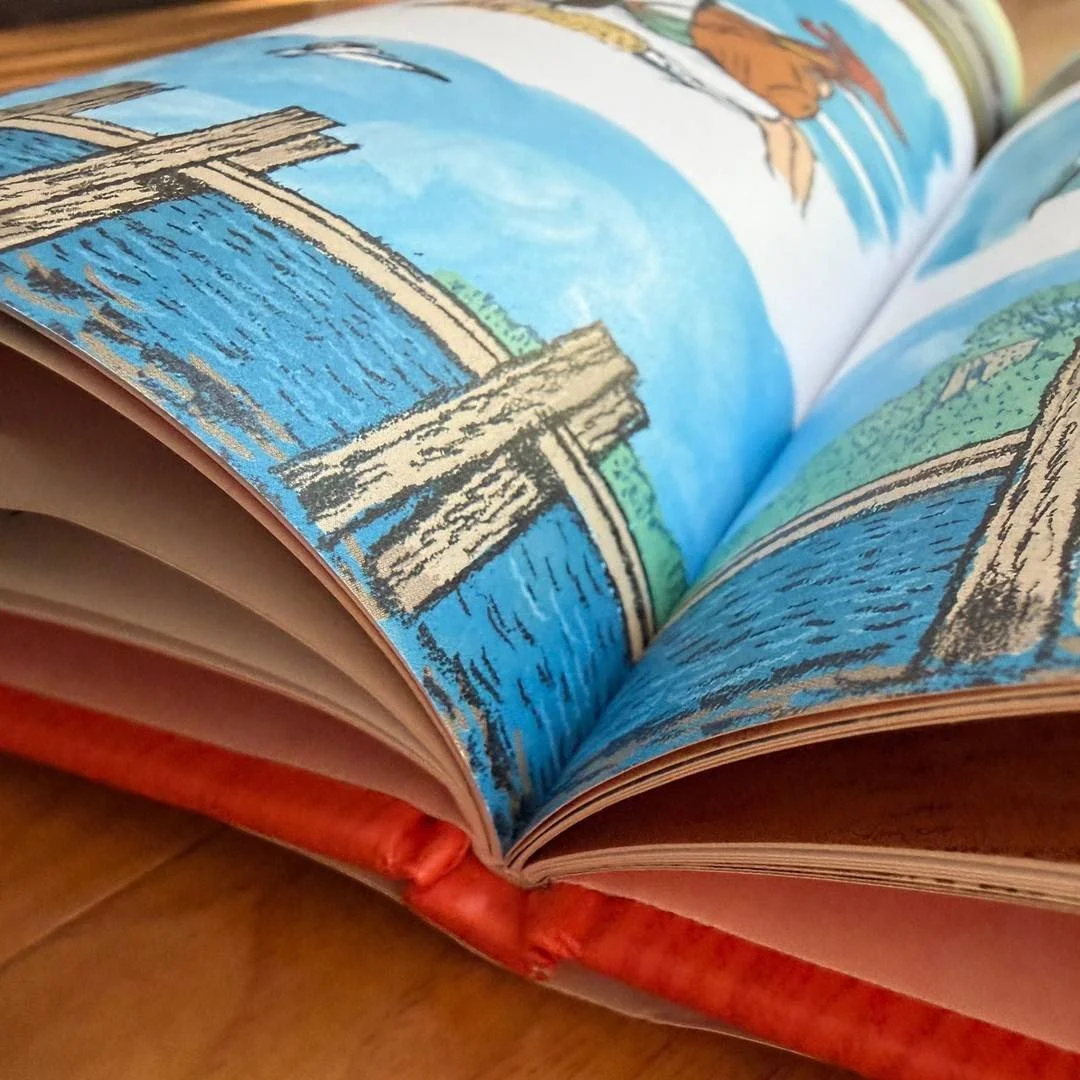
Hey everyone,
It's the last Saturday in September already!
Busy up here in Toronto with school starting up, travel to four different cities, big interview on today's full moon with positive psychology co-founder Martin Seligman, author of 'Agency' (08/26), and I just shared my annual birthday advice. Plus, so many books to tell you about—
—buuuuut before we get to them let's do a mailbag!
Hi Neil! I recently moved to Victoria BC and was wondering if you had any independent bookstore to recommend there or nearby on Vancouver Island?—Vanessa V
Yes! Munro's! Classic indie bookstore since 1963.
Love that you mentioned the Moomins! I told each of my adult children I’d take them on a trip - just the two of us - to do any cultural thing they wanted to do. My second trip is in October; my older son and I are going to Helsinki on a Tove Jansson / Moomin pilgrimage!—Drew F
I love that, Drew! I see the Tove Jansson Gallery is in Helsinki and there's entire Moomin Museum couple hours away in Tampere. I'm falling into Moominvalley big time, as you'll see below.
Hi Neil,
Questions:
How do you read as much as you do?
What are the reading habits of your kids and how did you get them into loving reading?
Feel free to link me back to blog articles as I’m sure you’ve likely covered these topics before.
Wishing you a wonderful birthday and back to school season for your boys.
Nikki
I fell out of reading in my 20s! Then put systems in place to read more and wrote about them. Here's my '8 Ways To Read (A Lot) More Books'. (Here's a PDF, too.) Then I wrote a follow up with more ideas. We leave books everywhere in our house, I lower the stakes to 2 pages of fiction before bed, and—for the kids—Leslie and I read to them, with them, or beside them before bed. Simple stuff! But it does take work.
Hi Neil, I thought of you while reading 'An Experiment in Criticism' by C.S. Lewis. You often quote George R.R. Martin (I now only hear this quote in my head with your voice) saying, "A reader lives a thousand lives before he dies. The man who never reads lives only one." Lewis expresses a similar sentiment to close out his book and I wanted to share it with you:
"Those of us who have been true readers all our life seldom fully realise the enormous extension of our being which we owe to authors… The man who is contented to be only himself, and therefore less a self, is in prison. My own eyes are not enough for me, I will see through those of others. Reality, even seen through the eyes of many, is not enough. I will see what others have invented… Literary experience heals the wound, without undermining the privilege, of individuality. There are mass emotions which heal the wound; but they destroy the privilege. In them our separate selves are pooled and we sink back into sub-individuality. But in reading great literature I become a thousand men and yet remain myself. Like the night sky in the Greek poem, I see with a myriad eyes, but it is still I who see. Here, as in worship, in love, in moral action, and in knowing, I transcend myself, and am never more myself than when I do."
I hope you’re having a wonderful day. My best to you and your family. — Dan D
What a nice note to close us off. Reading matters! Transcending our (relatively puny and irrelevant!) selves and growing new awarenesses.
Now!
Let's get to the books.
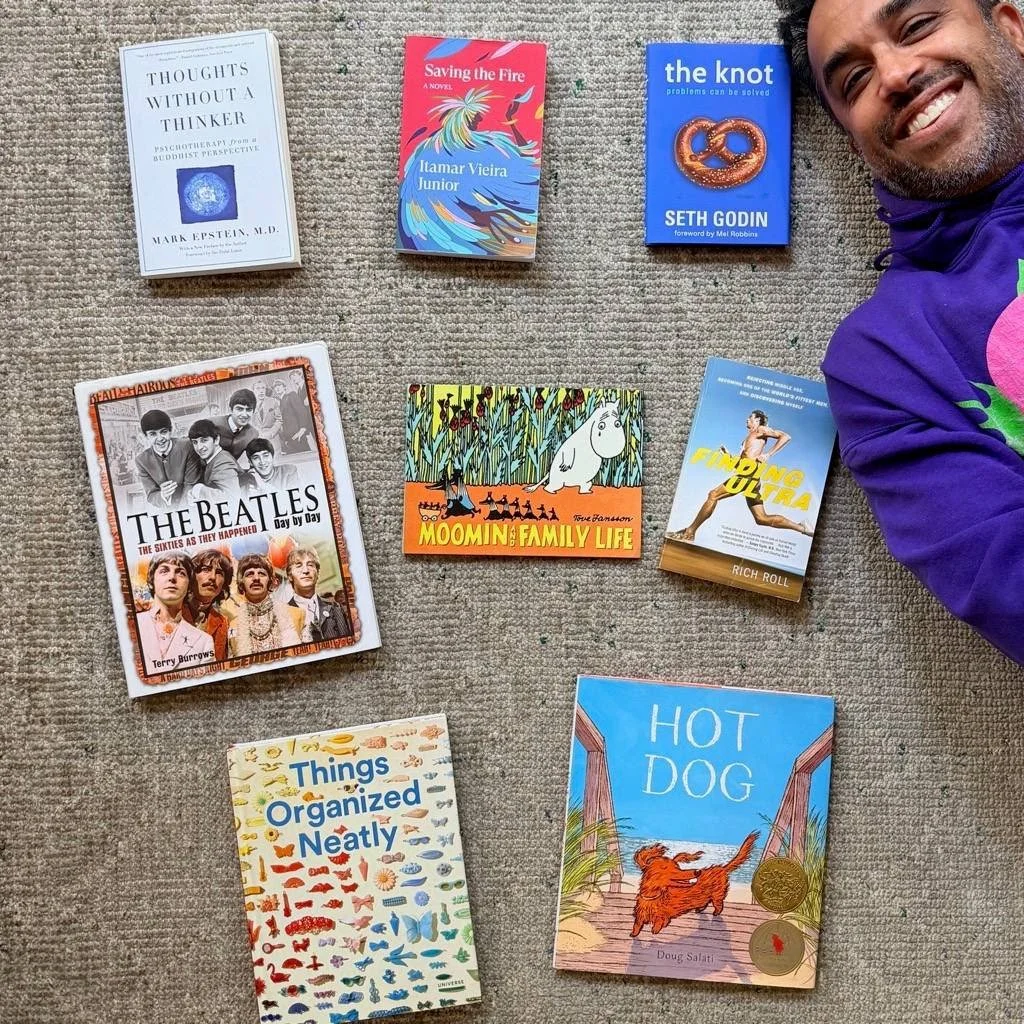
Here's my picture again and let's go!
Neil
PS. All my stuff is handwritten from me to you—no ads, no AI—since 2008. Join us here!
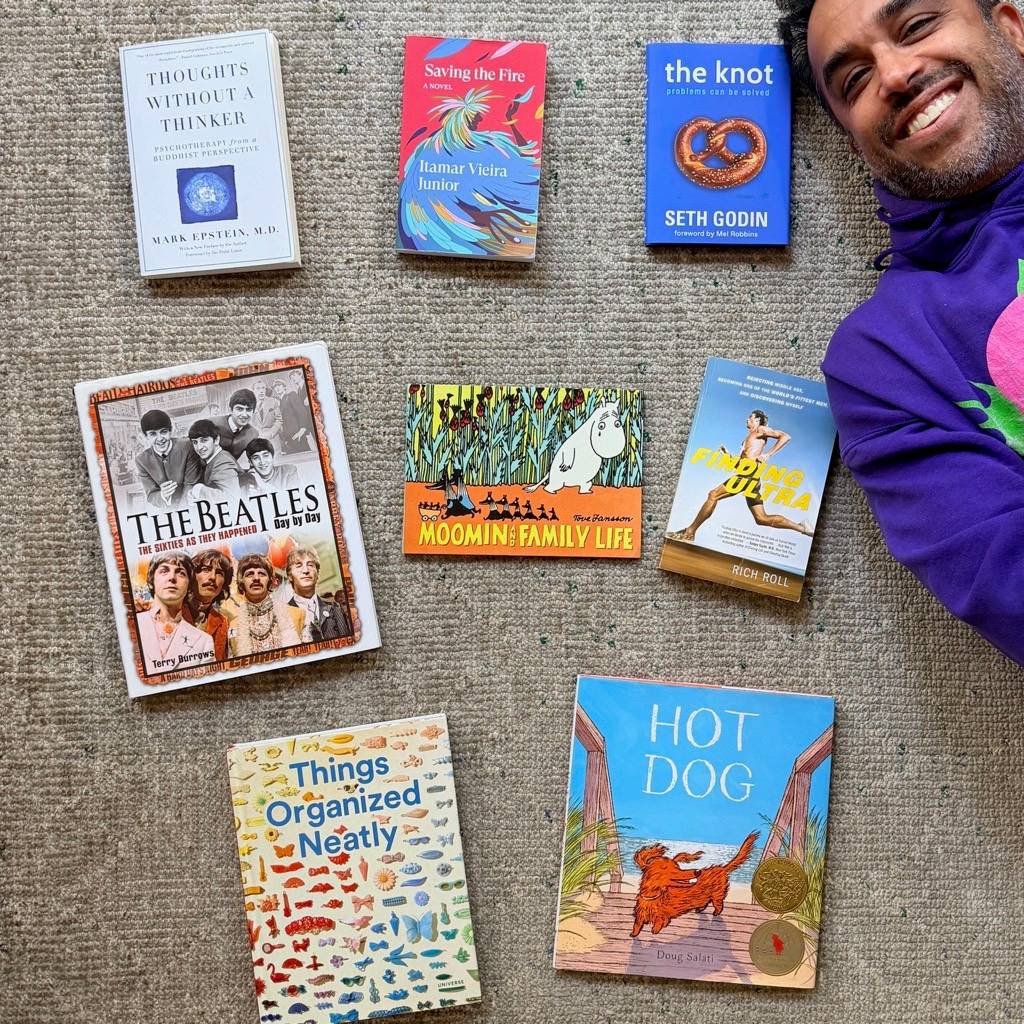
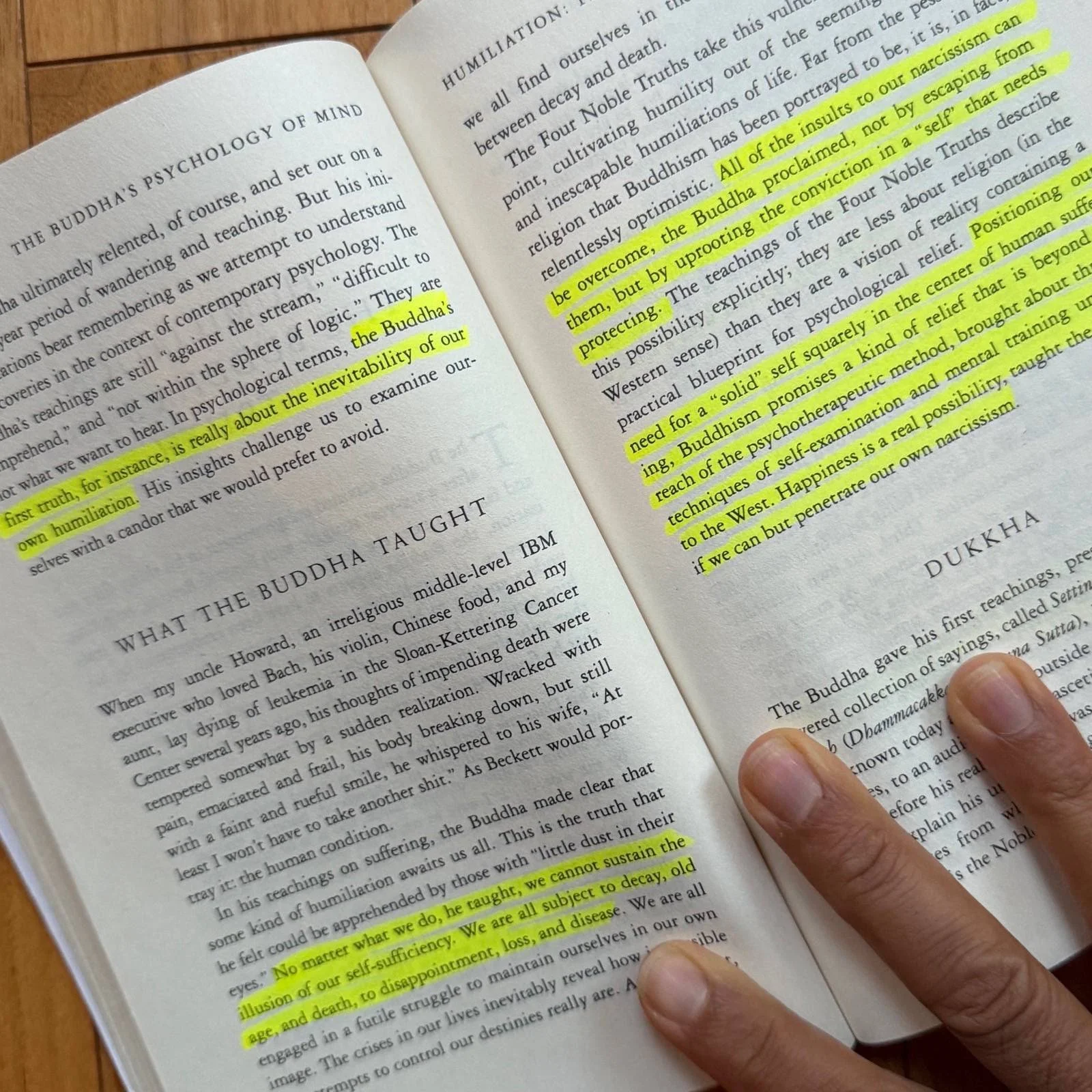
1. Thoughts Without A Thinker: Psychotherapy from a Buddhist Perspective by Mark Epstein, M.D. (b. 1953). Foreword by the Dalai Lama (b. 1935). I bought this book because of the title! Thoughts without a thinker? What!? Took me all the way till the very last page of this erudite 1995 book merging Western psychotherapy with Eastern philosophy to get the full scoop. Basically, Epstein says, thoughts without a thinker is the idea that insight arises best when the thinker’s existence is no longer necessary. Sound like a riddle? Don’t worry: He gets there slowly, steadily, with endless quotes from Freud and the Buddha. Let’s flip back to the beginning. On Page 17, he relates to us overthinkers when he writes, "thoughts in our minds keep us endlessly chattering as if beyond our control" and then tells us that "we are locked into our minds, but we do not really know them. We are adrift and struggling, buffeted by the waves of our minds, having not learned how to float." Teach us, Dr. Epstein, the New York City private practice psychiatrist with deep history studying in the Eastern world, how do we float? The secret is—drum roll please—meditation. Don’t be scared! He gets there slowly. And defines it broadly. First he invites us into his learnings on Buddhism and stitches them into the teachings of early psychoanalysts. For example, he says on Page 17 that "According to Buddhism, it is our fear at experiencing ourselves directly that creates suffering" and then immediately quotes Freud who writes that a patient "must find the courage to direct his attention to the phenomena of his illness. His illness itself must no longer seem to him contemptible, but must become an enemy worthy of his mettle, a piece of his personality, which has solid ground for its existence and out of which things of value for his future life have to be derived. The way is thus paved for the reconciliation with the repressed material which is coming to expression in his symptoms, while at the same time place is found for a certain tolerance for the state of being ill." Damn! I could use some of that. I’ve had a rough summer. I’ve been fighting, pushing against, some of the ups and downs I’ve been feeling. Why am I feeling like this? What’s wrong with me? You know the drill. In just a few words, Buddha and Freud, translated and brought into HD by Mark Epstein, felt like balm. I drained a highlighter into this book! So much yellow. Here’s a sample two-page spread from Page 44-45 which comes from Chapter 2 titled "Humiliation: The Buddha’s First Truth."
The book is chopped into 3: Part 1 is 94 pages on "The Buddha’s Psychology of Mind" (a deliciously absorbing read), Part 2 at 54 pages on "Meditation," and Part 3 at 60 pages on "Therapy." My favorite chapter might have been Chapter 6 on Bare Attention which keeps chipping away at something us overthinkers know: persistent thoughts, evaluating thoughts, is the opposite of living in the moment. What we need to cultivate is simply perceiving what’s happening, without evaluating, without judging, without interpreting, without analyzing, without evaluating. SUPER HARD! And yet if we can "pay precise attention, moment by moment, to exactly what you are experiencing, right now, separating out your reactions from the raw sensory events" then we reap … tremendous benefits. I have so much more I want to say about this book but this review is already over 500 words so let me just say I cannot recommend this book enough!
2. Saving The Fire: A Novel by Itamar Vieira Junior (b. 1979). Translated from Portuguese by Johnny Lorenz (b. 1972). A couple years ago I got a pile of Brazilian literature shipped to me from my friend Wagner Moura and he’d written little Amazon gift notes inside each one. I started the intimidating pile by reading 'Crooked Plow' (12/25) which had a note from Wag saying:
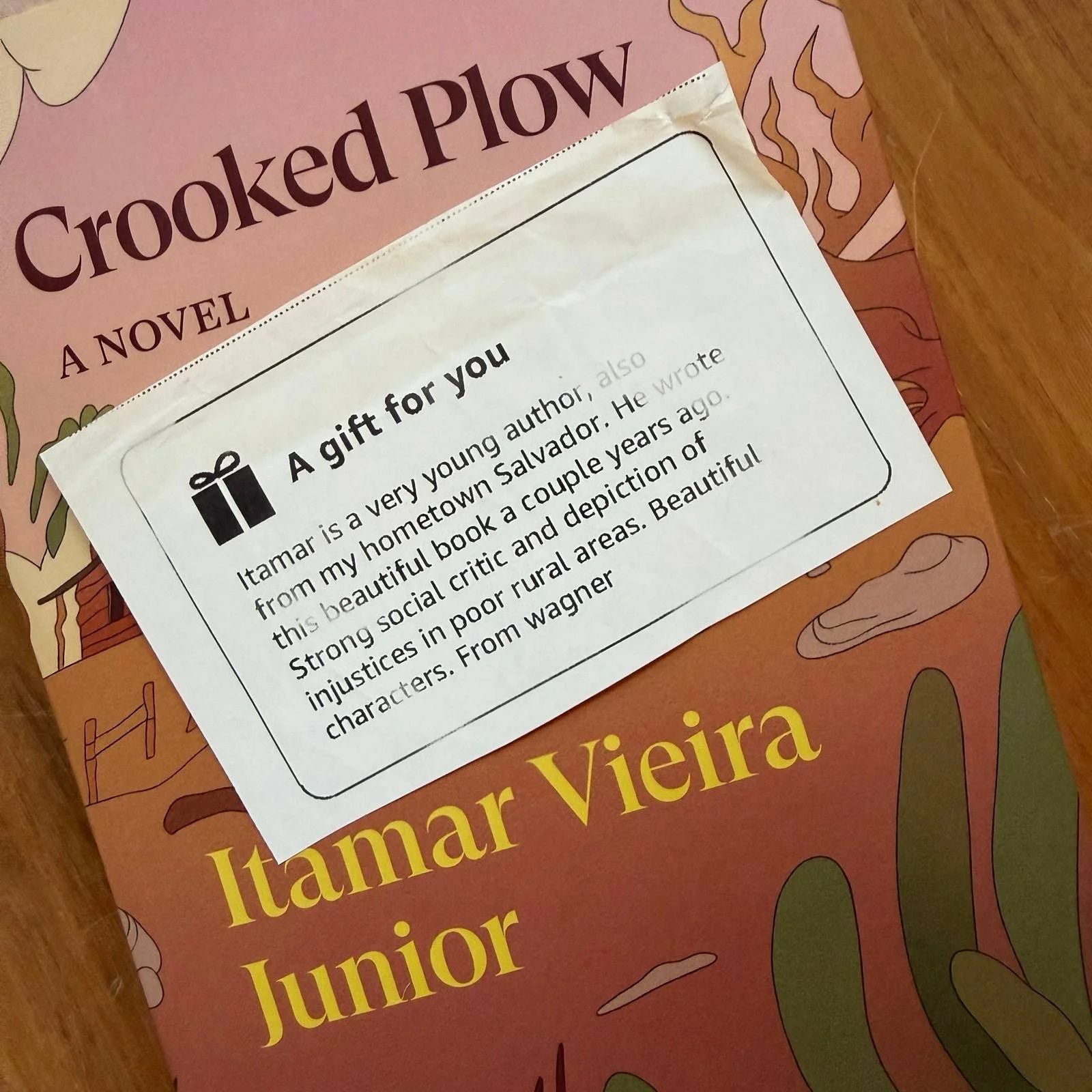
A gift for you: Itamar is a very young author, also from my hometown Salvador. He wrote this beautiful book a couple years ago. Strong social critic and depiction of injustices in poor rural areas. Beautiful characters. From wagner.
I read the book. I loved the book. It came in at #6 in my Best of 2025. The next book from the pile I tackled was 'The Posthumous Memoirs of Brás Cubas' (04/26) and it similarly delighted. All of a sudden I’m a huge fan of Brazilian literature! "Whenever I disobeyed Luzia’s commands, challenging her authority with hostile retorts, she’d be quick to say, 'You’re so wicked, giving birth to you is what killed Mama!'" That’s the opening sentence here and get ready because you’re about to go on a torrid 72-page first-person narrative from the perspective of "the boy," Moises, as he’s living with only his cruel big sister, in a poor village named Tapera in Northeastern Brazil. "My mother suffered from depression after I was born and couldn’t even get out of bed. She died of ‘melancholy’ is how my family later explained it." That’s sentence two and three. Simple, right? Easy to read? This book is written at an eighth grade level. AND YET! The structure, twisting narratives, shifting perspectives, and exquisitely unfolding plot that blossoms like a peony. It's a literary feat. So readable! So much going on. The next section switches perspectives to first-person Luzia, the next to a third-person retelling of the scene we just left … from the perspective of the eldest daughter whose only been hinted at before. Magic! Depth. Heart. Soul. Births, deaths, defilement, loneliness, violence, heroic journeys. Itamar Viera Junior brings Brazil to Western readers the way Khaled Hosseini brings Afghanistan. Simple prose wrapped around heart-bruising tales. It is impossible not to feel a deep connection with Tapera, "a community of farmers, fisherman, and potters of Afro-Indigenous origin," according to the jacket, as we follow one wide, expansive family through endless grim and occasionally joyous turns. I learned that Vieira Junior got his PhD in Ethnic and African studies and did his doctorate on the ongoing struggles of the "quilombos," the Afro-Brazilian communities of escaped slaves and their descendants. Sharp commentary about colonialism riding in a roller-coastering plot with wonderful turns of phrase, this is a novel I will be recommending again and again. A force!
3. The Beatles: Day by Day by Terry Burrows (b. 1963). Did you ever watch the show Patriot Act on Netflix? Hasan Minhaj and his Daily Show-inspired comedy writing crew explored the deeper stories under the headlines with hilarious, pinballing-around 25-minute episodes that I would binge watch on airplanes. And then! Suddenly! The show was canned. How could something this good be cancelled? Because, I suspect, the show was timely. What does well on streaming platforms? What never gets old? Food shows! Design shows! Things that might have been made last week, last year, or last decade, but still feel … non-timely today. Casinos don’t have clocks. Social media stars repost last year’s greatest hits. Algorithms love "evergreen" content—stuff that, whenever you look at it, it’s today. We are living in an endlessly flattening present. It’s exhausting! Stores never close. Scrolling never ends. Peer in any direction and there is endless infinity. That’s part of the reason why I loved this book—a treasure I found at 'The Owl Pen' in Bracebridge, Ontario this summer. On February 7th, 1964, The Beatles board Pan Am Flight 101 for New York City. On February 8th, they talk to 11 million people from New York’s Plaza Hotel on the radio show "Saturday Club". On February 9th, they are on the The Ed Sullivan Show (for a record-breaking 73 million people) .On February 10th, they do a press reception in the Plaza Hotel. On February 11th, they play their first US concert at Washington Coliseum for 8000 people. On February 12th, they play Carnegie Hall On February 14th, they do a photo shoot for LIFE magazine … and it goes on. On the 16th, they go back on Ed Sullivan, on the 18th they meet Cassius Clay, on the 22nd they fly home. I love it. We see the two-week trip! We get photos. We feel the length of it. We feel what they did—when. And that was admittedly a pop-out moment! Three days after they get back from the US, we get this: "February 25, 1964. George’s 21st birthday. The last Beatle to reach what is then the age of majority, George Harrison celebrates his 21st by opening some of the 30,000 cards he has been sent in 52 mail sacks." There are wonderful details here: trips they took, concerts they attended, lawsuits they fought, breakups and makeups with family members along the way.
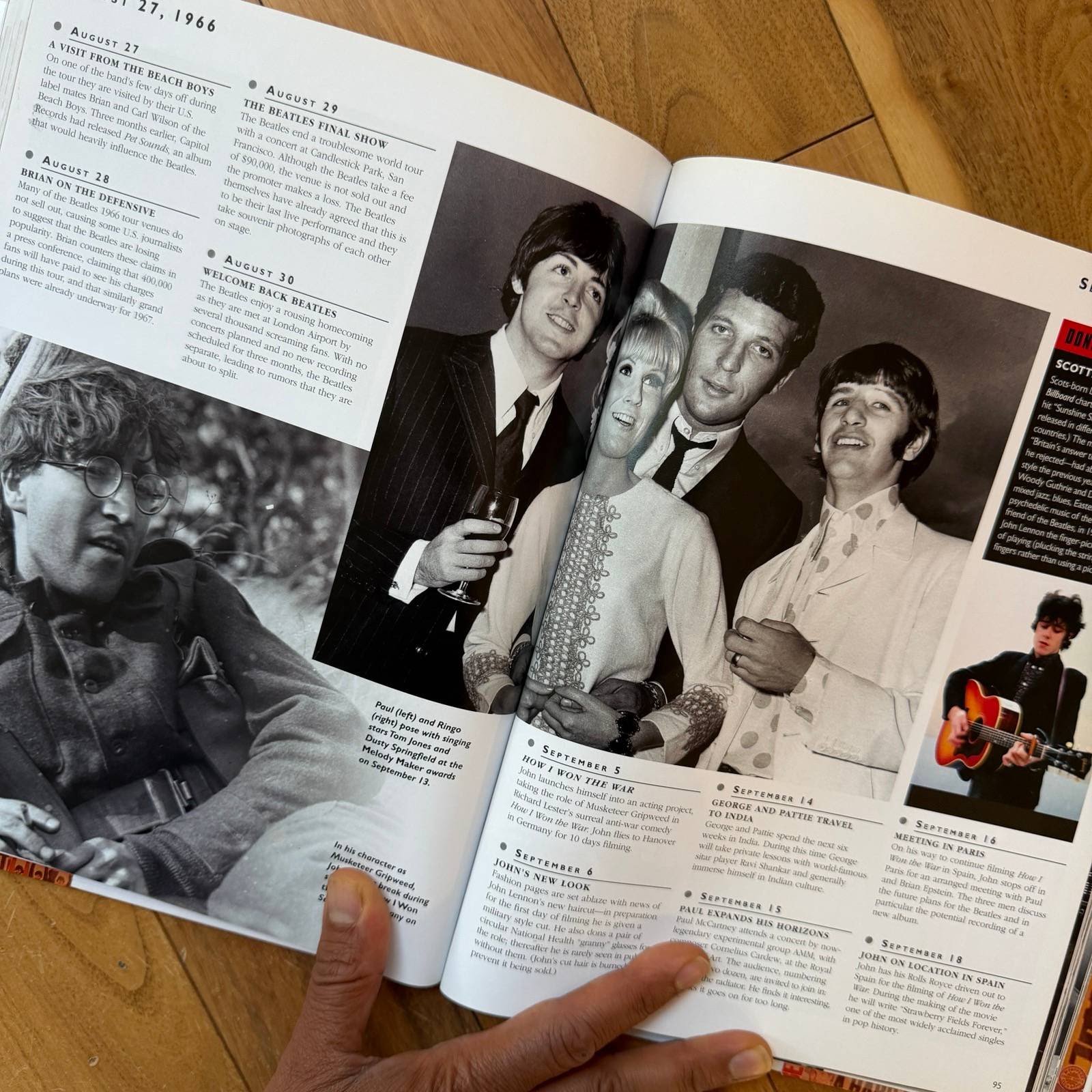
From September 6, 1966: "Fashion pages are set ablaze with news of John Lennon’s new haircut—in preparing for the first day of filming [the anti-war comedy How I Won The War] he is given a military style haircut. He also dons a pair of National Health "granny" glasses for the role; thereafter he is rarely seen in public without them. (John’s cut hair is burned to prevent it being sold.)" How insane is it that you have to burn your hair so it’s not sold? The chronological and near-daily nature of this book amplifies the experience, makes things feel richer, and more in tune with our natural rhythm. Can we reject the endless flattening present? Maybe, maybe not. We can try. I am trying to reject even the Gregorian calendar by publishing every new chapter of my podcast on the exact minute of every full moon. This wonderfully detailed book is perfect for Beatles fans and helps remind us how time turns.
4. Finding Ultra: Rejecting Middle Age, Becoming One Of The World’s Fittest Men, and Discovering Myself by Rich Roll (b. 1966). "I was a fat, out-of-shape, and very unhealthy man hurtling into middle age—a depressed, self-destructive person utterly disconnected from who I was and what I wanted to be," Rich writes on Page 2 of this gripping, eloquent, inspiring mid-life memoir from (in my opinion) the greatest interviewer of our day. I turned back to this book this month after getting an email from Jennifer S. who wrote after I sent a couple books to her boss:
Would you be so kind as to tell me the names of the books that you gifted James, I am all about self-improvement and motivation etc. and trying to be / feel better, I would love to buy myself a copy of each.
When I asked her what area of her life she'd most like to improve, she said:
I would like to move my body 5 x per week because I think movement can create confidence but I need to get ready for work at 6.30am so I have to get up at 5.30am to get out at 5.45am to jog.. I used to do this but then I stopped.. I am 47 and I just want to feel better. My job and commute keeps me sedentary. I also wish to run the London Marathon.
What did I suggest she read? This book! Not mine. I don't have much about running! And I love Rich’s (relatable) story of working too hard, gaining weight, finding himself caught in a web of addiction and bad habits before channelling his inner drive to become one of the world’s fittest men. Maybe the "what happened after" is a bit unrelatable but there are bits you can pick up and apply to your life. His devastatingly short honeymoon. His waking up in rehab. His time in AA. And the writing is full of glorious phrases like this one from Page 29 when he’s describing his first time watching a bike race: "… their spinning wheels a beehive-purr soundtrack to the rainbow blur of the brightly colored jerseys careening past." Btw, I reached out to Rich with Jennifer's question, asking him what other books he’d recommended, and he wrote back: "There’s a difference between wishing and willingness, between wanting and doing. She doesn’t need to read a book. She already knows what to do because she’s done it before, which is set her alarm for 5:30. She’s asking for a book recommendation because it’s another rationale to avoid taking contrary action today, an excuse to defer the discomfort to another day." At first when I got this I thought—ouch! Rich is right, of course. But, me, you know, I also need books, I need tips, I need suggestions, nudges, boosts. New ways of seeing things! Maybe it’s a mix? Or different for different people? How about this: If there’s something in your life you want to do—and you know what the next step is—then take this as your message to go out and do it. Set that alarm. Get going. Let your future self thank you for taking the first step today.
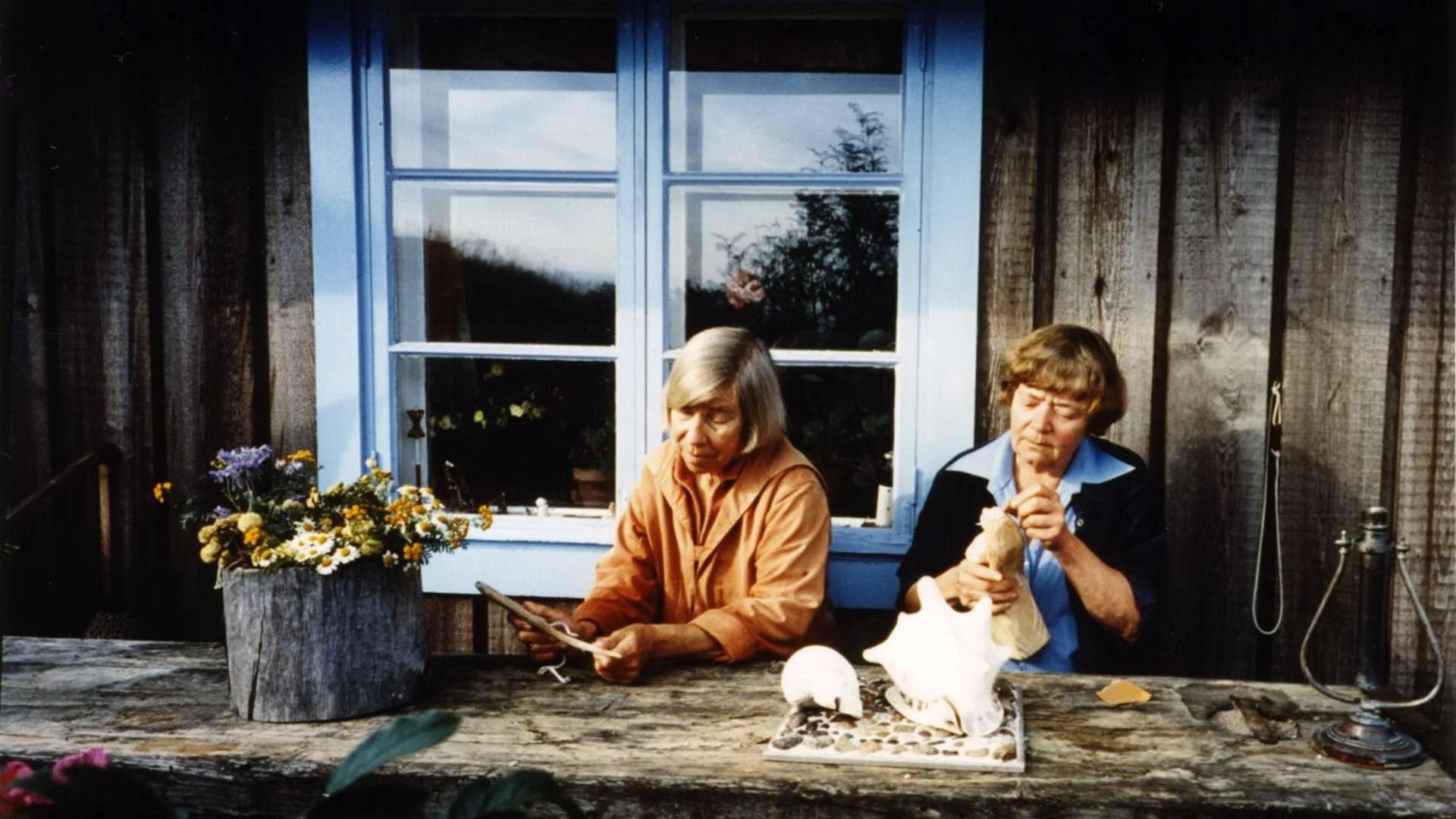
5. Moomin and Family Life by Tove Jansson (1914-2001). I am falling deeper into the Moominvalley and it’s such a glorious place to live. Come! Join me! Characters are simultaneously light and dense, simple and complex, with an odd and endlessly acceptable strangeness that makes whatever you’re wrestling with, whatever scrapes you’re tending to … feel … comforted … cared for … nurtured. Helsinkian Tove Jansson never married Tuulikki "Tooti" Pietilä, her life partner of fifty years, because gay marriage wasn’t legalized in Finland until 16 years after her death. Super romantic: The two spent thirtyish summers together on the tiny island of Klovharun in the Gulf of Finland:
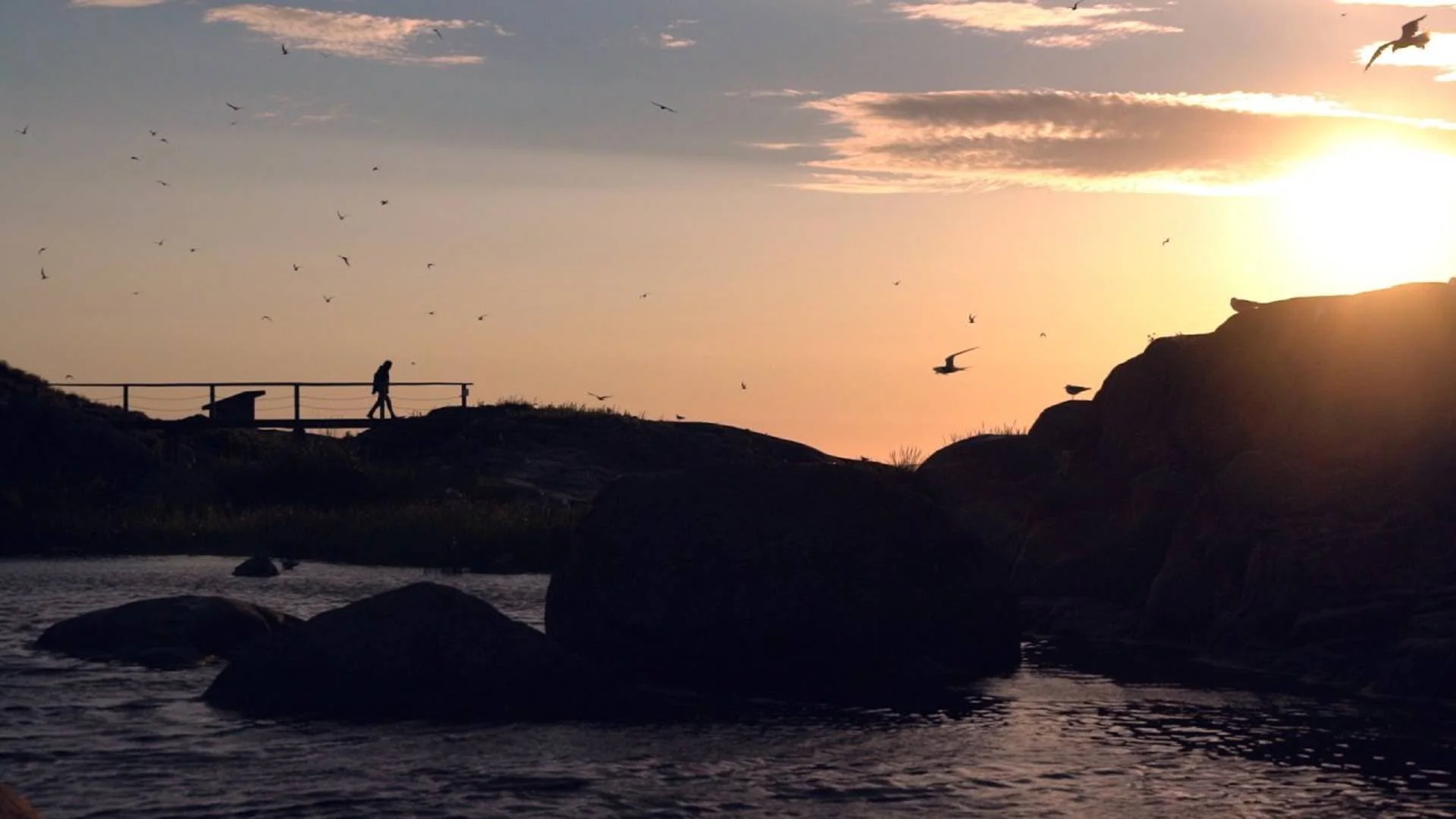

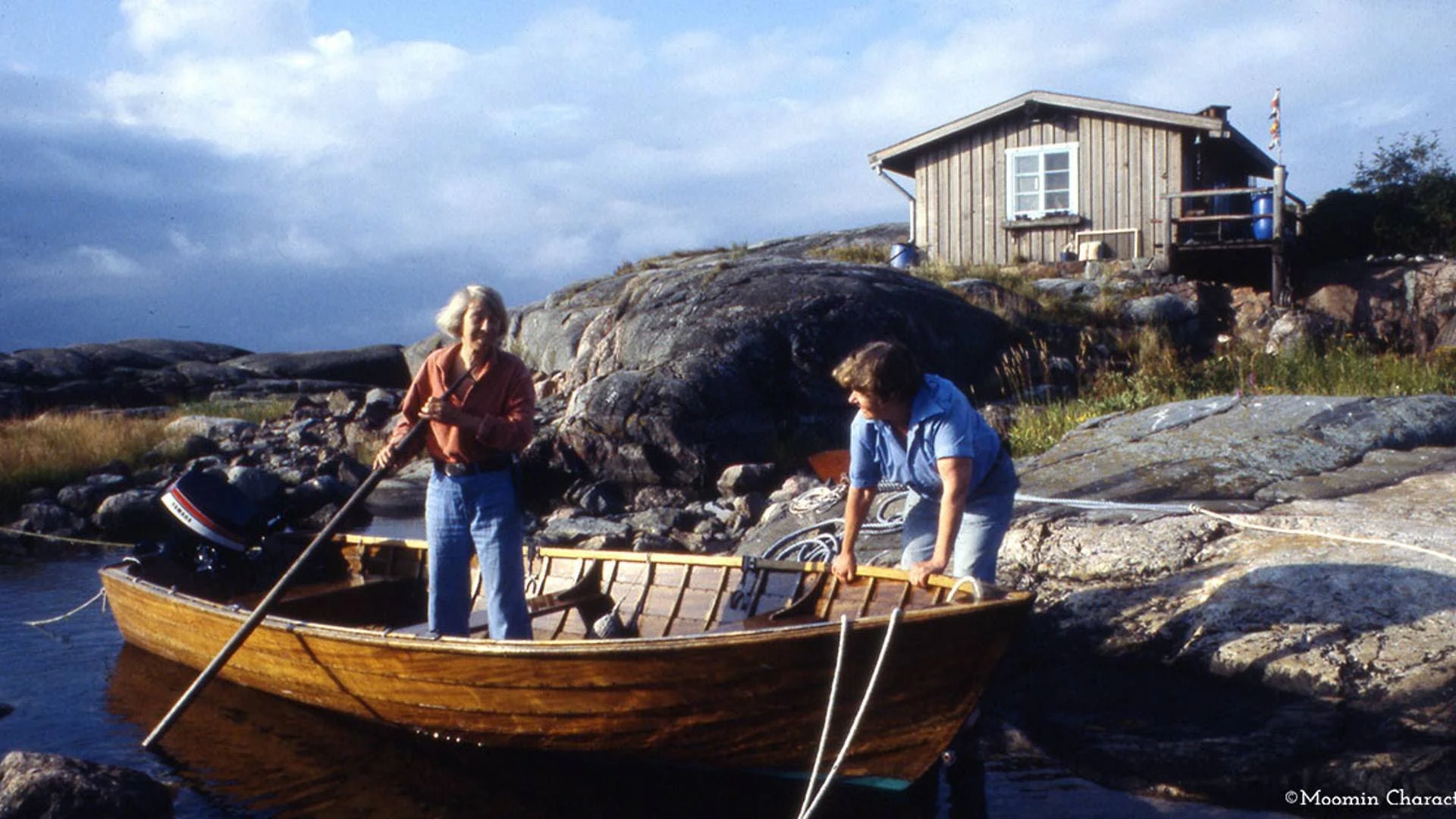
Maybe that’s why these early post-gendered comics have so much water in them? Check out the black comedy-tinge melancholy that pops out right away on the first page:
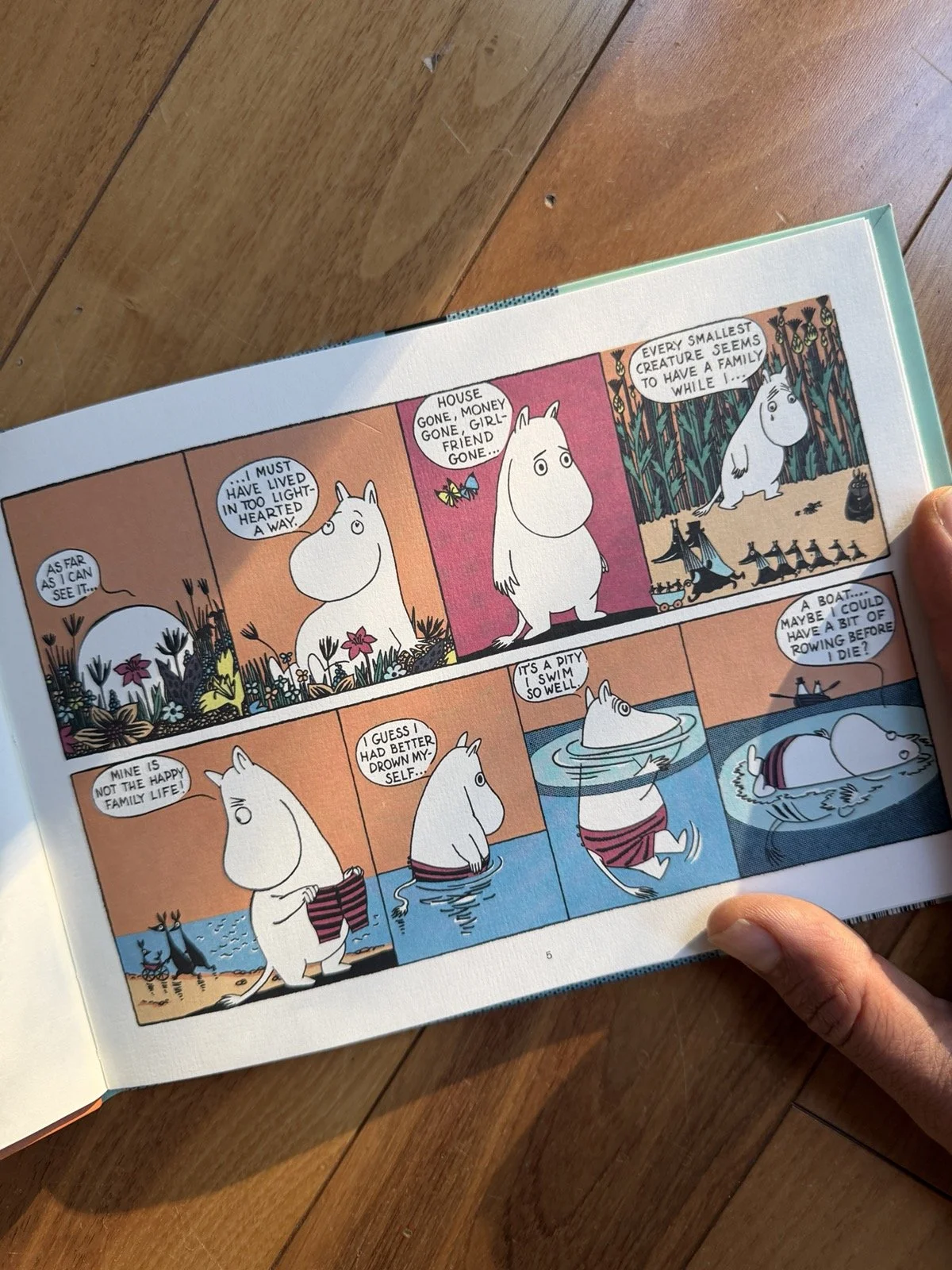
In the next few pages, he is found by his long-lost parents, who happen to be rowing by, then invites a friend to live with them, and then … his dad decides he wants to go on an adventure and they take off for a nearby cave. The comic book is only 34 pages but you feel you’ve lived a lifetime when it’s done. The brilliant Maria Popova calls Tove Jansson "one of the most imaginative and influential storytellers in modern history—an artist and writer of singular creative vision and a genius for rendering visible and comprehensible life’s subtlest nuances" and I completely agree. (Btw, I subscribe to Maria’s The Marginalian midweek email which is one of my favorite email newsletters.)


6. The Knot: Problems Can Be Solved by Seth Godin (b. 1960). Foreword by Mel Robbins (b. 1968). I spent seven hours last week getting tested for ADHD. A few years ago, I was sitting with Leslie as the psychologist told us one of our sons had ADHD and I thought … this sounds like me. (I should have remembered that happening from when Paulette Bourgeois told us in Chapter 21 of 3 Books that that’s precisely why the 1994 classic 'Driven To Distraction' by Edward Hallowell and John J. Ratey became formative to her.) Today, I find myself writing a book about overthinking and I decided I wanted to know—I needed to know!—whether I really have ADHD in order to help me write the book. ADHD testing isn’t covered up here, meaning I have to shell out $4000 (!) to get this done, and after seven hours of assessment forms and surveys, and Leslie having to do a bunch too, and then being interviewed 1 on 1 by both a clinical psychologist and a psychiatrist—"Were you restless as a kid?", "What was your home life like?", "Do you often misplace things?", "Do you interrupt others in conversations?"— what did they tell me? I ... don't have ADHD. "Really?," I asked. "Really," she said. "Now, that's our opinion, you can get a second opinion if you want." Apparently I check off a lot of the boxes under impulsivity and hyperactivity but "The childhood symptom patterns I don't think were meaningful." And the negative impact to my life isn't there. Maybe because I have a lot of systems and workarounds? I'm still trying to figure it out. There's a big report I need to read through. But ... I check off a lot of the boxes? Kind of makes sense I love Seth Godin books! Before the Appendices this book is 131 pages … total … and broken into 8 parts! Part 1 "The Knot" is 18 pages chopped into 14 sub-headlined "chapters." They’re not called chapters but … what else would we call them? Wonderfully Digestible Gulps? Let’s go with that! Part 2 "Stuck In Knots" is 17 pages, 6 WDGs. Part 3 "Find The Pin" 12 pages, 13 WDGs. The book is small! Stick it on your toilet. It opens with the wonderful riddle about Buridan’s Donkey who was hungry and thirsty and stuck standing between a pile of carrots and a bucket water and … due to analysis paralysis … he didn’t move towards either and ended up dying of hunger and thirst on the spot.
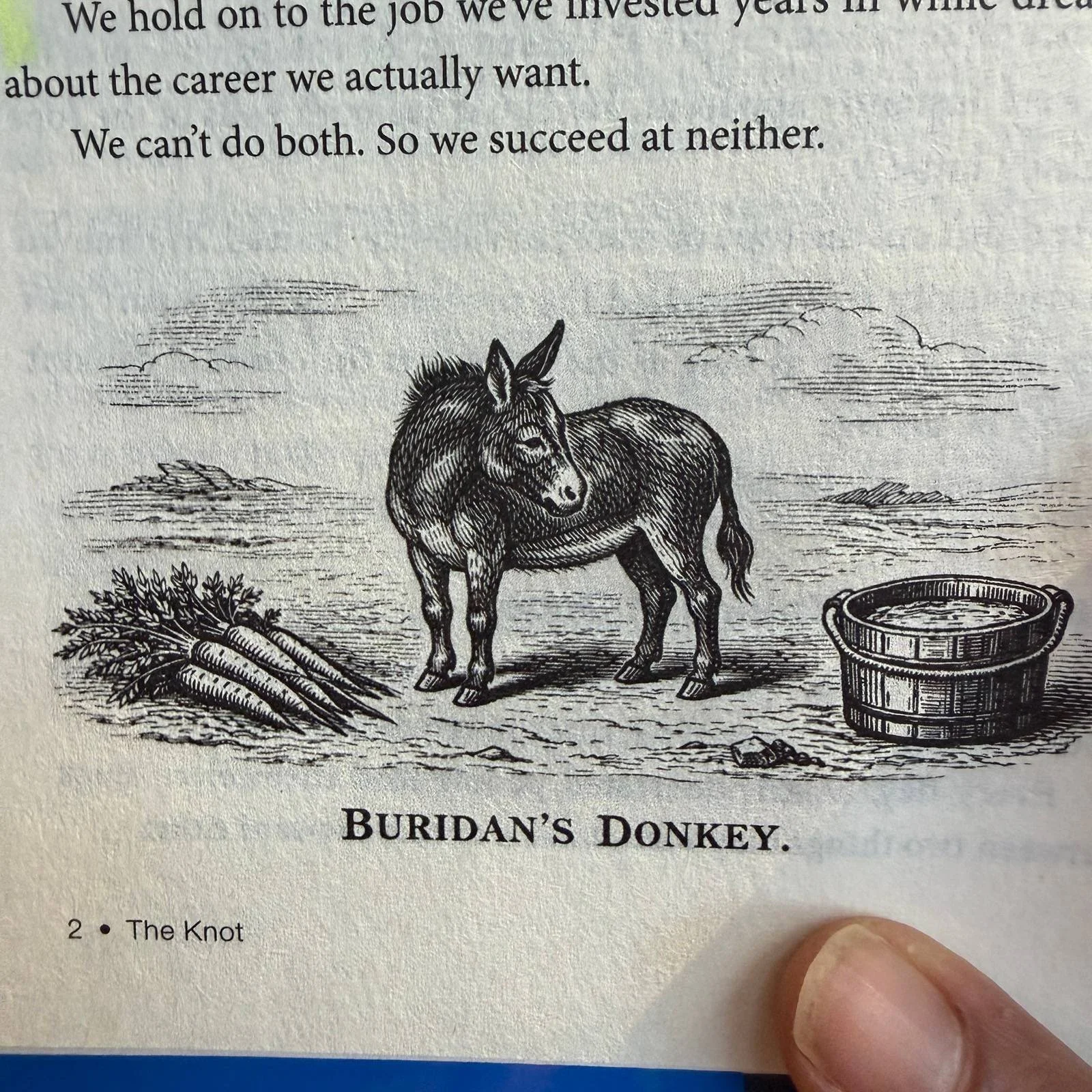
In his usual concise and jab-you-in-the-ribs way, Seth writes: "We want to innovate without really changing anything. We want to move fast and still be certain we’ll get it right. We want to launch a business without risking our savings." We know this. We can’t do both … so we succeed at neither. A few pages later, he calls out actual examples of this "Donkey Trap" as he outs organizations who are "committed to innovation within our established best practices" or who "need to move fast on this rebrand but the stakes are high and we need to get it right." LOLOL. How is a guy who works from a studio (with a wonderful patina!) in the quiet New York City suburb of Hastings-On-Hudson so gifted at shining a spotlight on the corporate fog suffocating big companies? He’s so good. So good! If you’ve ever seen and laughed at this meme—which was originally created over 50 years ago!—then you will love this book:

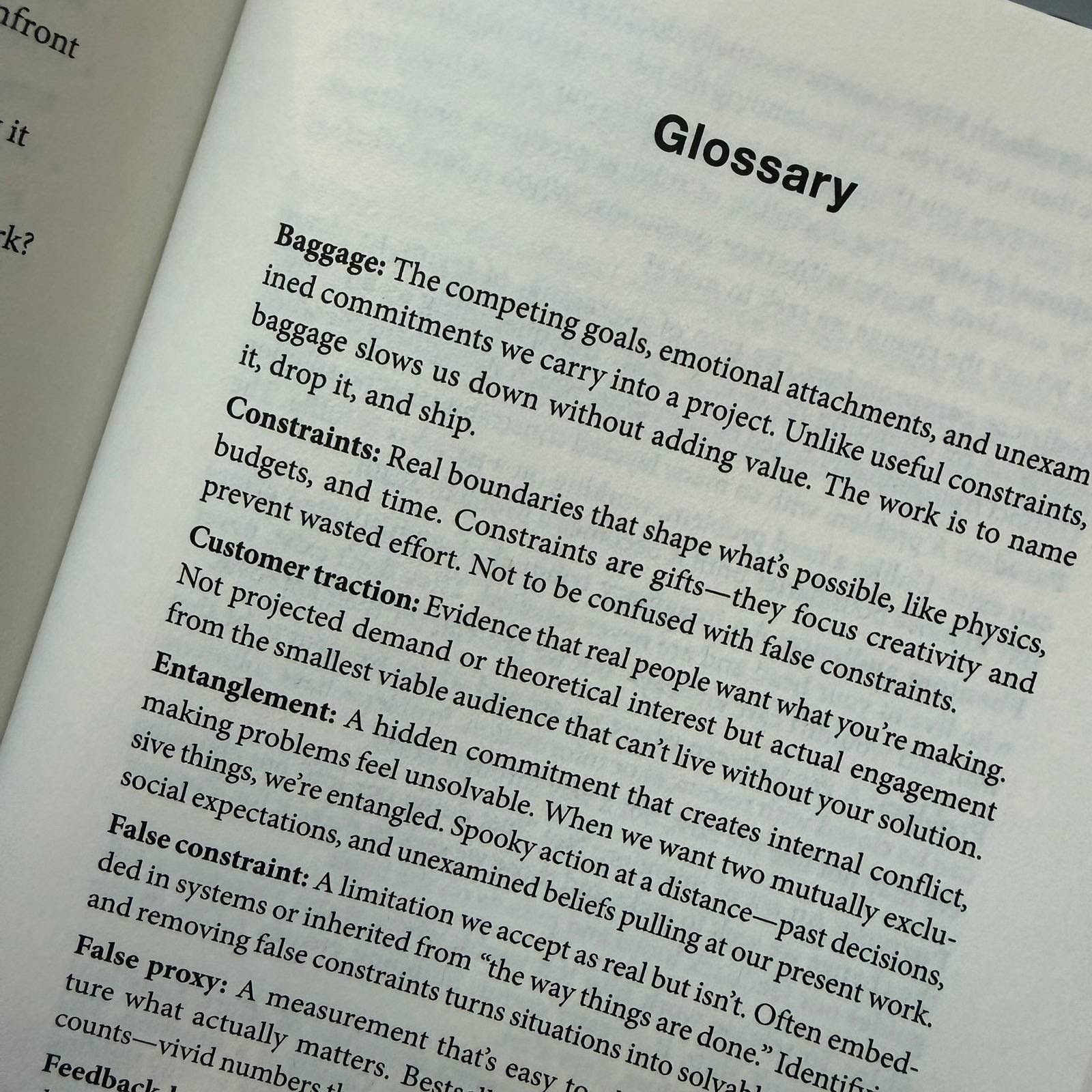
Seth’s mind works so fast that sometimes it can be tough to follow along. He speaks in aphorisms, in metaphors, and says in one sentence what most people say in a page. So while this is a powerful book to help unlock tough problems it’s also … a bit of a sipper. For example, on Page 50 when he says "Three Words Extinguish Entanglements: Tell the Truth", that’s nice, but … hard, right? He keeps going: "How much time and effort can you expend on this problem? Say it out loud. A budget and a calendar." So obvious! But nobody does it. "Strip away the corporate talk, the mission statements, the fog of imprecision," Seth cajoles. We have to get good at seeing problems, naming them, and making a difference. The book closes with the wonderful story of a 79-year-old Maori leader Whina Cooper who led a 30-day march that grew to 5000 people over 700 miles to the capital to denounce the British land takeovers of New Zealand. What happened? Those who have been to New Zealand know the coasts are shared by all, the country has steered itself back from the colonizing forces. Seth closes wonderfully by streamlining himself into an Afterword called "Working with Problems," an Appendix called "The Questions," and a helpful Seth-interpretation "Glossary":
Then he closes with "Unknotted, a Path for Changemakers" which I wanted to rip out of the book and stick on my wall but will settle for just putting a pic of it here for you:
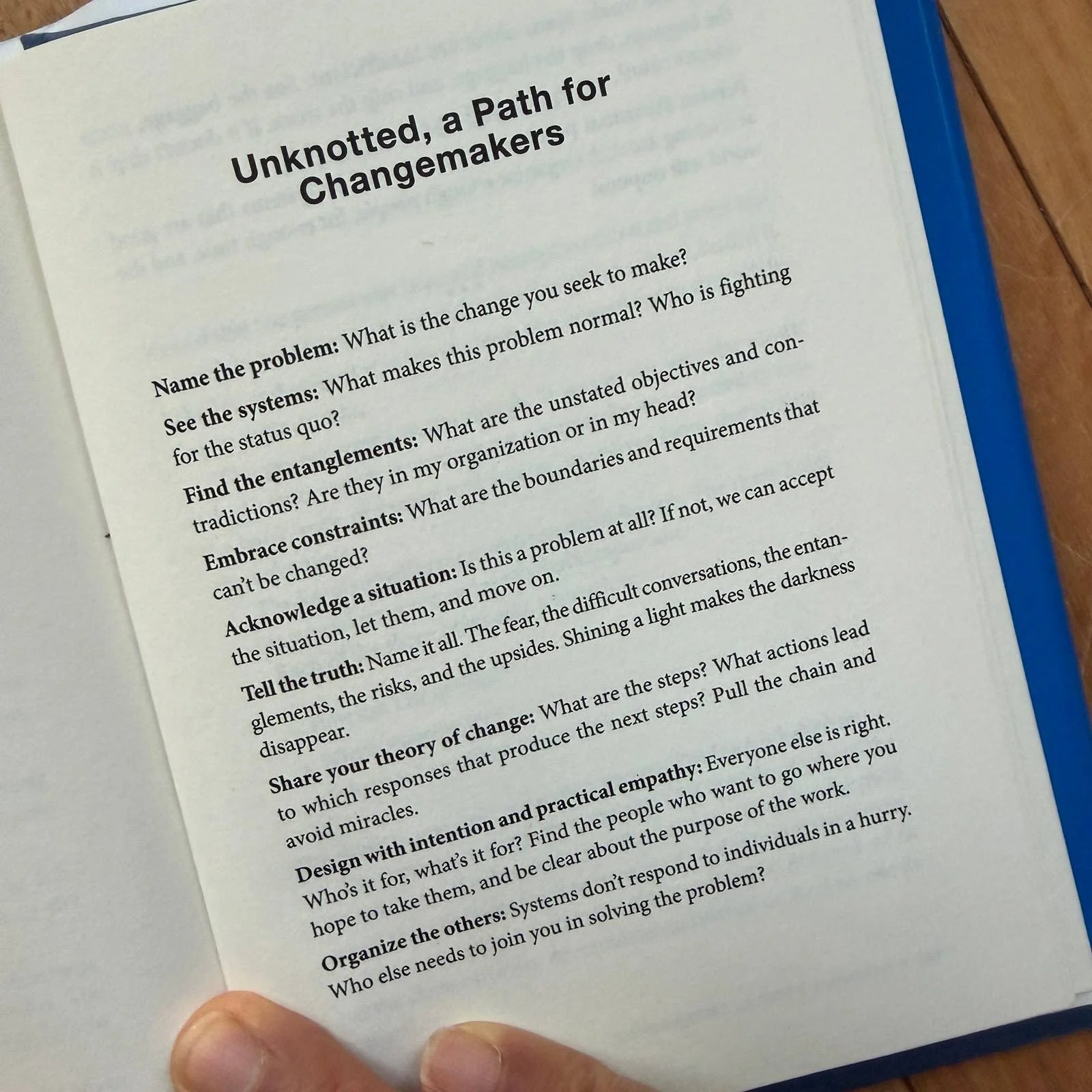
Seth is enlightened. He is wise. And in his latest offering he gives all of us the nudge, and the direction, we need right now. If you respond well to small business case studies, metaphorical motivation, and have had your brain addled enough by phones and social media that you want to read books but don’t want to read long books then this is perfect.
7. Things Organized Neatly by Austin Radcliffe (b. 1987). This is a book of things organized neatly. It’s based on the 17-year-old Tumblr blog. I sometimes leave it on display in my house because when I look at it I feel slightly more organized and put-together even though I didn’t do anything. Here a few photos from the book:
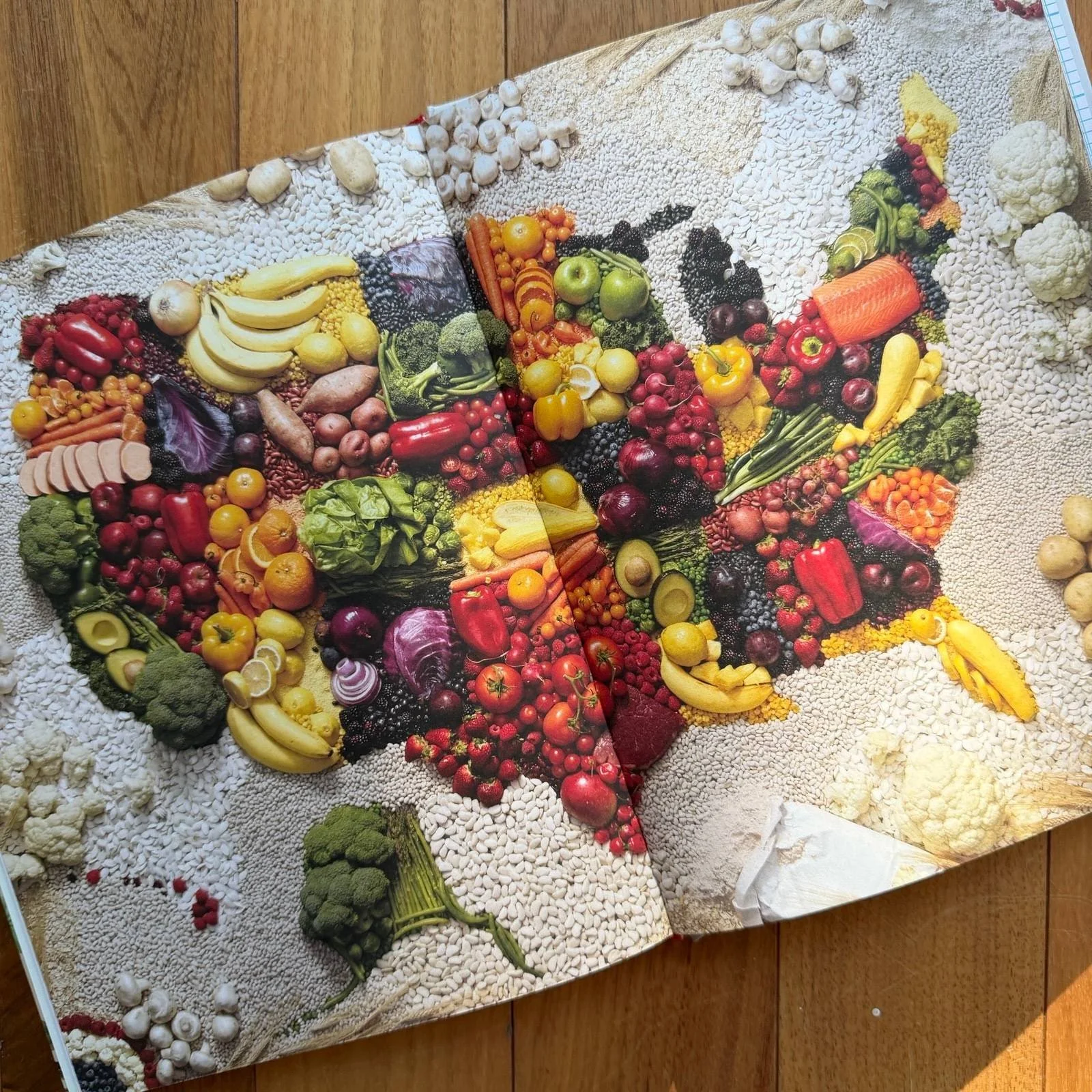
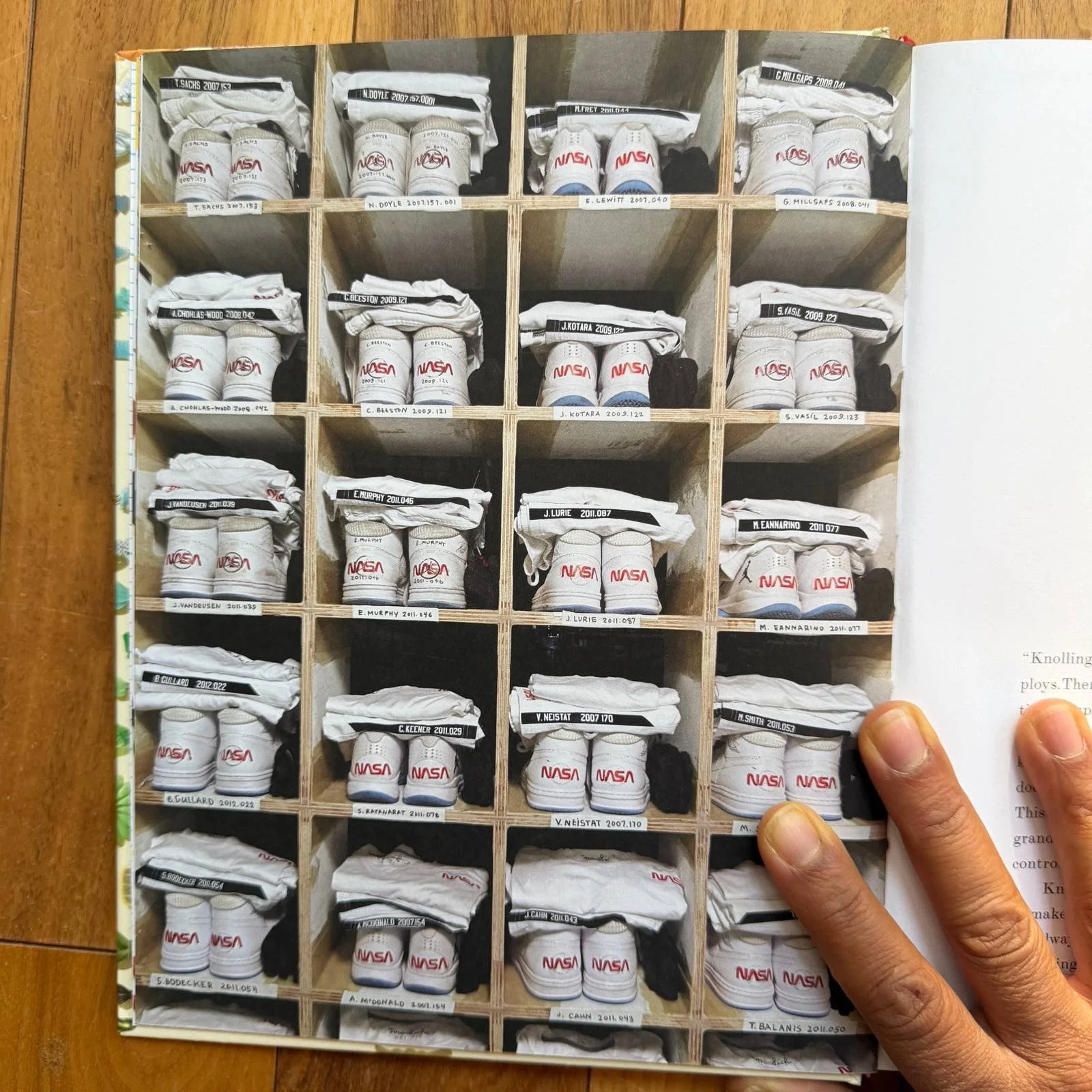

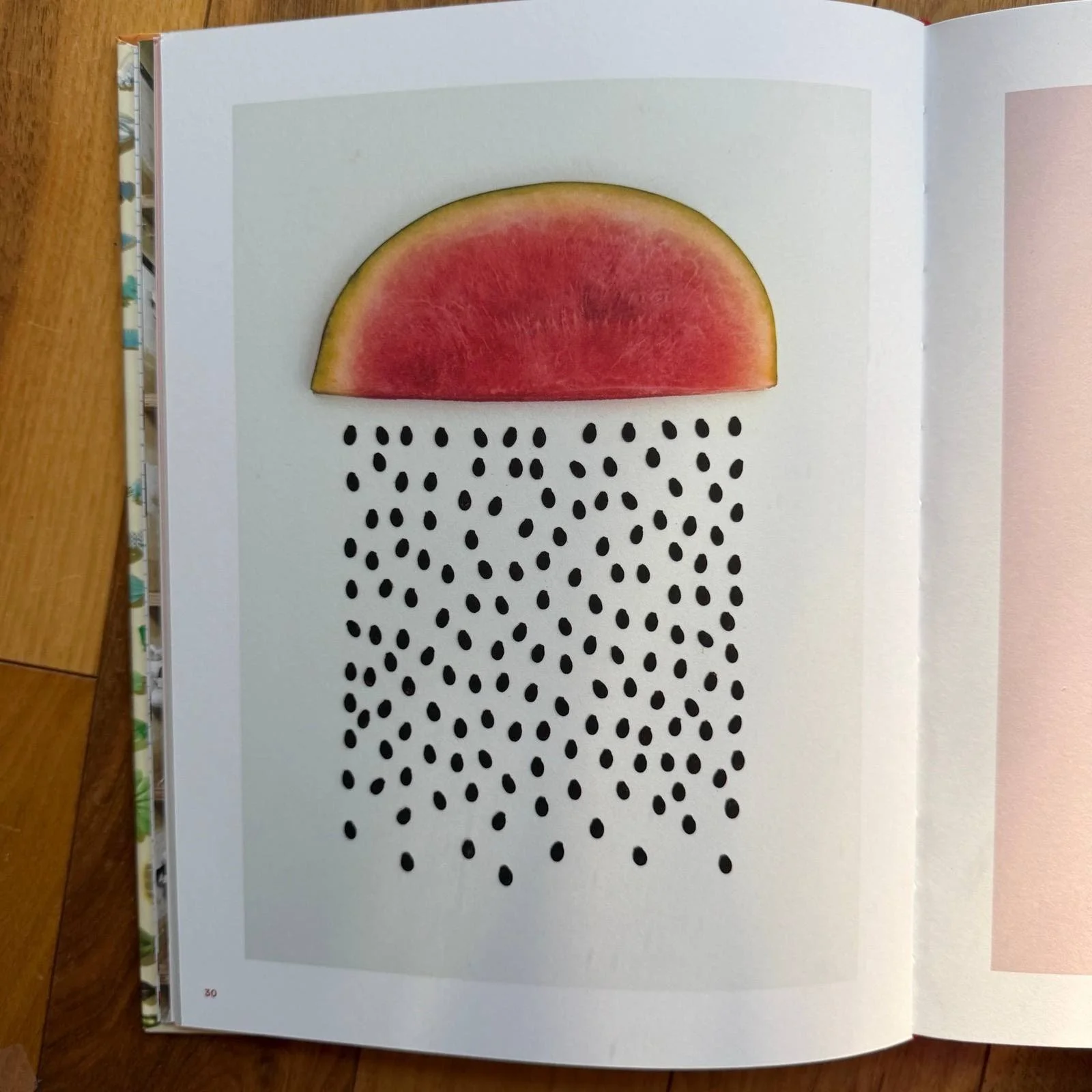
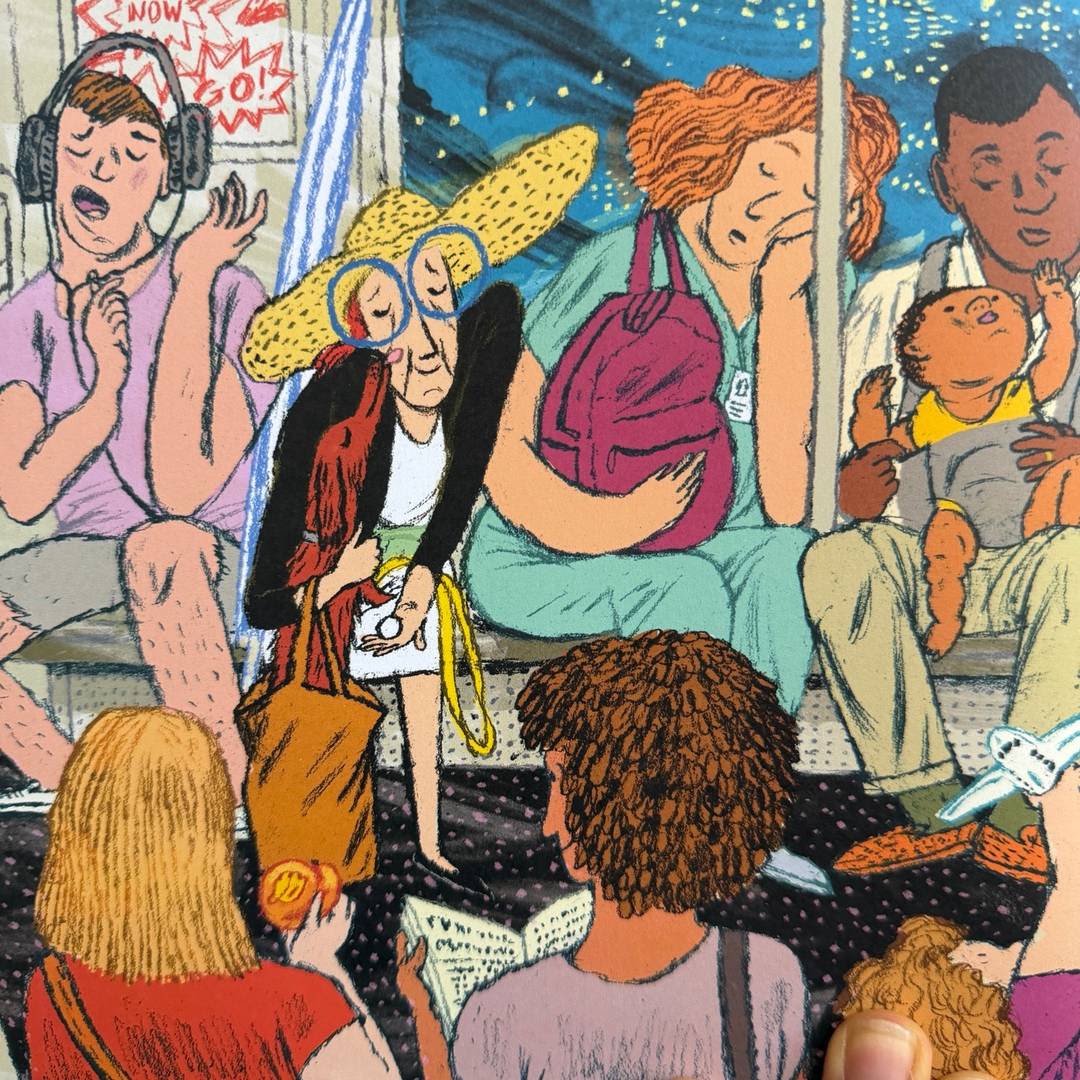
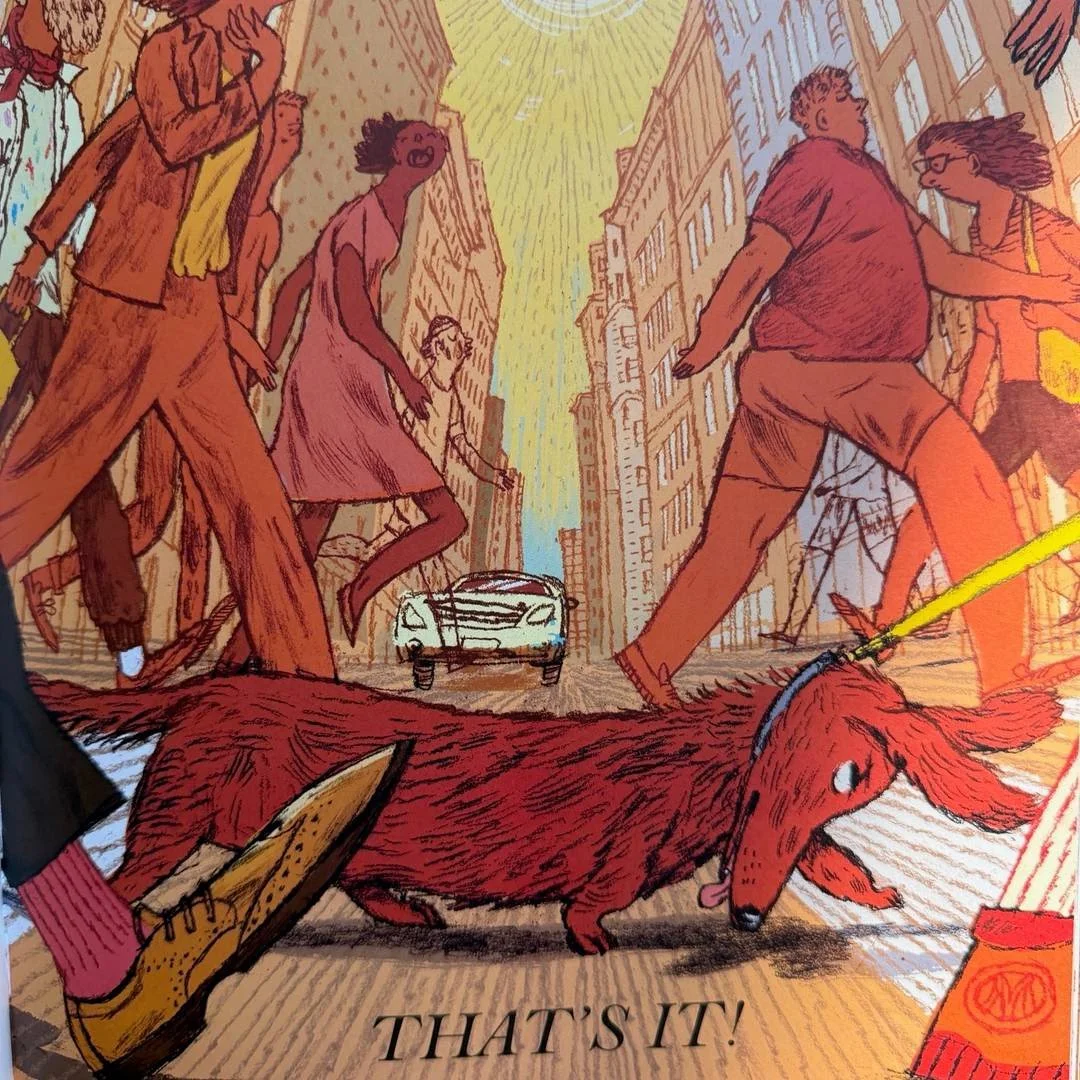
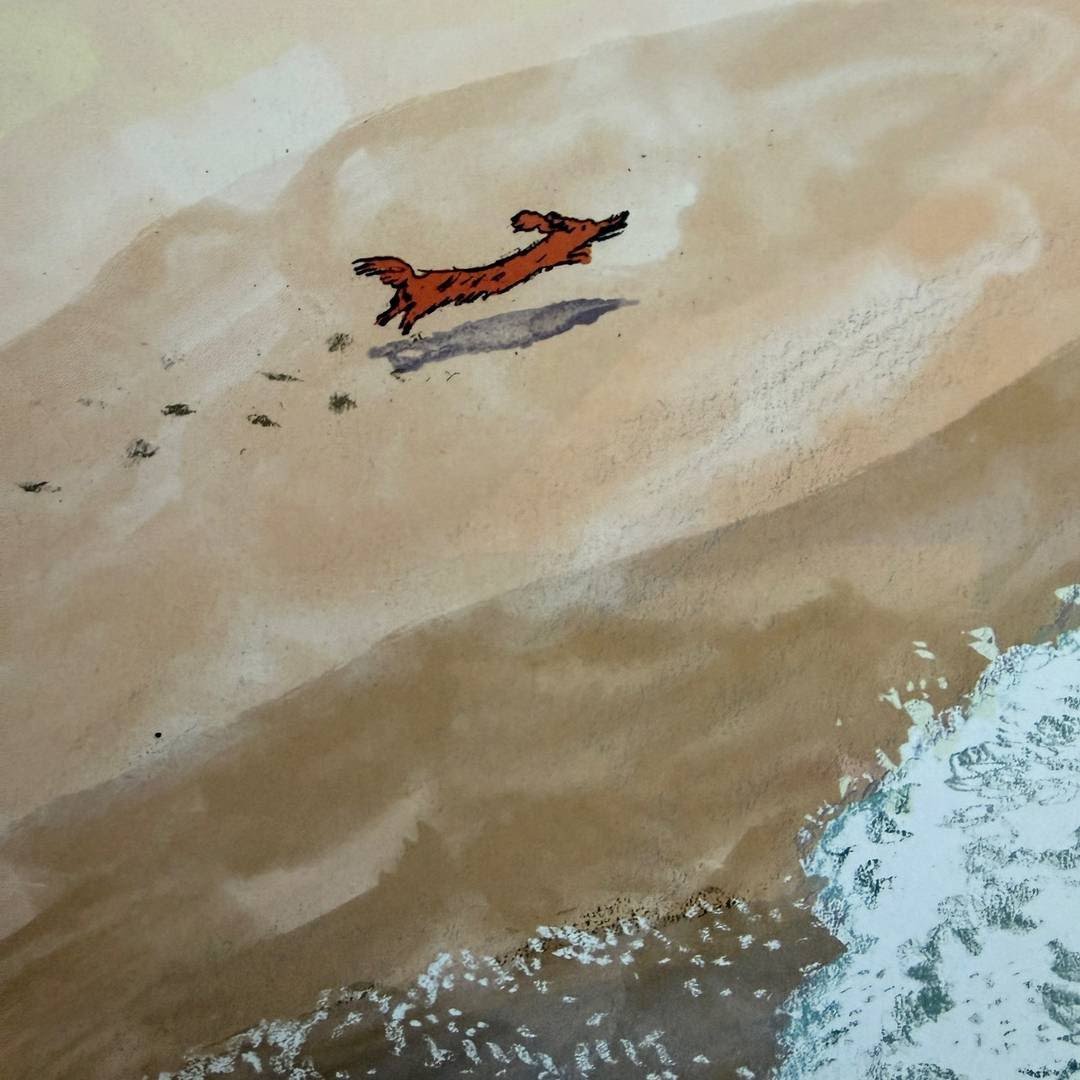
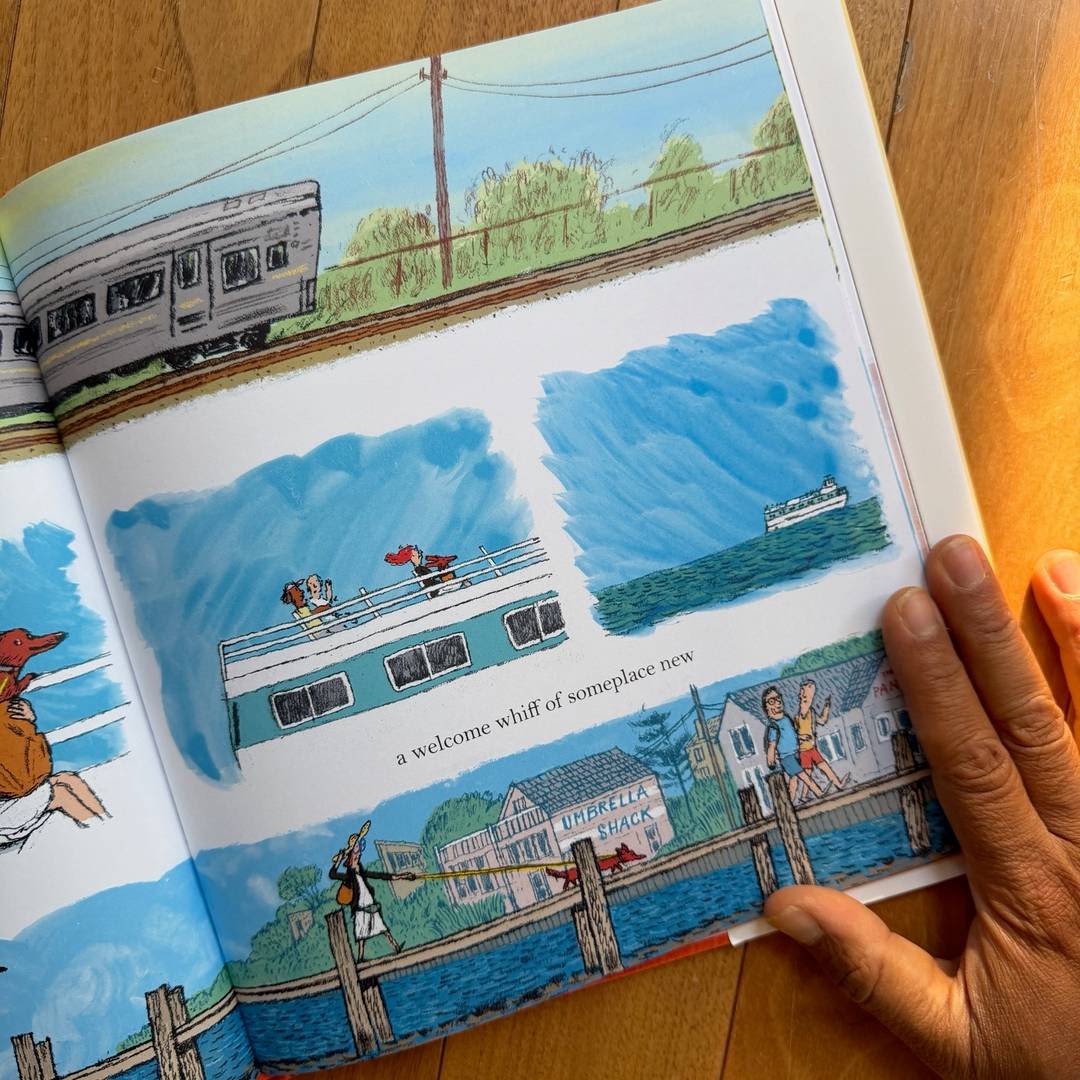
8. Hot Dog by Doug Salati (b. 1985). Winner of the 2023 Caldecott, awarded each year to the "most distinguished American book for children," this is a vivid story of a dog living in a much-too-dense and much-too-hot urban landscape who experiences the deep joy of a day at the beach. That’s it! That’s the whole story. But it’s the color, the crowdedness, the crunch of collisions, that really brings the hot and sweaty feel of overwhelm to life. It’s impossible to read the first few pages of this book and not feel hot! And then what happens? Well the dog stops in the middle of an intersection—it’s too hot, can’t move!—and then their owner hails a taxi and they begin "a slow escape… gaining speed…unfolding sky, a salty breeze… a welcome whiff of someplace new…" Visceral, evocative, transporting, meditative, escapist. I just loved this book.