Neil's Monthly Book Club is my oldest and most popular email newsletter. Click here to subscribe.
Hey everyone,
We don’t have long here!
Social media scrolls, dripping news feeds, and endless stimulation at the push of a button. Even though we're making progress, progress, it can still feel like too much.
So let’s keep steadying ourselves in the blizzard.
Unplug, untether, go on nature walks, send voice notes to loved ones, take an afternoon to make a big meal or fall into a book.
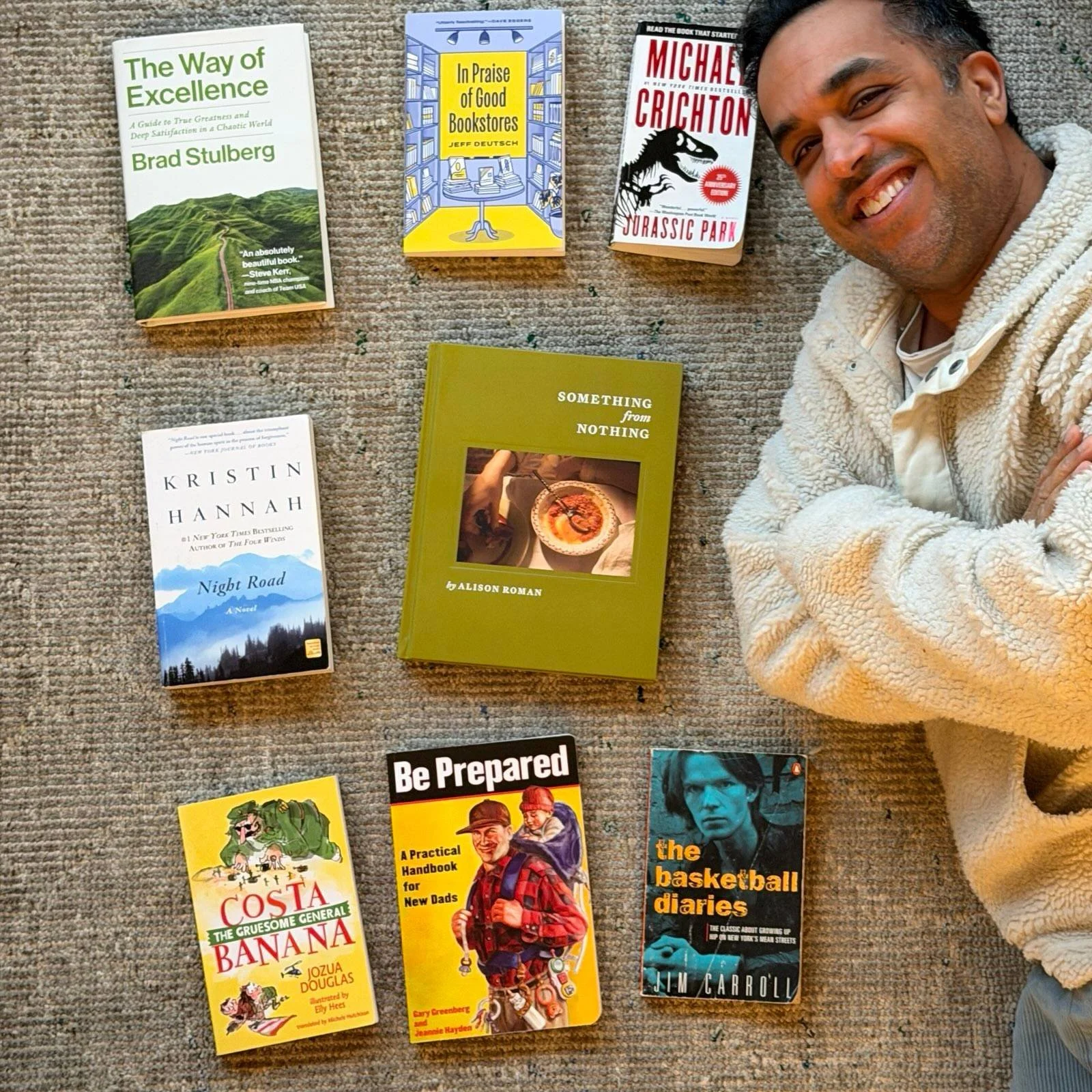
This month, I spent time in the roughest parts of New York in the 60s, got stuck in a dystopian nightmare off the coast of Costa Rica, learned about the value of bookstores as we slide into the Age of Machines, picked up new ideas on mental excellence, and learned how to make a delicious split pea soup.
Here are the books I read and enjoyed this month,
Neil
P.S. Invite others to join our tribe right here. All my stuff online is 100% handwritten from me to you—no ads, no interlopers—since 2008.
1. The Way of Excellence by Brad Stulberg (b. 1986). I first ‘met’ Brad Stulberg via The Rich Roll Podcast where he makes regular appearances. Brad has a gift for distilling piles of research into simple and energizing writing. He defines excellence as “an ongoing process of growth and becoming that imbues life with meaning and vigor. It emerges from involved engagement in something worthwhile that supports your values and goals.” He believes excellence spawned from the earliest life forms on earth—that we’ve always leaned toward excellence to live and keep living—and in this book he shares 16 habits and practices to help us build more excellence in our lives. Trade-Offs! Gumption! Renewal! Failure! Maybe the words sound vague, but if you’re feeling a bit in-betweeny lately—asking how do I, where do I, what might I type questions—then this book will help you focus on process. Control the controllables! Brad is keenly aware of the seductive algorithms keeping us in weird quasi-productive states. And he knows while we all slip into those regularly, we also retain agency to put ourselves back on the right path. This is an agency-assistance book. I might file it next to other get-goings like ‘What To Do When It's Your Turn’ by Seth Godin (03/17), ‘The Inner Game of Tennis’ by Timothy Gallwey (one of Brad's influences!) (11/24), or ‘The War of Art’ by Steven Pressfield (11/16).
2. In Praise of Good Bookstores by Jeff Deutsch (b.1975). Who needs bookstores anymore? Find what you want online then beep, beep, boop, there’s a package on your porch. But this process misses the browse—the unhurried biblio-wander, the literary soak, that unique whole-body expansiveness that comes from meandering through stacks of a thoughtful human! curation of collective wisdom. As author Jeff Deutsch, longtime bookseller at Chicago’s famous Seminary Co-op Bookstore, says on Page 37: “There are forms of idleness that energize as there are forms of productivity that are wasteful.” I love that! But what does it mean? Well, “to the idler, as to the flaneur, the stroll is an end in itself. There is a curiosity about what might come next, a receptivity to whatever might arise, and a conviction that whatever it is, it will be of interest.” Okay, so then yeah, bookstores, great to be in … but the business stinks! Open one and you’ll be selling gum and toys to eke out a profit. Enter this accessible and erudite manifesto which functions as a kind of transitionary bridge between our Age of Analog and Age of Machine. We’re probably going to remain human for a while, and the richness that third places like bookstores offer is of such deep value. Through five thoughtful and deeply satisfying long-form chapters, Deutsch shares what bookstores can offer: Space, Abundance, Value, Community, and Time. From ‘Space’ on Page 21: “… the good bookstore is about interiority. Deep in the browse, many of us move through the space as though we were inside the Mind itself … and many of us turn inward as we do so, finding the space especially conducive to self-reflection.” I agree! Wandering through bookstores feels good. I feel like I’m connected with … everything. Bookshelves don’t feel static to me but alive, full of wisdom. Maybe it’s as Simone Weil says, who Deutsch quotes: “Stars and blossoming fruit trees: utter permanence and extreme fragility give one an equal sense of eternity.” Jeff Deutsch writes about bookstores the way George Saunders writes about writing. Joy, richness, and love tingled under my skin as I read. From Page 110 on ‘Community’: “We enter a bookstore settled, but the ideas we encounter unsettle us. The company, however, is comforting and the connection provides a pleasant stirring.” And then moments later, “In the privacy of our own minds, when the external din is quieted, when the prevailing opinions and judgments (which resemble conscience, but function mostly as pernicious censors) are silenced, we discover our own voices. We bring these voices back to the public square that we might … ‘trouble easy consensus.’” I love that. There are so many easy consensuses these days! So take the other track. Question the algorithms. Buy a book with cash from an indie bookstore—find one in the US, Canada, or the UK!—and come to your own conclusions. I always feel inspired when I chat with booksellers like Mitchell Kaplan (Books & Books, Coral Gables, Florida), Bulle Abdullahi (Nuria Bookstore, Nairobi, Kenya) or John and Alison (Camino Books, Del Mar, California). As Deutsch writes: “Good bookstores reflect their communities; exceptional bookstores both reflect and create their communities.” Live near bookstores, wander inside, love them, and help them prosper and thrive. This book was medicine I didn’t know I needed.
3. Jurassic Park by Michael Crichton (1942-2008). “The planet is not in jeopardy. We haven’t got the power to destroy the planet—or to save it. But we might have the power to save ourselves.” Sounds like Paul Hawken! But that’s a quote from the one and only chaos theory mathematician Dr. Ian Malcolm. I first read this book in 1992, when I was 12 and in seventh grade at Glen Dhu Public School in Whitby, Ontario. My friends passed around a beat-up copy of the two-year-old book with the freaky cover of a T-Rex skeleton, sharing the realistic sci-fi story about a rogue bio-genetics firm launching a new “zoo” on a misty island off Costa Rica. The movie came out in 1993 and now, looking back over 30 years later, John Hammond’s dream of Jurassic Park taking over the world … kind of happened. Movies, shows, swag, and now Jurassic “World” is one of the largest media franchises of all time! (I’m not into the new cartoons, but I sure do love Jurassic Park pinball … one of the top 10 pinball games in the world, btw!) In my reread now, the dinosaurs sort of range from fearsome to clownish, the dialogue is a bit clunky, there are some odd plot jumps, and a lot of scenes I’d forgotten about because they never made the films. But Crichton’s creation remains a great escape—a book of wonder, a book of momentum. Malcolm remains eminently quotable, too. Here’s one of his many gems: “A day is like a whole life. You start out doing one thing, but end up doing something else, plan to run an errand, but never get there … And at the end of your life, your whole existence has the same haphazard quality, too. Your whole life has the same shape as a single day.”
4. Night Road by Kristin Hannah (b.1960). And now it’s time for this month’s Leslie’s Pick, a book read and recommended by the woman I’m lucky to be married to. Full Leslie's Picks list here! Over to you, Les: “My sister, Jenny, told me she was up way too late crying in the night reading the most heartachingly bittersweet book and I knew I had to read it! Having read Kristin Hannah’s ‘The Nightingale’ and ‘The Women’ (06/24), I had this ominous feeling from the first page. It haunted and entranced me, and I flew through the book faster than anything I’ve read in a long time. I loved the perspective shifting between the vivid, relatable, and emotionally resonant character of Jude—a loving stay-at-home mother of twin children in their last year of high school, who struggles with her desire for control amidst her teens’ growing independence—and Lexi, a teenage girl coming out of foster care who discovers her first love, belonging, and self-worth just before everything is thrown upside down. This book made me cry multiple times and lives on in my heart days after putting it down.”
5. Something from Nothing by Alison Roman (b. 1985). What’s your favorite cookbook? I’m on the hunt! At our house, Leslie is the master chef—she can open the fridge, see four random ingredients, and whip them into a delicious meal—whereas I seem to often need a recipe or special trip to the grocery store. But I’m trying to get into making big Sunday night meals! So when I was down at Type Books on Queen Street in Toronto, I asked if they had an accessible cookbook, with lots of delicious soups and stews, but nothing too fancy or hard. They pointed me to this book by Alison Roman, who owns and runs First Bloom, a grocery store and café in Bloomville, New York, and it immediately won me over with an early essay about … potato chips.
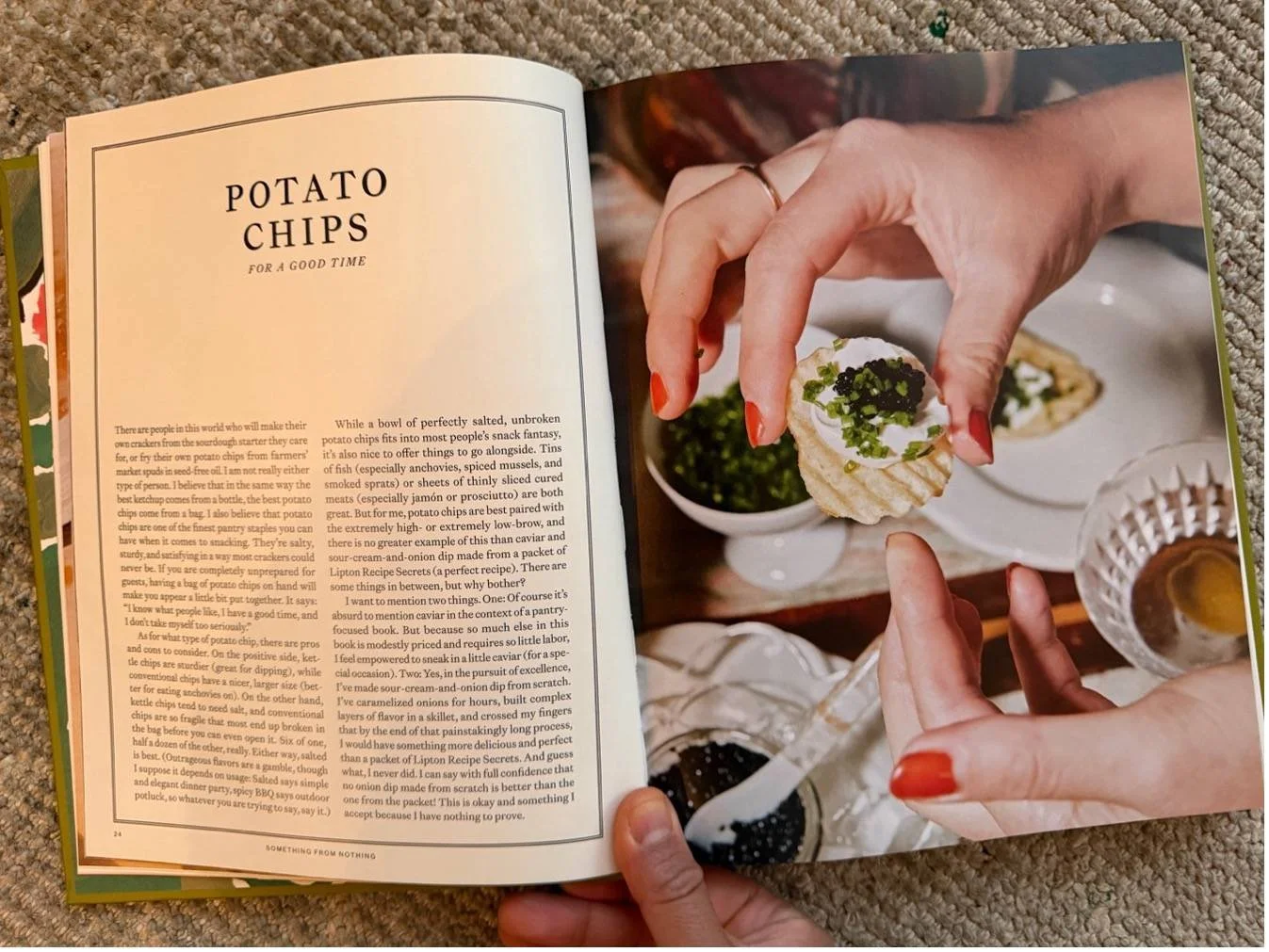
“I believe that in the same way the best ketchup comes from a bottle, the best potato chips come from a bag. I also believe that potato chips are one of the finest pantry staples you can have when it comes to snacking. They’re salty, sturdy, and satisfying in a way most crackers could never be.” Yes! LOL. And, you know, there’s no recipe. Just a photo of a potato chip carrying a heap of dip with chopped chives on top. And that’s the vibe here: fancy enough to be delicious, casual enough to be doable. The first recipe I tackled was this “Very Classic Split Pea Soup”:
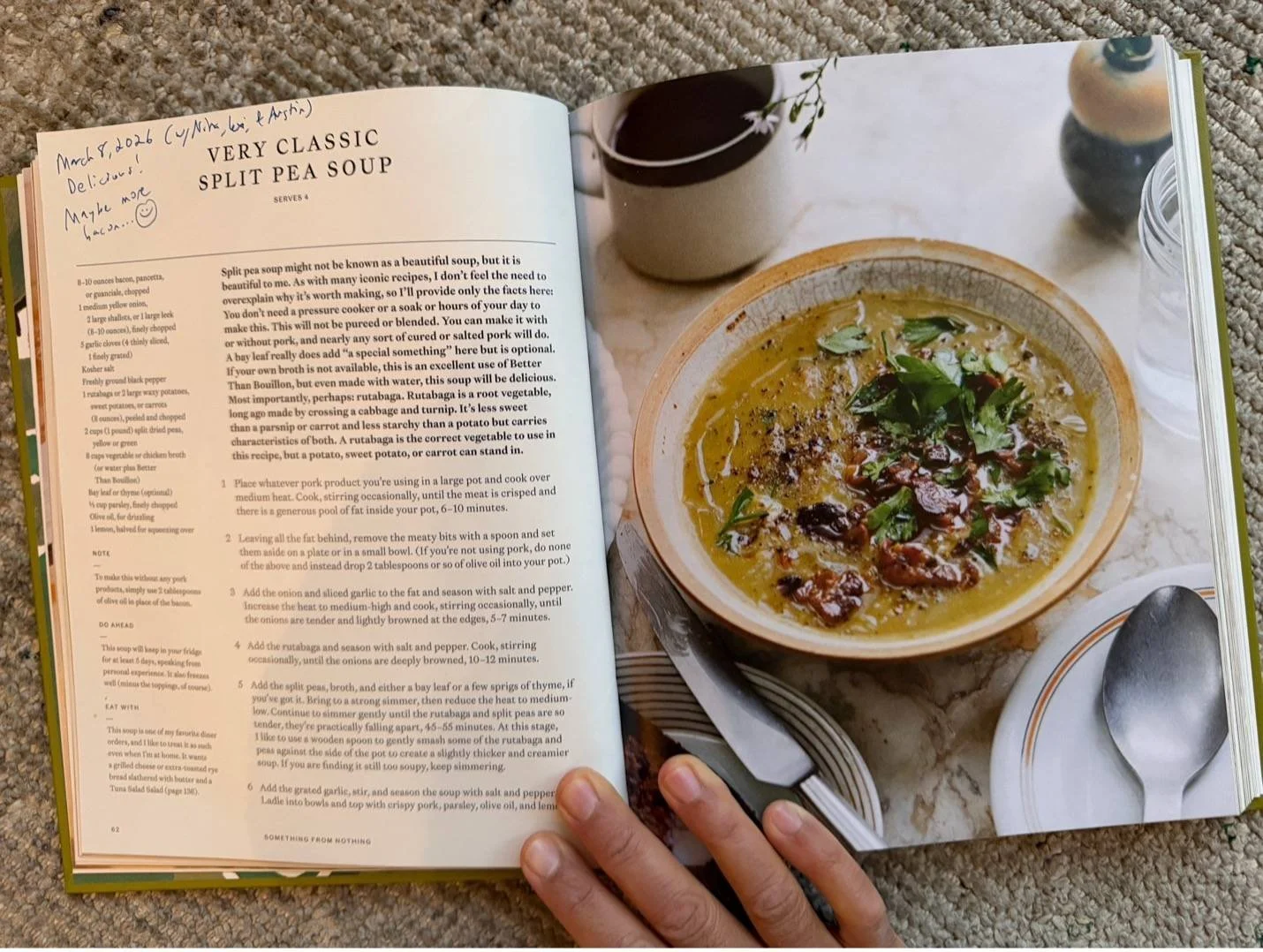
Suddenly, I was peeling rutabaga (a cross between a cabbage and a turnip!), crisping bacon, chopping parsley, and squeezing lemon on top. What a finishing move! The writing is literary and breezy, the recipes aren’t too challenging, there’s a lot of substitutions and easy alternatives, and the photos make you drool. What more could you want?
6. Costa Banana: The Gruesome General by Jozua Douglas (b. 1977). “Pablo Fernando was the president of Costa Banana. Costa Banana was a small tropical country in Central America. The president was the boss, all on his own. He could make anything he wanted to happen. No matter how crazy it was.” So begins this electric, strange, and oddly prescient kids book originally written in Dutch in 2013. The book was suggested to me by fellow Book Clubber, Carol Jaxon, who wrote:
““I have been reading Jozua Douglas’s Costa Banana series of books because I am about at a fourth-grade reading level in Dutch. (Nothing as humbling or rewarding as trying to communicate in another language.) These books are so cute and well-written and they are modern! They have smart phones and technology and are relatable to kids these days . For example, in the fourth book about UFOs, the father buys everyone in the family a doppelgänger for Christmas! My first reaction was why is buying another human being okay in a children’s book? My Dutch teacher reminded me that parents can talk about that with their kids.””
There is a lot to talk to your kids about in here! I read it with my 6-year-old but probably could have skewed older. People tell the President nobody likes war and when he disagrees, an advisor chimes back, “Easy enough for you to say. You’re the general. You don’t actually have to fight.” The book is filled with these kinds of obvious but not commonly heard lines. New laws are suddenly invented, like how everybody has to call the President “Great Leader Genius” or “Big Strong Man”. Mutinies are formed to overthrow the government. And it all adds up to some kind of absurd geopolitical thriller—for kids. The plot zig zags quickly, so you may find it tough to get back into the story if you put it down for too long. Although this book is a little too in-the-news feeling at times, it’s a unique way to read something outside the lines. I’ve ever read a children’s book translated from Dutch before, either. Fun and fast tone, delightfully short chapters, and wonderful Quentin Blake-esque illustrations from Elly Hees throughout.
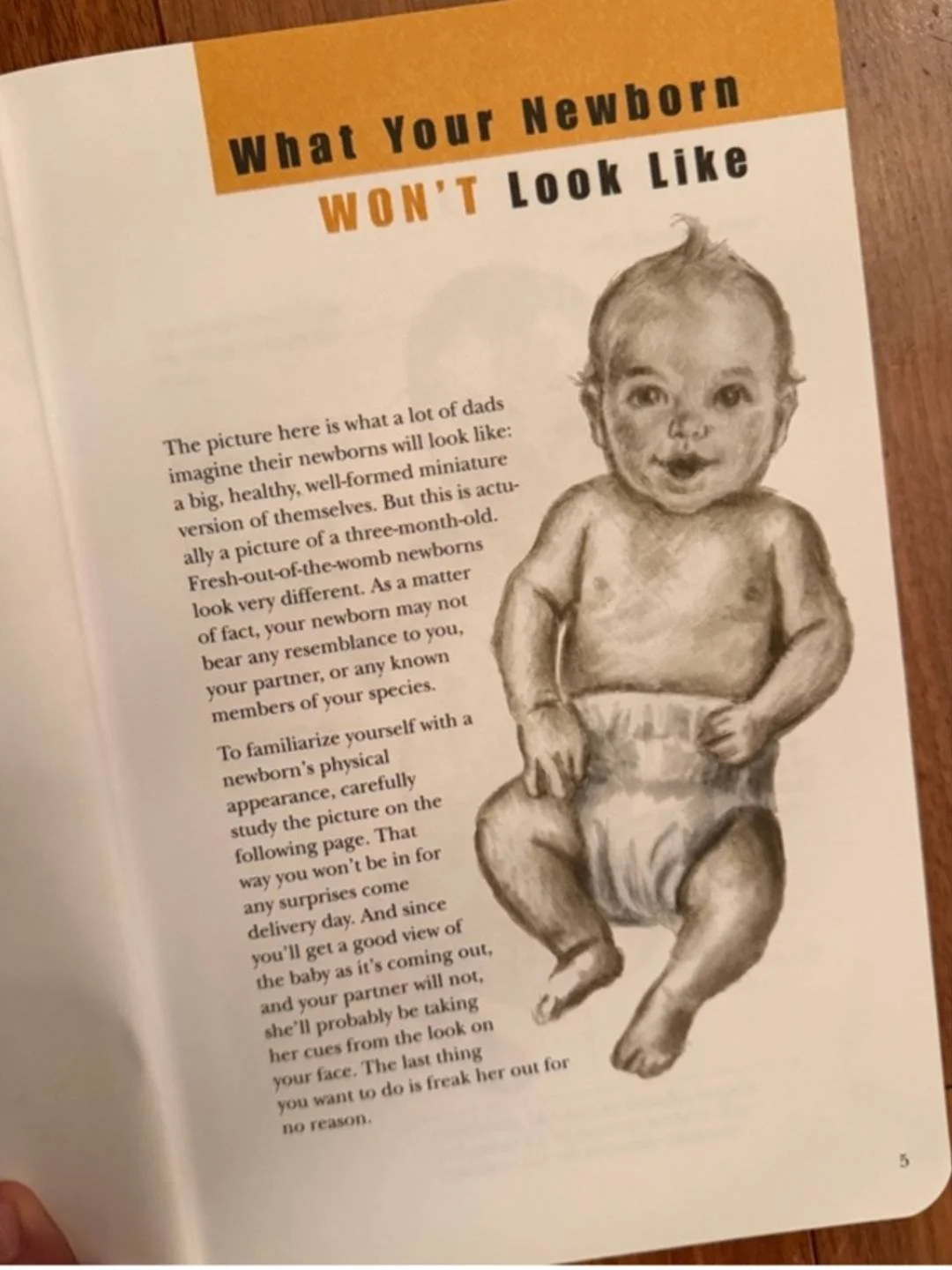
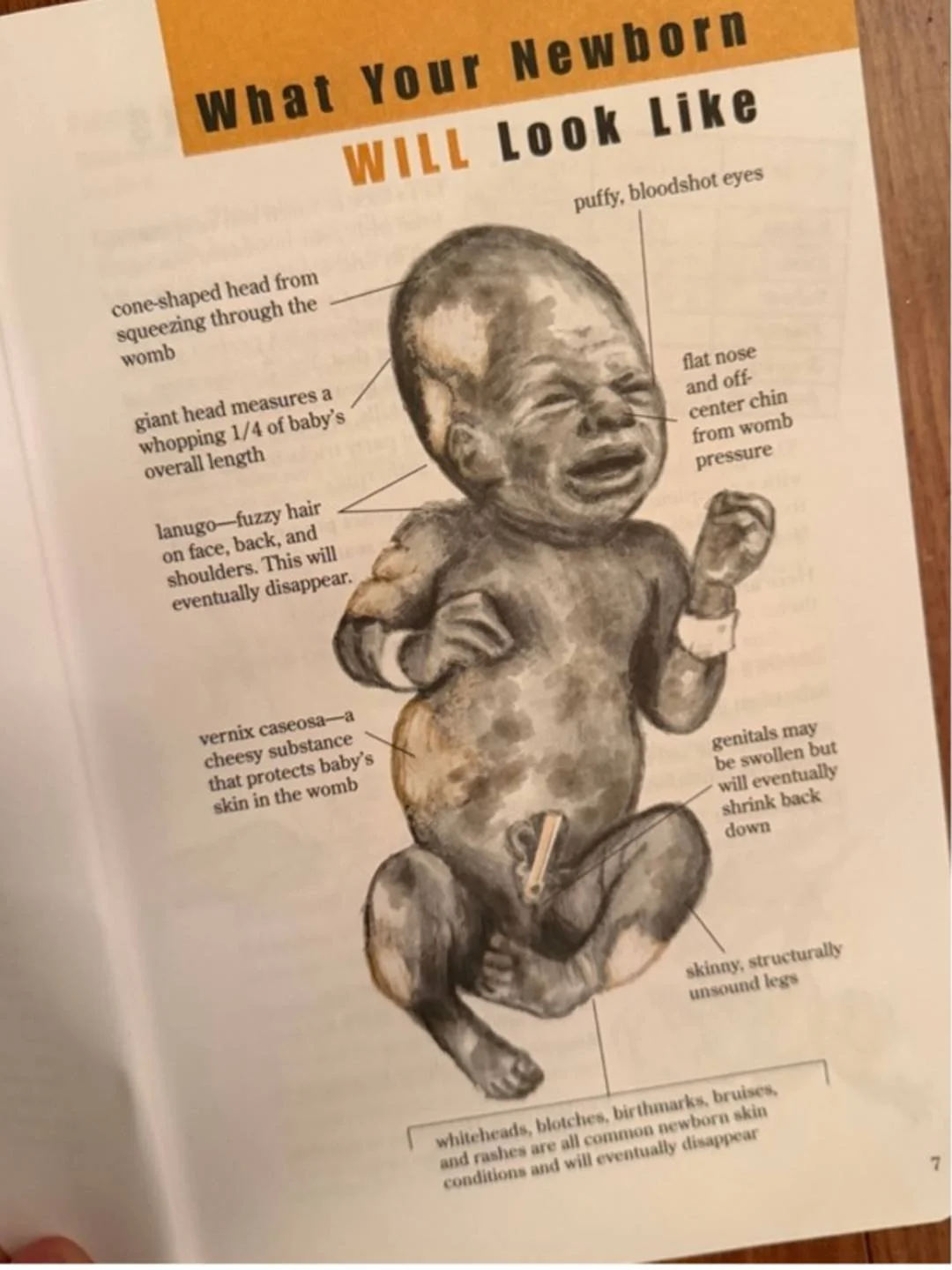
7. Be Prepared: A Practical Handbook for New Dads by Gary Greenberg and Jeannie Hayden. This was the only parenting book I read before having kids and it’s been my go-to gift whenever a friend tells me they’re going to be a dad. Written and illustrated by a witty husband and wife team, it’s wonderfully readable with a humble and funny “fake field guide” tone, full of useful information (more than you might expect), and the whole thing is organized by “Age of Baby”, so you can put it down and then pick it back up when your baby is (say) 4-6 months and discover all kinds of new sections, like “Temperature Taking Tactics”, “Resuming A Sex Life?”, and “Starting Solid Foods”. The book is definitely too heteronormative and some of the jokes have wilted with time, but I love its earnest way of presuming you know nothing (which I did!) and then starting you … there. Check out the first two pages after the Table of Contents, comparing “What Your Newborn WON’T Look Like” with “What Your Newborn WILL Look Like”: