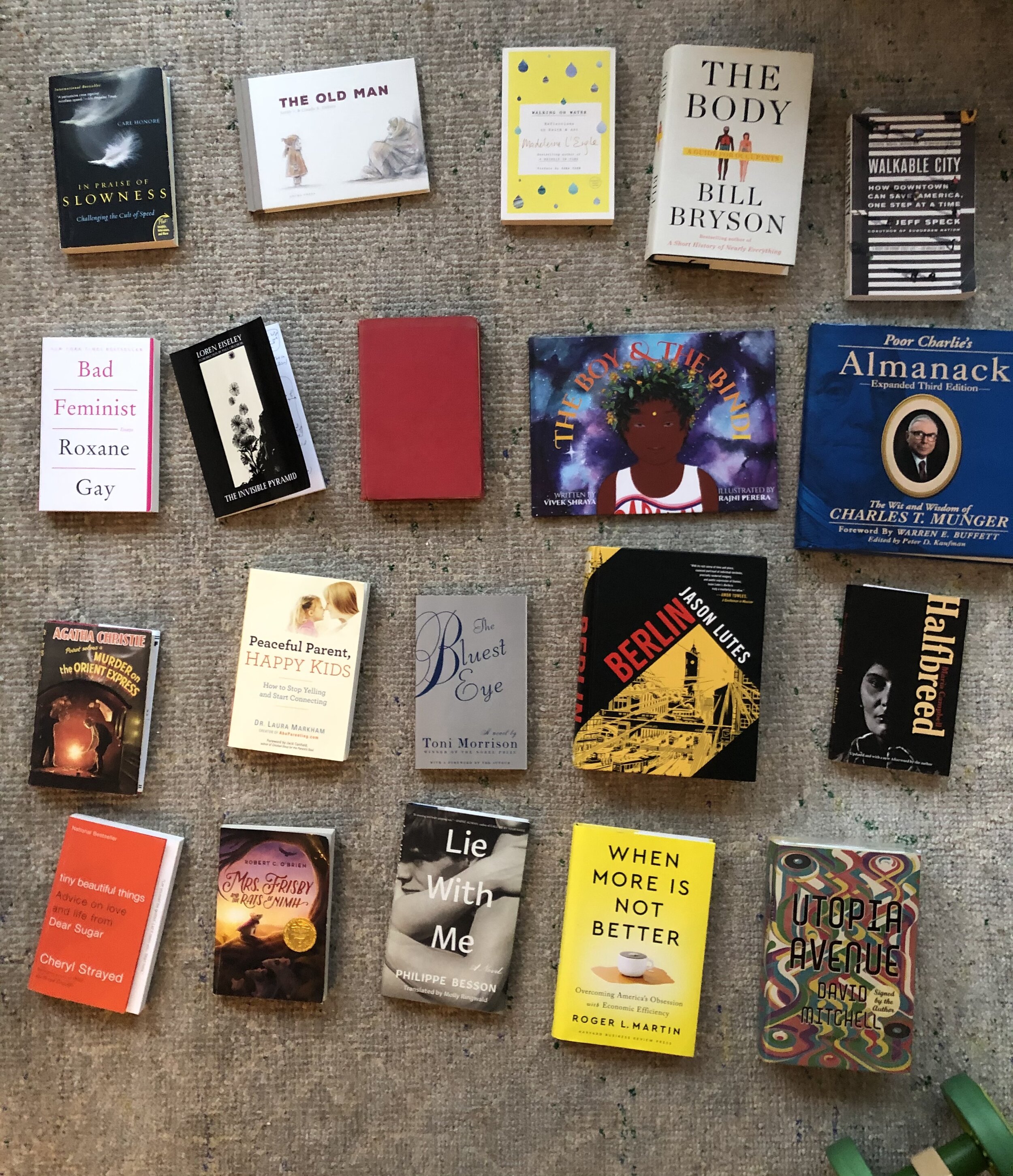
20. In Praise of Slow: Challenging the Cult of Speed by Carl Honoré. I bought this book years ago and never found time to read it. Quelle surprise! Still the most common question I get on my reading lists is “How do you find time to read so many books?” My answer in HBR articles here and here. I believe this book is a mirror we all need right now. If you’re feeling pandemic sluggishness this book will smile at you warmly, pat you on the back, and help you settle deeper into your slower, wiser, more meandering self. And if you’re the opposite, if you feel like the treadmill you’re on is cranked to 10, then this book will force you to stop and reflect. Chock full of research and wonderfully narrated by the incredibly warm Carl Honoré in the same “sitting beside you on the bus” style of Quiet or So You’ve Been Publicly Shamed, I felt like this was the book I have needed for years. It's time to slow down and read this wonderful book.
The 5 Greatest Regrets of the Dying and How to Avoid Them
How overwhelming is your life right now?
I'm guessing you're in the washing machine with the rest of us.
When I'm spinning in the heavy duty cycle I find myself reaching out to touchstones that have helped ground and center myself again and again. Like what? Like revisiting 7 science-backed ways to be happy right now, 7 ways to calm my mind and sleep better or and, yes, the 5 greatest regrets of the dying.
Bronnie Ware is an Australian palliative nurse who spent years taking care of the dying in the last three months of their lives.
“When questioned about any regrets they had or anything they would do differently,” she says, “common themes surfaced again and again.”
She eventually put together the five most common regrets from people moments away from their last breath and posted it on her blog. It went viral, and the story was picked up by The Guardian and The Daily Mail, among others.
So what were the greatest regrets she heard from patient after patient? Didn’t make enough money? Didn’t work enough hours? Not enough vacations? Not enough homes? No. Not even close. The 5 Greatest Regrets of the Dying are:
I wish I'd had the courage to live a life true to myself, not the life others expected of me
I wish I hadn't worked so hard
I wish I had the courage to express my feelings
I wish I had stayed in touch with my friends
I wish that I had let myself be happier
Every time I read this list I am stunned into silence for a minute. I think how many of these regrets I would have if I died today. I look at how I'm spending my time today, this week, this month and see if there are things I can adjust to make sure I'm focusing on the right things. There always are so the list serves as inspiration.
I also always feel like this entire list relates to authenticity. That's ultimately how you avoid these regrets. It’s all about being you and being cool with it. Being honest with yourself and honest with others. I would argue if you’re being yourself, if you're being authentic, then:
You do live a life true to yourself
You do overvalue your time and find a job that fits your life
You do recognize and express your feelings
You do keep in touch with your friends
You do let yourself be happier
Being you removes regrets from your life.
Authenticity removes regrets from your life.
So use the 5 greatest regrets of the dying to briefly escape your washing machine mind. Forget about whatever your cell phone's yelling at you, forget about your overwhelming to-do list, and take a minute to stop and listen to the crowdsourced sum of thousands of people on the edge of existence shouting desperately back to you with what's really important.
7 ways to calm your mind and sleep better
How’s your sleep?
Mine’s been shot lately.
Some nights I find myself tossing and turning and just can’t turn off my brain. Some nights an anxious chest fluttering will helpfully pop out of nowhere jussssst before bed. Other nights I fall into a deep sleep just fine before waking up perky and refreshed at 2:27am.
I suppose I have never slept that much.
I fell asleep when I was tired. I woke up when I wasn’t. I kept moving. Honestly, what’s the big deal? I agreed with the philosophy of Wait But Why author Tim Urban who said on 3 Books: “Sleep is boring. Being awake is fun.”
But these days that type of thinking gets you in hot water. We seem to have all agreed, yet again, that 7-8 hours of sleep is best and if you aren’t getting that much you’re not far from the guy who never wears a seatbelt. You are a menace to yourself! How can you put yourself at risk when we know children who sleep less are more likely to be obese, lack of sleep results in horrible immune function, and, my favorite, sleeping less than seven hours a night means you’re 12% more likely to have a premature death and sleeping more than eight hours a night means you’re 30% more likely to have a premature death.
NO PRESSURE!
My point is on top of lack of sleep we’re carrying around anxiety about lack of sleep.
The other day I looked back in my journals and realized that I have gone through bouts of low sleep for pretty much forever. It’s the reason I posted 1000 blog posts at 12:01am for 1000 weekdays in a row. In the years after my divorce this practice was originally a sleep aid, too.
And it did help.
But what about now?
Well, after looking back in my journals I also realized I have devised a series of tiny sleep tools, practices, and habits that help me get to sleep during periods of low sleep. (Note I don’t want to call it “poor sleep” or “bad sleep” and be judgmental about it. I think only you know how much sleep you really need and what works for you.)
But whenever I’m in a period of low sleep relative to what I want to be getting I try one of these.
Here are seven ways to calm your mind and sleep better:
7. Read something written over 1000 years ago. Our entire lives are shorter than a flash of lightning on a December night in the long year of eternity. I find it helps me get out of my own head to connect with a voice speaking to me from long, long ago. There is a helpful perspective in recognizing that your present reality isn’t the be all or end all ... of anything. Others have wrestled and processed similar issues many, many times before. Some may find comfort in the Bible, Quran, or Vedas. For me my go-to bedside table books are On The Shortness of Life by Seneca, Letters from a Stoic also by Seneca, and The Art of Living by Epictetus. Lately I’ve also been enjoying The Essential Rumi which is a measly 700 years old but we can say it still counts.
6. Clean up your Bedside Window. What’s your Bedside Window? Everything you can see from your bed that’s messy. For me that's my bedside table and dresser. What happens? Well, without regular pruning, my bedside table can quickly look like a library threw up. Tipsy piles of books, homemade bookmarks from my kids, pens and cue cards everywhere. And my dresser somehow becomes an empty chest of drawers underneath a sloppy pile of clothes. My sleep is a lot better when I take five minutes to straighten, tidy, and clean up my Bedside Window.
5. Perform an intense 1 minute workout. Does your body shift into a sort of low-grade state of slow-moving, stomach-bubbling lethargy before bed? That happens to me. The energy dial goes from a 10 during the day to a 7 at dinner to a 5 when I’m putting my kids to bed to a 3 when I’m brushing my teeth. So what’s the problem? It gets stuck at 3. It never gets to a 0. How do I twist the knob all the way down? An intense one-minute workout. Even the name makes it sound doable. It’s just one minute! Imagine you’re a car with a few tiny fumes of gas left in the tank. Want to go to bed on a slow cruise full of big turns and quiet idling? No, you need to run out of gas to come to a full and complete stop. How? By hitting the gas. Here are three 1-minute workouts to hit the gas and putter out before bed:
i) jumping jacks x 10, pushups x 10, jumping jacks x 10, pushups x 10
ii) squats x 10, lunges x 10, squats x 10, lunges x 10
iii), triceps x 10 (hang off a chair by your elbows and lift ), crunches x 10, triceps x 10, crunches x 10
(PS. For bonus points, roll a few stressed out muscles on a lacrosse ball when you’re done.)
4. Hang a perspective-setting image near your bed. Have you heard the story of Jerry Seinfeld hanging a Hubble telescope photo of distant galaxies up on the writing room wall during Seinfeld. Why? Because it helped destress the place. Who can stay fritzed out wording a black and white cookie joke when you know what? In the grandest scheme of things: You don’t matter. When discussing the famous image of the pale blue dot Carl Sagan said “Our posturings, our imagined self-importance, the delusion that we have some privileged position in the Universe, are challenged by this point of pale light.” (longer quote here) A big image that grounds and centers you can help you zoom out of today and focus on something bigger. Right now Leslie and I have an image of our hands holding to remind us we always have each other. Is it a photo of a grandparent who believed deeply in you and gives you strength in yourself? A picture of your favorite place to watch the sunset? Or one of your child laughing to remind you of what matters?
3. Pick bedtime novels based on pacing: Years ago my friend Shiv told me she read one David Sedaris essay before bed every night. I remember thinking that was strange. But then I tried it. His words really do have the perfect pacing to lull me to sleep. We don’t talk about pacing in books enough but I think it’s the most important factor in a before bed book. A slow-paced book calms down a fast-paced life. Here are ten books I’ve found to be perfectly paced before bed:
The Old Man and the Sea by Ernest Hemingway
The History of Love by Nicole Krauss
To Kill A Mockingbird by Harper Lee
Norwegian Wood by Huraki Murakami
Little Fires Everywhere by Celeste Ng
Gilead by Marilynne Robinson
The Little Prince by Antoine de Saint-Expury
The Catcher in the Rye by J.D. Salinger
Naked by David Sedaris
Little House in the Big Woods by Laura Ingalls Wilder
2. Buy a really expensive pillow that fills with water or braided horse hair or something. I’m kidding. Don’t do this. Everyone says you should and I’ve fallen into this trap a few times. At first I’m excited. “My sleep savior has arrived!” or “I have finally found the ultimate sleep hack!” But two nights later I’m tossing and turning. Same with fancy eye masks, creams, or anything that promises quick results. If you want it dark, sure, go ahead, buy a cheap mask from a dollar store. But don’t pour money into fancy pillows, masks, or other hacky tricks that don’t work on the underlying issue of calming down or relaxing your mind. That’s what we’re really aiming for here. I need to repeat #2 so this one doesn’t count.
2. Make a Brain Billboard. Be honest with yourself and ask what deep seeded fear is taking hold in your brain stem and rattling you awake whenever you are mildly conscious. I mean the really deep thing. Are you paranoid about money? Love? Connection? We all have fears. They aren’t necessarily rational or logical or even real when we wake up the next day. But they can grab you at night when you’re in your weaker, lower resilience moments and claw at your mind. What’s the solution? Make a little Brain Billboard that addresses the fear directly. Write it like a loving note from your wiser self. Take a cue card, fold it in half, write down the ‘billboard’ to address your fear, and place it on your bedside table. That way it’s the last thing you see before bed and the first thing you see in the morning. So, for example, if you have a fear of money make something like that:

1. Do Two-Minute Mornings or AhhLife. I normally start my day by filling out the three simple prompts in Two-Minute Mornings: “I will let go of…”, “I am grateful for…”, and “I will focus on…” But my wife Leslie has always done it at night. Why? Well, in two minutes before bed she extricates a fear, focuses her mind on positives, and write a focus for tomorrow. Does it need to be Two-Minute Mornings specifically? Of course not. In this video I share how I surround myself with journaling opportunities to pick away at the mental plaque that builds over the day. One of the best is the free email journaling service Ahhlife.com. You get to set the date and frequency you want your email journaling prompt to arrive so I set mine for Monday, Wednesday, and Friday nights at 9pm. Why? Well, because if I’m awake when I get the email it doubles as a go-to-bed reminder. And, if I’m awake and overthinking something I just reply to the email and journal out the plaque. What anger am I feeling? What frustration feels overwhelming? What happened that set me off? It doesn’t need to make sense. It doesn’t need to be rational or any kind of fine prose because it will never be displayed in the Library of Letters erected in your honor after you die. Nobody will read it! It’s just a place to put the thing that may be keeping you up so that it isn’t simmering inside you when you hit the pillow.
So there you have it!
7 ways to calm your mind and sleep better.
What do you do that isn't on the last?
Just let me know on Twitter.
#985 Being really proud of yourself for using a bit less toilet paper than usual
"Thank you, tomato." ⠀
⠀
That's what I said while carefully circle-cutting all the wet pink flesh and smooth red skin away from the hard core at the top of my little tomato nub at breakfast the other day. ⠀
⠀
"Thank you for giving me every single edible molecule in your body."⠀
⠀
Then I threw the core in the compost, awkwardly balanced the juicy trapezoidal prisms on top of my melted cheddar and fried egg, and then bit into my sandwich feeling a bit smug.⠀
⠀
I admit I normally slice up just the tomato torso before tossing everything else away. "That would take five seconds of work," I must have thought the first few times, before I stopped thinking about it altogether, before I stopped noticing it at all. ⠀
⠀
But now a giant magnifying glass far beyond the Milky Way is panning across the universe for a closeup on our species. And now I'm suddenly asking, and I'm sure you're asking too: What things do we do that no longer make sense to you? ⠀
⠀
Did you really need to flush?⠀
⠀
Do we really need to rush?⠀
⠀
Can we let our thoughts unhush?⠀
⠀
And live with a little less stuff? ⠀
⠀
AWESOME!
#992 Someone sending you a good idea on how to distract your kids for a solid hour
"We got a good one," Alec said.⠀
⠀
It was almost 11pm and I was wearing a mask standing on the sidewalk about fifteen feet down from him as he sat on a lawn chair on his front porch. Spring blooms lined the path which led about ten feet up to where he sat facing me and the street behind me. I felt a bit like I was suddenly alone in the throne room of a castle about to hear a piece of wisdom from the wise old king. ⠀
⠀
Sidewalks up and down the street were empty. TV screens kaleidoscoped like the northern lights through living room curtains. Flickering streetlights cast a dim yellow shadow over our faces. It felt like the throne room was surrounded by giant stained-glass windows while a lightning storm raged down outside. ⠀
⠀
"Danielle and I both had morning meetings at work so we asked our boys to organize the basement like a zoo. They made tickets, got dressed up, and had to classify and set up all their toys and stuffed animals by habitat. You know, reptile house, boreal forest, Asia pavilion, 'mythical creatures', whatever."⠀
⠀
I loved the idea and looked up at him for the big payoff. ⠀
⠀
He knew I wanted it.⠀
⠀
He waited a moment. ⠀
⠀
And then he smiled. ⠀
⠀
And it finally came. ⠀
⠀
"It took them the whole morning!" ⠀
⠀
AWESOME!
How to Cut All Meeting Time in Half
In November 1955 a strange article appeared in The Economist by an unknown writer named C. Northcote Parkinson. Readers who started skimming the article, titled “Parkinson’s Law,” were met with sarcastic, biting paragraphs poking sharp holes in government bureaucracy and mocking ever-expanding corporate structures. It was searing criticism masked as an information piece. It began innocently enough with the following paragraph:
“It is a commonplace observation that work expands so as to fill the time available for its completion. Thus, an elderly lady of leisure can spend the entire day in writing and dispatching a postcard to her niece at Bognor Regis. An hour will be spent in finding the postcard, another in hunting for spectacles, half-an-hour in a search for the ad dress, an hour and a quarter in composition, and twenty minutes in deciding whether or not to take an umbrella when going to the pillar-box in the next street. The total effort which would occupy a busy man for three minutes all told may in this fashion leave another person prostrate after a day of doubt, anxiety and toil.”
The thesis of the piece was in the first sentence: “It is a commonplace observation that work expands so as to fill the time available for its completion.” Haven’t we heard advice like this before? “The ultimate inspiration is the deadline,” for instance. “If you leave it till the last minute, it takes only a minute to do.” Or how about: “The contents of your purse will expand to fill all available space.”
Think back to bringing homework home from school on the weekends. There was nothing better than a weekend! But the dull pain of having to do a page of math problems and write a book summary loomed like a faint black cloud over Friday night, all day Saturday, and Sunday morning. I remember I would always work on homework Sunday night. But once in a while, if we were going away for the weekend, if I had busy plans on both days, I would actually get my homework done on Friday night. The deadline had artificially become sooner in my mind. And what happened? It felt great. It felt like I had more time all weekend. A fake early deadline created more space.
How do you cut all meeting time in half?
As part of a job I had at Walmart years ago I suddenly took ownership over the company’s weekly meeting for all employees. It was a rambly Friday-morning affair without a clear agenda, presentation guidelines, or timelines, all in front of 1000 people. The CEO would speak for as long as he wanted about whatever he wanted and then pass the mic to the next executive sitting at a table, who would speak as long as he wanted about whatever he wanted, before passing the mic to the next person. It was unpredictable—and starting at 9:00 a.m., it rolled into 10:00 a.m., sometimes 10:30 a.m., and occasionally 11:00 a.m. People would go on tangents. Nobody was concise. And everyone would leave two hours later in a daze, trying to remember all the mixed priorities they heard at the beginning of the meeting.
So I worked with the CEO to redesign the meeting. We created five segments of five minutes each and set up an agenda and schedule of presenters in advance. “The Numbers,” “Outside Our Walls,” “The Basics 101,” “Sell! Sell! Sell!” and “Mailbag,” where the CEO opened letters and answered questions from the audience.
The new meeting was twenty-five minutes long!
And it never went over time once.
How come?
Because I downloaded a “dong” sound effect that we played over the speakers with one minute left, a “ticking clock” sound effect that played with fifteen seconds left, and then the A/V guys actually cut off a person’s microphone when time hit zero. If you hit zero, you would be talking onstage but nobody could hear you. You just had to walk off.
What happened?
Well, at first everybody complained. “I need seven minutes to present,” “I need ten minutes,” “I need much, much longer because I have something very, very important to say.” We said no and shared this quote from a Harvard Business Review interview with former GE CEO Jack Welch:
“For a large organization to be effective, it must be simple. For a large organization to be simple, its people must have self-confidence and intellectual self-assurance. Insecure managers create complexity. Frightened, nervous managers use thick, convoluted planning books and busy slides filled with everything they’ve known since childhood. Real leaders don’t need clutter. People must have the self-confidence to be clear, precise, to be sure that every person in their organization—highest to lowest—understands what the business is trying to achieve. But it’s not easy. You can’t believe how hard it is for people to be simple, how much they fear being simple. They worry that if they’re simple, people will think they’re simpleminded. In reality, of course, it’s just the reverse. Clear, toughminded people are the most simple.”
Then what happened?
Well, with a clear time limit, presenters practiced! They timed themselves. They prioritized their most important messages and scrapped everything else. They used bullet points and summary slides. We introduced the concept by saying “If you can’t say it concisely in five minutes, you can’t say it. By then people doze off or start checking their email.” Have you ever tried listening to someone talk for twenty straight minutes? Unless they are extremely clear, concise, and captivating, it’s a nightmare.
Everybody got a bit scared of their mic cutting off, so the meetings were always twenty-five minutes.
What happened to productivity?
Well, a thousand people saved an hour every week. That’s 2.5% of total company time saved with just one small change.
How do you complete a three-month project in one day?
Sam Raina is a leader in the technology industry. He oversees the design and development of a large website with millions of hits a day. He has more than sixty people working for him. It’s a big team. There are many moving parts. From designers to coders to copy editors. How does he motivate his team to design and launch entirely new pages for the website from scratch?
He follows Parkinson’s Law and cuts down time.
He books his entire team for secret one-day meetings and then issues them a challenge in the morning that he says they’re going to get done by the end of the day. There is only one day to make an entire website! From designing to layout to testing—everything.
Everyone freaks out about the deadline. And then everyone starts working together.
“The less time we have to do it, the more focused and organized we are. We all work together. We have to! There is no way we’d hit the deadline otherwise. And we always manage to pull it off,” Sam says.
By spending a day on a project that would otherwise take months, he frees up everyone’s thinking time, transactional time, and work time. There will be no emails about the website, no out-of-office messages, no meetings set up to discuss it, no confusion about who said what. Everyone talks in person. At the same time. Until it’s done! Sure, in-person isn’t easy in a pandemic, but what meetings are you doing that right that are laddering up into other meetings which are laddering up into other meetings? How can more people be brought together on a larger problem to avoid all the friction in between?
So what’s the counterintuitive solution to having more time?
Chop the amount of time you have to do it.

Look at the left of the graph. The less time available, the more effort you put in. There is no choice. The deadline is right here. Think of how focused you are in an exam. Two hours to do it? You do it in two hours! That deadline creates an urgency that allows the mind to prioritize and focus.
Now look at the right of the graph. The more time available, the less effort we put in overall. A little thought today. Start the project tomorrow. Revisit it next week. We procrastinate. Why? Because we’re allowed to. There is no penalty. Nothing kills productivity faster than a late deadline.
What does C. Northcote Parkinson say about waiting to get it done?
“Delay is the deadliest form of denial,” he says.
Have you ever finished a project on time and then the teacher announces to the class that the deadline has been extended? What a bummer. Now, even though you finished at the original deadline, you get the pain and torture of mentally revisiting your project over and over again until you hand it in. Could it be better? How can we improve it?
Calvin says it best:

Remember: Work expands to fill the time available for its completion.
In the around-the-table weekly Zoom call, in the original 1000 person company meeting, in a normal website-development cycle, what invisible liability do you find? Time. Too much of it.
And work expanding to fill it as a result.
What’s the solution?
Create last-minute panic!
Move deadlines up, revise them for yourself, and remember you are creating space after the project has been delivered.
Do only nerds do their homework Friday night?
Maybe.
But they’re the ones with the whole weekend to party.
This article is adapted from The Happiness Equation
Jack Welch quote is excerpted from “Speed, Simplicity, Self-Confidence: An Interview with Jack Welch” by Noel M. Tichy and Ram Charan, Harvard Business Review, September 1989. Used with permission.
Calvin and Hobbes strip is © 1992 Watterson and reprinted with permission of Universal Uclick. All rights reserved.
#1002 Any dessert in sandwich form
Let’s do this.
It’s time to break down the top six.
6. The Creamy Zebra
I’m talking about that soft rectangle ice cream sandwich melded into the wall of sinusoidal ice shavings near the bottom of your corner store freezer. Push your paws between popsicles and pre-wraps to grab the sticky surprise from the frozen tundra. Next, drop a couple dollars on the counter before slowly undressing the Wax Paper Tuxedo to reveal your naked bounty: jet-black dimpled cookies melted right onto a factory-chopped rectangle of vanilla ice cream that offers one entirely soft consistency with zero texture variation.
5. Illegally Sized Oreos
Painstakingly twist apart as many Oreos as you can, slow-peel the sugary goop off of each one, and then rebuild it into a majestic Oreo full of as much of the white stuff as possible for the ultimate sugar to cookie ratio.
4. The Donut
This is where a freshly fried glazed donut has been sawed in half and stuffed with ice cream, maybe some chocolate, maybe some cinnamon sugar. Yes, it’s an endangered species, but with recent carnival conservation efforts, the donut sandwich is making a comeback. My friend Gillian recently told me about one she ate at a local fair: “It was the hottest, freshest donut,” she began, “and the coldest, creamiest vanilla ice cream.” Her eyes glistened like a honey cruller as she gazed off into the distance. I could tell the donut affected her, moved her in some small way.
3. The Wild Zebra
This is where you pull off the same black-and-white ice-cream sandwich as The Creamy Zebra except it’s made to order at your own house. You buy crunchy cookies. You scoop fresh ice cream. You put them together. It's all you! None of this store bought garbage. It's the difference between seeing a zebra in the zoo and seeing a zebra on the African plains. The zebras may look the same but they taste completely different. That’s not what I mean. Not tastes like you’re eating zebras from the zoo and you’re also like a zebra poacher who shoots and eats zebras in the Serengeti and you know, those poached wild zebras with real developed running muscles and big swooshing tails, yum yum, they taste way better than lazy, diseased, fat old zebras from the zoo who sit around in the wrong climate for twenty years eating hay bales and candy wrappers. I’m not saying that! I didn't shoot any zebras. Nor did you! Nor should you, I mean. I don’t know anything about zebras. What I do know is you should make your own ice cream sandwiches in your own backyard and then never lazily compare them to something they do not resemble in any way at all other than they happen to have the same colors. Clearly.
2. Cake Sandwich
There’s a local burger stand near my house that’s only open in the summer due to their lack of roof. But, when they’re open, it’s a special place, because they have rows of picnic tables, a big bonfire, bean bag tosses, a delicious smoky smell, and servers running around holding burgers, dogs, and fries. And when you’re done they always say: “Would you like an ice cream sandwich?” And you say yes, of course, because hashtag yolo. Then they say “Do you want chocolate chocolate, chocolate vanilla, or vanilla vanilla?” And you pick one without fully getting that they’re about to bring you a giant rectangle of (chocolate or vanilla) frozen birthday cake, sliced across the gut, with a perfect rectangle of (chocolate or vanilla) ice cream gently placed inside like some sort of frozen child tucked into sugary sheets. Everyone’s eyes pop when the masterpiece is set down on the checkered tablecloth and then afterwards the bean bag toss goes into a sort of riled and frenzied triple overtime due to blood glucose levels.
1. The Crazy
This is the one you make at three in the morning in the giggle-till-you-pee-your-pajamas stage of the sleepover. Somebody gets a craving after the Karate Kid marathon but the pizza boxes are just full of crusts and limp green peppers so while your parents sleep upstairs you all slip out of your sleeping bags, pound up the basement steps, flick on the kitchen lights, and pull the waffle iron out of the pantry. Batter splatters, giggles amplify, and a couple burnt forearms later you’re peeling waffle after waffle from the machine. But it doesn’t stop there! Someone sizzles up bacon, maple syrup glug-glugs, and your host finds a leftover stash of Halloween candy. An hour later you’re back into sleeping bags with all your friends leaning around one plate tearing apart a sloppy sandwich full of ice cream, bacon, shaved coconut, and gummy bears. It’s a primal savannah kill short on majesty and long on memories.
Now!
These are just a few dessert sandwich possibilities.
We have come so far but the future is bright, my friends.
One day soon we will achieve the Dessert Sandwich Singularity where combinations merge together seamlessly and we can’t even remember which desserts were ever eaten separately.
Do not be afraid of this progress. Do not be worried.
While there may be job losses at the ice cream parlor or The Cheesecake Factory the truth is our economy is robust and entirely new roles and organizations will be created such as the ice cream cheesecake parlor and The Cheesecake Cold Cut Factory.
Yes, the future will be magnificent.
The future will be glorious.
And we all know it will be truly
AWESOME!
I wrote 1000 Awesome Things from 2008 – 2012 which turned into four books. This is #1002 of The Next 1000.
Why we're so bad at predicting what will happen to us in the future

We all think the way things are now is the way things will continue to be. If you’re flying high, that’s not so bad, but if you’re falling, flailing or treading water like many of us right now, then this is a dangerous tendency.
Here’s how to counteract it.
See the failure you’re going through as a step up an invisible staircase toward a Future You in a Future Life you can’t even imagine yet.
The staircase represents your life so far. And you can’t see up the invisible staircase.
Look down behind you. That part is visible. You can see where you came from. All the steps you already walked up.
Look. There’s the time you moved in fifth grade and got bullied by that goon Adam every day after school.
Remember? That’s when you first picked up a basketball and started practicing with Coach Williams every night.
There’s Francesco, the tattooed chef who chewed you out every shift you showed up late to wash dishes at the seafood place as a teen. It was painful but you learned to be on time.
Prom — remember that disaster? I guess that night helped you realize you were gay.
So many steps up to today. Big steps. Hard steps. But steps all the same.
And what’s next on the staircase?
Well, that’s the problem.
No one knows.
It’s invisible. We can’t see the future. And maybe if that were the only problem, that would be okay. But it isn’t. It gets worse.
Why?
Because according to the research, we actually think we can see up that staircase.
Our brains think, “Oh yeah, sure, I know what’s next in my life.” In reality, we suck at it. Let me explain.
In 2013, Science published a fascinating study conducted by the researchers Jordi Quoidbach, Daniel T. Gilbert and Timothy D. Wilson. They teamed up to measure the personalities, values and preferences of more than 19,000 people ages 18 to 68. In a series of tests, they asked the subjects about two pretty simple things: how much they thought they had changed in the past decade and how much they would change in the next decade.
They used a lot of scientific methods to make sure the data were legit, then they published their results. Academic circles started buzzing. Media outlets clamored to share the results.
Why?
Because the results were mind-blowing.
It turned out that no matter how old the respondents were, they uniformly believed that they had changed a ton in the past but would change little in the future.
What?
Imagine a 30-year-old guy telling the tempestuous story of his last 10 years but figuring his next 10 years would be smooth sailing. Imagine a 50-year-old woman talking about how everything had flip-flopped after she turned 40 but then assuming that at 60, she’d be the same person she was now. That was the case for everybody regardless of age, gender or personality.
We all do it.
We all think that the way things are now is the way things will continue to be.
If you’re flying high, that’s maybe not a bad thing, but if you’re falling, if you’re busted, if you’re heartbroken, if you’re lonely, then this is a dangerous psychological tendency. And we all share it.
When we’re at rock bottom, we are certain that there’s no way up. We think we’ll never get out of our parents’ basement. We think our divorce means we’ll never meet someone new. If we’ve lost our jobs, we think we’ll be scrolling online postings forever.
The researchers called this the “end of history illusion.” We think everything will remain unchanged from here on out.
Why did those researchers study go to the effort of 19,000 people? Gilbert went on NPR’s Hidden Brain and explained, “You know, like everybody, I suffer the slings and arrows of outrageous fortune. You know, we have divorces. We have surgeries. We have breakups with women we love and friends we enjoy. So it was sort of ordinary events that befell me all in one year. And I realized that, had you asked me a year earlier how I would be faring, the answer would have been, ‘Oh, my gosh, I’ll be devastated.’ But I wasn’t devastated…. And it made me wonder if I was the only person who was just too stupid to be able to look ahead into his future and figure out how he’d feel if really bad or maybe really good things happened.”
There it is. The invisible staircase.
Even Gilbert, the famed Harvard psychologist and professor, the author of bestselling books such as Stumbling on Happiness, even he forgets that the rest of the staircase is invisible. He went through a flop or two and figured, “Well, darn, my life’s gonna suck forever.” But it didn’t.
Inevitably, everything we go through in life really is a step to help us get to a better place.
It’s hard to see it this way. But we have to, because this study helps us realize we’re prone to catastrophizing. That alone should be enough to zoom backward in your brain and go, “Wait a minute here. I’m tricking myself! Who’s to say I won’t get out of the basement? Meet someone new? Land a plum gig I love?”
See it as a step.
Gilbert ended up figuring out that when it comes to predicting the future, we’re all stupid. Each and every one of us.
Doesn’t that feel better?
This research reminded me of an HR job I had where I had to escort bosses into meeting rooms whenever they had to fire an employee. I was there for paperwork, for witnessing, for emotional support. I was in the room when dozens of people got fired, and it was awful. There were tears and wet tissues and many afternoons when I’d be consoling someone in a freezing parking lot as they loaded up their trunk with framed pictures from their desk saying “I thought I’d be here forever” and “What am I going to do now?” and “I’ll never find another job.”
Those scenes left me heartbroken. I lost a lot of sleep over them.
Sometimes I’d bump into the former employees years later. And what did they tell me? “Getting fired was the best thing that happened to me! If I hadn’t gotten that severance package, I never would have had those crucial six months to spend with my dad before he died.”
Or: “I traveled to Peru and became a nutritional supplement importer, and I love what I’m doing now!”
Or: “I’m working at a smaller company now, and I’ve gotten promoted twice in two years!”
Or: “I used my severance pay to take the time to be with my daughter and son-in-law in the months after her third miscarriage.”
Why did every fired employee tell me this? Why did they all react so positively after some time had passed? How can that happen?
Because we confuse the challenge of picturing change with the improbability of change itself.
We do.
We confuse the challenge of picturing change (“What am I going to do now?”) with the improbability of change (“I’ll never find anything!”).
In other words, you can’t picture yourself changing so you assume that you won’t.
Why?
Because your seeing skills are shit!
And so are mine. So are everyone’s. You think because you can’t see up the staircase there aren’t any more steps. But there are more steps.
And change will come.
It always does.
That’s why it’s so hard to see change as a step. To see this failure, this flop, this difficult life experience as part of a process, as part of a greater whole. It’s hard to see it as a step because you can’t see the next step. And you sure can’t see 10 steps after that.
Why do we always think failure leads somewhere bad? It’s not true. It rarely is. Remember the end of history illusion. Our brains think this is the end. Remember all those people I met after they were fired saying how positive that left turn ended up being?
It’s me, too. How could I have known that failing at P&G would somehow lead us to having the conversation we’re having right now? I couldn’t have. Believe me, I far prefer having this conversation to doing price analysis on eye shadows and mascaras. But when I flamed out there, I pictured myself sleeping in a pile of club sandwich crusts in Cleveland.
So be kind to yourself.
When you’re there, when you’re stewing in the shock of failure and loss, when you’re convinced you’re stuck, when you’re convinced there’s no way forward, just remember: There’s a staircase you’re not seeing. Trust that it’s there, right in front of you, and that it leads to exciting new places. Have the courage to believe in this one thing that you can’t see.
There are so many steps ahead. So many steps. Don’t stop. Shift the spotlight, and keep moving.
It’s very possible and very likely that what you’re going through is a step toward a future you’ll be happy with. But you just can’t see it … yet.
An earlier version of this article was published on TED.com
25 of the best books to read during Coronavirus
Have you heard?
The world is ending.
Or at least it appears to be.
Stock markets crashing, countries locking down, and everything sold out at the grocery stores. Well, almost everything.
Who else has been slowly looking around their place thinking: “How long can I really last in here?”, “Why didn’t I build that bunker when I had the chance?”, or “What do you mean nobody can find the can opener?”
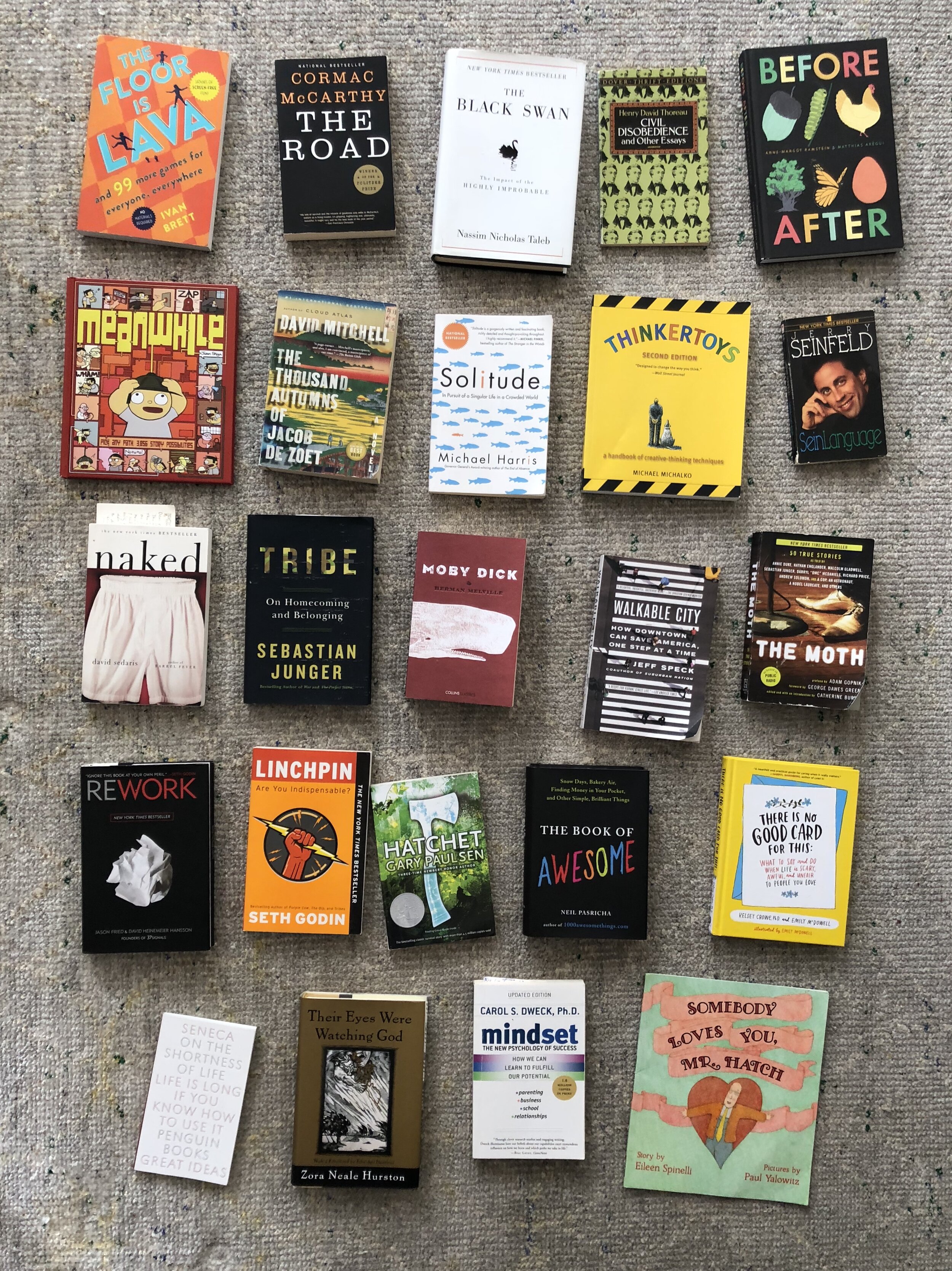
Well, I put together a list of 49 things to do during the Coronovirus and now I’d like to offer 25 of the best books to read during Coronavirus. (Clearly all my writing these days ends in “during the Coronavirus” so please do reply and send me suggestions or others you’d like to see.)
These 25 books are a place for you to open your head and carefully put your mind for a while if, like me, yours just can’t stop spinning right now.
Let’s get into it:
25. The Floor Is Lava: 99 More Games for Everyone, Everywhere by Ivan Brett. Do you have kids bouncing off the walls already? Then you need this book. Remember that game you played when you were a kid where you pretended the floor was lava and you had to jump between all the couches and coffee tables to avoid melting into the Earth’s molten core? Well, I never really thought about it but the most beautiful thing about that game was that you didn’t need … anything. Nothing! You didn’t need a thing. This book is a wonderful collection of games like that. Leave it beside the dinner table.
24. The Road by Cormac McCarthy. I know what you’re thinking. Dark, right? First three lines on the back: “A father and son walk alone through post-apocalyptic America. Nothing moves in the ravaged landscape save the ash on the wind. It is cold enough to crack stones, and when the snow falls it is gray.” Yes, you’re right, it’s dark. But it is also touching. Because even though this phenomenally tight and sparse classic doesn’t sound like the heartwarmer you need right now it will produce deeper feelings of appreciation, gratitude, and love for what you do have right now.
23. The Black Swan: The Impact of the Highly Improbable by Nassim Taleb. Coronavirus is a black swan event. What’s that? A highly improbably event that is a) unpredictable, b) carries massive impact, and c) results in, after the fact, everyone baking up explanations to make it appear less random and more predictable than it really is. This is the book I have thought about over the past few weeks more than any other. It is absolutely essential reading to make sense of these times and (more importantly) help yourself prepare for even more of them in the future. (Bonus: Nassim Taleb is very active on Twitter and offers a lot of insight / rage on what is happening on Coronavirus.)
22. Civil Disobedience and Other Essays by Henry David Thoreau. I am not a big fan of social media or politics but if you’ve been followingmy Twitter account lately you’ve seen a sudden change in my behavior on both counts. I believe Coronavirus is too big a topic to be publicly silent about. (Inspiration from Seth Godin here.) I flipped open this book on civil disobedience for some guidance and inspiration and I think you should, too. Especially if you have a platform or a voice or are a leader people turn to in your family and team. And then, after you’ve read it, stick around for the the fantastic essay “Walking” which is wedged in the back like a cone-shapped chocolate nugget at the bottom of a Drumstick. I love walking and that essay jostled my mind even more. Here’s a link to the full text online. Walking! Sexier than ever.
21. Before After by Matthias Arégui and Anne-Margot Ramstein. Does it feel like your life is cleaving into Before Coronavirus and After Coronavirus phases? This book has no words and offers a metaphorical reflection as you ponder personal changes. On the left side of a page is an acorn. On the right side is an oak tree. On the left side of a page is a bud on a branch. On the right side is a fresh peach. On the left side is a fresh peach. On the right side is a rotten bug-infested peach that was left unpicked. You get the idea. If you’re intrigued, scroll to the end of this YouTube video for a peek inside.
20. Meanwhile: Pick Any Path by Jason Shiga. Did you like Choose Your Own Adventure books when you were a kid? If so, you’ll love this post-modern graphic novel with 3856 story possibilities (3856! seriously!) all told through images and rampant flipping between pages. It’s head-twisting, it’s frenetic, it’s mad-scientist, but if you’re into puzzles or games (or your child is) then this is for you. Like any great game, it is absolutely absorbing, frustrating, and rewarding at the same time.
19. The Thousand Autumns of Jacob De Zoet by David Mitchell. Do you want to disappear? Do you want to go somewhere really far away for a while? How about Japan in the year 1799? I highly recommend this book. Whenever I start telling people about author David Mitchell I catch myself saying “Have you heard of Cloud Atlas? He wrote that!” and then they usually go “Oh! Oh yeah, that was that movie with Tom Hanks, right?” Yes, Cloud Atlas did turn into a movie with Tom Hanks and Halle Berry, and yes it’s wonderful and crazy escapist too, but I personally found it a lot less accessible than this one.
18. Solitude: In Pursuit of a Singular Life in a Crowded World by Michael Harris. Are you living in your head too much right now? Are you getting a bit lost in there sometimes? I am. And if you’re with me then we both need to work on our ability to be in solitude. If loneliness is “alone and sad” then solitude is “alone and happy.” Michael Harris peels back the layers of this incredibly subtle life skill to show us why it’s crucial to master, what gets in the way, and how we can reorient ourselves in the distraction machine we live in. (PS. This book made my Best Of 2018 list.)
17. Thinker Toys: A Handbook of Creative-Thinking Techniques byMichael Michalko. Are you feeling the tectonic plates below your business, workplace, or livelihood groaning? Are you already feeling like it’s going to be a long road to recovery or something more like this changes everything? If you are chomping at what’s next then this handbook of ways to poke and prod your own thinking is a great book to flip through to jostle your own thoughts.
16. SeinLanguage by Jerry Seinfeld. Can you believe Jerry Seinfeld has only written one book ever? Yes, it’s true. He’s reported to have another one out this fall but, until then, this is all we got. Even though it’s 30 years old it completely holds up. If you need some laughs to distract you, why not call up the most successful comedian in the world to help?
15. Little House in the Big Woods by Laura Ingalls Wilder. Okay, you’ve hung out in the 1700s so now it’s time to hang out in the 1800s. A hypnotically vivid autobiographical description of growing up in rural Wisconsin from shooting panthers to smoking meat in hollow tree trunks to playing catch with pig bladders. There is no plot. There is no crisis. There’s just 238 pages in 18-point font of vivid memories weaved into a captivating tableau that makes you feel like you’re living another life. Another fantastic dose of escapism. Written in 1937 as the first book in the famous “Little House” series. According to the wonderful folks at Common Sense Media it’s perfect for anyone age 7 and up. Yes, I read it for the first time recently and loved it. (ThanksGretchen Rubin.)
14. Naked by David Sedaris. About ten years ago my friend Shiv told me she read a David Sedaris essay every night before bed to help clear her thoughts. I remember thinking that sounds weird! But then I tried it. Turns out she’s right! This is something so soothing about David’s slow and paceful writing. The laughs always feel like a surprise even though you know they’re coming every three sentences. I can’t think of an author who grows on you more over the years. Btw, since you asked, popping out of the book in the pic above is indeed the thank you postcard David Sedaris sent me (!?!?) after I interviewed him for 3 Books.
13. Tribe: On Homecoming and Belonging by Sebastian Junger. A friend said to me the other day “Despite the physical seclusion my parents are thrilled I’m suddenly calling them every day.” Who else is feeling a pull back to their tribe? When our tenuous global connection feels short-circuited many of us likely lean back into the tribes which we know for sure we belong. This short book combines history, psychology, and anthropology to share why our tribal connection has been largely lost in modern society and why regaining it may be the key to our psychological survival. In the words of a hockey movie trailer, or this movie trailer this book may matter now more than ever before…
12. Walkable City: How Downtown Can Save America, One Step At A Time by Jeff Speck. Since I brought up Thoreau’s “Walking” earlier let’s tap that nail a little deeper here. Do you ache for simpler times? Walkable neighborhoods? Small town living? I just finished this book I’ll post a longer review in my monthly book club but, suffice to say, Jeff’s voice is fresh, funny, and whip smart, and he will leave you convinced that almost nothing is as important as creating a rich walking life.
11. Moby Dick by Herman Melville. I freely admit this is the only book on this list that I haven’t read. But I want to! I’ve read the first 100 pages a couple times. I like it! But I crumble under its weight. And that’s exactly why I threw it on here. It’s so I could ask you a general question: What is your personal white whale book? Moby Dick? Lord of the Rings? The Count of Monte Cristo? Infinite Jest? What gigantic tome can you finally grab from the basement, dramatically blow the dust off the cover, and place firmly on your bedside table? Because now is time for that book, everybody. Now is that time.
10. The Moth. Loneliness is up! It was already up before Coronavirus but hailing “social distancing” as the new norm for a while has certainly jacked loneliness stock even more. (Sidenote: We should be calling it physical distancing not social distancing. Can we start doing that? Sure, yes, absolutely, keep far apart from everyone. That’s how we stop the virus. But we need to call, text, and connect more than ever before.) If you miss the feeling of hanging out with friends at a bar over a sticky pile of chicken wings then I recommend grabbing The Moth (or the wonderful follow-up All These Wonders) and letting yourself feel like you’re back in the ripped plastic booth under the neon Amstel Light signs. These are stories told live and without notes to standing-room crowds around the world. They will sound like the best story you’ve heard all night when you’re out with friends.
9. Rework by Jason Fried and David Heinemeier Hansson (DHH). Jason Fried and DHH run a famously 100% remote organization called Basecamp. They also are incredible writers who have treated their company as a management test kitchen. If you’re trying to figure out new ways of operating then this is a great thought-provoking primer on what’s possible. (They also wrote a follow-up more specifically about remote-working)
8. Linchpin: Are You Indispensable? By Seth Godin. Pairs well with Rework above (which features a blurb from Seth Godin on the cover). I debated whether to put this or The Dip on here but I think if your employment is feeling shaky then this is the better one to start with. No matter what happens, you own you. Challenges are coming. That’s for sure. But you own you. And this is a guidebook to jacking up your confidence, unlocking boxes you didn’t realize you were sitting inside, and seeing your strengths and opportunities with fresh eyes.
7. Hatchet by Gary Paulson. Do you feel like you just crash landed in the Canadian wilderness and you’re all alone right now? And you need to figure out how to collect your wits and sort yourself out to make it through this trying time? Well, that’s exactly what happens to 13-year-old Brian Robeson in this YA book about survival and determination.
6. The Book of Awesome by Neil Pasricha. My own book? What the hell? Well, I’ve actually been feeling a lot of deja vu over the past couple weeks. I began writing 1000 Awesome Things in 2008 during a very similar feeling period … crashing stock market, rising unemployment, a sort of “anxiety everywhere” cloud floating above us. (That was on top of my own inner world, of course.) The daily blog posts I wrote to cheer myself up and provide a getaway for the everyday eventually got stapled together into this book.
5. There Is No Good Card For This by Kelsey Crowe and Emily McDowell. Emily McDowell out-Hallmarks Hallmark. Her incredible cards over at Emily McDowell and Friends are wonderful, beautiful, and inspiring. (Get a dose on her Instagram, too.) Elizabeth Gilbert calls this book ‘a wonderful crash course in Humanity 101… shows you how to show up as the best possible version of yourself when it matters most.’ A great I find myself turning to again and again. (PS. Check out my conversation with Emily here.)
4. On The Shortness of Life by Seneca. If you’ve followed my stuff for a while you know I’ve talked about this little 2000-year-old essay many times. I keep a copy in my suitcase. In stressful times it seems to give me much needed comfort and grounding. Given that it’s 2000 years old the whole thing is out of copyright and available online here. (If you like this and want another dose of stoic philosophy I recommend The Art of Living by Epictetus.)
3. Their Eyes Were Watching God by Zora Neale Hurston. If you are looking for a book of ultimate redemption over struggle then here it is. Zora Neale was born in Alabama in 1891 and published this novel about a Southern black woman’s journey to independence in 1937. Born from a rape and raised by her grandmother who was a slave, it’s an incredibly epic tale of her life which (I promise) ultimately rewards at the end.
2. Mindset: The New Psychology of Success by Carol S. Dweck. A lot of what happens to us over the coming weeks and months is going to come down to mindset. How are you able to see what happens to you? A deeply researched book that will help you develop a growth mindset across all spectrums of life from business to parenting.
1. Somebody Loves You, Mr. Hatch by Eileen Spinelli. We got a letter in our mailbox last night from somebody on our street who’s offering to help anybody, with any errand, at any time. How beautiful is the tightened togetherness during tragedy? How are your neighbors doing and how can you help? And, a bit less discussed, what are the ripple effects of your help? This children’s book helps show that impact. It’s a tear-inducing story of a lonely old man who receives a giant box of chocolates from a secret admirer which helps him become a loving citizen, friend, and neighbor. When it turns out the box was delivered to the wrong address, he quickly returns to his glum and depressed state. But the people he began loving haven’t forgotten all that love and the book closes with them lifting him back up. For ages 5–8 or, you know, anyone who wants to cry while putting their kid to bed.
49 things to do if you're staying home due to Coronavirus

Have you heard of the Dracula Sneeze?
It’s one example of social distancing being recommended these days along with conference cancellations, work from home policies, and school closures.
In many places it’s all adding up to more home time, family time, kid time, and together time.
If you have a break, how do you embrace it?
Today I’m sharing 49 things to do if you’re staying home due to Coronavirus:
49. Build an amazing couch cushion fort
48. Organize the Tupperware drawer
47. Finally scroll through your Camera Roll to pick out a dozen favorites to print for a photo wall
46. Make a lightbulb vase
45. Garden
44. Start a Reading Challenge with your kids (some ideas here)
43. Read The Story of Us at Wait But Why
42. Do a 7-minute workout
41. Finally clean out that basement storage room
40. Make a mix tape or mix tape playlist
39. Order this book and make paper airplanes
38. Listen to 3 Books (start with David Sedaris, Angie Thomas, or Seth Godin)
37. Prune your apps
36. Read all 1000 awesome things
35. Pick names out of a hat and paint that person’s toenails
34. Read the “Little House” series with your kids
33. Learn how to play chess
32. Go down a 92nd Street Y rabbit hole
31. Pick one of “26 very long books worth the time they’ll take to read”
30. Plan an epic board games tournament
29. Make a Maze Book
28. Watch David Foster Wallace’s “This is Water” commencement speech
27. Throw an indoor picnic
26. Go for a walk and wave at everyone from a distance
25. Pick something you know more about than most people and edit the Wikipedia page
24. Pick a year and watch all the Best International Feature Film nominees
23. Pick a country and plan an International Dinner Night with new recipes and music
22. Take Yale’s popular free online course “The Science of Well-Being”
21. Or another free course
20. Pick a blog you love and commit to reading the entire Archive (try this, this, or this)
19. Craft and mail a postcard to PostSecret
18. Write one of those late 90’s-style giant essay updates emails to a friend. Say you don’t need a reply
17. Organize your books in the Dewey Decimal System (use this and this to help)
16. Download Merlin and become a backyard birder (For inspiration, read this.)
15. Watch the most popular TED Talks of 2019
14. Pick one of the (growing) 1000 most formative books to read
13. Put together a care package for a friend or family member
12. Do a yoga class
11. Go on a long nature walk in the woods
10. Pick a room and rearrange all the furniture
9. Start journalling using Two-Minute Mornings or Ahhlife.com
8. Fix something that's been broken forever
7. Build a stack of pancakes that looks just like the front of the box
6. Organize your filing cabinet, hard drive, or recipes
5. Make a bird feeder out of things lying around your house
4. Paint
3. FaceTime Grandma
2. Check in on your neighbors
1. Forward this email to a friend and pick something to do together
3 steps to developing a happier mindset

While researching resilience for You Are Awesome I found that in order to become more resilient, you need to cultivate a positive mindset first. Why? Because the stronger we are mentally, the better we are able to bend -- not break -- when challenges come.
A positive mindset is like Optimism Insurance. It helps soften every blow you get from a nasty email, friend letting you down, or bad news story flying across the headlines.
So how do we develop a happier mindset?
Let me answer in three steps:
Step 1: Flip your happiness model
Our parents lied! They said they wanted us to be happy but then also encouraged us to go to a good school, find a good job, and work hard for a promotion. Sure, everyone’s parents are different but I would argue that most of us hear some version of this model told to us as children:
GREAT WORK → BIG SUCCESS → BE HAPPY
You know, study really hard, get good grades, go be a doctor! (Are my Indian roots showing?) Or simply work really hard, get a promotion, then be happy!
The first step to cultivating a positive mindset is flipping this model.
Based on research I share below, how does developing a happier mindset really work?
BE HAPPY → GREAT WORK → BIG SUCCESS
Yes, it’s the opposite! A phenomenal paper called The Benefits of Frequent Positive Affect: Does Happiness Lead To Success? shows that if you're happy first... then you do great work, because you're happier doing it! You're 31% more productive, have 37% higher sales, and are three times more creative, amongst a host of other benefits.
So Step 1 is realizing that cultivating a positive mindset needs to happen first … and not as the result of work or success.
Step 2: Commit to a “20 for 20” happiness challenge
So we know we have to be happy first. But… how? Does anyone just wake up in a good mood every day? I don’t! Most people don’t. We have to work at it. It's like yoga. A practice. The goal isn’t to be perfect … the goal is to be better than before.
Luckily there are dozens of positive psychology studies that give specific, tactical practices that we can use to cultivate this mindset.
I often challenge people to commit to a “20 for 20” challenge which means you take one of these practices below and commit to doing it for 20 minutes a day for 20 days in a row. By then you have created a new happiness practice that will be harder to stop.
What are some of the practices? I’ve listed five of my favorites below together with one study on each. Remember: These all take 20 minutes or less a day. And it’s a multiple choice question. You don’t have to do them all! Just pick one.
Journaling about the highlights of your day
In a University of Texas study called “How Do I Love Thee? Let Me Count the Words,” researchers Richard Slatcher and James Pennebaker had one member of a couple write about their relationship for twenty minutes three times a day. Compared to the test group, the couple was more likely to engage in intimate dialogue afterward, and the relationship was more likely to last. What should you write down? Simply a laundry list of the highlights of your day. If you aren't the pen and paper type then try the free email journaling service Ahhlife.com.
Take a nature walk (or another exercise you like)
The American Psychosomatic Society published a study showing how Michael Babyak and a team of researchers found three thirty-minute brisk walks or jogs can improve recovery from clinical depression. Yes, clinical depression. Results were stronger than those from studies using medication or studies using exercise and medication combined. Can you commit to going for a jog 20 days in a row or going for a walk in the woods? If you can get into nature the phytoncides released from trees can reduce adrenaline and cortisol (a stress hormone) in your body. (More on this from the paper "Effect of forest bathing trips on human immune function")
Reading 20 pages of fiction
A 2011 study published in the Annual Review of Psychology showed that reading triggers our mirror neurons and opens up the parts of our brain responsible for developing empathy, compassion and understanding. What does EQ help with? Becoming a better leader, teacher, parent and sibling. (Sidenote: This big a-ha on reading is one of the reasons I launched my podcast 3 Books … where I interview folks like David Sedaris, Judy Blume, and Malcolm Gladwell about which 3 books changed their life. Trying to help find that always elusive next great book to read.)
Playing “Rose Rose Thorn Bud” around the dinner table
My family and I play a game called Rose Rose Thorn Bud almost every night. Essentially, we take turns sharing two roses (what we’re grateful for), a thorn (what didn’t go well that day), and a bud (something we’re looking forward to). I wrote a longer article on Rose Rose Thorn Bud here and made a video on it here, too.
Singing
A study published in Evolution & Human Behavior found that choral singing calms the heart, boosts endorphin levels, improves lung function, expands pain thresholds, and decreases reliance on pain medication. Choral singing was even found to elicit feelings of inclusion, connectivity and positivity, and fosters social closeness in a group. Can you join a church choir or develop a sing-a-long playlist to jam with your kids during school dropoff or pickup?
Step 3: Swap negative inputs for positive inputs
Our brains crave bad news.
We have 200,000 years of evolution programmed into our brains that have perfected the art of looking for problems, finding problems, and solving problems. It's why we rubberneck on the highway, it's why if it bleeds it leads, it's why, in the words of author and media critic Ryan Holiday, "MSNBC's real goal is to glue you to a television screen and sell you Subarus." We get addicted to that hit as our amygdala constantly scans the world for problems. No wonder sometimes that's all we see!
So what's Step 3 to developing a happier mindset?
Swap negative inputs for positive inputs. Cancel your newspaper subscriptions, unfollow all news sites on social media, swipe left on your iPhone and scroll down to disable the News Widget that automatically pops up. (Here's a WikiHow article on disabling iPhone News with more detail.). What's the goal? Swap superficial knowledge of "many bad things every single day" for deeper knowledge on the things that matter to you most. How? Through reading books. And, signing up for emails that actually serve and honor your attention instead of mining it for ads. (Here are 10 I personally read and recommend.)
Don't worry. After you ditch the news you'll still know what's going on. It's impossible to avoid all the TV screens blaring in the corner of every elevator, dentist office, or airport lounge. You may know less about what's going on but you'll be consciously trading that in for deeper knowledge, greater wisdom, and, yes, a happier mindset.
What are the three steps to developing a happier mindset?
Step 1: Flip your happiness model
Step 2: Commit to a "20 for 20" happiness challenge
Step 3: Swap negative inputs for positive inputs
Do you think you can do it?
I know you can do it.
Start right now.
And good luck!
3 ways money can buy you happiness

John Lennon was wrong.
Love isn’t all you need.
A famous study in 2010 by Princeton’s Woodrow Wilson School said making money helps make you happier … up to $75,000 a year. Sure, we can debate the study endlessly. How do they define happiness? How do you define happiness? What if you live in a big expensive city compared to a more affordable small town? What country and currency? And what about in today’s dollars?
But let’s not get lost in the debate.
Can we agree going from struggling to making ends meet to actually making ends meet would make you happier? And that going from making ends meet to having some extra money beyond that would, too?
If so I think the better question really is: How can you spend your money to be happier?
Well, I have just the answer for you! Here are three ways you can spend money to be happier:
1. SKILL
Go online and sign yourself up for painting, ballroom dancing, or figure skating classes. Why? Well, I’m going to be really honest with you. You suck at a lot of things. Your chocolate-making is subpar at best, nobody has seen you mix a decent Manhattan, and your balloon animals are pretty terrible – except, I guess, for your snake.
There’s a lot of research that shows that when we grow, we are happier. Don’t we know this deep down? We all love feeling the burn and reward of learning and then mastering something new. Why are you reading this article? Our minds are always trying to learn. We like it. We crave it.
My friend Michael is a successful author and entrepreneur and last year he told me he signed up for a standup comedy course on a bit of whim. You know what? That’s perfect! Why? Because he had never done standup comedy. He was awful at standup comedy. But he spent the money and felt it would be wasted if he didn’t go. So he went! And by the end? He had put together a tight five-minute set which he happily emailed around to his friends.
Money well spent.
2. SOCIAL
I’ve shared before how my wife Leslie and I each have one “night out” a week. I have a Neil’s Night Out. She has a Leslie’s Night Out.
What do we do?
Well, I’ll get dinner with an old friend, go to a play with my mom, or maybe go to a bookstore to hear an author talk about her new book. Even if it’s with a roomful of people I don’t necessarily know I come home with the feeling of growing and deepening relationships.
Harvard professor Daniel Gilbert wrote the book Stumbling on Happiness. He says if we strip ourselves of everything we think defines us — our genders, nationalities, religions, even our health — it’s really the strength of our relationships with our friends and family that truly affects our happiness levels.
Is there a couple you and your partner have been meaning to invite out for a dinner? A brother- or sister-in-law you can go on a random movie night with? Are you willing to go on Meetup.com and take part in a random social event with a group of strangers? Or pay to join a local Toastmasters Club?
All of them will make you happier.
3. SWEAT
Sweat once a day.
I suck at softball but that didn’t stop me from joining a softball league with some friends a few years ago. Yes, I have been demoted to right field after letting every ground ball go through my legs. But it means once a week at least I’m guaranteed to run around. Joining the team cost $125. And it pays off in spades.
The American Psychosomatic Society published a study showing how Michael Babyak and a team of doctors found that three 30-minute brisk walks or jogs can improve recovery from clinical depression. That’s right, clinical depression. And the results were actually stronger than studies using medication or studies using exercise and medication combined.
Sweating is a science-backed prescription for happiness. Grab a yoga membership. Sign up for kick-boxing. Join a dodgeball league. Or just buy some nice running shoes and start running around the block.
Does money buy happiness?
Well, it can.
Just remember the 3 S’s.
Buy a skill, invest in social nights, and sweat it out.
Fancy cars, sexy threads, and flashy purses can wait.
What we all need are your balloon animals.
Check out the video version of this article
The secret tool everyone can use to develop self-confidence

We know we shouldn’t listen to our critics. We know we should do things for ourselves. Morihei Ueshiba, founder of the Japanese martial art aikido, said, “As soon as you concern yourself with the ‘good’ and ‘bad’ of your fellows, you create an opening in your heart for maliciousness to enter. Testing, competing with, and criticizing others weaken and defeat you.”
So why do we listen? What makes us interested in external measurements? Why do we take outside rankings, results, or opinions over our own opinion of ourselves?
There is a root issue. An underlying reason. There is one issue that many of us have, that I know I have, that is at the basis of why we jump at external rankings. The root issue is . . . our lack of confidence. Self-judgment. We get lost in our own heads, we get confused with mixed advice, so we follow what we see. The root issue is self-confidence. And we’re going to solve this root issue together right now.
“Every single day I come to work I feel like I’m a failure.”
Twilight shone through the glass window and dim lights lit up leather chairs and the shiny lacquered desk as I sat staring in disbelief at my Harvard Business School leadership professor as he smiled wryly through wet, shiny eyes.
Tenured Harvard Business School professors have bachelor’s degrees, master’s degrees, and PhDs, and they finish at the top of their class in all three! They make six-figure salaries and consult and speak on the side to earn even more. And they’re teaching at Harvard! A not-too-shabby résumé bullet point.
So why did my Harvard professor consider himself a failure?
“I walk up to my office door every morning and see that the professor in the office to my left has a Nobel Prize . . . and I know I’ll never have a Nobel Prize,” he continued. “And I see that the professor in the office to my right has written twelve books . . . and I know I’ll never write twelve books. I haven’t even written one. Every single morning I’m reminded how inferior I am and it kills me.”
I looked at him and could tell he was smiling and trying to make a point . . . but I could also see there was some truth in his words. After all, in his world, all his major accomplishments are neutralized by his peers. Piles of degrees, million-dollar bank ac- counts, prestigious jobs—all just par for the course.
The secret scribble to increasing your confidence
What is confidence and how can we become more confident?
Time for the confidence scribble.

Let’s talk about your opinion of yourself. It can be high or low. Sure, it will flip-flop all the time. But let’s say in any instant it can be high or it can be low. Does confidence just have to do with your opinion of yourself?
No!
Most people think it does. But we always have an opinion of others, too. What do you call people with a high opinion of themselves and a low opinion of others? They’re not confident. They are . . .

Stuck-up. Egotistical. Bigheaded. Arrogant people are not confident because they don’t understand that having a high opinion of others doesn’t lower their opinion of themselves. They are affected by other people’s confidence! It makes them feel weak. So they try to lower that confidence while increasing their own. Remember the school yard bully who actually feels bad about himself deep down? This is the guy we’re talking about here. This is the guy who feels the need to be better than others in order to be good at all.
Next box. What do you call people with a high opinion of others but a low opinion of themselves?
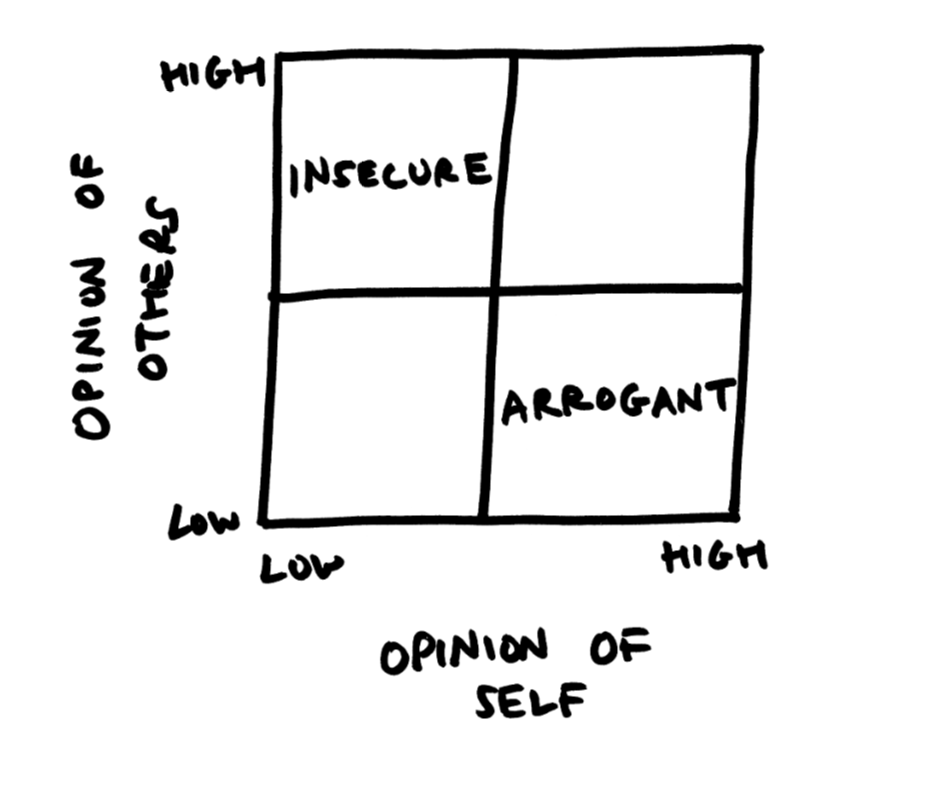
We’ve all been there! We think greatly of other people and believe ourselves to be “lesser than.” You feel this way when you stare at a group photo and say something like “Oh my God! I look hideous! I look huge! You look great, though.” Talk about beating yourself up. High opinion of others. Low opinion of yourself. Insecure.
Now, what do you call people with a low opinion of themselves and a low opinion of others? No high opinions of anyone at all!

We’ve all been here, too. Bad days, bad bosses, big mistakes. We can get into a funk and see problems everywhere. We become cynical. The cynic isn’t confident. Cynical is the furthest thing from confident! As Conan O’Brien said on his final episode hosting The Tonight Show, “All I ask of you is one thing: Please don’t be cynical. I hate cynicism—it’s my least favorite quality and it doesn’t lead anywhere.”
What’s left? What do the truly confident people have? They have a high opinion of themselves. And! They have a high opinion of others. That is the true definition of confidence.

The secret tool to increasing your confidence is the confidence scribble. We will all float around these boxes over and over but the key is taking a second to pause, stand back, and ask yourself where you are right now... and how you can help your mind navigate to the top right box.
Buddha says, “You can search throughout the entire universe for someone who is more deserving of your love and affection than you are yourself and that person is not to be found anywhere. You yourself, as much as anybody in the entire universe, deserve your love and affection.”
Check out the video version of this article
A slightly different version of this article is excerpted from The Happiness Equation
Why you can’t fully live until you’ve accepted death

How do you deal with knowing that one day you’ll die?
I’ve been getting asked this question more and more lately.
It’s why I read so many books on death. It’s why I write so much about The Deathbed Test.
So, how do I deal with knowing that one day I’ll die?
I embrace it.
Fully. 100%.
Embracing death, and living an intentional life as a corollary, I’ve actually realized is the underpinning of all my thinking, all my books, my TED Talk, and just how I try (try) to show up every single day as a son, brother, husband, father, writer, speaker, and fellow human being.
My whole thing is about intentional living.
Because here’s how I think about it:
One day I will die. One day you will die. One day our grandparents will die and our parents will die and our kids will die and their kids will die and their kids will die and their kids will die. The guy cutting you off in traffic? He’ll die. The lady calling you at dinner selling you a credit card? She’ll die. The cashier at the corner store? Dead. Every teacher you’ve ever had, everyone who’s ever woken up beside you, every actor in every movie, every politician in every country… will all be dead. In the blink of an eye.
The average lifespan is 30,000 days.
That time is always, always ticking.
And you will never be as young as you are right now.
So what does that mean?
Well, you have two choices.
You can either be horribly depressed by this thought.
You can feel as though nothing really matters since we are all ashes to ashes and dust to dust in the end. The game is already over! What’s the point? Of this? Of anything? Who cares? Why try? Or, if you do care or do try, maybe it’s because you feel like this weird life on Earth thing is some kind of ‘waiting room’ or ‘test’ towards a higher ideal or better place where we live for infinity after this life is done.
Or:
You can be incredibly liberated by this thought.
We are all going to die! So? This really matters. This! Right here. It really matters. Today really matters. The voicemail you leave for your mom? It really matters. The note you put in your kids lunch? It really matters. Putting your phone away to really connect with your family over dinner? It really matters. The smile you share with a neighbor? It really matters. The art you’re making? The risk you’re taking? The cake you’re baking?
It really matters.
It really matters.
It really matters.
All of it.
It does.
Because there’s not much time.
So in this limited time we have here, in the limited minds we have here, all swimming somewhere inside this vast expanding universe — which, reminder!, we really have no idea what it even is and how it got here and why we got here — our only job, duty, and goal is to live every single day like it is so precious and beautiful and special and rare and fleeting and finite …
… because it is.
And because this matters.
It really matters.
The choice of being horribly depressed or incredibly liberated is up to you.
An earlier version of this article appeared on Apple News
7 ways to read (a lot) more books this year

How many books do you read a year?
For most of my adult life I read maybe five books a year — if I was lucky. I called myself a reader! I told people I was a reader! But in reality I’d just read a couple on vacation and have a few slow burners sitting on the bedside table for months.
But then a few years ago I surprised myself by suddenly reading 50 books. And last year I read well over 100. I have never felt more creatively alive in all areas of my life. I feel more interesting, I feel like a better husband, I feel like a better father, and my writing output has dramatically increased.
Amplifying my reading rate has been the lead domino that’s tipped over a slew of others.
I’m disappointed I didn’t do it sooner.
Why did I wait 20 years?
Well, our world today is designed for shallow skimming rather than deep diving, so it took me some time to identify the specific changes that skyrocketed my reading rate. So how did I 10x my reading rate? Well, I did seven specific things that I think you can do, too.
Here they are:
1. Centralize reading in your home
Back in 1998, psychologist Roy Baumeister and his colleagues performed their famous “chocolate chip cookie and radish” experiment. They split test subjects into three groups and asked them not to eat anything for three hours before the experiment. Group 1 was given chocolate chip cookies and radishes, and were told they could eat only the radishes. Group 2 was given chocolate chip cookies and radishes, and were told they could eat anything they liked. Group 3 was given no food at all. Afterward, the researchers had all three groups attempt to solve an impossible puzzle, to see how long they would last. It’s not surprising that group 1, those who had spent all their willpower staying away from the cookies, caved the soonest.
What does this have to do with reading? I think of having a TV in your main living area as a plate of chocolate chip cookies. So many delicious TV shows tempt us, reducing our willpower to tackle the books.
Roald Dahl’s poem “Television” says it all: “So please, oh please, we beg, we pray / go throw your TV set away / and in its place, you can install / a lovely bookshelf on the wall.”
The first step to reading more is moving your TV to the basement. My wife Leslie and I did this and then installed a bookshelf on a wall near our front door. Now we see it, walk by it, and touch the bookshelf dozens of times a day. And the TV sits dormant unless the Raptors are in the playoffs.
2. Make a public commitment
In his groundbreaking book Influence: The Psychology of Persuasion, Robert Cialdini shares a psychology study showing that once people place their bets at the racetrack, they are much more confident about their horse’s chances than they were just before laying down the bet. He goes on to explain how commitment is one of the big six weapons of social influence. So why can’t we think of ourselves as the racehorses? Make the bet on reading by opening an account at Goodreads, friending a few coworkers or friends, and then updating your profile every time you read a book. Or put together an email list to send out short reviews of the books you read. I do exactly that each month, with my Monthly Book Club Email. I stole the idea from bestselling author Ryan Holiday, who has a great reading list.
3. Find a few trusted, curated lists
Related to the above, the publishing industry puts out over 500,000 books a year in english alone. Do you have time to sift through 1000 new books a week? No, nobody does, so we use proxies like Amazon recommendations. But should we get our reading lists from retailers? If you’re like me, and you love the “staff picks” wall in independent bookstores, there’s nothing as nice as getting one person’s favorite books. Finding a few trusted, curated lists can be as simple as the email lists I mentioned, but with a bit of digging you can likely find the one that totally aligns with your tastes. Some good lists are from Bill Gates, Reese Witherspoon, Andrew Luck, and Derek Sivers.
4. Change your mindset about quitting
It’s one thing to quit reading a book and feel bad about it. It’s another to quit a book and feel proud of it. All you have to do is change your mindset. Just say, “Phew! Now I’ve finally ditched this brick to make room for that gem I’m about to read next.” An article that can help enable this mindset is “The Tail End,” by Tim Urban, which paints a striking picture of how many books you have left to read in your lifetime. Once you fully digest that number, you’ll want to hack the vines away to reveal the oases ahead.
I quit three or four books for every book I read to the end. I do the “first five pages test” before I buy any book (checking for tone, pace, and language) and then let myself off the hook if I need to stop halfway through.
5. Take a “news fast” and channel your reading dollars
I subscribed to the New York Times and five magazines for years. I rotated subscriptions to keep them fresh, and always loved getting a crisp new issue in the mail. After returning from a long vacation where I finally had some time to lose myself in books, I started realizing that this shorter, choppier nature of reading was preventing me from going deeper. So I canceled all my subscriptions.
Besides freeing up mindshare, what does canceling all news inputs do? For me, it saved more than $500 per year. That can pay for about 50 books per year. What would I rather have 10 or 20 years later — a prized book collection which I’ve read and learned from over the years…or a pile of old newspapers? And let’s not forget your local library. If you download Library Extension for your browser, you can see what books and e-books are available for free right around the corner.
6. Triple your churn rate
I realized that for years I’d thought of my bookshelf as a fixed and somewhat artistic object: There it is, sitting by the flower vases! Now I think of it as a dynamic organism. Always moving. Always changing. In a given week I probably add about five books to the shelf and get rid of three or four. Books come in through lending libraries in our neighborhood, a fantastic used bookstore, local indie and chain stores, and, of course, online outlets. Books go out when we pass them to friends, sell them to the used bookstore, or drop them off at the lending library. This dynamism means I’m always walking over to the shelf, never just walking by it. As a result, I read more.
7. Reapply the 10,000 steps rule
A good friend once told me a story that really stuck with me. He said Stephen King had told people to read something like five hours a day. My friend said, “That’s ridiculous. Who can do that?” But then, years later, he found himself in Maine on vacation. He was waiting in line outside a movie theater with his girlfriend, and guess who was waiting in front of him? Stephen King! His nose was in a book the whole time in line. When they got into the theater, Stephen King was still reading as the lights dimmed. When the lights came up, he pulled his book open right away. He even read as he was leaving. Now, I haven’t personally confirmed this story with The King himself but I think the message is an important one either way. Basically, you can read a lot more. There are minutes hidden in all the corners of the day, and they add up to a lot of minutes. In a way, it’s like the 10,000 steps rule. Walk around the grocery store, park at the back of the lot, chase your kids around the house, and bam — 10,000 steps.
It’s the same with reading.
When did I read those five books a year for most of my life? On holidays or during long flights. “Oh! A lot of downtime coming,” I’d think. “Better grab a few books.”
When do I read now? All the time. A few pages here. A few pages there. I have a book in my bag at all times. In general I read nonfiction in the mornings, when my mind is in active learning mode, and fiction at night before bed, when my mind needs an escape.
Slipping pages into all the cricks and corners of the day adds up.
So let me ask you some blunt questions: Are you really ready to 10x your reading rate? Are you prepared to make sacrificial lambs of your TV and newspapers? Are you ready to quit more to read more? Are you ready to publicly commit to the world?
I hope so and I hope some of these steps help.
Happy reading.
21 Awesome Things About The Holidays

Deck the halls with boughs of awesome.
Here are twenty-one awesome things about the holidays. Let's get into it:
Plugging in the Christmas lights from last year and having them all work
Nope, not even a year twisted into a ball of knots in the basement could take the sparkle out of these bright little bulbs. So untie them slowly, hang them quickly, and help get the whole neighborhood shining.
AWESOME!
When the neighbor shovels that little patch of the sidewalk
Sidewalks bring us together.
Fences split yards, lawns divide homes, and invisible property lines are scribbled on dusty blueprints in city archives. But somehow those little strips of concrete tie us all together and connect the dots between our lives.
It’s a beautiful moment when a friendly neighbor shovels the snow off of your walk after a winter snowstorm. Swaddled in snow-packed mitts, sweaty scarves, and salty boots, they’re just lending a helping hand of kindness and some friendly season’s greetings.
AWESOME!
When construction cranes get Christmas lights on them
They’re not selling anything.
Nope, Christmas lights on construction cranes just smile down on the city and cover us all in a warm and festive light. Flickering in the sky, flashing way up high, they hug us all together in a friendly yellow glow.
On top of that, it’s sort of fun thinking about how they got there too. Doesn’t it seem kind of dangerous? It’s like someone risked their lives just putting up lights for the people.
Thanks Spiderman!
AWESOME!
The Holiday Party Save
Do we need all those parties?
Sure, we all love catching up with close friends in Christmas sweaters, but sometimes the office party feels like a meeting with veggie trays, and clinking drinks with second cousins gets old. Face it—there are times when you need to be saved, my friends. Yes, the Holiday Party Save happens anytime a friend yanks you from a bad holiday party conversation by pulling off a thrilling and daring rescue mission.
Here’s how it all goes down:
Step 1: The Plan. Say tonight you’re heading to your uncle’s annual Christmas party with your new boyfriend. As you both walk into Stranger Conversation Territory, it’s important to make that deal up front: You save them, they save you. Don’t forget to shake.
Step 2: The Signal. You’re trapped! When you find yourself listening to neverending vacation stories, getting detailed stock-picking advice, or hearing about someone’s thesis, it’s time to get out. Signal your friend with an eager Smile ’n’ Raised Eyebrows glance, casual Nodding Head-Tilt beckon, or if absolutely necessary, a booming bloodcurdling “Get over here!” scream, like Scorpion in Mortal Kombat.
Step 3: The Save. Here’s the tricky part. Your friend comes over and has two options. First, they can play False Emergency and drag you away while apologizing to the chatty strangers. This is risky because it could look forced and you’ll need to disappear rather than just talk to someone else. Instead, they can try The Natural, which is where they drop a nice, normal transition into the conversation. “Should we go grab some food?” “Linda just got here, let’s say hi,” or “Where’s the bathroom?” usually work well.
Remember: When you’re stuck, when you’re stranded, when all you see is gloom, just yell for your brothers and sisters and let them pull you across the room.
AWESOME!
When that kid crying at the mall isn’t your kid
There’s nothing like a good old-fashioned holiday hissy fit in an elbow-to-elbow packed mall to help soothe your fraying nerves.
Whether it’s the snotty-nosed toddler wailing on Santa’s lap, the sweaty snowsuit screamer on the floor of the toys section, or your everyday baby bawler yelling to the food court heavens, it doesn’t matter.
It’s just a migraine moment in the middle of mall mayhem.
And whether you’re taking care of your baby brother, babysitting the neighbors, or wheeling around your own mutant offspring, we’ve all been there. We all know the stress, we see the staring eyes, we all know the pain, and . . . we do sympathize.
But it’s still great when that kid crying in the mall just isn’t your kid.
Hark! The herald angels sing.
Glory to the kid free king.
AWESOME!
Pulling out that old box of Christmas ornaments from when you were a kid
Let’s go back.
Crack open that musty cardboard box from the basement storage space and get ready to brainwarp back to the big eyes and bright lights of your youth. Yes, yank out that twisted clump of yarn, ceramics, and construction paper and get ready for a sweet stroll down memory lane. Hopefully your old box features some of these classics:
1. A chipped ceramic you painted in elementary school. Maybe it’s the shiny Santa Claus that you doused in too much lacquer back in third grade. The brush strokes make his beard look gray, and one of his eyeballs has a blue smear that makes him cross-eyed. But his smile still holds and that little ribbon you knotted through his hat is perfect for hanging him back up on the tree.
2. Homemade ornaments featuring some combination of construction paper, popcorn, and glitter. When you were young you cleared off the kitchen table and set up a home workshop where you stitched popcorn, glued sparkles, and taped up little rolls of construction paper. And even though the reds have faded to orange and the glitter has cracked away, there’s something beautiful about pulling out those squashed rings, baby handprints, or crayon drawings and letting your brain slip back to simpler days.
3. The hundred-year-old hand-me-down. You’re lucky if you have one of these wood-carved gems bouncing around the bottom of the box. Someone’s Great-grandpa whittled a toy train engine or rosy-cheeked soldier from some softwood and delicately painted it to perfection. Maybe the tree it’s carved from is two or three hundred years old and fell from the woods of a distant forest. High fives if you agree this beats the neon plastic from the dollar store any day.
Yes, when you pull out that box of Christmas ornaments from when you were a kid, it’s like taking a magical mystery tour back to your childhood. It’s a brief headtrip out of your serious grown-up body into the Freaky Friday fun times of yesterday.
AWESOME!
When strangers wish you happy holidays
Holidays are stressful. Gift shopping, mall hopping, money dropping, and through it all you’re planning in-law sleepovers, giant family dinners, and complicated travel plans.
It’s nice in these roaring revved-up moments when a complete stranger catches your eye and wishes you a heartfelt happy holidays.
Whether it’s the cashier at the grocery store, the receptionist at your gym, or the lady getting a perm beside you at the salon, it’s nice scoring that warm little season’s greetings to remind us we’re all chasing the same ol’ thing.
That’s right: Love, big hugs, family time, and cozy company right when we need it most.
AWESOME!
That moment near the holidays when there’s suddenly cookies, chocolate, and candy everywhere
Let’s get fat together.
Roll those rum balls, sprinkle sparkles on the shortbread, and dump the bulk bag of candy canes in the crystal dish by the secretary’s desk.
AWESOME!
Flipping channels and stumbling on that one Christmas special you loved as a kid
It’s a wonderful life.
When you’re bunkering in the basement to get away from the holiday madness upstairs, it’s always nice when the channel flipping pops you onto your favorite old flashback.
Which classic gem burrows into your heart?
1. That Rudolph stop-motion special. Sam the Snowman (no relation to Frosty) narrates this epic tale of outcasts Rudolph and Hermey the Elf as they stumble through the North Pole meeting Yukon Cornelius and the Abominable Snowman before taking refuge on the Island of Misfit Toys. Never forget the moral of the story: Follow your heart and become a dentist.
2. A Charlie Brown Christmas. Like most Charlie Brown cartoons, this one features monotone voices, confusing plots, and dry humor. Thankfully, jazzy piano music and dancing kids make it all come together.
3. Any non-Christmas movie that takes place during Christmas. Sure, Bruce Willis crawling around office ducts in Die Hard might not seem festive, but listen closely to the background music and you’ll hear some Christmas tunes. Let’s throw in Lethal Weapon, Gremlins, and Batman Returns, too.
4. How The Grinch Stole Christmas. All the Whos living in Whoville have a serious problem in that there’s a freakish monster living in the cliffs above their romantic mountain town — dramatically reducing property values by the day. If you don’t love the big rhyming sing-a-long finish to this one, your heart is officially three sizes too small.
5. Frosty the Snowman. Poor Frosty just doesn’t have the personality of Sam from the Rudolph special. And since they always air this one with Rudolph, the inferiority of Frosty jumps out even more. Honestly, if Frosty is your favorite old Christmas special, then I feel sorry for you. You had a rough childhood.
6. Whatever special is on the same time as Frosty on the other channel. A Garfield Christmas, John Denver and the Muppets, or Will Vinton’s Claymation Christmas automatically win.
Finding your favorite holiday special from when you were a kid is like uncovering a hidden stash of buried treasure at the bottom of the sea. It doesn’t matter if you’ve seen it a hundred times, have it on your computer, or own the DVD, either. There’s just something sweet about feeling like it was waiting there at this very moment … and feeling like the stars all aligned to give you a brief little dose of
AWESOME!
The Super Present Power Shop
You’re running late.
When it’s almost Christmas and there’s nothing under the tree it’s time to furrow your brows, steady your glare, and clench those fists for a big Super Present Power Shop.
Yes, this is where you bust into the mall in a sweatshirt-and-running shoes tornado and spin around at high speeds until successfully finding something for everyone on your list.
Black Friday’s long gone, online delivery windows are closed, and now it’s crunch time. Here are some tips to pulling it off:
Good parkin’ is good startin’. Circling the frozen tundra in lot WW is a fool’s game. No, you need to find the secret YMCA entrance, get a drop off and pick up, or arrive ten minutes before doors open to score a front spot. Don’t forget The PLPT.
Skip the coat, grab the kicks. Leave your winter jacket in the trunk and sprint across the icy lot to the front door because thirty seconds of frozen lungs is worth avoiding three hours of overheating. Plus, those running shoes will help you run and dive for the last Baby Farts-A-Lot in the toy store.
Plug in. Stuff some headphones in your ears and rock out to 2Unlimited or Technotronic to stay motivated. Remember: Nothing slows you down more than hearing Santa Baby for the third time in an hour so pump up the jam and let’s move this.
Couples for couples. If you have couples on your list just divide the number of gifts by two. Beer mug for him, wine glasses for her? No, martini shaker for both. You get the idea.
Close your list, open your mind. Focus is important so jot down your names and ideas before hitting the stores. Just make sure to leave your mind open for things to jump off the shelves. Breath mints, People magazines, and IKEA golf pencils all make lovely stocking stuffers.
Bag a Monster. It’s important to ask the first store you visit for the largest bags they have. They should go fishing for a couple minutes and pull out the king-sized ones normally reserved for toaster ovens and dehumidifiers. Use those monster to eat everything else you buy all day.
Okay, listen, listen — these are just a few tips to get you going. As you start perfecting your Power Shop you’ll grow more advanced techniques like stuffing your pockets with peanut butter sandwiches, phoning for inventory checks while waiting in lines, and buying someone a sled so you can drag all your presents from shop to shop.
But no matter what kind of Power Shop you pull off, one thing’s for sure: when you crash back into your couch surrounded by full bags and a crossed-off list well… it’s time to unclench your muscles, droop your eyes, and just smile back slowly at your mall-conquering moment of
AWESOME!
Putting a Santa hat on your pet or grandparent
It’s party time.
And those Christmas sweaters are just the beginning.
I mean sure, tossing on a thick woolly for the holiday party is a sure way to spread the cheer — especially if your sweater features hypnotic swirls of red and green, a giant floating snowman head, or an intense action sequence of Santa flying his reindeer through a blizzard.
But to really get that party going and that eggnog flowing you’ve got to crank it up a notch. Yes, we’re talking about tossing a Santa cap on your golden retriever or grandpa, we’re talking about tossing one on your labradoodle or grandma, and we’re talking about everyone donning their gay apparel to whip this holiday bash into a whole new level of
AWESOME!
Snow falling on Christmas eve
Jumbo snowflakes falling thick and heavy on Christmas Eve is a special sight. They blur the world for a moment and lay a fresh blank canvas over everything. So if you’re sitting inside listening to carols on the radio, munching Christmas cookies, or chatting with family and friends, take a moment to look out the window and just enjoy the scene.
AWESOME!
Ripping your present open like a wild animal
First, some apologies.
We’re sorry, Endurance Wrapper. You spent thirty minutes getting the present just right with your scissor-frilled ribbons, crisply folded corners, and those adorable little bows. You put time in and we didn’t respect that with our raccoon-with-rabies slaughtering of your gift.
We’re sorry, Auntie Paper Collector. We know you quietly keep all the discarded bows and paper to fold back into little piles for next year. Nobody minds the creased sun-faded reindeer wrapping paper because we know you’re saving money and the planet. But this time we didn’t leave you with much. Unless you’re collecting saliva-smeared scraps, squashed boxes, and torn bows.
We’re sorry, Garbage Collecting Dad. We see you trudging around the living room with the World’s Lightest Garbage Bag, scooping up all the tiny bits of tissue paper and sticky ripped price tags. We know your job would be a lot easier if all presents moved to a Gift Bag Only Policy.
We are very, very sorry to you all.
And now that we’ve apologized our conscience is clear.
Because the truth is we love ripping presents open like a drugged-up reindeer.
AWESOME!
Trying on your new clothes as soon as you unwrap them
Stiff creases, unhemmed pants, and itchy tags can’t dent your mood.
Now it’s time to change real fast, clear the kitchen runway, and strut your stuff in a private fashion show for your friends and family.
And dog.
AWESOME!
The In-law Nap
The In-law Nap is any nap you manage to pull off at the in-law’s house. As long as it’s not during Thanksgiving dinner, Christmas present unwrapping, or while the birthday cake is served, it is a completely legal nap and fully counts as spending quality time visiting the in-laws.
Whether you skip out on setting the table, ditch helping with the dishes, or just miss a couple hours playing cards with Grandma . . . it doesn’t matter.
All that matters is you pulled it off.
Yes, you answered a phony phone call in the other room for twenty minutes, you snuck into the kid’s fort and fell asleep in the cushion barracks, or you hid on a pile of jackets and scraggly blankets in the spare bedroom.
All that matters is you pulled it off.
All that matters is that you’re
AWESOME!
Drinking with Grandma
It’s time for some intergenerational egg nogging.
Get ready to light the yule log, sail the gravy boat, and get your eighty-five pound grandmother a sloshy glass of rummy nog.
Now, whatever your age, whatever your tastes, whatever your pleasures, whatever your fates, let’s all agree on one thing today: grabbing an occasional festive drink with your mom’s mom or your son’s son bridges boundaries and crosses divides.
Once upon your time your grandma used to boogie. Once upon a time your grandma threw it down. I’m saying before you danced on tables, she danced on them, too. And before you learned to mix things, she was mixing two.
So when the holidays hit and the families combine it’s time to bring out the punch bowl and time to have a good time. Because we’re not here forever and we’re not here very long. We don’t get many chances so toss one back before granny’s gone.
I never knew my grandparents but I heard stories they were great… so I know if they were here now we’d party hard before it got too late.
AWESOME!
When your guests do the dishes even after you told them not to
It’s time for Christmas dinner.
Yes, sweaty and flushed, you run around baking bread and breaking eggs before that doorbell bing-bongs, the guests ping-pong, and everyone sits down to eat up your delicious holiday meal.
Of course, you enjoy the dinner—you love it, it’s great—but you don’t really enjoy it. No, you’re running around refilling glasses, folding napkins, scooping seconds, warming pies. You’re cleaning crumbs, wiping babies, and keeping an eye on The Kids Table. While everyone sits and chats, you’re a Tasmanian devil of dining room insanity, whipping into a whirlwind and making sure everyone enjoys their meal.
By the end, you’re completely and utterly exhausted. Your bones are bleeding, your skin is stinging, and your body is aching for a tender hug from a cushy couch.
That’s why it’s great when your guests offer to do the dishes after the meal.
“No, no, no,” you say. “Sit down, sit down, sit down.”
But they insist, but you insist, but they insist, but you insist, but they insist . . . and then finally you just stare back at them with hollow, broken eyes and give up.
Now you crashland on the couch, listening to carols as your guests fill the sink and bubble up the suds. And what a beautiful moment of sweet relief it is when you walk back in there and see everything sparklingly clean.
Plus, for the rest of the week you get to enjoy the Treasure Hunt that comes with finding your own dishes in all the wrong cupboards. But it’s no big deal, so just smile and enjoy those Gravy Boat Rescue Missions and Wooden Spoon Search Parties with a smile.
Yes, this one goes out to guests who wash the dishes even after we told them not to. Today we say thanks for the love, thanks for the memories, and thanks for scrubbing the crusty stuffing dish.
AWESOME!
When the Christmas tree gives the only light in the room
Turn out the lights.
Pull the curtains open and watch as jumbo snowflakes drift past the window, snow-covered kids walk by dragging sleds, and winter winds whisper through the evergreens. Smell the turkey crisping in the oven, listen to scratchy carols spinning in your head, and hear footsteps from the family slowly come together in front of the sparkling tree…
Swipe your daughter’s bangs as she lies in your lap, smile at grandpa sipping eggnog on the ottoman, or cuddle up with your cousins in a pile of cozy blankets and comfy sweats on the couch.
Sip that crystal glass of eggnog, sniff the pine of the tree, and relax and share a quiet moment of bliss with someone touching your hands … or your heart.
AWESOME!
Successfully regifting a present to someone who wants it
What do cellophane-wrapped mugs of mini candy canes, Season 3 of Mr. Belvedere on DVD, and framed photos of someone else’s dog have in common?
They’re just what we never wanted.
But that’s okay, that’s okay—because someone else might! Yes, now it’s time for some Regifting Magic, people. It’s time to regift like you’ve never regifted before. You’re a regifting machine if you follow these three steps to freedom:
1. Smile sweetly. Never look a gift horse in the mouth. Instead, look them in the eyes while saying thank you over and over. You may also find it helpful to practice these lines (for these items): “I’ve been meaning to try that place!” (gift card to Taco Bell), “How did you know I liked this shade of green?!” (puke green sweater), and “It’s perfect, it’s perfect—honestly, how have I even been wearing shoes all these years?!” (shoehorn).
2. Add it to your gifts-to-give pile. When you get home, make sure to write a thank-you card promptly and then toss the gift in the closet with your motorized self-twirling spaghetti fork, Streetlamps of the World page-a-day calendar, and novelty light-up ceramic angel. Let your inventory bulk up a bit so you’ve got good regift variety, and be sure to hide the stash from future regiftees. Post-it Notes with the name of the person who gave it to you can also help prevent the dreaded Boomerang Gift. Don’t let it happen to you.
3. Annnnnnd . . . regift! Remember that one man’s trash is another man’s treasure. When you look at it this way, it feels like you’re doing very important gift-giving charity work. You’re a misfit present coordinator! Now, you need to be about 90 percent sure the regiftee will love the present. After all, there’s nothing wrong with gift cards to Taco Bell and light-up ceramic angels. It’s just that one goes to your backward-cap skateboarding rascal of a little cousin and the other goes to your Grandma who loves tacos.
AWESOME!
Driving around town to see all the Christmas lights
Every city has a street.
It’s the quiet cul-de-sac where all the neighbors play it big for Christmas and decorate their homes with the greatest light show the world has ever seen. Word gets out through the local paper or radio station and soon everyone knows it’s just the place to go for a late night cruise down Neon Light Lane.
It’s the one place everyone enjoys traffic jams.
Sitting bumper to bumper around the quiet crescent, you push your hat above your forehead, press your mittens to the window, and stare out at the twinkling scene. Reds and greens flicker and flash on your darkened face as snow reflects classy floodlights, roofs beam with strings of white, and inflatable Santas bob and wave from the middle of lawns.
And there’s always one house that is just a bit better than the rest. It’s probably the family that got the parade route started with the big splash every year. I like thinking the neighbors leaned on their shovels with furrowed brows when they first saw lights spelling Merry Christmas being draped across the roof, but over time their Grinchlike hearts melted and they felt the Christmas spirit themselves.
Somehow over time the street grew and grew and grew until it became the sparkly beauty we see today. There’s something fun and something sweet about bundling up and just driving down the street. Hear the carols softly on the radio, feel the smiles in the car, and just take a moment to relax and remember how lucky we are.
AWESOME!
The sound of snow crunching under your boots
Dim streetlights cast blurry shadows for your cold walk home.
Snow-packed mitts, floppy wool hat, and a drippy, sniffly nose cover your shuddery frame as you shuffle down empty side streets on your way to the cozy warmth of your waiting bed. Everything is an eerily pitch-perfect silence buried under a shadowy sheet of bright white. Pine trees sway softly, Christmas lights flicker, and the biting air ice-scrapes your frost-nipped nose.
Somehow the solid crunch of your winter boots against the packed road snow fills the night with a relaxing and familiar sound that marks tiny little progress towards cuddling up under warm blankets and falling deep asleep.
Like cracking frozen puddles, pushing soft drink lid buttons, or popping a spoon in a jar of peanut butter, the sound of snow crunching under your salty winter boots scratches a primal itch that just feels so satisfying.
So stuff your hands in your pockets, curl your head to your chest, and crunch loud and crunch proud deep into the dark, winter night.
AWESOME!
Earlier versions of some of these appeared in 1000 Awesome Things and The Book of (Holiday) Awesome
--
Feeling anxious about the holidays? Check out this video on how to deal with social anxiety at family gatherings during the holidays:
The Very Best Books I Read In 2019

Welcome to my third annual list of “The Very Best Books I Read This Year.” (Here are my 2017 and 2018 lists.)
Now, books make great gifts but if you want some other intentional living gift ideas check out my Unconventional Christmas Gift Guide.
These are my favorite books I read this year. I hope you find one or two you like.
Happy holidays,
Neil
—