7 quotes on the power of reading from Charlie Munger
Hey everyone,
Charlie Munger died last Tuesday at age 99. If you don't know him, I recommend this New York Times obituary or (to go deeper) the book Poor Charlie's Almanack which was one of my top books of 2020. I was texting my friend Shane the day his death was announced and he told me had a meeting scheduled with Charlie. That day! They were going to discuss Charlie coming on Shane's podcast. He got a cancellation from Charlie's assistant a few hours before the news. But think about that: At age 99 the man was ... still working. I love that. You know my views on retirement which I expand on heavily in The Happiness Equation.
One quote I love which I got from this 2005 "Never Retire" NYT Op-Ed by Bill Safire is: "When you're through changing, you're through." Maybe that's the real pearl of wisdom. Not to keep gunning till you die but to simply always strive to change — to grow — to learn. Curiosity! Staying connected! Being tapped in! I hope when I'm 99 I have a meeting scheduled with some plucky Canadian podcaster 50 years younger than me. Why? Because I know I'll learn something from that. And I hope that after the call I pick up a book.
Charlie Munger's wisdom is captured in many places — including this great repository Shane created on his blog — but today I want to just share a few of my favorite quotes about reading. He was a reading evangelist! And I love him for it. Because sometimes, when I'm on, you know, the tenth hour of writing up my monthly book club or twenty hours into prepping to interview somebody about their formative books I stop and think "Wait, does anybody even read anymore? Who's reading books? Why am I focusing all my time and energy on something potentially shrinking when I should really be learning how to use The Tik Tok?"
Ah, but then I read quotes like these and remember. Wisdom, learning, growing, changing — really living, that's what I'm after. I think that's something we share. And I know I have found nothing offering more compressed wisdom nor a wider range of experienced emotions than reading books.
Thank you, Charlie. Rest in peace. And may we all enjoy a lifetime of reading. A few of my favorite "Charlie on reading" quotes below!
Neil
1. “In my whole life, I have known no wise people (over a broad subject matter area) who didn’t read all the time – none, zero.”
2. “As long as I have a book in my hand, I don’t feel like I’m wasting time.”
3. “We read a lot. I don’t know anyone who’s wise who doesn’t read a lot. But that’s not enough: You have to have a temperament to grab ideas and do sensible things. Most people don’t grab the right ideas or don’t know what to do with them.”
4. “Warren (Buffett) and I do more reading and thinking and less doing than most people in business. We do that because we like that kind of a life. But we’ve turned that quirk into a positive outcome for ourselves. We both insist on a lot of time being available almost every day to just sit and think. That is very uncommon in American business. We read and think.”
5. "Develop into a lifelong self-learner through voracious reading; cultivate curiosity and strive to become a little wiser every day.”
6. "It's been my experience in life if you just keep thinking and reading you don't have to work."
7. “If it’s wisdom you are after, you are going to spend a lot of time sitting on your ass and reading.”
Sign Up for a Dose of Inspiration:
Every other week, I send an email out with an article I’ve written, or one of my favorite speeches, essays or poems. No ads, no sponsors, no spam, and nothing for sale. Just a dose of inspiration or beauty!
Click here to sign up.
7 books to calm your mind before bed (instead of watching the news!)
Hey everyone,
Time for my Black Friday door-crashing special! Just kidding. I'm not doing that. I just want to talk about reading books. Why? Well, do you fall into late-night doomscrolling rabbit holes like I do? Makes sense! Billions of dollars of research have fine-tuned the hijacking machine that pulls us forever deeper into news and social media funnels. Especially when we're tired and unable to mentally pull away. I've started locking my phone in a Kitchen Safe every night -- I bought the Mini version from this website (no affiliation and not an ad!) -- and then head up to read.
Here are 7 books to help calm your mind before bed,
Neil

Little House in the Big Woods by Laura Ingalls Wilder. Let's start with some children's literature! Hypnotic autobiographical description of growing up in rural Wisconsin in the late 1800s. From shooting panthers to smoking meat in hollow tree trunks to playing catch with pig bladders. There is no plot. There is no crisis. There’s just 238 pages in 18-point font of vivid memories weaved into a captivating tableau that makes you feel like you’re living another life. And one that's far, far away from this one. Masterful escapism and the first book in the famous “Little House” series. Originally written in 1937 and still perfect today.
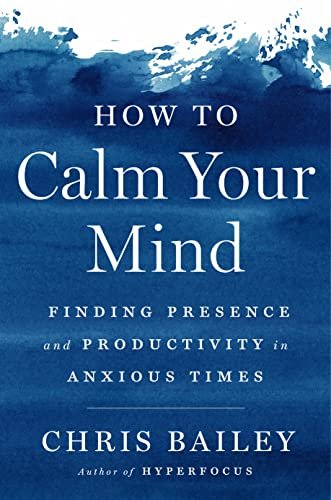
How To Calm Your Mind: Finding Presence and Productivity in Anxious Times by Chris Bailey. Little more head on but a great book Chris wrote post-burnout and post-anxiety attack as a simple guide to calming his / your mind. So how do we calm your mind? Get off phones, get outside, lower dopamine, increase analog -- and Chris leads us there with a great dose of left-brain-scratching research and a, yes, calm tone that makes this a perfect read for right now. Great offering for the overwhelmed.

When You Are Engulfed In Flames by David Sedaris. Really anything by David Sedaris could go here. A long time ago my friend Shiv told me she read a Sedaris essay every night before bed. Something sounded off about that. But then I tried it. And she’s right! There’s something so soothing about his slow, peaceful pace. The rhythm feels like hanging with a friend. And the laughs wash away stress, too. Here’s “It’s Catching” by Sedaris in The New Yorker if you want a sample from this collection. I still love Naked and Me Talk Pretty One Day, too.
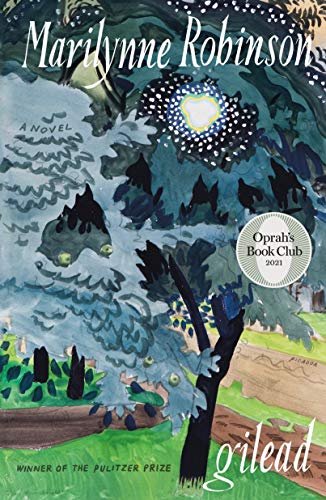
Gilead by Marilynne Robinson. Set in a small Iowa town named (yes) Gilead in the 1950s the book is a letter from a septuagenarian pastor to his first and only child, a young boy, with everything he wishes he’d be around to tell him when he got older. Sound tearjerking already? Just wait. There are layers beyond layers here and yet they’re all baked into a pastry that somehow feels light. I already feel like I need to read it again. Winner of the National Book Critics Circle Award and the Pulitzer Prize.

Ikigai: The Japanese Secret to a Long and Happy Life by Héctor García and Francesc Miralles. I wrote a lot about ikigai in The Happiness Equation which is perhaps why Hector Garcia mailed me a copy of this book when it first came out. It has gone on to become a massive international bestseller. And for good reason: The book triangulates and expands elements of Dan Buettner’s famous Blue Zones studies and TED Talk into a well-researched, wide-ranging, well-organized handbook with everything from sharing Okinawan antioxidant-rich food to lessons on practicing qigong. Helps us pull away from the stress of today.
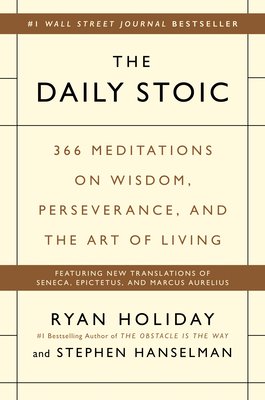
The Daily Stoic: 366 Meditations on Wisdom, Perseverance, and The Art of Living by Ryan Holiday and Stephen Hanselman. A wonderful collection of excerpts from the Stoic greats -- Marcus Aurelius, Epictetus, Seneca, and their pals -- with a contemporary expansion from Ryan. Nothing beats getting out of the moment like reading something over 1000 years old. (That's one of my seven ideas for sleeping better.) This is Ryan Holiday's bestselling book for good reason.
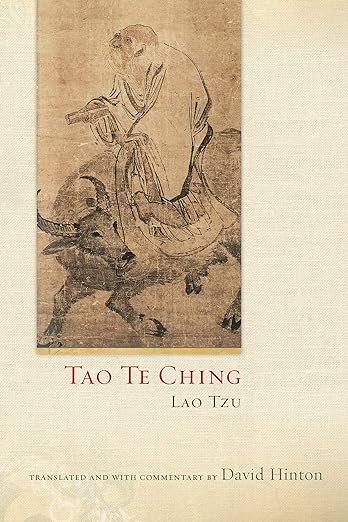
Tao Te Ching by Lao Tzu. James Frey told me he finds solace in the Tao Te Ching -- one of his three most formative books. A lot of little poems or words of wisdom resonated with me from that book so I looked for a copy. What’s the biggest problem finding a “book” written over 2500 years ago? Picking a translation. The used bookstore near my house had about a dozen. I kept opening and looking for one where I could make sense of what I was reading and finally settled on a translation by David Hinton. You can find some good options to pick from here. Wonderful to read a few pages before bed. Sometimes they rattle around my brain, sometimes I feel like I’m lost in a zen koan, and sometimes I feel like I pull something beautiful from them. Here’s a sample: “7. There’s a reason heaven and earth go on enduring forever / their life isn’t their own / so their life goes on forever. / Hence, in putting himself last / the sage puts himself first, / and in giving himself up / he preserves himself. / If you aren’t free of yourself / how will you ever become yourself?”
We live in overwhelming times! I hope one of these books helps you pull yourself back from the overwhelm. As always, just reply and let me know which ones you resonated with or any others you recommend. Hang in there, everybody.
Sign Up for a Dose of Inspiration:
Every other week, I send an email out with an article I’ve written, or one of my favorite speeches, essays or poems. No ads, no sponsors, no spam, and nothing for sale. Just a dose of inspiration or beauty!
Click here to sign up.
How to Tell Yourself a Different Story with Seth Godin
Hey everyone,
A few moons ago I began testing a new short-and-sweet style release on my 3 Books podcast feed. I’m thinking of the entire show as one big book! And, as you know, every full moon I drop a new Chapter. The goal is 333 Chapters total for 1000 formative books all the way up to 2040.
Well, now I’m trying out Pages. A Page is a 333-second (or less) excerpt from a Chapter dropped at 3:33am between Chapters. Bite-sized! Meant to drop a little morsel of wisdom — or a book recommendation or an interesting viewpoint — into your feed. For short commutes, little walks, or just a podcast palette cleanser between longer listens.
Today I’m pasting the transcript of the most popular Page so far: Page 31 from Seth Godin called “How to Tell Yourself a Different Story.” You can download all Pages by subscribing to the show on Apple or Spotify. 100% free and 100% ad-free — as always.
Have a great week,
Neil
Page 31: How to Tell Yourself a Different Story with Seth Godin
Page 31 here | Full chat with Seth here
Seth: I think almost all help is self-help. If you were drowning, it's really unlikely that someone will pick you up and take you out of the water. It is way more likely that someone will throw you a life buoy. Or, reach out with a long stick. Or, try to help you swim to shore. But if you don't want to do it, you're probably not going to get saved. And that, what we seek to do when we want to do better, when we want to feel better, or when we want to make a better difference, is help ourselves, is commit to moving forward. And that's all a self-help book does, if it's doing a good job, is open the door for you to fix yourself. The author can't fix you. The diet book can't make you skinny. A book on goal setting can't make you successful. What it can do is open the door.
And so, if you say, 'I don't like self-help books, they're always trying to do this and this and this.' You might be saying, 'Well actually I don't want to help myself get out of this spot I'm in because I'm comfortable being unhappy. I'm comfortable being stuck.' And that the problem with reading a book like this is that it might work. And if it works, then I'll have to change. And if I change, that might be uncomfortable.
My story is that I was unsuccessful and unhappy. I had a narrative in my head that things weren't working and every time something didn't work I would go 'Ah, there it goes again!' But the door was open and I said, you know what, your problem is not the outside world. Your problem is the story you're telling yourself about the outside world, and that story is a choice. And if you're not happy with the story, tell yourself another story. Period. That simple. And most people will hear what I just said and not change anything. Because I'd been telling myself a story that made me unhappy. And if I wasn't happy with that story I should tell myself a different story. The outside world wasn't the problem. I mean I won the birthday lottery. I grew up with great parents, upper-middle class, with privilege, going to a famous college, and I was healthy. So every story I was telling myself was this made-up story that I didn't have to tell myself. I could've told myself a different story. And that choice is at the heart of almost every self-help book. And it's at the heart of what a non-fiction author has the chance to do. Now notice, when you read a book, the voice is your voice -- not true when you listen to an audiobook. Your voice, in your head, saying something that you didn't believe until you read it. And maybe, just maybe, the author can use the tension and the leverage and the moment to create a little bit of magic that gets you to open the door you could've opened all along. All of us could tell ourselves a better story.
Neil: What happened after that? You said everything changed?
Seth: My life completely changed. I stopped whining. I stopped looking for reasons to whine. Shortly thereafter I applied for an on-campus job and became co-founder of the largest student run business in the country. We started a travel agency and a ticket bureau and a concert agency and a coffee shop and a laundry service and a birthday cake service, every week or two we started a new business and -- so many things happened because I chose to tell myself a different story. Shortly after that I met the woman who became my wife, which was a great decision on my part, and so all of those factors happened, not because the outside world got better, but because I chose to tell myself a different story.
Neil: That is so beautiful.
Listen to all Pages on Apple or Spotify. Full chat with Seth here.
Sign Up for a Dose of Inspiration:
Every other week, I send an email out with an article I’ve written, or one of my favorite speeches, essays or poems. No ads, no sponsors, no spam, and nothing for sale. Just a dose of inspiration or beauty!
Click here to sign up.
The Nature of the Fun by David Foster Wallace
Hey everyone,
'The Nature of the Fun' by David Foster Wallace (DFW) is one of my favorite essays.
It's purportedly about writing fiction—and wrestling through the fears and emotions around the process—but I think it applies to a lot more. Like how to find, and especially re-find, the fun at the heart of whatever challenging thing you're doing. Especially after you've had some success. Beware market winds or they may blow you senseless!
This essay originally appeared in 'Fiction Writer' in 1998 and is available today as part of the absolutely phenomenal DFW essay collection 'Both Flesh and Not' (Library, Goodreads, Amazon). The copyright is held by the David Foster Wallace Literary Trust. (DFW very sadly died by suicide in 2008.) I have bought 'Both Flesh and Not' (Library, Goodreads, Amazon) as a gift for people many times and highly recommend it. This essay is worth owning in print and the title track on Roger Federer is likely the best essay on tennis ever written. Many, many gems in there.
On a personal note I talked about 'The Nature of the Fun' back in Chapter 1 of 3 Books as it was a big part of my inspiration to start the podcast. I reread it often and use it as a helpful artistic centering force.
I hope you like it too,
Neil
The Nature of the Fun
Written by David Foster Wallace | (Library, Goodreads, Amazon)
The best metaphor I know of for being a fiction writer is in Don DeLillo's Mao II, where he describes a book-in-progress as a kind of hideously damaged infant that follows the writer around, forever crawling after the writer (i.e., dragging itself across the floor of restaurants where the writer's trying to eat, appearing at the foot of the bed first thing in the morning, etc.), hideously defective, hydrocephalic and noseless and flipper-armed and incontinent and retarded and dribbling cerebrospinal fluid out of its mouth as it mewls and blurbles and cries out to the writer, wanting love, wanting the very thing its hideousness guarantees it'll get: the writer's complete attention.
The damaged-infant trope is perfect because it captures the mix of repulsion and love the fiction writer feels for something he's working on. The fiction always comes out so horrifically defective, so hideous a betrayal of all your hopes for it—a cruel and repellent caricature of the perfection of its conception—yes, understand: grotesque because imperfect. And yet it's yours, the infant is, it's you, and you love it and dandle it and wipe the cerebrospinal fluid off its slack chin with the cuff of the only clean shirt you have left because you haven't done laundry in like three weeks because finally this one chapter or character seems like it's finally trembling on the edge of coming together and working and you're terrified to spend any time on anything other than working on it because if you look away for a second you'll lose it, dooming the whole infant to continued hideousness. And but so you love the damaged infant and pity it and care for it; but also you hate it—hate it—because it's deformed, repellent, because something grotesque has happened to it in the parturition from head to page; hate it because its deformity is your deformity (since if you were a better fiction writer your infant would of course look like one of those babies in catalogue ads for infantwear, perfect and pink and cerebrospinally continent) and its every hideous incontinent breath is a devastating indictment of you, on all levels... and so you want it dead, even as you dote and love and wipe it and dandle it and sometimes even apply CPR when it seems like its own grotesqueness has blocked its breath and it might die altogether.
The whole thing's all very messed up and sad, but simultaneously it's also tender and moving and noble and cool—it's a genuine relationship, of a sort—and even at the height of its hideousness the damaged infant somehow touches and awakens what you suspect are some of the very best parts of you: maternal parts, dark ones. You love your infant very much. And you want others to love it, too, when the time finally comes for the damaged infant to go out and face the world.
So you're in a bit of a dicey position: you love the infant and want others to love it, but that means you hope others won't see it correctly. You want to sort of fool people: you want them to see as perfect what you in your heart know is a betrayal of all perfection.
Or else you don't want to fool these people; what you want is you want them to see and love a lovely, miraculous, perfect, ad-ready infant and to be right, correct, in what they see and feel. You want to be terribly wrong: you want the damaged infant's hideousness to turn out to have been nothing but your own weird delusion or hallucination. But that'd mean you were crazy: you have seen, been stalked by, and recoiled from hideous deformities that in fact (others persuade you) aren't there at all. Meaning you're at least a couple fries short of a Happy Meal, surely. But worse: it'd also mean you see and despise hideousness in a thing you made (and love), in your spawn, in in certain ways you. And this last, best hope—this'd represent something way worse than just very bad parenting; it'd be a terrible kind of self-assault, almost self-torture. But that's still what you most want: to be completely, insanely, suicidally wrong.
But it's still all a lot of fun. Don't get me wrong. As to the nature of that fun, I keep remembering this strange little story I heard in Sunday school when I was about the size of a fire hydrant. It takes place in China or Korea or someplace like that. It seems there was this old farmer outside a village in the hill country who worked his farm with only his son and his beloved horse. One day the horse, who was not only beloved but vital to the labor-intensive work on the farm, picked the lock on his corral or whatever and ran off into the hills. All the old farmer's friends came around to exclaim what bad luck this was. The farmer only shrugged and said, "Good luck, bad luck, who knows?" A couple days later the beloved horse returned from the hills in the company of a whole priceless herd of wild horses, and the farmer's friends all come around to congratulate him on what good luck the horse's escape turned out to be. "Good luck, bad luck, who knows?" is all the farmer says in reply, shrugging. The farmer now strikes me as a bit Yiddish-sounding for an old Chinese farmer, but this is how I remember it. But so the farmer and his son set about breaking the wild horses, and one of the horses bucks the son off his back with such wild force that the son breaks his leg. And here come the friends to commiserate with the farmer and curse the bad luck that had ever brought these accursed wild horses onto his farm. The old farmer just shrugs and says, "Good luck, bad luck, who knows?" A few days later the Imperial Sino-Korean Army or something like that comes marching through the village, conscripting every able-bodied male between like ten and sixty for cannon-fodder for some hideously bloody conflict that's apparently brewing, but when they see the son's broken leg, they let him off on some sort of feudal 4-F, and instead of getting shanghaied the son stays on the farm with the old farmer. Good luck? Bad luck?
This is the sort of parabolic straw you cling to as you struggle with the issue of fun, as a writer. In the beginning, when you first start out trying to write fiction, the whole endeavor's about fun. You don't expect anybody else to read it. You're writing almost wholly to get yourself off. To enable your own fantasies and deviant logics and to escape or transform parts of yourself you don't like. And it works—and it's terrific fun. Then, if you have good luck and people seem to like what you do, and you actually get to get paid for it, and get to see your stuff professionally typeset and bound and blurbed and reviewed and even (once) being read on the AM subway by a pretty girl you don't even know, it seems to make it even more fun. For a while. Then things start to get complicated and confusing, not to mention scary. Now you feel like you're writing for other people, or at least you hope so. You're no longer writing just to get yourself off, which—since any kind of masturbation is lonely and hollow—is probably good. But what replaces the onanistic motive? You've found you very much enjoy having your writing liked by people, and you find you're extremely keen to have people like the new stuff you're doing. The motive of pure personal fun starts to get supplanted by the motive of being liked, of having pretty people you don't know like you and admire you and think you're a good writer. Onanism gives way to attempted seduction, as a motive. Now, attempted seduction is hard work, and its fun is offset by a terrible fear of rejection. Whatever "ego" means, your ego has now gotten into the game. Or maybe "vanity" is a better word. Because you notice that a good deal of your writing has now become basically showing off, trying to get people to think you're good. This is understandable. You have a great deal of yourself on the line, now, writing—your vanity is at stake. You discover a tricky thing about fiction writing: a certain amount of vanity is necessary to be able to do it at all, but any vanity above that certain amount is lethal. At this point 90+ percent of the stuff you're writing is motivated and informed by an overwhelming need to be liked. This results in shitty fiction. And the shitty work must get fed to the wastebasket, less because of any sort of artistic integrity than simply because shitty work will make you disliked. At this point in the evolution of writerly fun, the very thing that's always motivated you to write is now also what's motivating you to feed your writing to the wastebasket. This is a paradox and a kind of double bind, and it can keep you stuck inside yourself for months or even years, during which you wail and gnash and rue your bad luck and wonder bitterly where all the fun of the thing could have gone.
The smart thing to say, I think, is that the way out of this bind is to work your way somehow back to your original motivation: fun. And, if you can find your way back to the fun, you will find that the hideously unfortunate double bind of the late vain period turns out really to have been good luck for you. Because the fun you work back to has been transfigured by the unpleasantness of vanity and fear, an unpleasantness you're now so anxious to avoid that the fun you rediscover is a way fuller and more large-hearted kind of fun. It has something to do with Work as Play. Or with the discovery that disciplined fun is more fun than impulsive or hedonistic fun. Or with figuring out that not all paradoxes have to be paralyzing. Under fun's new administration, writing fiction becomes a way to go deep inside yourself and illuminate precisely the stuff you don't want to see or let anyone else see, and this stuff usually turns out (paradoxically) to be precisely the stuff all writers and readers share and respond to, feel. Fiction becomes a weird way to countenance yourself and to tell the truth instead of being a way to escape yourself or present yourself in a way you figure you will be maximally likable. This process is complicated and confusing and scary, and also hard work, but it turns out to be the best fun there is.
The fact that you can now sustain the fun of writing only by confronting the very same unfun parts of yourself you'd first used writing to avoid or disguise is another paradox, but this one isn't any kind of bind at all. What it is is a gift, a kind of miracle, and compared to it the reward of strangers' affection is as dust, lint.
Sign Up for a Dose of Inspiration:
Every other week, I send an email out with an article I’ve written, or one of my favorite speeches, essays or poems. No ads, no sponsors, no spam, and nothing for sale. Just a dose of inspiration or beauty!
Click here to sign up.
44 Things I've (Almost) Learned As I Turn 44
Hey everyone,
Today is my birthday!
Last year I shared a list of birthday advice. Now it's time for this years! Two in a row makes it a tradition, I think. For the list just scroll down!
Btw some background if you're still reading the top part: I've been wisdom-collecting for years. In my 20s I took hundreds of flights and always made it my goal to ask the person I was sitting beside for a piece of life advice before getting off the plane. (It helps that my 20s were before airplane internet and giant headphone cocoons.) I'm sure a lot of these come from those chats. And then, after last year's list, I made a little file on my phone called "44" and have been planting, snipping, and pruning it all year -- treating this list like some kind of little plant I'm ready to finally put on my porch.
And remember: Lists like these are preachy by nature! Take what you like and chuck the rest in the bin.
Here we go:
1. The best sunblock is the one you use.
2. If you don't know if it goes in the dryer, it doesn't.
3. Let your kids catch you reading books. Don't let them watch you scrolling social media.
4. 3 E's of a great speech: Entertain, Educate, Empower.
5. Dating tip: You meet interesting people in interesting places.
6. Add a silent mental "...yet" to any sentence you catch yourself starting with "I can't", "I'm not", or "I don't." "I can't speak Hindi ...yet", "I'm not a runner ...yet", "I don't eat oysters ...yet."
7. Mood follows action.
8. Time you spend with your kids when they're young correlates with time they spend with you when you're old.
9. Stock tip: Buy the haystack, not the needle.
10. Never buy a couch before taking a nap on it.
11. Remember the 'End Of History Illusion': We all know our pasts were bumpy -- yet never expect our futures to be.
12. Ideas are the easy part. Doing it is the hard part.
13. No cell phones in the bedroom. If you need waking up, buy an alarm clock. If you get emergency calls, get a landline.
14. There's nothing wrong with ending a sentence with of.
15. Easy way to entertain toddlers: Lie face down in the middle of the floor.
16. Grapefruits that look best often taste worst and grapefruits that look worst often taste best.
17. Wrap floss around middle fingers not pointer fingers.
18. Most people read zero books last year. 2 pages of fiction a day helps build back the habit. 'Foster', 'Animal Farm', 'A Christmas Carol', 'The Little Prince', and 'The Old Man and The Sea' are all <100 pages.
19. You can't make new old friends.
20. Addiction is when something that takes you from normal to good starts taking you from bad to normal.
21. Beware the 5 greatest regrets of the dying: i) I wish I'd had the courage to live a life true to myself ii) I wish I hadn't worked so hard iii) I wish I had the courage to express my feelings, iv) I wish I had stayed in touch with my friends, and v) I wish I had let myself be happier
22. Don't post your kids faces online. They might sue you.
23. Divorce is not a death sentence.
24. Strapping things to your body to measure things in your body makes you less connected to your body.
25. Between jobs remember: The longer you hold your breath underwater the more interesting place you come up.
26. On making decisions: Low time, low importance? Automate. High time, low importance? Regulate. Low time, high importance? Effectuate. (Just do it!) High time, high importance? Debate.
27. If you don't deal with your shit, your shit deals with you.
28. When sending meeting options in multiple time zones put their time zone first.
29. Stitches vs Bandaids Test: Aim to say yes to kids trying things that cause bandaids and no to things that cause stitches.
30. You don't have to finish the book.
31. Ikigai: A reason to get out of bed in the morning. Write one down on a folded index card and leave it on your bedside table.
32. To pay more attention in video meetings: Hide Self View.
33. Blender breakfast I've used for 15 years: water, cinnamon, turmeric, protein, frozen banana, frozen greens, powdered greens, nut milk, nut butter, yogurt, avocado.
34. Guaranteed way to get good: Do it for free for ten years.
35. You don't rise to the level of your goals. You fall to the level of your systems.
36. Funeral Rule: If you're not sure if you should go, go.
37. The Lindy Effect: Longer something's been popular, longer it'll stay popular. Helpful for finding books, restaurants, ideas.
38. Cut the cord between guilt and pleasure.
39. Social Media Paradox: More you're posting about it less you're doing it.
40. There is a relationship between how much you buy local and how nice the flowers are in your park.
41. Changing your mind is a sign of strength not weakness.
42. There is a tiny arrow on your gas gauge that tells you which way to park your car at the pumps.
43. Quickest happiness hack? Lower expectations.
44. You only earned what you spent and enjoyed.
-
I'm sure I stole all of these but some specific credits: Rich Roll (7), Daniel Gilbert, Jordi Quoidbach, and Timothy Wilson (11), Paul Graham (20), Bronnie Ware (21), Sarah Silverman (27), Joey Coleman (29), James Clear (35), and my dad (44). Bad paraphrases all mine, of course. Click here to read last year's list.
Read more of my birthday advice:
46 Things I’ve (Almost) Learned As I Turn 46
45 Things I’ve (Almost) Learned As I Turn 45
43 Things I've (Almost) Learned As I Turn 43
Sign Up for a Dose of Inspiration:
Every other week, I send an email out with an article I’ve written, or one of my favorite speeches, essays or poems. No ads, no sponsors, no spam, and nothing for sale. Just a dose of inspiration or beauty!
Click here to sign up.
"The right to the future tense" by Shoshana Zuboff
Hey everyone,
In my May 2023 Book Club, I said 'The Age of Surveillance Capitalism' by Shoshana Zuboff is the best book I've read this year. A rip-the-mask-off-the-tech-giants journalistic tour de force that squeezed my mind and my heart. I honestly think about the book several times a week -- even months later.
One of the more profound insights it left me with is this idea of who owns "the right to the future tense." Right now? We do! We get to decide what we do next, right? But... for how long? Algorithms nudge our behavior into binary actions that chip away agency. A map tells us which way to drive ... then slips a donut ad in at the red light. A prompt from the pharmacy tells us the next tube of cream has been delivered to our mailbox ... before we've even checked to see if the rash is still there. Does this nudging add up to convenience alone? When will it -- or when did it -- tip further into behavior ... cajoling. Behavior ... determining?
Who owns the future tense? Today I'm sharing a short excerpt from Chapter 11 of 'The Age of Surveillance Capitalism' introducing this idea. These are 8 of the first 12 paragraphs of that chapter that run across four of the 525 pages of the book. I hope this might nudge you into buying the book. (You can do so right here!) But, of course, that is still (for now) your decision...
Neil

Chapter Eleven
The Right To The Future Tense
An Excerpt from ‘The Age of Surveillance Capitalism’
Written by Shoshana Zuboff
I. I Will to Will
I wake early. The day begins before I open my eyes. My mind is in motion. Words and sentences have streamed through my dreams, solving problems on yesterday's pages. The first work of the day is to retrieve those words that lay open a puzzle. Only then am I ready to awaken my senses. I try to discern each birdcall in the symphony outside our windows: the phoebe, redwing, blue jay, mockingbird, woodpecker, finch, starling, and chickadee. Soaring above all their songs are the cries of geese over the lake. I splash warm water on my face, drink cool water to coax my body into alertness, and commune with our dog in the still-silent house. I make coffee and bring it into my study, where I settle into my desk chair, call up my screen, and begin. I think. I write these words, and I imagine you reading them. I do this every day of every week—as I have for several years—and it is likely that I will continue to do so for one or two years to come.
I watch the seasons from the windows above my desk: first green, then red and gold, then white, and then back to green again. When friends come to visit, they peek into my study. There are books and papers stacked on every surface and most of the floor. I know they feel overwhelmed at this sight, and sometimes I sense that they silently pity me for my obligation to this work and how it circumscribes my days. I do not think that they realize how free I am. In fact, I have never felt more free. How is this possible?
I made a promise to complete this work. This promise is my flag planted in the future tense. It represents my commitment to construct a future that cannot come into being should I abandon my promise. This future will not exist without my capacity first to imagine its facts and then to will them into being. I am an inchworm moving with determination and purpose across the distance between now and later. Each tiny increment of territory that I traverse is annexed to the known world, as my effort transforms uncertainty into fact. Should I renege on my promise, the world would not collapse. My publisher would survive the abrogation of our contract. You would find many other books to read. I would move on to other projects.
My promise, though, is an anchor that girds me against the vagaries of my moods and temptations. It is the product of my will to will and a compass that steers my course toward a desired future that is not yet real. Events may originate in energy sources outside my will and abruptly alter my course in ways that I can neither predict nor control. Indeed, they have already done so. Despite this certain knowledge of uncertainty, I have no doubt that I am free. I can promise to create a future, and I can keep my promise. If the book that I have imagined is to exist in the future, it must be because I will to will it so. I live in an expansive landscape that already includes a future that only I can imagine and intend. In my world, this book I write already exists. In fulfilling my promise, I make it manifest. This act of will is my claim to the future tense.
To make a promise is to predict the future; to fulfill a promise through the exercise of will turns that prediction into fact. Our hearts pump our blood, our kidneys filter that blood, and our wills create the future in the patient discovery of each new sentence or step. This is how we claim our right to speak in the first person as the author of our futures. The philosopher Hannah Arendt devoted an entire volume to an examination of will as the "organ for the future" in the same way that memory is our mental organ for the past. The power of will lies in its unique ability to deal with things, "visibles and invisibles, that have never existed at all. Just as the past always presents itself to the mind in the guise of certainty, the future's main characteristic is its basic uncertainty, no matter how high a degree of probability prediction may attain." When we refer to the past, we see only objects, but the view to the future brings "projects," things that are yet to be. With freedom of will we undertake action that is entirely contingent on our determination to see our project through. These are acts that we could have "left undone" but for our commitment. "A will that is not free," Arendt concludes, "is a contradiction in terms."
Will is the organ with which we summon our futures into existence. Arendt's metaphor of will as the "mental organ of our future" suggests that it is something built into us: organic, intrinsic, inalienable. Moral philosophers have called this "free will" because it is the human counterpoint to the fear of uncertainty that suffocates original action. Arendt describes promises as "islands of predictability" and "guideposts of reliability" in an "ocean of uncertainty." They are, she argues, the only alternative to a different kind of "mastery" that relies on "domination of one's self and rule over others."
. . .
Why should an experience as elemental as this claim on the future tense be cast as a human right? The short answer is that it is only necessary now because it is imperiled. Searle argues that such elemental "features of human life" rights are crystallized as formal human rights only at that moment in history when they come under systematic threat. So, for example, the ability to speak is elemental. The concept of "freedom of speech" as a formal right emerged only when society evolved to a degree of political complexity that the freedom to speak came under threat. The philosopher observes that speech is not more elemental to human life than breathing or being able to move one's body. No one has declared a "right to breathe" or a "right to bodily movement" because these elemental rights have not come under attack and therefore do not require formal protection. What counts as a basic right, Searle argues, is both "historically contingent" and "pragmatic."
I suggest that we now face the moment in history when the elemental right to the future tense is endangered by a panvasive digital architecture of behavior modification owned and operated by surveillance capital, necessitated by its economic imperatives, and driven by its laws of motion, all for the sake of its guaranteed outcomes.
'Leisure' — A poem by W. H. Davies
Hey everyone,
I hope you're finding a little bit of space this August.
I recently turned back to this 112-year-old poem called "Leisure" from W. H. Davies. I originally put it into The Happiness Equation and still find it a helpful prod to make sure I'm making time to make time.
I hope you find this helps you to take a moment to just stand and stare.
Neil
PS. If you know somebody who'd like my every-other-Wednesday Neil.blog Kinder Surprise email they can sign up right here.
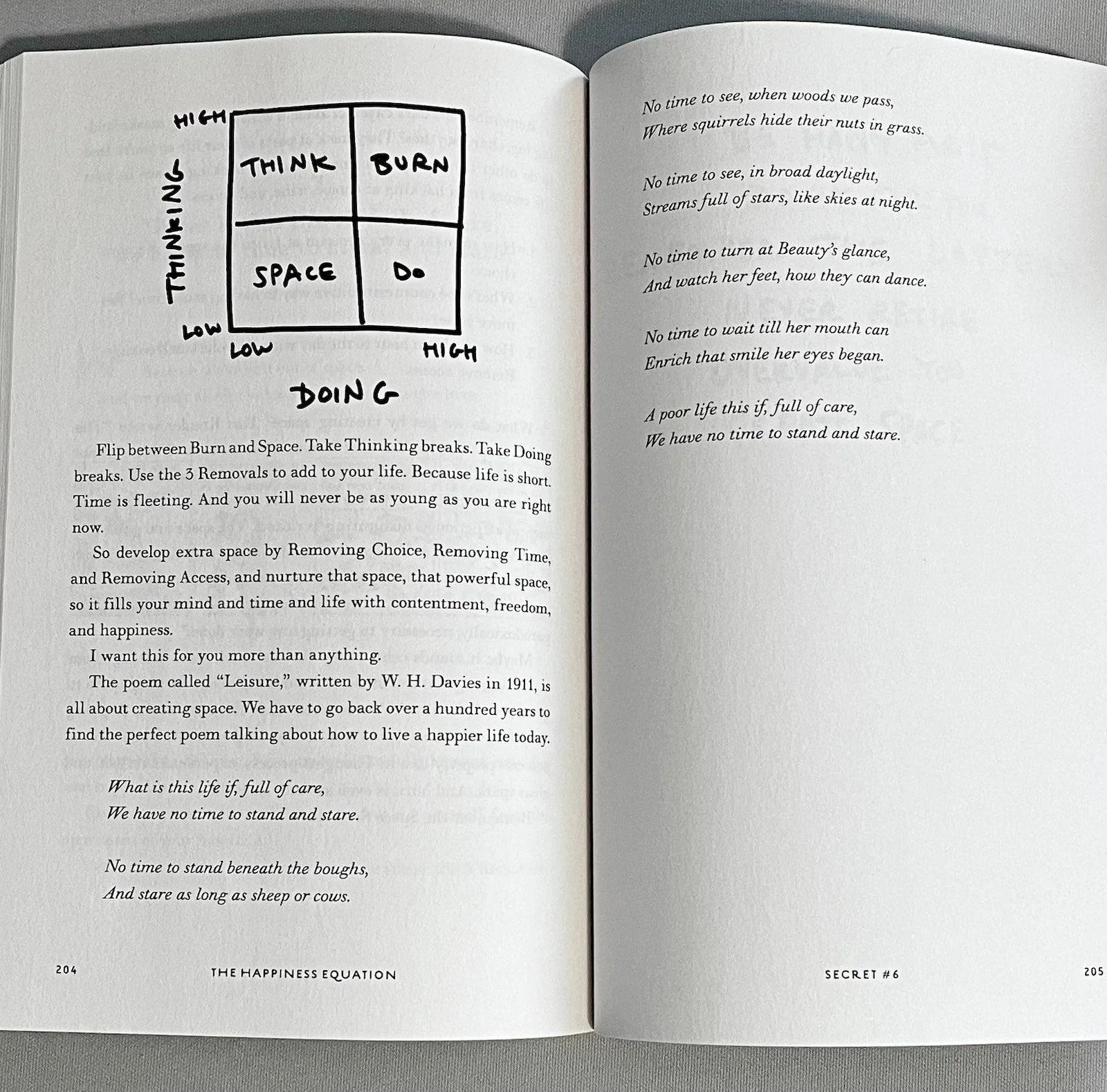
Leisure
Written by W. H. Davies
What is this life if, full of care,
We have no time to stand and stare.
No time to stand beneath the boughs,
And stare as long as sheep or cows.
No time to see, when woods we pass,
Where squirrels hide their nuts in grass.
No time to see, in broad daylight,
Streams full of stars, like skies at night.
No time to turn at Beauty's glance,
And watch her feet, how they can dance.
No time to wait till her mouth can
Enrich that smile her eyes began.
A poor life this if, full of care,
We have no time to stand and stare.
'Sparrow Envy' - A Poem by J. Drew Lanham
Hey everyone,
In my April 2023 Book Club, I wrote about the mesmerizing experience of reading J. Drew Lanham’s phenomenal memoir The Home Place: Memoir of a Colored Man’s Love Affair with Nature. I’ve since fallen into a book of poetry he wrote. A lot of which is about birds! Check out the “title track” from his book Sparrow Envy. I love the poems about swan dreams and nighttime migrations, too … but see if these few words on 'sparrow envy' resonate with you today.
Neil

Sparrow Envy from 'Sparrow Envy'
Written by J. Drew Lanham | Full book here
Were I the sparrow
brown-backed skittish and small—
I would find haven
in thorniest thickets—
search far and wide for fields lain fallow
treasure the unkempt
worship the unmown
covet the weed-strewn row
I would slink
between sedges
chip unseen from brambles
skulk deep within hedges
and desire the ditches grown wild
I would find great joy
in the mist-sodden morning
sing humble pleas
from the highest weeds
and plead
for the gray days to stay
Watching the Wheels by John Lennon
Written by John Lennon | Music Video here
Hey everyone,
March break up in Canada this week. Schools closed, snow falling, kids bouncing off the walls. I've taken this week off work for nine years straight now -- and despite one kid asking me to "pick up meeeee!" as I write this and another trying to show me a picture of a man with a crowbar through his chest that he found in a world records book, well, I wouldn't trade it for anything. This is hitting your inboxes in a few minutes at 7:30am EST and so far today I've had a great three hours of pee-filled pyjamas, a workout with thirty-pound kids rolling off my back, doing watercolors, and slow-mo-making five different breakfasts.
For me, raising kids is simultaneously exhausting and exquisite. Emotions shaken into the pot from every bottle in the cupboard.
One tiny place I find myself drawing inspiration from as a dad is Watching the Wheels by John Lennon. The song is John answering critics asking why he left music in 1975 to lean into life with Yoko and raise their son Sean for five years -- up until his still-so-horrible-to-think-about assassination in 1980. For me, the song represents a rare jewel in the Lennon Canon -- the only song I can think of where he talks about 'househusbanding' (as he called it) and some of the simple, deeper pleasures of leaning into fatherhood and raising kids. "I sort of half-consciously wanted to spend the first five years of Sean's life actually giving him all the time I possibly could," he said. "I look after the baby and I made bread and I was a househusband and I am proud of it."
I love the song's message of leaning into a slower and more intentional way of living. But our capitalism and algorithm-fueled fame machine asks louder than ever: "Surely you're not happy now? -- you no longer play the ga-aaaaaaaame."
Maybe I aspire to that myself. Or maybe I have it and need to remind myself to prioritize this when I'm asked why I like being, you know, just me. Why I don't hire ten people and really make a go of this thing! Hire more social media managers, ghostwriters, research assistants, people to follow me around with cameras, and, you know -- pump it up! amplify! grow the platform! take the message to the worrrrrrrrrrrlllllllllld!
Well ... because I love watching the wheels go by. That's why. I love being with my wife and my kids. I don't want to be working so hard telling people not to miss this that I end up missing it myself. Here I am stealing fifteen minutes of my morning to write this and even now ... I feel like I'm missing it.
Enjoy your day, squeeze your loved ones, and, when it comes to pulling away from the machine a little to enjoy watching the wheels, well, don't feel bad. Enjoy it. As John sings: "I just had to.... let it go-ooooooooOOOOOooooooooo."
Now just try watching the music video without crying.
Thank you so much for being part of this community.
Have a great week everybody and love you lots,
Neil
Lyrics:
People say I'm crazy doing what I'm doing
Well they give me all kinds of warnings to save me from ruin
When I say that I'm okay, well, they look at me kind of strange
"Surely you're not happy now you no longer play the game?"
People say I'm lazy ... dreaming my life away
Well they give me all kinds of advice designed to enlighten me
When I tell that I'm doing fine watching shadows on the wall
"Don't you miss the big time boy? You're no longer on the ball...."
I'm just sitting here watching the wheels go round and round
I really love to watch them roll
No longer riding on the merry-go-ro-ounnnnnd
I just had to let it go
People asking questions ... lost in confusion
Well I tell them there's no problem... only solutions
Well they shake their heads and they look at me as if I've lost my mind
I tell them there's no hurry... I'm just sitting here doing time
I'm just sitting here watching the wheels go round and round
I really love to watch them roll
No longer riding on the merry-go-round
I just had to.... let it go-ooooooooOOOOOooooooooo.
10 things I (try to) do every day to get more done

Do you feel like it’s getting harder to get stuff done?
It’s not just you. The distraction machine is cranked to 10. Endless apps and feeds and algorithms fight for our attention. They’re good at getting it, too! No wonder Reed Hastings, founder of Netflix, says their greatest competitor of all is sleep.
I find myself revisiting simple practices to help make sure I actually get anything done.
Here are ten habits I (try to) do to get more done each day:
1. Wake up and look at my ikigai
An ikigai is the ‘reason you get out of bed in the morning.’
Leslie and I take simple blank index cards, fold them in half, and set them up like tent cards on our bedside table.
I think of the ikigai I write on the card as “my morning message to myself” and find it helps provide a quick north star to my day.
I change what I write on the cards. Sometimes I’ll get lofty and purposeful (“Helping people live happy lives”), sometimes I’ll get focused (“Finish writing the next book”), and sometimes I’ll just use the card as a way to neutralize anxiety (“You have enough.”)

I write more about ikigais in The Happiness Equation and, if you want to go deeper, I recommend Héctor Garcia’s book Ikigai.
2. Two-Minute Mornings
I spend half a second staring at my ikigai card. Now what?
The next thing I do is grab my Two-Minute Mornings journal (or just any other index card is fine) and write my response to three prompts:
I will let go of…
I am grateful for…
I will focus on…
Research titled “Don’t look back in anger!” by Brassen, Gamer, Peters, Gluth, and Bluch in Science shows that minimizing regrets as we age creates greater contentment and happiness. I think there’s a big reason why confession and repentance show up across major world religions. Writing down and letting go of something feels like wiping a wet shammy across the blackboard of our minds. (I will let go of…)
Research by Emmons and McCullough shows if you write down five gratitudes a week you’re measurably happier over a ten-week period. The more specific the better! Don’t write “my dog” ten days in a row. Try “When the rescue puppy we got during the pandemic finally stopped peeing on my husband’s pillow,” etc. (I am grateful for…)
Finally, all kinds of small aggravating things hang out in my brain when I sleep. I'm not talking dreams. I mean the middle of the night "Oh yeah, I need to do that" things. Take the van in for the oil change! Ask the pharmacist about that rash! Overnight brain burbles need to be processed so the last prompt helps me aim to get one done. I'm carving a “will do” from my endless “could do" and "should do” lists. (I will focus on…)
Two-minute mornings help prime your brain for positivity.
3. Lift something heavy
Every day I lift heavy weights I seem to buy myself the rest of the day without feeling stress. It’s like a magic pill. I don’t like lifting weights! I hate lifting weights! But it’s worth it for that stress-free feeling for the next 24 hours.
Workouts such as Push/Pull/Legs or 5x5 are great -- and, honestly, just Google Image-searching them plus "workout" works for me -- but if you need a cajoling of some kind I suggest using Trainiac. I started in the pandemic and I got a real human coach (hi Geoff!) who sets my routines, using the equipment I have or will have (i.e., at a hotel gym), and then sends me notes, prompts, messages, and videos to keep me going. I don’t know how to do an exercise? I send him a video, he critiques my form. I have a question? He responds the next day.
To be clear: I’m not being sponsored by this app — I have no ads on any of my stuff and I accept zero payments or credits, etc, etc — but I’ve just been using it since the pandemic and enjoy it. I did personal training (like in person, at a gym) years ago but found it time and cost prohibitive.
I personally set my goal for four workouts a week and then if I “fail” and only get three in I still feel good. What about no workout days? I throw my kids in the air for a few minutes. I’m winded after! And we both feel great.
4. Walk 5km a day
Guess what the average human walking speed is?
5km/hour.
So just moving one phone meeting to a “walk and talk” helps get that 5km of walking in. I personally find that I’m actually more focused on the phone call when I’m walking because I’m not surrounded by the endless distractions of screens. Plus, it’s good for your health, good for community connection (you actually talk to your neighbors!), and walking tends to stoke your creativity, too. And, side benefit, it brings out your inner birder.
For more on walking I recommend “Walking” by Henry David Thoreau (free out of copyright full version) or “Why I Do All This Walking” by Nassim Taleb (Scribd link, with full essay in The Black Swan.)
5. Schedule one UNTOUCHABLE day a week
Okay, this isn’t a daily habit but a weekly one. I’m sneaking it in anyway because it’s so powerful.
A New Yorker feature by Alexandra Schwartz calls our focus on productivity and hustle “improving ourselves to death.” She writes, “It’s no longer enough to imagine our way to a better state of body or mind. We must now chart our progress, count our steps, log our sleep rhythms, tweak our diets, record our negative thoughts — then analyze the data, recalibrate, and repeat.”
What’s one solution? Untouchable Days. These are days where I am literally unreachable, by anyone, in any way — all day. My productivity is about 10 times higher on these days.
I know on the surface this idea sounds completely impractical and I mostly get scoffing and head shakes when I start talking about it. But, I also get more emails from people successfully using this concept across a vast array of ages and careers. If it sounds too hard, there’s nothing wrong with starting with an Untouchable Lunch. Leave your phone at your desk and get outside for an hour where nobody can reach you.
I go deeper on this concept in this viral HBR article and in my book on resilience.
6. Read 20 (or even 2!) pages of fiction a day
The Annual Review of Psychology published a report that says books are medicine.
Books create empathy, intimacy, compassion, and understanding. Why? Our brain’s mirror neurons fire when we read about experiences we haven’t lived — when we’re another gender, in another country, in another time … our minds think we’re there.
It’s like that Game of Thrones quote: “A reader lives a thousand lives before he dies … the man who never reads lives only one.”
Now, the troubling stat is that the American Time Use Survey says that 57% of Americans read zero books last year. Zero! Meanwhile, we’re spending over 5 hours a day on our phones.
But Science magazine published a formative study in 2013 which showed that reading literary fiction improved test results measuring social perception and empathy. So if we can channel a few minutes of phone time each day to reading fiction, we’ll have a natural way to zoom out of our problems and feel more connected to the wider world.
Everything feels easier after that.
7. “Wear one suit.”
It’s a principle.
I wear a blue suit jacket, white dress shirt, dark blue jeans, Nike running shoes, and my yellow watch … to every single speech and media interview I do. So I never think about what to wear for any of them. I just buy multiples of the same running shoes, shirts, socks, etc.
Same thing with my breakfast. “Drink one shake.” I’ve been drinking the same shake for fifteen years. Water, turmeric, cinnamon, half a frozen banana, powdered greens, frozen greens, protein, nut butter, nut milk, yogurt, and avocado. Sure, maybe I change the protein flavor once in a while, but the point is that I can make it on auto-pilot.
What can you systemize to free up more brain space for everything else?
8. Write a “3 things” cue card
Every night before I go up to bed I write an index card with tomorrow’s day up top — THURSDAY — and a (maximum) 3-item checklist below. Beside each item, I draw a square box to be checked off.
Why? Well, a laundry list of 20 things feels overwhelming and oppressive. (That can go on a weekly or monthly checklist.) But the nighttime forced prioritization helps me go to bed knowing I have my track set for the next day. And by making it only 3 I’ve done some of the hard work of simply choosing what not to do.
Also, one principle within the last? “Write first.” What I mean is that writing takes more of my energy than anything else I do, so if the day includes writing I’ll put that first. (You may have heard a similar principle for going to the gym: “Squat first.” Just start with the hardest thing.)
9. Lock the phone up around sunset
University of Bologna professors published a report in Sloan Management Review which showed that anxiety spikes when students don’t have their cellphones for even a single day.
Everyone talks about intermittent fasting … with food. We should be talking about intermittent fasting … with phones.
When I interviewed Johann Hari (author of Stolen Focus) he told me he drops his phone in a K-Safe every night. That’s a big square plastic box with a timer on the outside. Set the timer to 3 hours? It doesn’t open for 3 hours.
Now: Why do I say “around sunset”? Well, because I’m trying (trying!) to get my body more in line with natural light. When the sun dips down I want my brain to dip down, too. Dimmer lights. Candles at dinner. Fewer screens. More books.
Easing my body and mind into a darker, deeper sleep.
Also, if you don’t have a K-Safe or timed lockbox you can try my strategy of asking your partner to “Please hide my phone until tomorrow and don’t tell me where it is even if I ask.”
10. Have a “wind down” routine.
Research from Australia shows that exposing our brains to bright screens before bed reduces melatonin production — the sleep hormone.
So screens mess up our sleep. Great! Now what do we do? Well, we’ve already talked about reading. But what I mean here is you need a nighttime ritual. Maybe it’s playing Rose Rose Thorn Bud with your boyfriend. Maybe it’s flossing and brushing your teeth with your wife. Maybe it’s reading books to your kids. Maybe it’s tidying up your dresser and setting out your clothes for the next morning. Maybe it’s having a warm shower and shaving.
We need to plug our phones in the basement. (I recommend the furnace room — the darker and cobwebbier, the better!) And have a nighttime ritual that allows us the mental space to widen, reflect, and process the day in a slow and peaceful way.
Okay!
That’s it!
A long list, sure. And a lofty one! But, as always, as with anything I’m suggesting or trying myself, the goal is never to be perfect — it’s just to be a little better than before.
I hope even one or two of these resonate with you. And if you have something you suggest adding to my list — just drop me a line and let me know.
Sign Up for a Dose of Inspiration:
Every other week, I send an email out with an article I’ve written, or one of my favorite speeches, essays or poems. No ads, no sponsors, no spam, and nothing for sale. Just a dose of inspiration or beauty!
Click here to sign up.
Watching the Wheels by John Lennon
Written by John Lennon | Music Video here
Hey everyone,
March break up in Canada this week. Schools closed, snow falling, kids bouncing off the walls. I've taken this week off work for nine years straight now -- and despite one kid asking me to "pick up meeeee!" as I write this and another trying to show me a picture of a man with a crowbar through his chest that he found in a world records book, well, I wouldn't trade it for anything. This is hitting your inboxes in a few minutes at 7:30am EST and so far today I've had a great three hours of pee-filled pyjamas, a workout with thirty-pound kids rolling off my back, doing watercolors, and slow-mo-making five different breakfasts.
For me, raising kids is simultaneously exhausting and exquisite. Emotions shaken into the pot from every bottle in the cupboard.
One tiny place I find myself drawing inspiration from as a dad is Watching the Wheels by John Lennon. The song is John answering critics asking why he left music in 1975 to lean into life with Yoko and raise their son Sean for five years -- up until his still-so-horrible-to-think-about assassination in 1980. For me, the song represents a rare jewel in the Lennon Canon -- the only song I can think of where he talks about 'househusbanding' (as he called it) and some of the simple, deeper pleasures of leaning into fatherhood and raising kids. "I sort of half-consciously wanted to spend the first five years of Sean's life actually giving him all the time I possibly could," he said. "I look after the baby and I made bread and I was a househusband and I am proud of it."
I love the song's message of leaning into a slower and more intentional way of living. But our capitalism and algorithm-fueled fame machine asks louder than ever: "Surely you're not happy now? -- you no longer play the ga-aaaaaaaame."
Maybe I aspire to that myself. Or maybe I have it and need to remind myself to prioritize this when I'm asked why I like being, you know, just me. Why I don't hire ten people and really make a go of this thing! Hire more social media managers, ghostwriters, research assistants, people to follow me around with cameras, and, you know -- pump it up! amplify! grow the platform! take the message to the worrrrrrrrrrrlllllllllld!
Well ... because I love watching the wheels go by. That's why. I love being with my wife and my kids. I don't want to be working so hard telling people not to miss this that I end up missing it myself. Here I am stealing fifteen minutes of my morning to write this and even now ... I feel like I'm missing it.
Enjoy your day, squeeze your loved ones, and, when it comes to pulling away from the machine a little to enjoy watching the wheels, well, don't feel bad. Enjoy it. As John sings: "I just had to.... let it go-ooooooooOOOOOooooooooo."
Now just try watching the music video without crying.
Thank you so much for being part of this community.
Have a great week everybody and love you lots,
Neil
Lyrics:
People say I'm crazy doing what I'm doing
Well they give me all kinds of warnings to save me from ruin
When I say that I'm okay, well, they look at me kind of strange
"Surely you're not happy now you no longer play the game?"
People say I'm lazy ... dreaming my life away
Well they give me all kinds of advice designed to enlighten me
When I tell that I'm doing fine watching shadows on the wall
"Don't you miss the big time boy? You're no longer on the ball...."
I'm just sitting here watching the wheels go round and round
I really love to watch them roll
No longer riding on the merry-go-ro-ounnnnnd
I just had to let it go
People asking questions ... lost in confusion
Well I tell them there's no problem... only solutions
Well they shake their heads and they look at me as if I've lost my mind
I tell them there's no hurry... I'm just sitting here doing time
I'm just sitting here watching the wheels go round and round
I really love to watch them roll
No longer riding on the merry-go-round
I just had to.... let it go-ooooooooOOOOOooooooooo.
Sign Up for a Dose of Inspiration:
Every other week, I send an email out with one of my favorite speeches, essays or poems. No ads, no sponsors, no spam, and nothing for sale. Just a dose of inspiration or beauty!
Click here to sign up.
The Mind of Absolute Trust by Seng-ts'an
Written by Seng-ts’an | poem from The Enlightened Heart: An Anthology of Sacred Poetry. Edited by Stephen Mitchell
I was reading Tim Urban's new book WHAT'S OUR PROBLEM? when a quote from ancient Zen master Seng-ts'an hit me. It read: "If you want the truth to stand clear before you, never be for or against. The struggle between 'for' and 'against' is the mind's worst disease." It's out of context here but I went down a rabbit hole on this sixth-century Zen figure I'd never heard of and found this fascinating brain-scratching poem called "The Mind of Absolute Trust." See if it resonates with you!
Poem:
The great way isn't difficult
for those who are unattached to their preferences.
Let go of longing and aversion,
and everything will be perfectly clear.
When you cling to a hairbreadth of distinction,
heaven and earth are set apart.
If you want to realize the truth,
don't be for or against.
The struggle between good and evil
is the primal disease of the mind.
Not grasping the deeper meaning,
you just trouble your mind's serenity.
As vast as infinite space,
it is perfect and lacks nothing.
But because you select and reject,
you can't perceive its true nature.
Don't get entangled in the world;
don't lose yourself in emptiness.
Be at peace in the oneness of things,
and all errors will disappear by themselves.
If you don't live the Tao,
you fall into assertion or denial.
Asserting that the world is real,
you are blind to its deeper reality;
denying that the world is real,
you are blind to the selflessness of all things.
The more you think about these matters,
the farther you are from the truth.
Step aside from all thinking,
and there is nowhere you can't go.
Returning to the root, you find the meaning;
chasing appearances, you lose their source.
At the moment of profound insight,
you transcend both appearance and emptiness.
Don't keep searching for the truth;
just let go of your opinions.
For the mind in harmony with the Tao,
all selfishness disappears.
With not even a trace of self-doubt,
you can trust the universe completely.
All at once you are free,
with nothing left to hold on to.
All is empty, brilliant,
perfect in its own being.
In the world of things as they are,
there is no self, no non self.
If you want to describe its essence,
the best you can say is "Not-two."
In this "Not-two" nothing is separate,
and nothing in the world is excluded.
The enlightened of all times and places
have entered into this truth.
In it there is no gain or loss;
one instant is ten thousand years.
There is no here, no there;
infinity is right before your eyes.
The tiny is as large as the vast
when objective boundaries have vanished;
the vast is as small as the tiny
when you don't have external limits.
Being is an aspect of non-being;
non-being is no different from being.
Until you understand this truth,
you won't see anything clearly.
One is all; all
are one. When you realize this,
what reason for holiness or wisdom?
The mind of absolute trust
is beyond all thought, all striving,
is perfectly at peace, for in it
there is no yesterday, no today, no tomorrow.
Sign Up for a Dose of Inspiration:
Every other week, I send an email out with one of my favorite speeches, essays or poems. No ads, no sponsors, no spam, and nothing for sale. Just a dose of inspiration or beauty!
Click here to sign up.
Love for OUR BOOK OF AWESOME
Our Book of Awesome launched on December 6, 2022 and I feel like the personal beneficiary of more love from the awesome 🌊🌊🌊 around the world than I had ever expected. Most of it is in person, in bookstores, on my newsletters, and on my podcast, but I also wanted to throw a post up to gather it all in one place.
—
TV
Breakfast Television - Rogers (Dina Pugliese, Sid Seixeiro)
CityLine - Rogers (Tracy Moore)
The Morning Show - Global (Carolyn MacKenzie, Sangita Patel)
The Social - CTV (Jess Allen, Melissa Grelo, Traci Melchor)
Your Morning - CTV (Jess Smith)
Radio
Here and Now - NPR (Jane Clayson)
The Current - CBC (Matt Galloway)
Podcasts
Chase Jarvis Live x2 x3
Don’t Keep Your Day Job (Cathy Heller)
Good Life Project (Jonathan Fields) x2 x3
Moms Don’t Have Time To Read Books (Zibby Owens) x2 x3
Sickboy (Jeremie Saunders, Brian Stever, Taylor MacGillivary) x2 x3
The Holderness Family Podcast (Kim and Penn Holderness) x2
The Joyous Health Podcast (Joy McCarthy)
The Knowledge Project (Shane Parrish) x2
The Light Watkins Show x2 x3
The Miracle Morning (Hal Elrod) x2
The One You Feed (Eric Zimmer)
The Psychology Podcast (Dr. Scott Barry Kauffman) x2 x3
The Warblers (Birds Canada) x2
Interviews
Heroic Luminary Coaching Session (Brian Johnson)
IG Live (Alie Ward)
IG Live (Evan Carmichael) x2
Interview (Brendan Carr)
Blogs / Newsletters / Articles
“3 Lessons on creativity by a bestselling author” - Fast Company (Herbert Liu)
5 Things Making me Happy Newsletter (Gretchen Rubin)
BookTrib Newsletter
Dr. Greg Wells Newsletter
Herbert Liu Best of Books Newsletter
“I’m grateful that I’ve never had to do a gratitude journal” - The Bloggess (Jenny Lawson)
Kindred Newsletter Q&A (Susan Cain)
Laura Vanderkam Newsletter
Marc and Angel Newsletter (Marc and Angel Chernoff)
Print Mag Q&A (Debbie Millman)
Simon & Schuster Newsletter
Simon & Schuster Global Newsletter
The Sunday Paper (Maria Shriver) x2
BookTok / Bookstagram
Alex and Books (Alex Wieckowski)
Becky Overbeck
Blurb Your Enthusiasm (Mary Webber OMalley)
Book Sparkled (Shivi Verna)
Brindle Book Lover
Catherine Price
Divyanshu Reads (Divyanshu Oberoi)
Humble the Poet
Indigo x2
Jay Yang Inspires
Jordan Tarver
Joy McCarthy
Lisa Ray
Matt Karamazov
Mindset Reading (Ravi Sarj)
Mindset Search (Mo Hasnai)
Nina Purewall
Productive Reading
Reader Mentality (Kamalpreet Singh)
Sarah Reads Fiction (Sarah Reid)
Simon & Schuster
The Bloggess (Jenny Lawson)
The Bo.ok Nerd (Laasya Mukkamalla)
The Happiness Library (Marianne Peter Nicoly)
The Maritime Reader (Heather Hines)
Two Percent Better (Cameron Boakye)
Vanessa Van Edwards
Werklife (Abha Chiyedan) x2
Well By Shania (Shania Bhopa)
Twitter Love
Alex and Books (Alex Wieckowski)
Ben O’Hara-Byrne
Beth Fish Reads (Dr. Beth Fish)
Elan Mastai
Hector Garcia
Jeremie Saunders
Jonathan Haidt
Lisa Ray
Loan Stars
Maria Shriver
Meesh Beer (Michele-Marie Beer)
Oliver Burkeman
PR by the Book (Kim Weiss)
Post Secret (Frank Warren) x2
Rich Aucoin
Rich Roll
Shawn Achor
Tal Bakker
Vanessa Van Edwards
Bestseller Lists
Globe International Non-Fiction
Globe Canadian Non-Fiction
Vancouver Sun Indie Bookstores
Retail Council Indie Bookstore
Globe International Self Improvement
Porchlight
'Do not ask your children to strive' by William Martin
Written by William Martin | poem from The Parent's Tao Te Ching: Ancient Advice for Modern Parents