Hey everyone,
Happy last day of January!
We got the biggest dump of snow in Toronto’s history this week and many cars on the streets remain entirely snow-bubbled:

It turned into our second snow day of the season and I went back and read what I wrote about snow days 18 years ago on 1000 Awesome Things and realized I feel precisely the same way now. Time stops. Life slows down. Community tightens. I’ve met more neighbours this week than this year—digging out cars, shovelling the rink, offering help, being offered help.
We’ve had a fun month on the podcast with Salim Amin capping our three-chapter soirée to Kenya before re-releasing one of the most popular shows in 3 Books history from Ryan Holiday’s house in Texas. Tomorrow at 5:09pm—the exact minute of the Snow Moon!—we'll drop Chapter 157 with eminent environmentalist Paul Hawken.
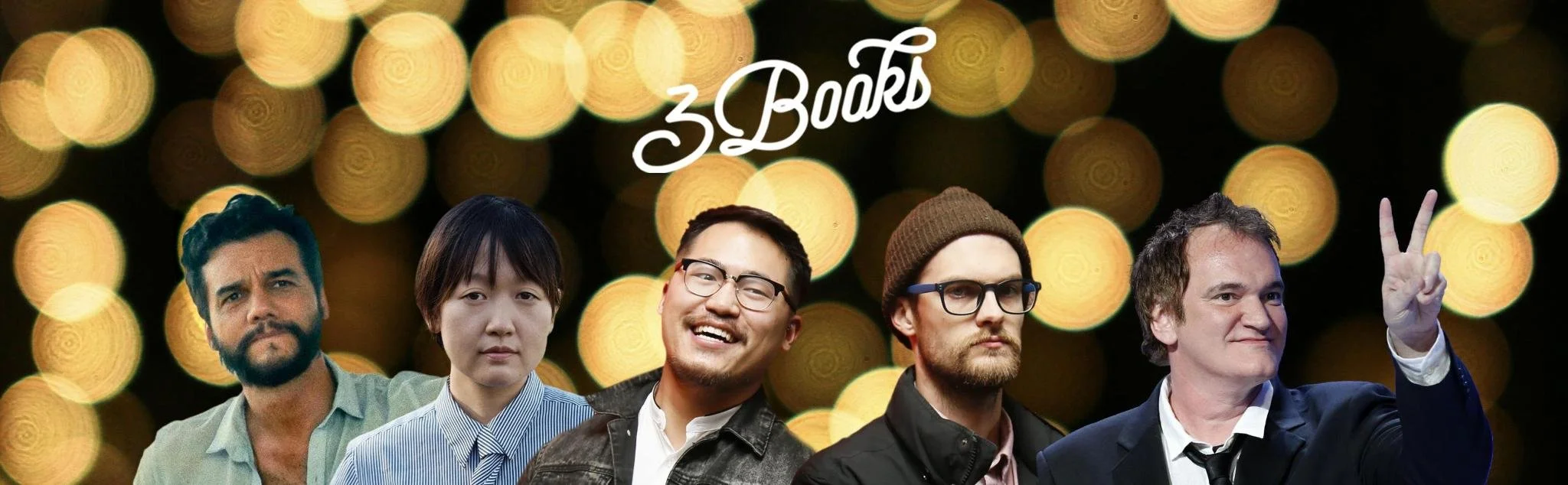
I also want to say big congrats to Wagner Moura, longtime friend of 3 Books, for his Best Actor nomination. If you haven’t seen The Secret Agent (nominated for Best Picture!) check it out. Here’s the trailer and if you click the footer below you’ll get an Oscars playlist of 3 Books with our chats with Wag as well as Celine Song, Daniels, and Quentin Tarantino.
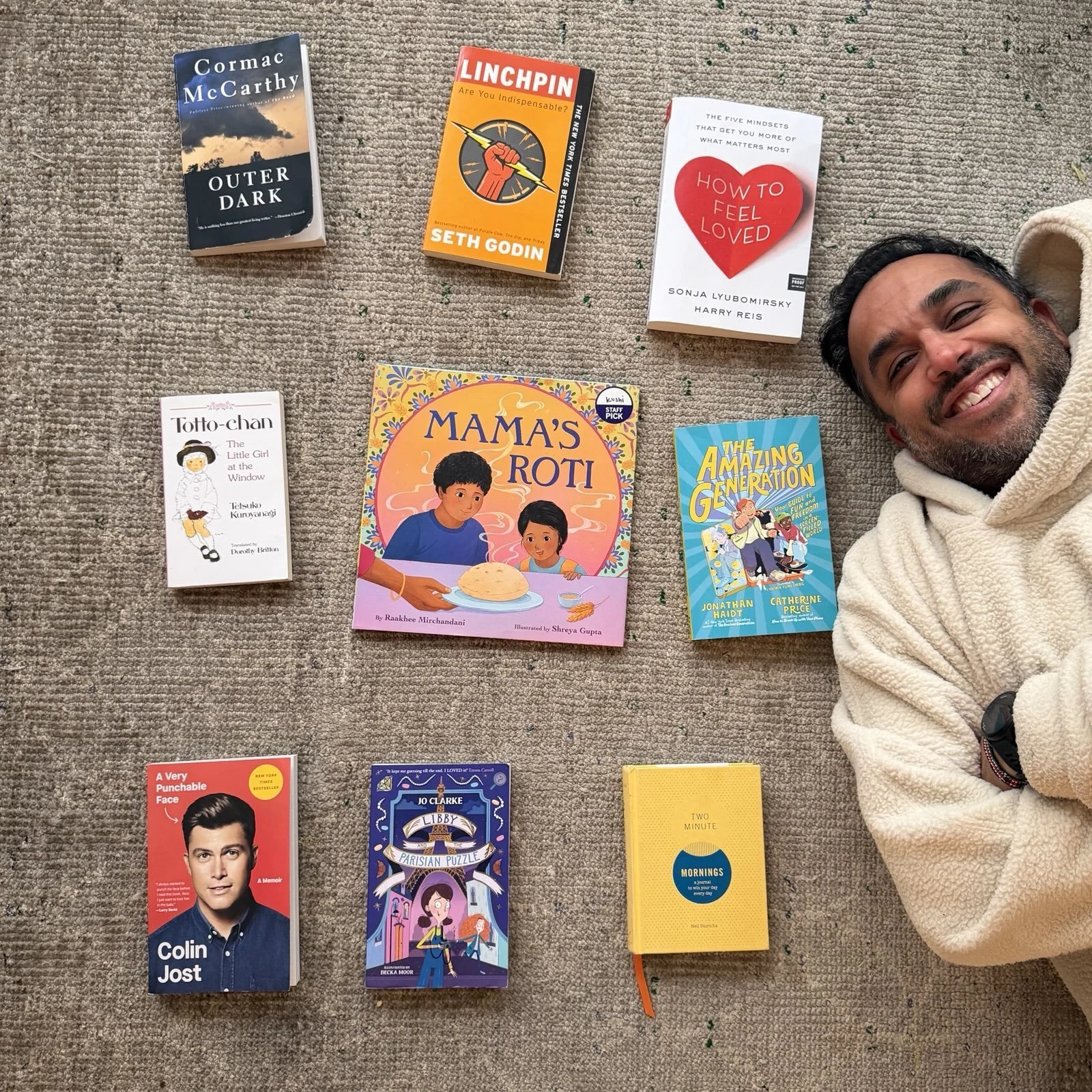
This month I read and loved ‘Outer Dark’ by Cormac McCarthy and was pumped to get an early copy of happiness hero Sonja Lyubomirsky’s new book. Reviews of those plus books by Jon Haidt, Raakhee Mirchandani, Seth Godin, Colin Jost and more just below…
And now: Let’s flip to the pages!
Neil
PS. To join this book club email click here … 100% ad free, sponsor free, commercial free, interruption free, algorithm free, and AI free since 2008.
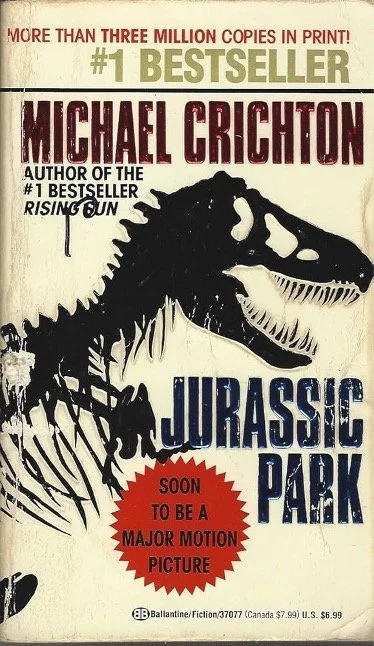
1. Outer Dark by Cormac McCarthy (1933-2023). Have you ever heard of book jacket designer Chip Kidd? I think I first saw his name on the inside of the beat-up mass-market Michael Crichton paperback my friends and I passed around when we were twelve back in 1992:
Eight years later I took the train from Kingston to Toronto to have dinner with Jay Pinkerton, the recently graduated editor I hero-worshipped at Golden Words, and at the end of the night he handed me a book that had come out recently and which, again, I saw had a cover designed by Chip Kidd:
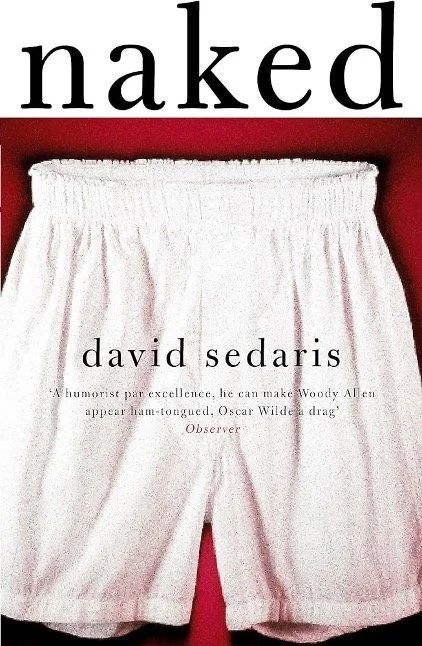
I’ve reread ‘Naked’ by David Sedaris five or six times since. Every few years there it is! Lying beside my bed. A large pair of white men’s boxers. Chip Kidd, Chip Kidd, Chip Kidd. The man has a gift for reducing an entire book’s theme, thrust, feel into a single image. He nails it again with the new cover of this 1968 Cormac McCarthy classic:
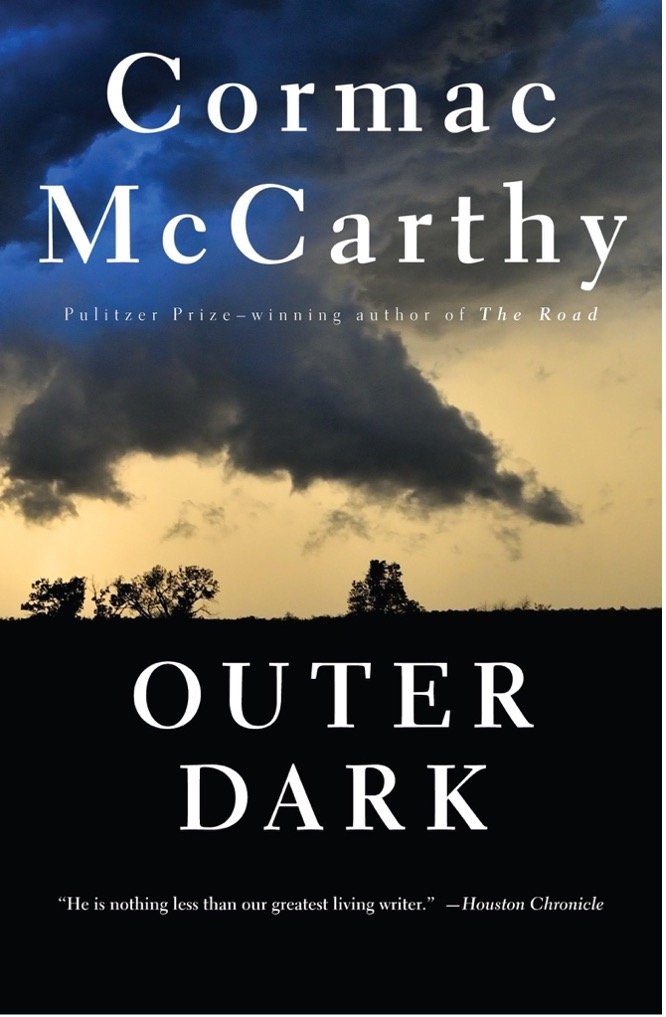
A bit of light over a dark day. Big skies with ominous clouds and sparse trees. The yellows, the blues. You feel it. And then you start reading this book and its 241 pages slowly tighten around you and you’re there. This book made me feel all kinds of dark, dismal, and dreary. Had to be in the mood! For sure. Before bed, usually. In the darkness. With my book light in “orange mode” lying on my chest pointed up at the pages like a fading flashlight. That was the zone. And this book didn’t disappoint with a single sentence. Check out the first one which is 105 words (!) long and opens with these 10.5:
“They crested out on the bluff in the late afternoon su…”
Don’t you already want to hear the other 90%? EVERY SENTENCE IS LIKE THAT. And the dialogue? Some of the sharpest, saltiest, elegantly twisted tongues I have ever read with character after character popping out of the pages with their own precisely unique slang. (Except, of course, the one memorable character who never speaks.) This book is a magic trick. A feat of writing so lofty you wonder how he could do anything else. Did Cormac McCarthy cook? Clean? Bathe? How could he when he was chiseling sentences out like this! A casual scene from Page 63: “She took the soap and lathered her hands up in a gritty curded paste, spreading it over her face and then dashing cold water after it, eyes shut fiercely against the soap’s caustic sting." Pretty good, right? It keeps going: "When she had finished she rinsed the basin and took up the lamp from the ground and started for the house. The whippoorwill had stopped and she bore with her now in frenzied colliding orbits about the lamp chimney a horde of moths and night insects.” What just happened? I found myself going back and rereading so many sentences the moment I finished. Writing with simple words but strikingly detailed. And his gift for visuals and metaphors never stops like on Page 107 where “The man’s speckled hands had drawn up clenched like two great dying spiders …” or Page 109 where the “… house was grown with a rich velour of moss and lichen and brooded in a palpable miasma of rot.” The other thing you should know going into this book is that it’s about half dialogue and there are precisely zero quotation marks. (That’s a lie what you said, the girl whispered hoarsely., etc.) He also gets you into these patters where you can picture the characters and he trusts that he doesn’t even need to bother explaining who’s speaking because you both know. He takes Stephen King’s famous advice from “On Writing” (04/18) that “The road to hell is paved with adverbs” and cranks it to the next level. Like this:
What?
I said where’s your youngern.
I’ve not got nary.
The babe, the babe, the old woman crooned.
They ain’t nary’n.
Hah, said the old woman. Bagged for the river trade I’d judge. Yon sow there might make ye a travelin mate that’s downed her hoggets save one.
Bit out of context but that dialogue tips us off to the storyline which in one sentence is: A woman and a man go on separate hunts for a lost baby a hundred years ago somewhere in the southern US. As always I recommend reading the Wikipedia Plot Summary before, during, and/or after reading. No book guilt, no book shame! One note: The back cover of this book reveals a major plot point which McCarthy does not himself reveal until Page 191 … 80% of the way through the book! Massive violation of the “No Spoilers On Book Jackets” Treaty and for a book that lives on the unsaid I basically have to say, in all-caps, that YOU SHOULD NOT READ THE BACK OF THIS BOOK BEFORE READING IT. Vintage, you fools! Now, to close on a random amusement park metaphor, if George Saunders is looping roller coasters and David Mitchell is one of those vertiginous full visual-immersion rides with the bumpy seats, then Cormac McCarthy is something like slow-motion Bumper Cars. Endless, stark and highly-detailed little collisions for a bracing ride of oscillating intensities.
2. Linchpin: Are You Indispensable? by Seth Godin (b. 1960). How are you feeling about your career right now? I meet people who are crushing it, people in despair. We all go up and down throughout our lives but I do believe in always doing something. I have gone on the record saying retirement is a flawed concept! (It's an entire chapter in The Happiness Equation.) I believe we need the 4 S’s—Social, Structure, Stimulation, and Story—and great work is a gift that gives it. In the eight years I’ve run 3 Books Seth Godin remains the only Guest who has chosen one of his own books. In our lovely chat he makes the point that nobody would expect Tom Cruise to go on Colbert and not talk about his movie, right? And then he delightfully owns how writing ‘Linchpin’ in 2008 changed his life. One of his 3 most formative along with ‘The Book of EST’ by Luke Rhinehart and ‘See You At The Top’ by Zig Ziglar. I love this book. It has a wonderful message: No matter what happens, you own you. Challenges! Many coming. More after that. But you own you. So let Seth help jack up your confidence, unlock boxes you didn’t realize you were inside, and help you see your strengths and opportunities with fresh eyes, all with Seth’s uniquely inspiring and entrepreneurial tang.
3. How to Feel Loved: The Five Mindsets That Get You More of What Matters Most by Sonja Lyubomirsky (b. 1966) & Harry Reis (b.1949). A new baby birthed by two researchers at the top of their fields. Sonja is the world’s longest running researcher on happiness. Number one! Probably most quoted, too. She co-wrote the capstone positivity psychology paper “The Benefits of Frequent Positive Affect: Does Happiness Lead To Success?” back in 2005. I was 9 when Sonja began studying happiness in 1989. She had come from Moscow a few years earlier, completed her undergrad at Harvard and was doing her PhD at Stanford. She says only Ed Diener (1946-2021) was into happiness research at the time. Too fluffy for the stern-nosed! She got going a decade before Martin Seligman (b. 1942) and Mihaly Csikzentmihalyi (1934-2021) famously kicked off the positive psychology movement in earnest. Meanwhile Harry Reis, no slouch, has been studying relationship science and intimacy for decades at the University of Rochester. Mix their brains and out comes this idea: That a big secret to happiness is feeling loved. Not being loved! That too. But feeling it. Related, but different. The authors come together to proffer an interesting model that looks like this:
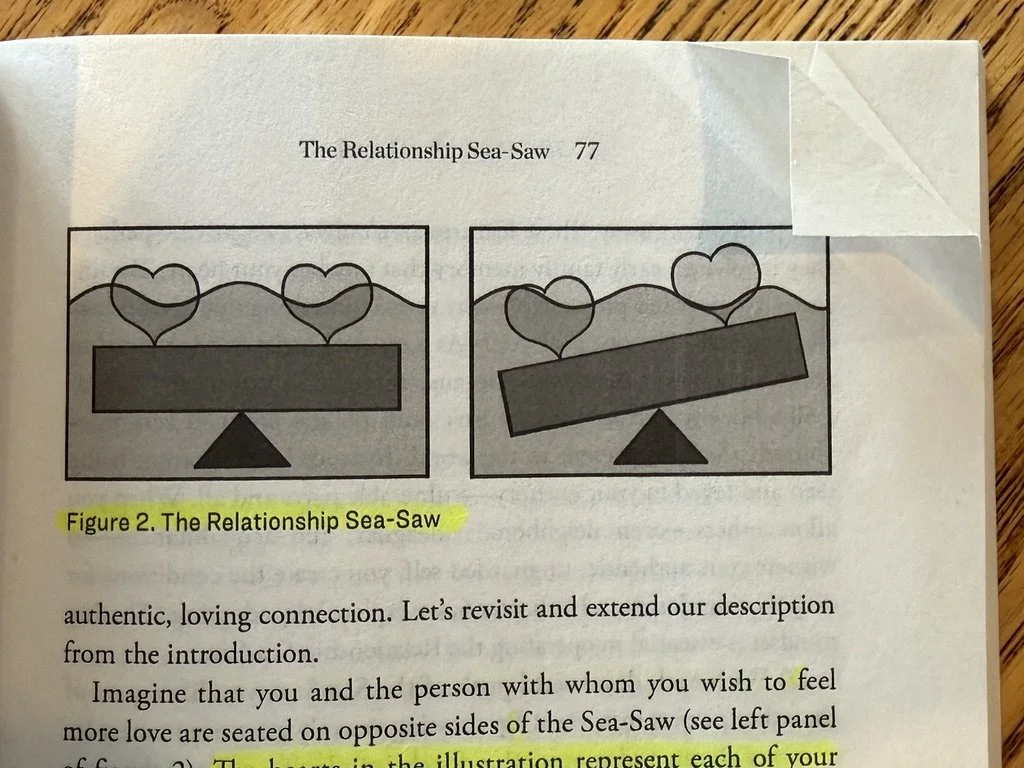
The Relationship Sea-Saw. The idea is that in any relationship we have parts of ourselves we expose and, of course, parts that are “under water”, in the sea, hidden—parts we fear revealing. But when we actively listen through one of the 5 mindsets (Sharing, Listening-to-Learn, Radical-Curiosity, Open-Heart, and Multiplicity) we make a “downward push” of the Sea-Saw (purposefully spelled “Sea”, btw) and “lift a part of the other person into view.” After this what happens? Well “the other person lifts you up in return” and so the relationship becomes one of “a delicate dance of alternately lifting and being lifted.” They then quote clinical psychologist David Schnarch who calls this dance “knowing and being known.” I loved the little anonymous poem that appears as an epigraph before Chapter 4:
A friend is one that knows you as you
are, understands where you have
been, accepts what you have become,
and still, gently allows you to grow.
That's sort of the key point here. This all begins “by fully seeing, embracing, and accepting the other person.” On one hand, kind of obvious? But, on the other, helpful to use when thinking about your own life. Like “Oh yeah, I want to feel more love from my parents? Maybe I should use one of these mindsets to give more love to them first.” This is a left-brain book for left-brain people with everything refreshingly backed up by fresh science and studies. All in service of helping you connect deeply with your closest people and adding a new layer of consideration and awareness to some of what makes those relationships naturally tick.
4. Totto-Chan: The Little Girl at the Window by Tetsuko Kuroyanagi (b. 1933). Illustrated by Chihiro Iwasaki (1918-1974). Translated by Dorothy Britton (1922-2015). Free range parenting is in! Not in, as in we’re doing it, but in, as in popular. The newspaperwoman once branded “America’s Worst Mom” for letting her 9-year-old ride the New York City subway by himself is now tag-teaming with Jonathan Haidt to spearhead a movement running downhill behind the accelerating boulder that is The Anxious Generation. Phones out of schools! Longer recesses! More outdoor play! More outdoors, period. It’s totally in line with my recent chat with Ginny Yurich. This is a north star for me and many right now. Not saying it’s easy! But we’re making strides. Australia just raised their minimum age for social media to 16 and a growing chorus of people (including me) are writing to their government representatives, on all edges of the political spectrum, to help rein in Big Tech. Want a vision of a tech-free free-rangey childhood? This little non-fiction Japanese memoir is just the thing! Originally published in 1981, it was finally translated to English in 2011, and I learned about it from Ryan Holiday who picked it as one of his most formative books on 3 Books. (I admit after he picked ‘Meditations’ by Marcus Aurelius and ‘The 48 Laws of Power’ by Robert Greene I was sort of expecting him to give me ‘I Hope They Serve Beer In Hell’ by Tucker Max (the other writer he interned for) or ‘The Four-Hour Workweek’ by Tim Ferriss. But you can’t put Ryan in a box!) Anyway, Kuroyanagi was one of Japan’s most popular TV personalities for years and this is her childhood of joining an unconventional school near Tokyo during World War II. If you believe that trust and controls are inversely related you will love this book. You can read it as an innocent story of childhood or an indictment of the entire factory-style education system. Wonderful either way. As Ryan told us on 3 Books: “I am very worried that mediocre people are going to squash the specialness out of my kid.” Books like this show us another way.
5. Mama's Roti by Raakhee Mirchandani. Illustrated by Shreya Gupta. I love Staff Picks Walls. Best shelf in the bookstore! They add human curation to even potentially-at-risk-of-blandness big-box chains. James Daunt is trying to basically turn Barnes & Noble into entirely Staff Picks, in a sense. "Bespoke bookselling", we called it back in Chapter 141. And Amazon doesn’t have Staff Picks. So in this case I need to thank Kushi at the Indigo Eaton Centre. My 5-year-old had a PA Day and we kicked a giant ice block from our house all the way through the subway till it was a very tiny ice rock that he threw into the Eaton Centre fountain. Then we took the escalator up to the rooftop Indigo Bookstore which hangs out under one of the best skylight roofs in the country—you can see the Indigo banner on the right side of this pic:

Once inside we took the giant circular staircase up to the kids section and while my kid was hoodwinked with Paw Patrol toys (move toys out of Kids books sections!) I was able to grab a few books off the shelf. This is an incredible book that looks like a children’s book, and has a fun back-and-forth storyline that connects the roti of a modern Indian family in suburban New Jersey (presumably Raakhee’s) and the parallel universe of roti as a source of nourishment, culture, and livelihood across the ocean in northern India.
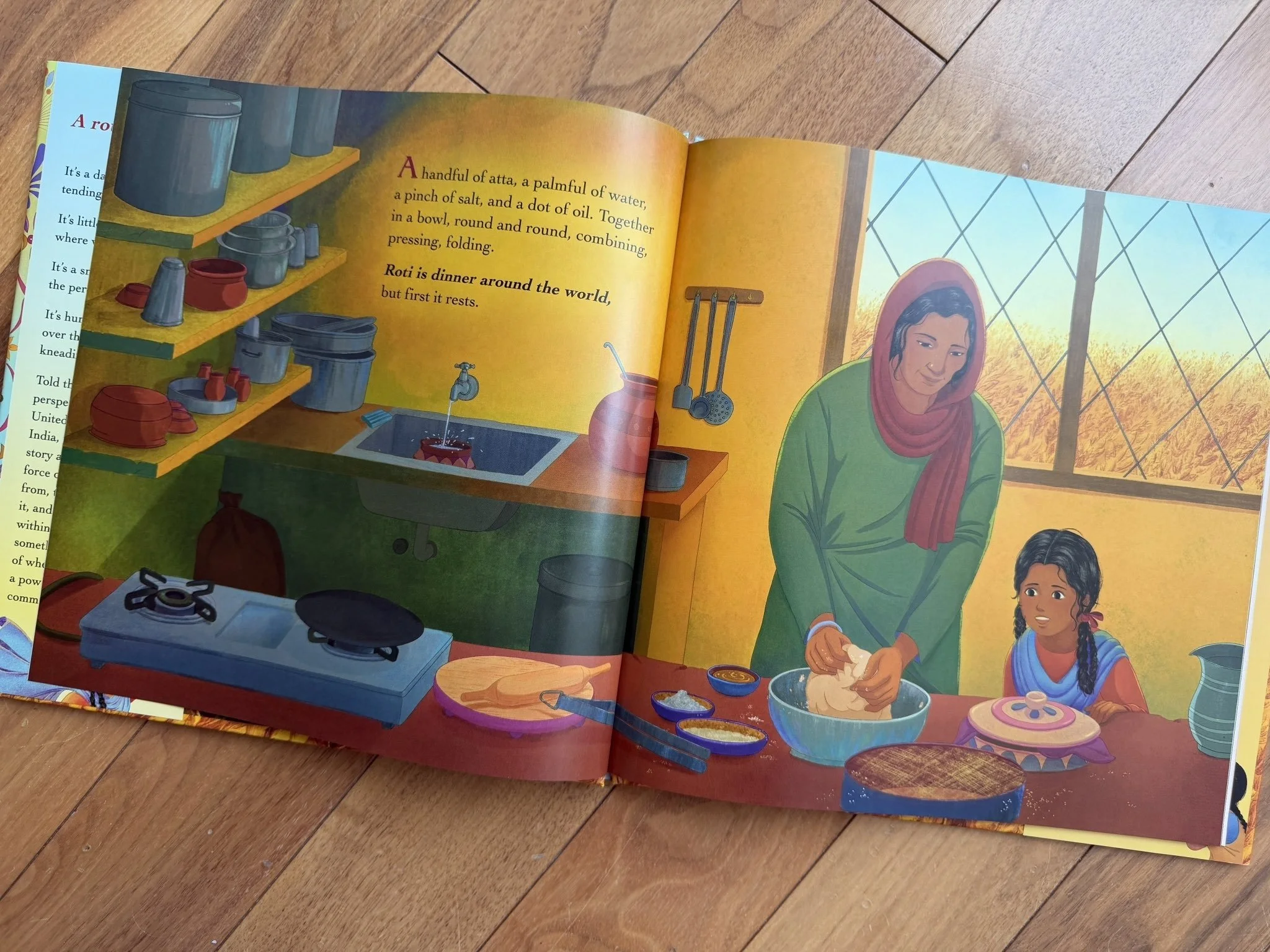
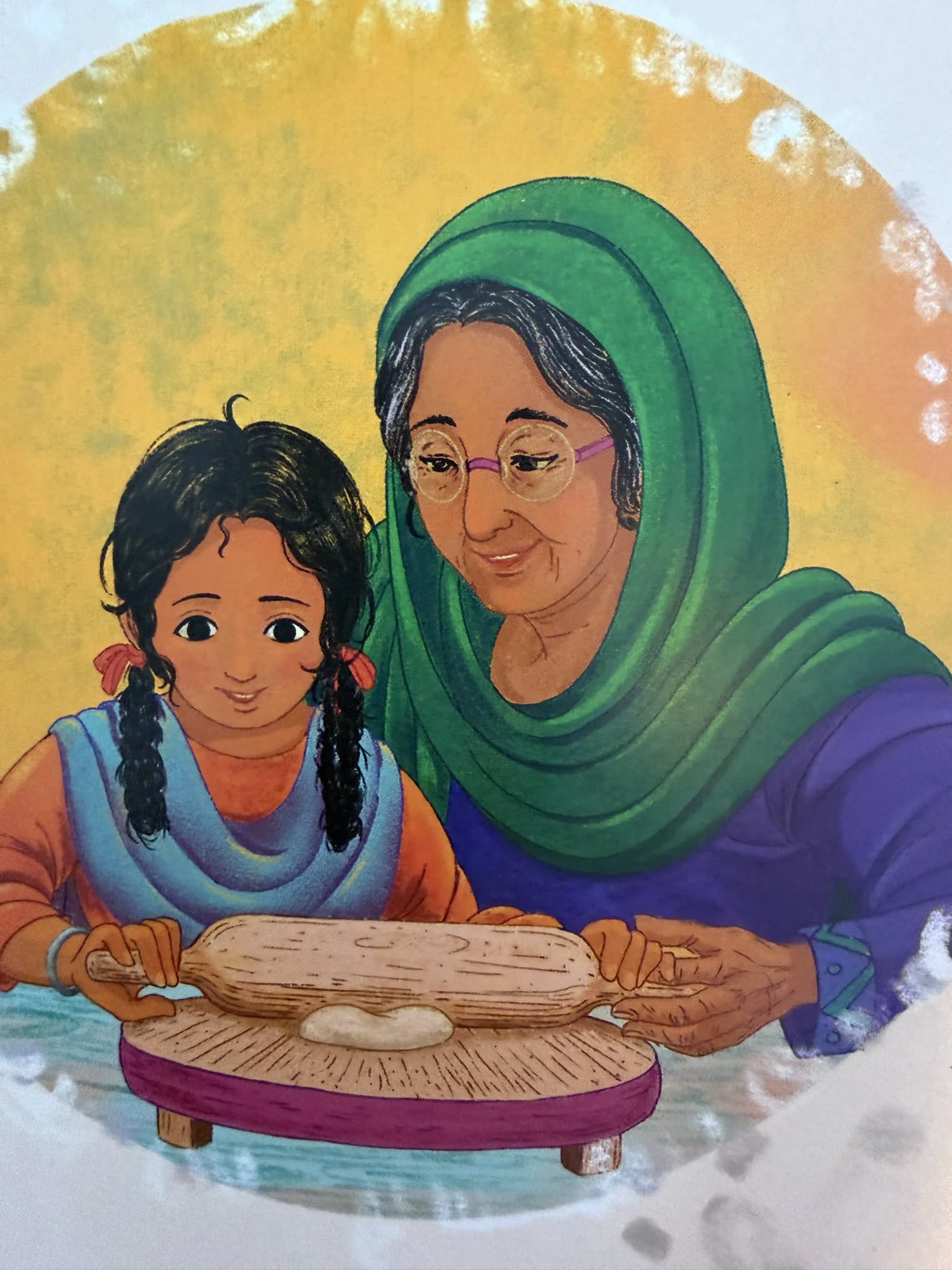
“A handful of atta, a palmful of water, a pinch of salt, and a dot of oil. Together in a bowl, round and round, combining, pressing, folding. Roti is dinner around the world, but first it rests.”
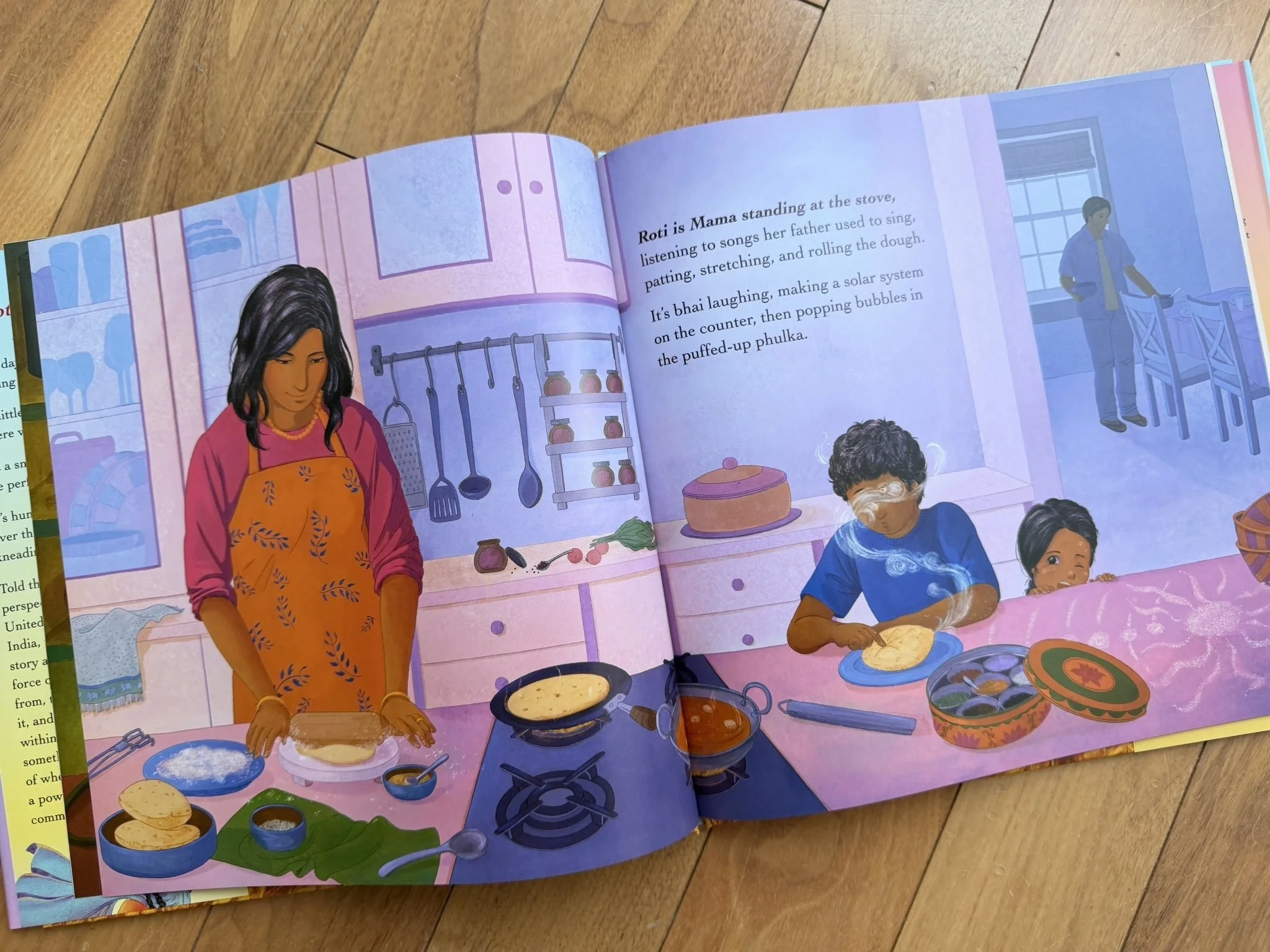
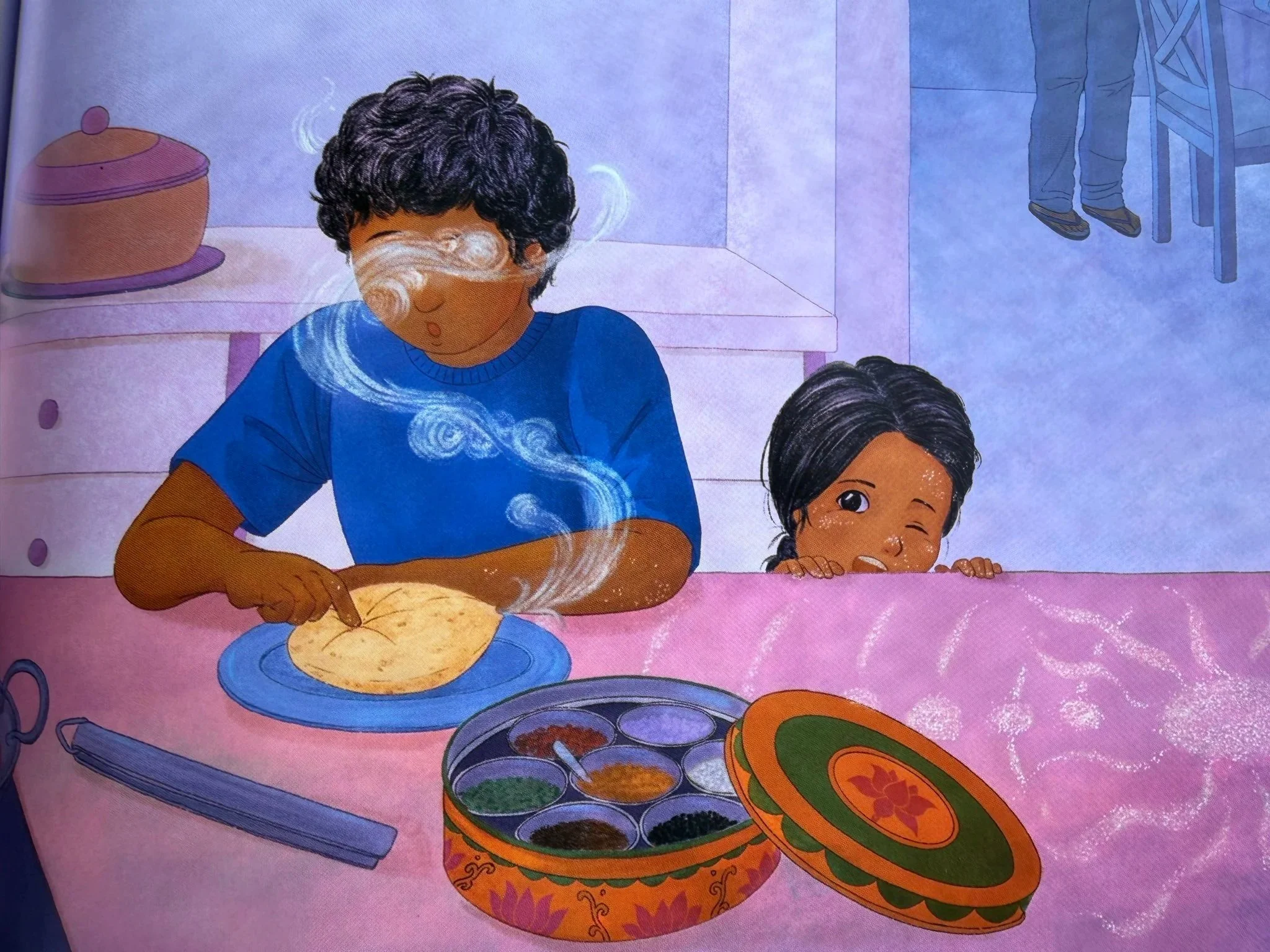
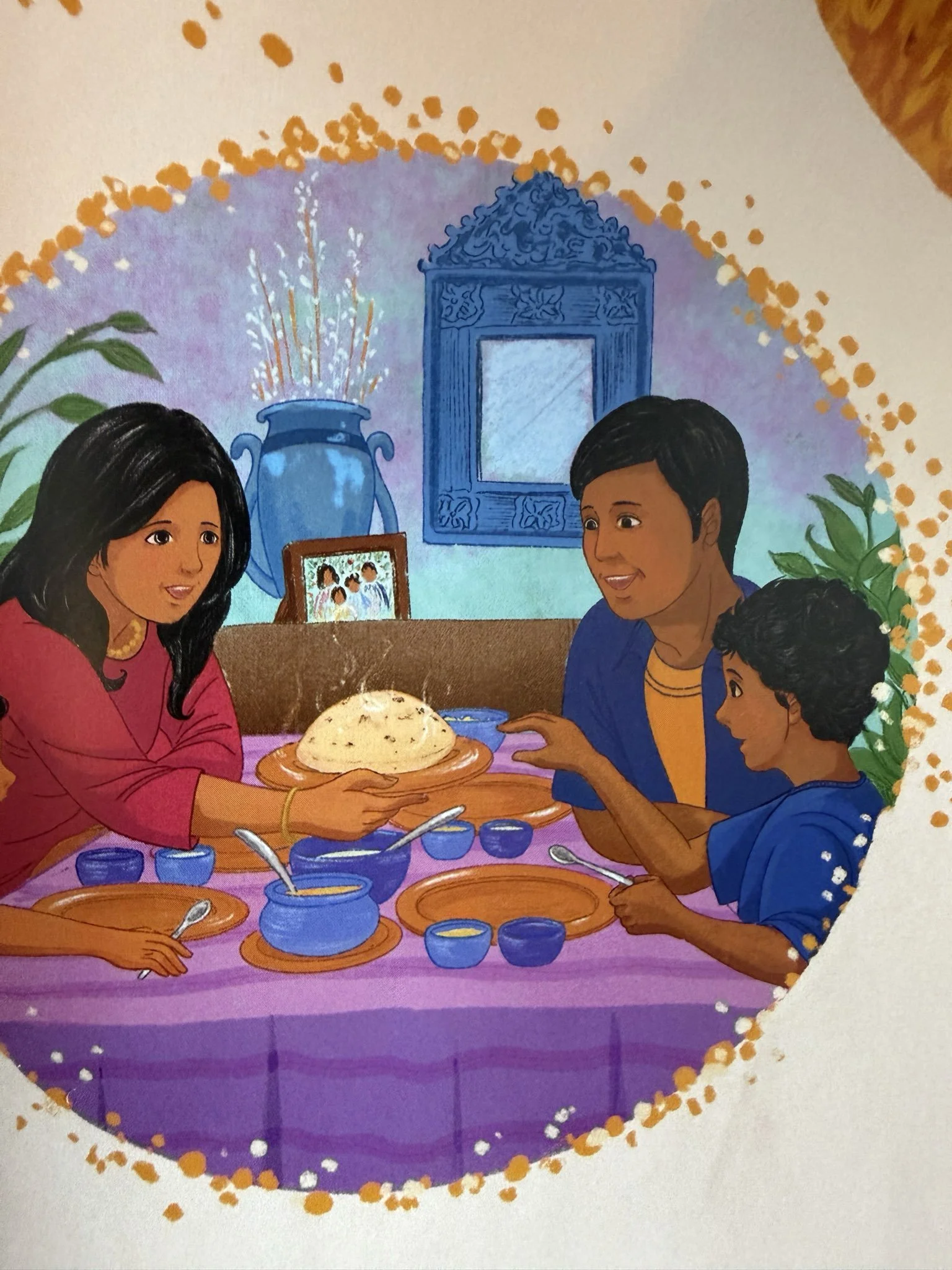
“Roti is Mama standing at the stove, listening to songs her father used to sing, patting, stretching, and rolling the dough. It’s bhai laughing, making a solar system on the counter, then popping bubbles in the puffed-up phulka.”