9 of the World's Best Email Newsletters (Actually Worth Clogging Your Inbox For)

photo-1519337718347-749509f114a8.jpeg

Your attention is for sale.

Detergent jingles blare before YouTube videos, podcast hosts can’t stop yapping about sweat-whisking undies, and spammers are even weaselling their way into our text messages.

I feel like these days we need to make sure our personal email inboxes become even more of a safe haven. Bunkers! Last vestiges of quiet in this loud, loud, loud world. You open it up and you want substance. Value. Gold. And if you don’t get it? Vamoose!

So protect your digital home.

Dig a moat around it. Ready the archers. Fill the cauldrons with boiling oil. And then, just before you raise the drawbridge, make sure you invite only your most interesting friends — the fascinating, provocative, enlightening ones — to join you for a celebratory feast in The Great Hall.

Below are the nine people I’d invite to my Great Hall feast.

And all nine pass my 3 key principles of:

  • Real Human: The email must come from a real human with a real name and a real face who I can actually reply to and (ideally) get a response back. (Sidenote: If you want to see why I think “humans over algorithms” is crucial, check out my SXSW Speech “Building Trust In Distrustful Times”)

  • Super Value: Time is precious so the emails I’ve recommended need to offer a depth and richness that jars my brain with incongruent ideas I can thoughtfully apply to ultimately living a more intentional life.

  • No Ads: “I feel monetized” is the new “I need a shower.” I’m not recommending any clothing companies with pics of sexy people wearing $800 rainboots traipsing through orchid swamps. And if any real human delivering super value is insidiously dropping in ads (and tons of the big ones do), they’re out on my list. Man’s gotta have a code.

And now: onto the list!

9. Barking Up The Wrong Tree by Eric Barker

I’m not sure how he does it but Eric Barker seems to suck up business and self-help books like a vacuum cleaner. A turbo-powered vacuum cleaner. But then, unlike the rest of it, who sort of leave it at that, Eric Barker does not leave it at that. He pulls off a magic trick something akin to opening up the dusty vacuum cleaner bag, sneezing a ton while wading through dust balls and cat hair, and then pulling out three valuable things sucked up in there — a tiny doll’s comb, the back of an earring, a couple of coins — and then tells us all about those three valuable things in a warm and witty way. And the best part? We don’t have to vacuum!

  • Frequency: Sporadic (approx. 1–2x / month)

  • Perfect for: Business and self-help book lovers looking to inject more into their brain and anyone looking to stay on top of “thinking trends”

  • Number of subscribers: >320,000

  • Signup Form: https://www.bakadesuyo.com/ (Wait for the pop-up)


8. Austin Kleon’s Newsletter 

I like the idea that success blocks future success. Are you killing it as a real estate agent? Great. But… what if you hadn’t quit ballet when you were twenty-two? Would you be on Broadway right now? Hard to know because you’re selling so many condos. Are you a great Vice President Of Something at your company? Fantastic. But what artistic itches remain inside you’re always thinking about scratching? Austin Kleon’s newsletter helps me scratch those itches. He’s a former reference librarian turned bestselling author (Steal Like An Artist, How To Keep Going) who points my brain at all kinds visual art, “ear candy,” quotes, and artistic ideas every Friday morning. A great way to keep challenging my own ideas and helps me explore lots of little “what if I dids.”

  • Frequency: Weekly (Fridays)

  • Perfect for: People who want to rock themselves out of stasis, those who like getting their brain poked with art, and those who feel a bit uncultured (like me) in big broad areas like music and painting and film

  • Number of Subscribers: > 60,000

  • Signup Form: https://austinkleon.com/newsletter/


7. Aha Parenting by Dr. Laura Markham

I am trying to be a better dad. Sometimes I yell at my kids and then feel a huge wave of shame. I get frustrated when it’s taking fifteen minutes to put on rainboots because we’re late and it’s not raining, even though my kids aren’t doing anything wrong. They’re kids. So often I find what I’m lacking are the words. The phrases. The child logic brain to know what to say and how to say it in a way that’s meaningful to them. And that’s exactly what Dr. Laura helps with. Her emails are simple, clear, and, I like to remind myself, aspirational. So, what do we do now to get ready? Make it a game. “You can’t put your boots on! No way, nooooooo wayy!” And my wife Leslie’s new technique of playing a song as a countdown to get going. (“Bust A Move” by Young MC works great. Yes, I put that link to their live 1989 Arsenio Hall performance, just because.) Plus, lots of other things. Some days are frustrating. But Dr. Laura’s email is helping me (slowly) become a better dad.

  • Frequency: You choose between weekly or weekly + two blog posts

  • Perfect for: Parents who want to be better parents, those fascinated by language and communication, and (for the same reason) managers and leaders of teams

  • Number of Subscribers: > 130,000

  • Signup Form: At the bottom of https://www.ahaparenting.com/


6. Granted by Adam Grant 

Adam Grant is the nerd’s Superman. Youngest tenured faculty in history of Wharton. (I was still in school when he got tenure.) Writes a New York Times column. Gives TED Talks. Drops an award-winning podcast. And, you know, debates Malcolm Gladwell in his spare time. I think it’s safe to say he’s at the top of the social sciences Pyramid of Influence. Every month his Granted newsletter gives me a little peek at the world through his eyes. I always find at least one article to share with friends and family. (I really liked this profile on Adam from Philly Mag.)

  • Frequency: Monthly

  • Perfect for: Business book junkies, leaders looking to become better leaders, those looking for new ways of thinking about same old things …

  • Number of Subscribers: >100,000

  • Signup Form: https://www.adamgrant.net/newsletter


*** Ahhlife.com 

This one isn’t a newsletter so I gave it three asterisks instead. But it’s gold. And it’s one of my faves. Let’s start with this: Do you journal? You should! It’s good for your brain. Good for your body. Research shows it makes you happy. I talk about journaling, I make YouTube videos about journaling, I even make actual physical journals, but guess what? I suck at journaling. That’s why I’m always preaching about it. I’m preaching to myself. Here’s what happens: I snap myself into the journaling habit! I get there! I’m there! I’m doing it, I’m journaling, for a day, a few days, for maybe a week. And then I fall off. Bam. Right to the ground. So now I’ve come up with a patchwork journaling system that has been working for a while. How does it work? Well, first, I surround myself with journals. Two-Minute Mornings in the morning. A longform journal of blank pages on my bedstand to squeeze out late-night anxieties. And… what else? This puppy. Ahhlife.com. What is it? A great little free email journaling subscription that helps me supplement my constantly floundering home journaling efforts. A little plug for the drug. They send me an email on the dates and time I picked and I just reply back with my entry … and I’m done. Super quick. Super easy.

  • Frequency: You pick your own date / time frequency. (I do Monday, Wednesday, and Fridays at 9pm.)

  • Perfect for: People who already know the benefits of journaling but are having trouble getting into the routine…

  • Number of Subscribers: (Not listed)

  • Signup Form: https://ahhlife.com/ (Click “Start your journal now”)


5. Seth Godin’s Blog Posts

Seth is best known as a marketing guru who’s written 19 (!) bestselling books. But I think of him as this deeply enlightened Yoda spouting pithy and almost coded bits of wisdom that sometimes fly way over my head and other times hit me with a ton of bricks and help me completely re-orient myself in the machine. I absolutely love listening to him.

  • Frequency: Daily (!?!?)

  • Perfect for: Anyone interested in human nature, entrepreneurs and those working without a safety net, and, of course, marketing folks…

  • Number of Subscribers: (Not listed)

  • Signup Form: https://seths.blog/subscribe/


4. The Ryan Holiday Reading Recommendation Email

Do you remember when you were a kid and your parents harped on you to read all the time? They got you a bookshelf. They read to you at night. Do you still live with them? If not, who harps on you to read now? Well, Ryan Holiday will. He’s happy to! Every month he sends out a list of the 5–10 books he’s consumed together with the not-so-subtle plotline to “Read more books, dummy!” He preaches about how it’s work, your job, your education. His tastes veer towards classics, Stoic philosophy, biographies, translations. “Smart books for smart people.” Yes, I feel really dumb reading his list sometimes. But it always, always gives me a good push. (By the way, I liked Ryan’s email list so much I completely copied it, with his permission, and started my own Monthly Reading Email)

  • Frequency: Monthly

  • Perfect for: Readers looking for the next great book, booksellers and librarians and book industry folks, anyone aspiring to be a better writer or reader…

  • Number of Subscribers: > 100,000

  • Signup Form: https://ryanholiday.net/reading-newsletter/


3. Brain Food by Shane Parrish

Shane Parrish is a former Canadian spy whose weekly Brain Food email aims to break through the “fast food noise” of the world with a grounded, thoughtful reflection of how we’re seeing the world right back to us. Super high level. Way above the fray. Thinking about thinking. A fantastic zoom-out and perfect way to start your week. He’s a kindred spirit on reading more books, too. (Note: Although Shane’s email is the only one on this list with a sponsor, I’ve chosen to include it because of the Ethics he shares on his About page.)

  • Frequency: Weekly (Sundays)

  • Number of Subscribers: > 200,000

  • Perfect for: Anyone who feels too micro wanting to get more macro, people looking for an edge, and I know this will sound like a contradiction, but those also looking to slow down their thinking and mentally chill more …

  • Signup Form: https://fs.blog/newsletter/


2. Take 5 with Mel Robbins

Whenever I open up Mel’s email I feel like I’m hanging out behind the scenes with an A-list celebrity who’s somehow radically self-aware, authentic, and even self-critical. Her weekly email sounds like a long email from a friend who shares the shame she felt visiting her grandmother after not visiting for years, the pain of her son being bullied at school, and even being a mom of three deciding she needed pelvic physio and encouraging everyone to look into it. I love Mel’s sharp, insightful, empathetic tone on how to build your best life. Makes sense she’s one of the world’s most booked female speakers, has sold more books on Audible’s self-publishing platform than anybody, and why one day last year every single recommended video on my YouTube sidebar featured Mel Robbins. YouTube knows something. And TV execs watch YouTube! Makes sense she’s hosting a national talk show debuting this fall. I’ve already heard people calling Mel the White Oprah. She is three big flame emojis.

  • Frequency: Weekly (Thursdays)

  • Number of Subscribers: > 350,000

  • Perfect for: Anyone looking for post-modern self-help, a no-BS kick in the pants, and a strong passionate friendly voice whispering in their ear once a week…

  • Signup Form: https://melrobbins.com/


1. Raptitude: Getting Better At Being Human by David Cain

Ten years ago David Cain wrote an article on Raptitude mentioning my blog 1000 Awesome Things and I noticed a traffic spike and hyperlinked over to say hello. I wrote that blog for four years. David’s been writing his for over ten (ten!) and has been constantly getting deeper and deeper into what it means to (yes) get better at being human. David is a fortysomething guy from Winnipeg and he’s one of the best street-level philosophers out there. He writes about The Elegant Art of Not Giving A Shit and how Everything You Own Is A Relationship You’re In and about The Simple Joy of “No Phones Allowed.” (I like his writing so much I got permission to quote him a bunch in The Happiness Equation.) My wife Leslie and I often swap Raptitude posts back and forth over email with our thoughts on top. Because I know so many “thought leaders” who read David’s writing I sometimes think of him as a bit of a thought leader’s thought leader. His writing is crisp and thoughtful and occasionally veers into challenging and cerebral waters. David Cain isn’t on the lecture circuit. His books aren’t front of the bookstore. He isn’t posting Insta-stories, sweating the size of his platform, or trying to “build his list” with piles of Facebook ads. Why? Because he’s chill. Because he’s beautiful. And because he’s living the life he preaches.

  • Frequency: Sporadic (approx. every 2–4 weeks)

  • Perfect for: People looking to live more pacefully, anyone feeling an itchiness about the world today, and people looking to lengthen their attention spans…

  • Number of subscribers: >30,000

  • Signup Form: https://www.raptitude.com/


And, yes, yes, of course: I also have my own email list which I didn’t put on the list above. I write and send an article every other Wednesday morning to over 30,000 people all about living intentionally (failure, trust, reading, resilience, etc.) Samples? This article you’re reading, “8 More Ways To Read A Lot More Books,” or “Why You Should Never, Ever Retire.” I’d love for you to check it out.

Now, those are my dinner guests!

Time is precious. Attention is precious. Thanks for reading.

A slightly modified version of this article originally appeared on Medium.

The Black Hole Inbox: An Incredible Email Productivity Tip I Learned From a Fortune 50 CEO

Screen Shot 2019-04-08 at 4.02.34 PM.png

I got my first office job in my early twenties.

For four months between school years in college I held the sexy job title of “summer intern” at a big consulting company in a downtown high-rise. Casey was my boss and the head of the project I was assigned to for the summer, which was for one of the world’s largest oil and gas companies.

One Monday morning, I was sitting in his glass-windowed corner office with the rising sun beaming onto the desk between us. More than three months of late-night stress and working on weekends had finally rolled up to right now.

We were minutes away from our big presentation.

Casey’s sense of humor had carried me through all the challenges and Chinese take-out boxes leading up to today, but he had just asked me a last-minute question that made me snap. My nerves were frayed. I had no energy left.

“Why do we have an assumption in here instead of an actual figure?” he asked.

“Because Roger didn’t write back to my three emails asking him for the right number and he never gave us a number where we could call him. I tried his assistant twice and never heard back, either. It’s like he forgot we existed. You know that.”

Roger was the highly touted CEO of the oil and gas company who everybody looked up to. He was featured in flashy magazine articles and known as a people leader who espoused work-life balance while nonchalantly beating his numbers every year. Meanwhile, employees at the company told us he ate lunch in the company cafeteria, drove a beat-up truck to work, and had dinner with his kids every night.

The man was a legend.

A CLOUD OF SMOKE 

After our introductory meeting three months back I wrote Roger an email summarizing our meeting and next steps. He didn’t write back. I then took my laptop home every night in case Roger emailed with an urgent question or request. I checked email every half an hour just in case the CEO of the company ever emailed late at night asking for a project update the next morning. Just so if he ever needed something, anything, I’d be ready, I’d be there. 

But… there was nothing.

Roger had seemingly disappeared in a cloud of smoke.

In three months of working for him he didn’t write me a single email. He didn’t write Casey any emails, either. We dropped a few questions along the way but never heard back. And I had just told Casey my messages to his assistant weren’t returned, either. Now suddenly it was time for our big presentation and Casey was questioning why I didn’t have certain numbers.

I steadied my nerves as we stepped into the boardroom where Roger was sitting and chatting with our company president. He smiled and got up to shake our hands and thank us for the work we’d done. “I’m so excited,” he said with a big grin. “I can’t tell you how much I appreciate how hard you’ve been working. You guys are geniuses. I’m going to learn so much from this chat.”

The anger I felt about his unresponsiveness suddenly melted. I felt like a million bucks.

We jumped into the presentation and had a great discussion. It was casual, engaging, and open. He loved it. And I couldn’t believe how relaxed everything felt. He was talking to us like old friends. After the meeting was done there was so much trust between us. So as we were packing up, I thought about it for a split second, and decided to ask him one last question.

I couldn’t help myself.

THE MAGICIAN REVEALS HIS SECRET

“Roger, thanks so much for today. We had trouble checking some numbers by you in advance. And I know we didn’t hear from you on the additional questions we had. So, just for my own learning, can I ask why you don’t write or respond to emails? How do you do that?”

His eyes opened a bit and he seemed surprised by the question. But he wasn’t fazed.

“Neil,” he said, “there’s a problem with email. After you send one the responsibility of it goes away from you and becomes the responsibility of the other person. It’s a hot potato. An email is work given to you by somebody else.”

I nodded, thinking about all the emails I got from Casey and co-workers.

“I do read emails, but the ones looking for something are always much less urgent than they seem. When I don’t respond, one of two things happens:

1.  The person figures it out on their own, or

2.  They email me again because it really was important.

Sure, I send one or two emails a day but they usually say, ‘Give me a call,’ or, ‘Let’s chat about this.’ Unless they’re from my wife. I answer all of those.”

I was very confused.

How was the CEO of a multibillion-dollar company with thousands of employees not emailing?

He paused to look at me and sensed I didn’t get it.

“You know what,” he continued. “Since I don’t write many emails, I don’t receive many either. I probably only get five or ten emails a day.”

THE BLACK HOLE INBOX

Five or ten emails a day?

Here I was working at a consulting company writing emails morning, noon, and night. It was the same for everyone. “My inbox has seven hundred emails,” my coworkers would say and sigh. “I did emails all Sunday afternoon.” There was no way around it. After all, our bosses sent urgent emails at 7:00 a.m. Saturday, late Sunday afternoon, or 11:00 p.m. Friday. I knew this was common in my company and others.

McKinsey had even reported that office workers spend on average 28% of their time answering emails. Almost a third. And Boomerang, one of the world’s largest email productivity services, reports the average person gets 147 emails a day.

We were all attached to our cell phones and computers, firing emails around, working hard to get everything done. Some people did Inbox Zero where the goal was to quickly delete, reply, or sort every email down to a baseline of empty. Others picked and prodded at them more. But everyone did emails. You couldn’t just ignore them. After all, it was part of the job. We all wanted to do a good job.

Suddenly it started to click why Roger was known for having lunch in the cafeteria with employees every day and driving home for dinner with his family every night.

He didn’t respond to hot potatoes.

He didn’t write back to emails and create email chains.

I looked up at Roger again, and he continued.

“Most of the time Neil,” he said, “people really do figure it out on their own. They realize they know the answer, they keep on moving, they develop confidence for next time. They become better themselves. Your assumptions in the slides today weren’t perfect, but they worked perfectly well and you learned by doing them. Don’t get me wrong. I sometimes walk over to chat with a person or pick up the phone. But if I wrote back to the email, I’d be sending a hot potato. And nobody wants to be asked by their boss or a Director or a VP or the company CEO to do something… never mind on an evening or weekend. Why? Because people would drop everything to reply. And they would expect me to reply to that. Basically, if I sent an email, it would never end.”

“So I end it.”

The Black Hole Inbox means mentally thinking of your inbox like a black hole.

People may fire emails in there! Here come questions! Here come queries! Here come concerns! And all of them get precisely zero response. The emails never come back. They never see them again. They disappear into the black hole.

Because the truth is you have only one brain.

And it can only focus deeply on only one thing at one time.

Your brain is the most incredible and complex object in the universe. We have never seen anything like it. We barely understand it. We use it, but we don’t know how we use it. When we kick, we pull our leg back and swing it forward. When we think, we just think. As Cliff once said on Cheers, “Interesting little article here. It says the average human being only uses seventeen percent of his brain. Boy, you realize what that means? We don’t use a full, uh… sixty-four percent.”

In order to focus on deep work, rich work, creative work, we need uninterrupted time. We can read our emails. Sure! Read them. But replying is what kicks off the incessant ping-ponging that never ends. Think of your inbox like a black hole and try hard, very hard, to dramatically reduce your replies. 

This is a scalable idea, too. If you get 100 a day and reply to 0? You're an all-star. Hardcore! But if you're replying to 75 today and you get it down to 50? That's a huge improvement, too. That's 25 more ping-pong balls you're not smacking back. Every single email you blackholify helps.  

Roger was the smartest guy at the company. Rose through the ranks! With huge respect from so many. All while eating lunch in the cafeteria every day and dinner with his family every night. 

I learned a few other things later on about Roger. I learned he was known internally all the way up the corporate ladder for not replying to emails. It infuriated some people! Most stopped emailing him altogether. But he created valuable Untouchable Days for his mind to think and always make sure he was doing the right things… rather than just doing things right. People loved working for him because he didn’t bog them down with micro-management. He empowered them. He grew great teams. And? He got endless promotions.

What else?

In addition to Roger’s Black Hole Inbox, I learned he didn’t have a desk phone, personal email address, or any social media accounts. At all.

How can you let your brain produce great work, savor space, and power your biggest ideas, most passionate efforts, and greatest accomplishments? 

Start with thinking about your inbox like a black hole.

This article is adapted from my book The Happiness Equation

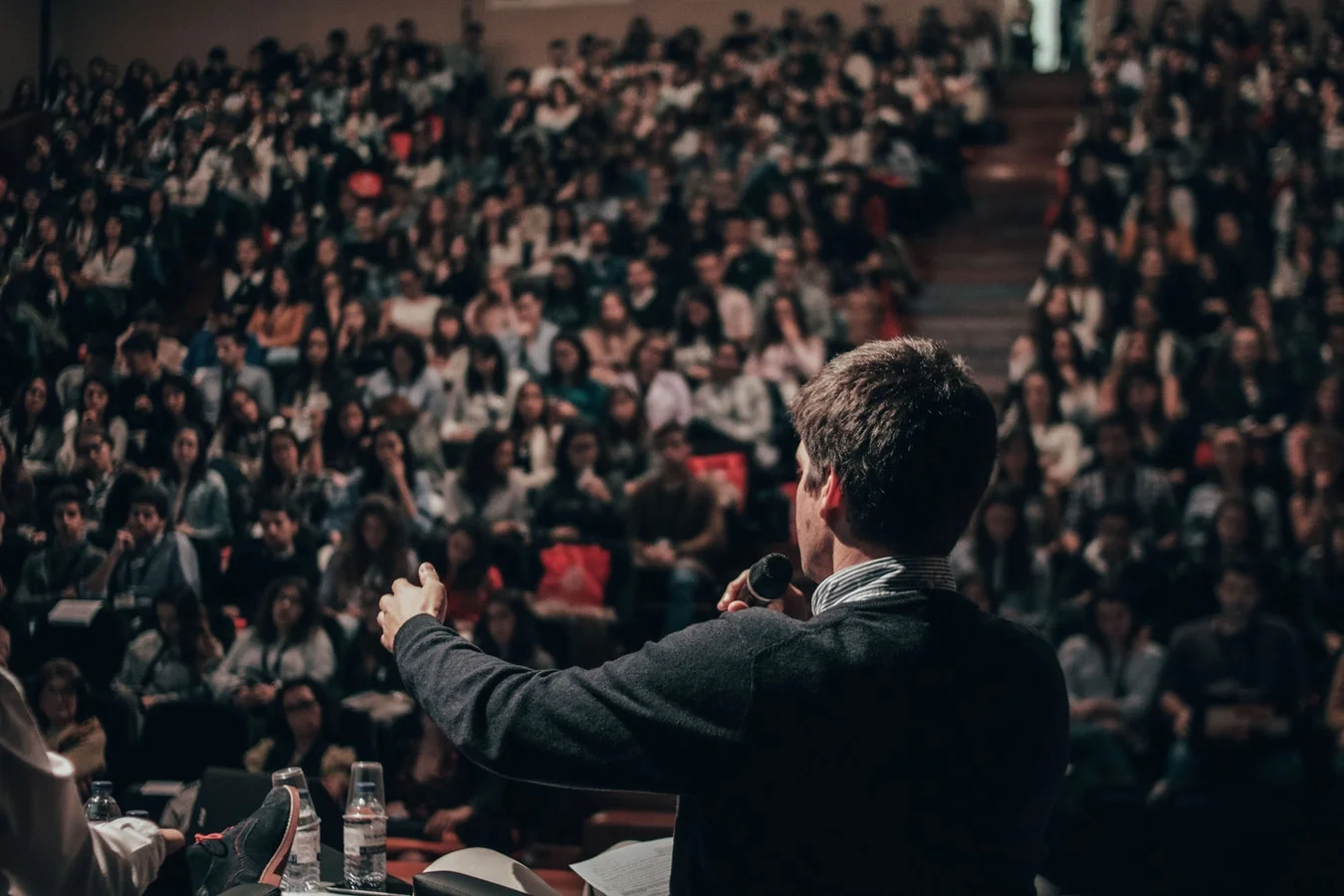
The 3 E's of a Great Speech

photo-1544531586-fde5298cdd40.jpeg

I gave a brand new speech at SXSW yesterday.

So, I was nervous about it. I lost sleep over it. I spent weeks writing the speech out, editing it over and over again, making up slides, editing them over and over again, and then I practiced out loud in front of my wife and my parents and a few friends and even the guy sitting next to me on the airplane to Austin until I had the whole thing memorized.

I was stomach-churningly nervous for the speech even though I give over fifty speeches a year.

What helped?

Well, there is a model for giving speeches that helped me yesterday, that's helped me before, that always helps me, which I want to share today.

I think about this model all the time and it applies whether you’re giving a toast at a wedding, standing up in the boardroom, or delivering a big keynote address at the annual trade show.

We always know we need to get our act together.

The hard part is how.

So here are the 3 E’s to giving a great speech:

1. ENTERTAIN

This is the base of the pyramid. Starting point. Table stakes. Want to know how entertained your audience will be by the time you get up to talk? In short, very. For starters, we all touch our phones over 2000 times a day and spend over 5 hours a day on them -- scrolling Instagram, watching SNL clips, reading fantasy football trash-talk, listening to podcasts. This is now your competition. So how do you beat it?

Well, you have one major advantage over the massive addiction that is the cell phone, and it is that you’re here. You’re live. You’re in the flesh. No one’s doing stand-up in the other corner. It’s all you. You get a deeper personal connection from the beginning. Nobody needs WiFi or has to tap a link to watch you. You get 30 seconds of free attention. (That’s a lot more than the average YouTube video gets.) 

So what do you need to do with that momentary leg up on your listeners’ attention? Reward it immediately. Show the audience the bonus they get by listening. Raise interest as you get onstage, create a laugh, and most importantly, be the most into your speech of anyone there. The audience can only rise to your level of excitement—nobody else’s—so no apologizing and no self-deprecating. Banned phrases include: “Now I don’t really know why I’m doing this!”, “I wrote this ten minutes ago so here goes…”, or “Well, how am I gonna follow that?!”

A good test is this: If your speech entertains one other person you’re close to (especially a friend or significant other) during a dry run, it will entertain a whole room.

Start with the toughest critic first.

(Normally I’ll try and open with a funny line but at SXSW yesterday I had this video made by my friends at Adjacent Possibilities to entertain before I walked onstage. Cheating? No. I say entertain any way you can.)

2. EDUCATE

Humans are learning animals. We’re always growing our minds, abilities, and knowledge. Of course we are -- education makes us better at our jobs, better with our money, and better at relationships, so we tend to seek it out. But even when we aren’t actively learning, our brains are absorbing new information. Podcasts share how a chocolate company is changing the world or which books shaped David Sedaris. Even SNL clips give us perspectives on the news. In fact, why are you reading this article? I’m guessing it’s because you’re hoping to learn something. So ask yourself:

What is your speech teaching?

Make sure you can write out the answer to that question in fewer than 140 characters. If the essence of your message is too complicated to tweet, it’s too complicated period:

  • “I’m teaching our hundred closest friends which formative moments shaped my daughter’s beautiful personality” (wedding toast)

  • “I’m teaching my employees why they should feel proud about last year’s results and excited about next year’s goals” (all-hands meeting)

  • “I’m giving people new techniques to apply at work to improve their well-being” (a TEDx–style talk).


3. EMPOWER

This one is the biggest trick of a good speech, the hardest to pull off, and admittedly the most ambiguous-sounding as a result. But “empowering” your listeners really all comes down to making them feel like these were all their thoughts. Theirs! Not yours.

Yes, you’re on stage.

But they have to feel like they own the message if they’re going to take it with them—and, ultimately, change their minds or behavior. Sure, people may ask for opinions, do research online, and read books to brush up on things. We all do that. But we only really do what we want to do.

So, the bottom line is: It can’t be your message, shared. It has to be their message, heard.

Your role is to lead listeners through a series of thoughts that build on each other as they progress, where they keep nodding and thinking to themselves, “Yes … yes … yes… ”

There are at least three reliable tools you can use to generate empowerment in your talk:

i) Pause and interact.

Can you use a flip chart where you write something down together with the audience? Can you leave pauses for the audience to jump in with their own answers? Can you do a short interactive exercise or experiment using the content you just shared? Their minds have to chew, not just swallow. Michael Bungay Stanier, author of a great book called The Coaching Habit, sometimes has listeners trade questions with the person sitting next to them.

ii) Find a lesson that’s doable, not just interesting.

We don’t want to hear how you climbed Kilimanjaro if we think we never will. When I talk about happiness I share major positive-psychology studies that show how you can improve your mindset in 20 minutes or less. Then I say, “You just have to do one, not all of them!” I’m trying to make the laundry list feel achievable. Is it harder to do this at a wedding? Maybe. But you know someone is nailing it at the wedding reception when you hear a story and think, “I want to start doing that.” 

iii) Keep it conversational.

It has to feel like a coffee-shop chat with your best friend, not like a charmer onstage tossing takeaways into the audience like candy at a parade. So? Memorize first. Paraphrase later. Don’t be too rigid. You listen to your friends, right? So that works better than a guru on a stage who may entertain and educate, but still falls short of empowering you to make changes in your life.

So that’s it. The 3 E’s to giving a great speech. The little meat grinder to run your speech through in order to make sure it passes the test. And how will you know if you nailed it? Count how many pieces of unsolicited feedback you get more than a month later. That’s real impact. Real change. You’re not asking what they “got” from your talk, you’re seeing what they remember.

Giving a great speech that entertains, educates, and empowers is a tall task.

Are you up for it?

You’re all the way down at the bottom so I’m guessing yes.

Congrats on making the commitment.

Now get out there and inspire others to commit to something, too.

I also did a video version of this article on Youtube:

An earlier version of this article appeared in Fast Company

13 Books To Read If You’re Anxious

photo-1521316973612-36489899f29b.jpeg

Anyone who says they never get anxious is lying.

Sure, National Institute of Mental Health studies may say things like 1 in 3 people are affected by anxiety and 1 in 5 Americans in general suffers from clinical anxiety, but I’m not talking about official diagnosed anxiety. I get that’s real anxiety and I don’t want to disempower the word but I also think it applies to the more general definition of anxiety, that I feel, that I’m guessing you feel, too. 

I’m talking about spinning in your head while lying in your bed tossing and turning for a couple hours before falling asleep. I’m talking about sweating the big interview or big trip you have coming up to the point where it’s difficult to concentrate on anything else. I’m talking about thinking and overthinking and overthinking a decision till you ultimately just avoid the decision completely. 

I felt like this a lot when I was little.

I would get headaches all the time and need to miss piano lessons or Beavers. I slowly grew out of feeling anxiety so often but to this day despite, you know, writing and speaking full-time about living intentionally, I still get anxious bouts a few times a month.

What helps?

For me, a few things: journaling, going for a long walk, talking to my wife Leslie, doing a tough workout, calling up my parents, and… 

Books. 

Yes, books help me move through anxious bouts so often that I thought I’d take a deep comb through my shelf and pull out the ones I find myself turning to again and again to nudge my brain forwards...

13. How To Love by Thich Nhat Hanh. 

The prolific Zen monk’s simple little paragraphs about compassionate love. Great applying to those you love… and great applying it to yourself. 

12. Hyperbole and a Half by Allie Brosh. 

I worried this book could actually cause anxiety. Sort of like an episode of Curb Your Enthusiasm does for some people. So that’s a risk. But I included it because there’s something about feeling connected to others who feel anxious which can help my own anxiety melt away. Despite the super rudimentary Microsoft-Paint visual style the content is an amazing introspection on the human condition on topics such as mental illness, depression, and, yes, anxiety. (Sidenote: Hyperbole and a Half was one of Sarah Andersen’s three most formative books over on the 3 Books podcast.)

11. The Art of Living by Epictetus. 

I stayed in a hotel called The Taj in San Francisco during the book tour for The Happiness Equation. It was my first time staying in an Indian hotel chain so I guess I shouldn’t have been surprised when I pulled open the top drawer of the bedside table and there was a copy of The Vedas lying there. But it was jarring. I’ve been used to seeing Bibles in hotel rooms my whole life. And then suddenly there was something else. “Hmmm,” I thought, “Maybe it’s not the Bible, per se, but a thousands-of-years old grounding and centering guidebook of stories and lessons for people far from home.” That got me thinking. What book would I put in the bedside table of my own hotel chain? (No, I don’t have one, but say I did! Maybe Pasricha&Pasricha? Our tagline: Least pronounceable hotel chain in the world.) (Btw, it’s pass-REACH-ah, in case you’re curious.) (No more brackets, promise.) What book would you include in your hotel chain’s bedside table? Me, pretty sure I’d go with The Art of Living by Epictetus. Marcus Aurelius and Seneca may command more of the Stoic philosophy spotlight, but I’ve found great joy paging through this two thousand year old book of simple philosophical notes written by a slave born on the edges of the Roman Empire in 55 AD. Perfect to flip through to wind your brain down before bed or to gently wake it up in the morning rather than looking at your cell phone (NSFW). Part of the appeal is that, despite being written so long ago, the book reads like an email you got this morning from a wise friend. Sample entry to share a taste: “It is better to do wrong seldom and to own it, and to act right for the most part, than seldom to admit that you have done wrong and to do wrong often.” (More sample entries can be found here.)

10. The War of Art by Steven Pressfield. 

A completely simple guide to battling “Resistance” – the single word Pressfield uses to describe the set of emotions and barriers preventing you from doing work you love. For me anxiety gets swirled into this emotional stew. A helpful brain reframe. 

9. Yo! Yes? by Chris Raschka. 

Beautiful children’s book showing how easy it is to connect and friendify. My wife Leslie has been using this book in her elementary school classroom for years. It’s super short with only a word or two per page. Literary minimalism! (It’s like: “Yo!” “Yes?” “You!” “Me?” “Yes, you!” “No fun.” “Oh?” “No friends.” “Oh! … Me?” “You?” “Me!” “...Yes!”, etc) Wonderfully emotive illustrations help it serve children and remind adults like me to always try and offer each other tender connection. That it’s not hard to be kind. And that kindness greases every other movement. Written and illustrated by Chris Raschka who’s also the wonderbrain behind the incredible A Ball for Daisy and The Hello Goodbye Window

8. How To Develop Self-Confidence & Influence People by Public Speaking by Dale Carnegie. 

Is your anxiety about giving a speech, an interview, or a date? I give a lot of speeches and sometimes I get anxiety right before a big one. Enter this book. This book is a lot less known than How To Win Friends and Influence People because, I think, it’s slightly less applicable but it’s gold, honestly. Timeless advice showing how to make a speech (or a conversation) all about the listener. That’s the key. Favorite chapters were templates with examples on how to open and close speeches (i.e., arouse curiosity, share a human interest story, share a shocking fact, etc.). Perfect for anyone shoulder-tapped for a toast at a wedding all the way up to the corporate honcho in the big hat. 

7. The Reason I Jump by Naoki Higashida and translated by David Mitchell. 

According to the introduction, this is the only book ever written about autism … by someone with autism. Japanese teenager Naoki Higashida wrote this book with a Japanese alphabet pad and an assistant, one character at a time, and you can feel that slow tenderness and passion as he answers question after question. Why do people with autism talk so loudly and weirdly? Why don’t you make eye contact while talking? What’s the reason you jump? I’ve loved David Mitchell since Cloud Atlas and Black Swan Green so I originally found this book while searching for bibliographical scraps. Turns out it’s incredible for anxiety because it pulls off an epic consciousness leap. You really feel like you’re living in another mind. A huge injection of empathy helps our own problems feel less important when we’re done. Side history: David Mitchell shares how his son has severe autism and he, like many, struggled to identify, relate, and support his child… until he read this book. He then worked with his wife to translate it at the request of friends and the book found a giant Western audience after The Daily Show trumpeted it and it hit The New York Times bestseller list. 

6. What To Do When It’s Your Turn (And It’s Always Your Turn) by Seth Godin. 

This book is a shot of nitro. There’s no way you can read it and not feel your confidence and energy lift up for your next project. Flip through it in an hour or two. A visually beautiful book from the incredibly wise master Seth Godin on taking risks, starting businesses, and just doing it.

!. Think Like A Bronze Medalist, Not Silver by Derek Sivers. 

This one isn’t a book but a blog post. Still, I feel like it deserves an honorable mention on this list so I gave it an exclamation mark instead of a number. Helpful perspective when I have anxiety because it’s a reminder to sometimes focus on gratitude over ambition, on being thrilled you made it instead of being bummed you didn’t, and on simply having enough versus always wanting more. 

5. Civil Disobedience and Other Essays by Henry David Thoreau.

The title essay is great but the one I really want to talk about here isWalking (link goes to full text). A fiery piece on the philosophical, meditative, and creative benefits of… walking. Leslie and I picked our house based on what we could walk to and I try and do most of my meetings walking. (Here's a great TED Talk on walking meetings.) This essay was both a justification and reminder of the benefits. As Thoreau says: “We should treat our minds, that is, ourselves, as innocent and ingenuous children, whose guardians we are, and be careful what objects and what subjects we thrust on their attention. Read not the Times. Read the Eternities. Knowledge does not come to us by details, but in flashes of light from heaven.” (Sidenote: If you want to go deeper on this topic, I recommend the Nassim Taleb essay “Why I Do All This Walking” and Austin Kleon’s tagged blog posts on Walking.)

4. The Book of Awesome by Neil Pasricha. 

Can I recommend my own book? The reason I wrote it was because my wife asked me for a divorce and my best friend took his own life right around the same time. I was in shock. I was spinning. I had to find a new place to live. I started up in therapy for the first time. I looked for any way to help avoid slipping down to emotional rock bottom. The awesome things in The Book of Awesome were the bounce from the bottom for me and I wrote one every single day for four straight years on 1000AwesomeThings.com. The best ones are in this book. (Here’s a TED Talk which shares more of this story.)

3. If This Isn’t Nice, What Is? by Kurt Vonnegut. 

Inspiring collection of commencement speeches by Kurt Vonnegut collected over forty years. Creates great perspective and incredibly grounding and centering. 

2. The Subtle Art of Not Giving A F*ck by Mark Manson. 

Have you by chance heard of this book? I’m guessing yes given it’s been on top of bestseller lists for years. I remember when it first came out booksellers I spoke to said it was the f-bomb that attracted folks. Later I heard folks say it was tapping into the emerging counter-anxiety trend of not giving a f*ck. But now that I’ve read it I can say… no, it’s the book itself. Pure solid gold life advice and mind-expanding philosophy told in a disarming, accessible, warts-and-all way by a new master. There’s less “new news” here but some pretty epic distillations of concepts that can otherwise feel too ephemeral or inaccessible. (P.S. Mark Manson is an upcoming guest on 3 Books and he just announced his new book.) 

1. Mindset by Carol Dweck. 

Check out this scenario from Page 8 of this book: “One day, you go to a class that is really important to you and that you like a lot. The professor returns the midterm papers to the class. You got a C+. You’re very disappointed. That evening on the way back to your home, you find that you’ve gotten a parking ticket. Being really frustrated, you call your best friend to share your experience but are sort of brushed off.” According to Carol Dweck, if you have a fixed mindset you’d think “I’m a total failure” or “I feel like a reject.” And if you have a growth mindset, you’d think “I need to try harder in class, be more careful when parking the car, and wonder if my friend had a bad day.” She points out it was a midterm... not a final. A parking ticket... not a major infraction. Sort of brushed off... versus getting dumped or screamed at. I’ll admit I was totally in the first camp. This incredibly readable book helped me understand how to develop a growth mindset across all spectrums of my life from writing to marriage to parenting. Since I read this book I began speaking differently to my children. And to myself.

I also did a condensed video version of this article on Youtube:

#1001 When that person you haven’t seen in a while doesn’t guilt trip you for not seeing them in a while

photo-1526225294770-079fcbe68745.jpeg

Did you used to get your cheeks pinched?

When I was a kid Poona Auntie pinched my cheeks at family gatherings on the reg. And, as if the death grip on my ruby-reds wasn’t enough, she always accompanied it with some classic Indian head wobbles and lines like “Why don’t you ever visit me, beta gee? Why has it been so long? Why don’t you ever phone your Poona Auntie?”  

Guilt, pain, shame, and a quick feeling of being a bad nephew.

I guess it never struck me to take a break from fighting hammer brothers in my basement to phone up a distant aunt and start gabbing like we were sitting under permers at the beauty salon.

And what would have happened if I really did call up the aunt whose only conversation topic was how I didn’t call her? Would we have suddenly started swapping vindaloo recipes or debated the latest Bollywood star turn? Or would we have simply inched along a step to discussing how I never came to visit?

Much later on in life I owned a sandwich shop and sometimes had a customer walk in the door who I hadn’t seen in a little while.

What did I say to them? “Hey, where have you been?  Why don’t you ever visit your favorite sandwich shop anymore?”

I started noticing when I did that they’d quickly flash an apologetic smile, make a quick Mesquite Chicken order, and then disappear forever.

I’d hear the door ding and could almost see the swirling black cloud of shame hovering over them as they stepped inside their dented Honda Civic and drove straight out of my life.

It took a long time to realize the shame was because of me.

And that it was undeserved.

I had somehow grown into the Poona Auntie of Sandwiches.

Over time, I started to understand why they never came back. It was the same reason I never called my aunt.

Who can handle that kind of guilt?

Much easier to disappear completely.

Shame clouds came in those days because I wasn’t confident.

“I’m a non-caller, I’m a bad nephew, I’m not holding up my end of the relationship.”

Or maybe the snow globe lives we live in just had a shake and I didn’t realize that was okay, that was normal, that neither person was to blame.

Because guilt tripping is a form of emotional lashing out.

Research from the University of Auckland and the University of New Hampshire found that people who felt more hurt when receiving criticism from partners were more likely to respond dramatically in order to make their partner feel guilty. The more their feelings were hurt, the more guilt their partners experienced.

 When you say, “I know we haven’t seen each other in a while,” you’re essentially saying, “and it’s all your fault.”

But we’re forgetting we all live in a snow globe.

We shake up, we shake down, we fly sideways, we get around. Sometimes the shakes send us flying. And that doesn’t mean we did anything wrong. We have to grow to appreciate what we had and what we have. We have to learn to let go a little more of what could or should be.

Moments, days, this year, right here.

Tomorrows are never guaranteed so no need to spray them with Poona Auntie sayings or shake shame clouds over people when all you really mean to say is:

“I’m so glad to see you.”

“I feel lucky we got this.”

“Thanks for being in my life.”

“And thank you for being

AWESOME!

 I wrote 1000 Awesome Things from 2008 – 2012 which turned into four books. This is my first new one online since then.

Why You Should Never, Ever Retire

photo-1468971050039-be99497410af.jpeg

“He’s dead.”

Staring in shock at my high school Guidance Department secretary, I thought that it couldn’t be true, it couldn’t be true, it couldn’t be true. I’d just talked to him last week.

“It happened so suddenly,” she whispered, tears shining through thick glasses, glossy red lips quivering silently in slow motion. “I am so sorry.”

Mr. Wilson was my guidance counselor. He had a shiny head holding two fluffy-cloud patches of gray hair on the sides and wore thick glasses and loose-fitting gray T-shirts while helping students with timetables, college applications, and personal problems.

Everybody loved Mr. Wilson.

I talked to him about summer jobs and he calmed me down during exams. He had a quiet, big-picture worldview that helped us get above ourselves and see beyond life in our hometown.

You could tell Mr. Wilson loved his job by the way his eyes twinkled as he bounced through the halls, spouting hellos and high-fiving students, calling everybody by name. He was always smiling, and our school was his home.

Back when I was in high school, the government had mandatory retirement. You turned sixty-five and poof! The government yanked you out of the workforce in a cloud of smoke and moved you straight on to old-age pension. You had no choice. And let’s face it — almost everybody wanted to retire way before sixty-five, anyway. TV ads preached “Freedom 55” with gray-haired couples skipping town to swim at the cottage, play golf, and sail into the sunset.

Retirement is a good thing. A great thing! What everybody wants, dreams about, wishes for, over and over and over and over . . . until it finally comes.

Do whatever, whenever, wherever . . . forever?

Sounds like a good deal!

The funny thing is that when Mr. Wilson retired . . . he didn’t look happy. None of us did. We had the big celebration with cake, music from the band, and teary speeches from former students. It was like the final scene in Mr. Holland’s Opus. Mr. Wilson said he was excited to be retiring, but his thin smile and wet eyes said the opposite.

But mandatory retirement came at age sixty-five . . . and so he retired.

The next week he had a heart attack and died.

The horrible idea the Germans had that ruined things for everybody

Every day there’s another article about how all of our retirements are doomed. Public pension promises in the U.S. vastly exceed their ability to pay. We now need nearly $400,000 at age 65 just to cover health care costs. And retirement itself increases your risk of depression by 40%.

For many of us, it’s starting to feel like the light at the end of the tunnel of life has been blocked by a triple-bolted steel door. Who’s to blame for this mess?

The Germans.

Yes, back in 1889, German Chancellor Otto von Bismarck invented the idea of retirement, establishing the concept for the rest of us. “Those who are disabled from work by age and invalidity have a well-grounded claim to care from the state,” he said at the time. He wanted to address high youth unemployment by paying those 70 and older to leave the workforce, and other countries followed suit with retirement ages around 65 or 70.

But there is one big difference between 1889 Germany and the world we live in today: The average lifespan then was 70 years. Penicillin wasn’t discovered for forty years! Now we’re all living much, much longer. And many of us would like to retire much earlier. But the scary headlines — and the realities that we see around us — cast doubt on our ability to ever retire. The entire concept of retirement is starting to feel flimsy at best.

So what are we to do, short of working the rest of our days away?

What can we learn from the healthiest 100-year-olds in the world?

To get to the root of the issue, let’s look past the North American shorelines (where I live) all the way to the beautiful sandy islands of Okinawa, in the East China Sea. According to the Okinawa Centenarian Study, men and women in Okinawa live an average of seven years longer than Americans and have one of the longest disability-free life expectancies in the world.

Dan Buettner and fellow researchers from National Geographic studied why Okinawans live so long. What did they find out? Among other things, Okinawans eat off of smaller plates, stop eating when they’re 80% full, and have a beautiful setup wherein they’re put into social groups as babies to slowly grow old together.

But they also have an outlook on life that is very different from those in the West. While we think of retirement as the golden age of golf greens and cottage docks, guess what they call retirement in Okinawa?

They don’t. They don’t even have a word for it. Literally nothing in their language describes the concept of stopping work completely. Instead, one of the healthiest societies in the world has the word ikigai (pronounced like “icky guy”), which roughly translates to “the reason you wake up in the morning.”

It’s the thing that drives you most.

Toshimasa Sone and his colleagues at the Tohoku University Graduate School of Medicine wondered whether having an ikigai could actually help extend longevity, health, and late-life stability, so they put the concept to a test. They spent seven years in Sendai, Japan, studying the longevity of more than 43,000 Japanese adults with regard to age, gender, education, body mass index, cigarette use, alcohol consumption, exercise, employment, perceived stress, history of disease, and even subjects’ self-rated scores of how healthy they were. Then they asked every single one of these 43,000 people, “Do you have an ikigai in your life?”

Participants reporting an ikigai at the beginning of the study were more likely to be married, educated, and employed. They had higher levels of self-rated health and lower levels of stress. At the end of the seven-year study, 95% of the folks with an ikigai were alive.
 Only 83% of those without an ikigai made it that long.

The 4 S’s

To put it another way: We don’t actually want to retire and do nothing. We just want to do something we love. And I’m not talking about endless days of back nines, fishing, and sailing into the sunset. While we might want some time to do those things, you’d be surprised to learn how quickly the bloom can come off of that type of rosy retirement. I believe that we’d all be better served by taking the concept of ikigai and distilling it into what I call the 4 S’s:

Social: Friends, peers, and coworkers who brighten our days and fulfill our social needs.

Structure: The alarm clock ringing because you have a reason to get up in the morning, and the resulting satisfaction you get from earned time off.

Stimulation: Keeping our minds challenged by learning something new each day.

Story: Being part of something bigger than ourselves by joining a group whose high-level purpose is something you couldn’t accomplish on your own.

Now, am I saying that if you’re six weeks away from your final punch-out after 30 years at the meatpacking plant, you should suddenly skewer your dreams and ramp up for 30 more? Of course not. What I’m saying is that retirement is a Western invention from days gone by that’s based on broken assumptions that we want — and can afford — to do nothing.

If you’re already struggling to pay bills and your career’s sitting on tectonic plates that are threatening to shift below the labor market, my recommendation is to dig deep into your natural passions to find a second act that aligns with your values.

There are far more problems and opportunities on this spinning planet than there are people to help with them so if you feel lost, follow your heart, find your ikigai, and remember the 4 S’s.

And stop worrying that you won’t ever be able to retire.

You’ll be far better off if you don’t.

An earlier version of this article appeared in Harvard Business Review

I expand on this idea in The Happiness Equation

8 More Ways To Read (A Lot) More Books

photo-1524995997946-a1c2e315a42f.jpeg

Do you want to read more books?

Most people I talk to say yes, yes, definitely yes. Then two seconds later they say “But I just don’t got that kind of time.”

Well, you know what? I’m calling shenanigans on that BS excuse.

Because the truth is we’re reading more words per day now than ever before. It’s just garbage reading. Texts and alerts and notifications and emails and headline skims and fly-by tickers and blog feeds and Twitter spews and Instagram comments.

Who has time for books anymore?

I know this pain because I’ve felt this pain. For most of my adult life I read five books a year tops. Few slow burners on my nightstand, couple on vacation if I was lucky.

But then three years ago I suddenly read fifty. Fifty books! In one year. I couldn’t believe it. I could suddenly feel books becoming this lead domino towards being a better husband, a better father, a better writer.

In fact, I was so enamoured with myself I even wrote an article about it for Harvard Business Review called “8 Ways To Read (A Lot) More Books This Year” where I summed up the little systems that helped me 10x my reading rate after decades of being a “don’t got that kind of time” whiner.

And then what?

Well, that article became the Most Popular article on Harvard Business Review for something like six months straight and when you type in “how to read more books” in Google it’s generally right near the top.

So it seems the desire to read more is somewhat universal.

Since then I’ve tried doubling down on reading myself. I send out a monthly book club with a summary of the books I’ve read and enjoyed each month and I now host a podcast all about books, too. I’m reading somewhere around 100 books a year now so I figured it was time for a Version 2.0 of that article sharing all the things I do to keep my reading rate high. An advanced version! Because sure, I hit slow patches, I hit bare patches, I slip into social media swirls and feel dirty afterwards.

But these are the eight things I do to get back on track.

8. Live inside a world of books. The first one is a mindset change. Most people have a bookshelf “over there”, you know? That’s where the books live. But one day last year my wife just dumped a pile of about ten picture books in the middle of our coffee table. What happened? Our kids started flipping through them all the time. So now we just rotate them and leave them there. Path-of-least-resistance principle! Just like how Google leaves alfalfa bars and tofu chips on the counter for employees while hiding the jelly beans in cookie jars. We’ve put the TV in the basement, installed a bookshelf near our front door, slipped books into carseat pouches, and, of course, placed one within reach of every toilet. (Want an epic toilet book? Try this.)  Argentinian writer Jorge Luis Borges says: “I cannot sleep unless I am surrounded by books.”

7. Go red in bed. Yes, I’m talking about lighting up your bedroom like a bordello. How? Well, you gotta wear a red-light headband on your head like you’re in the jungles looking for the Predator. My wife Leslie generally falls asleep before I do and that’s when I strap my red reading light on my forehead and get my reading on. Why red? Michael Breus, PhD and author of The Power of When says that “The theory is that red light aids melatonin production.” And bright lights have the opposite effect according to The Sleep Health Foundation of Australia.  

6. Make your phone disgusting. Cell phones are a problem. Our phones are designed to be smooth, sexy, and irresistible. Don’t believe me? The book Irresistible by Adam Alter will quickly raise your awareness to the addictive designs going into smartphones. They’re pocket slot machines. So what’s the solution? Make it disgusting. Put your phone in black and white. Move all the apps off the main screen so it’s blank when you open it. Leave your cracked screen cracked. Move your charger to the basement so it’s an extra step in your low resilience nighttime and morning moments. (Cause you're never really proud of those 11pm emails, amirite?) Enable Night Shift to automatically block calls and texts after 7pm. Slowly, slowly, slowly prevent it from becoming such a seductive temptress. 

5. Go Dewey Decimal. How do you organize your books? By color? By when you bought them? By big random piles everywhere? There’s a reason every library is organized in the Dewey Decimal System. It makes sense. The Dewey Decimal Classification (DDC) System was created by Melvil Dewey in 1876. The DDC is the most widely used classification system in the world and is currently in use at libraries in over 140 countries. All books fall neatly into ever-more-thin-sliced categories around psychology and religion and science and art and everything. What’s the benefit? You make connections. You see where your big gaps are. (I couldn’t believe I only had three books in all of religion until I realized I only had two books in all of science! Who is Jesus? What is a tree? Don’t ask me!) I spent one Saturday putting my books in Dewey Decimal System and, in addition to scratching an incredibly deep organizational itch, I now find books faster, feel like my reading is more purposeful, and am more engaged in what I read, because I can sort of feel how it snaps into my brain. What tools do you need to do it? Just two! I bookmarked classify.oclc.org to look up Dewey Decimal Numbers for any books which don’t have a DDC code on the inside jacket and I use the Decimator app to look up what that number means. Oh, and I use a pencil to write the number and category inside the jacket. So three things including the pencil. I write the DDC code and the category in the inside jacket of each book. 

4. Listen to 3 Books. A reader lives a thousand lives before he dies… and the man who never reads lives only one. Yes,  I stole that quote from Game of Thrones. But that quote begs a great follow-up question: Which thousand lives will you live? The average lifespan is about 1000 months long. (!) And estimates suggest around 1000 new books are published every single day. So on 3 Books I am spending fifteen years finding and reading the 1000 most formative books in the world. How? I’m sitting down and asking 333 of the most inspiring people I can find which three books most shaped their lives. I read the books in advance, do all the interviews in-person, have a strict no ads and no sponsors policy, and just get off discussing the big themes related to their books. Sample guests include David SedarisJudy BlumeChris Anderson of TED, and the world’s greatest Uber driver.

3. Unfollow all news. (Or Go Wiki.) Sure, sure, I preached before about how I cancelled all my magazine and newspaper subscriptions to focus solely on books. But you know where the news followed me? Online. They’re fishing for our eyeballs! So I had to get hardcore. Unfollow every news site on social media. Remove all bookmarks to news sites. Remove all passwords too! Now I get the news from skimming headlines at my local grocery store. Too hardcore? Mark Manson, author of The Subtle Art of Not Giving A F*ck, told me he combs the front page of Wikipedia News each day. That’s it! No news sites, no news feeds. Why? Well, it’s quick and it’s Wikipedia. No left, no right, no leanings. It’s Wikipedia. When the news gets stripped out the space to read opens up. 

2. Read on something that doesn’t do anything else. In my chat with Seth Godin on 3 Books, he told me the research shows we don’t read on devices where we have the ability to multitask. Same path-of-least-resistance principle. If we can be interrupted, alerted, or notified, we will. Not good for diving deep into new worlds. So what do I suggest? Real books. Real pages. On dead trees. Yes, kill em, print on em, and disappear into your mind. Only real books let you be the full director of the show, after all. No voice replaces your mental voice, no formatting or display screen affects the artistic intentions of the writer. Sure, I get it if you need big font or you drive all day and prefer audiobooks, I get that, but I’m just saying if you wanna be a real book snob for the rest of your life just like me, well I’ve got a nice warm seat beside me. 

1. Find your Sarah. My favorite bookseller of all-time is Sarah Ramsey of Another Story Bookshop in Toronto. I walk in, I start blabbering, I start confessing, I share what I’m struggling with, she hmms and hahs and sizes me up as we wander around the store talking for half an hour. And then I walk out with an armload of books that completely fit my emotional state, where I want or need to grow, and those that resonate with me on a deeper level. If you believe humans are the best algorithm (like I do) then walking into your local independent bookstore, sizing up the Staff Picks wall to see who’s similar to you, and then asking them for personal picks is a great way to speed you up. (Here’s an ‘indie bookstore finder’ if you want a place to start.)

So are you ready to go? Do you need some final convincing?

If you need your left brain scratched, then check out the 2011 The Annual Review of Psychology which says that reading triggers our mirror neurons and opens up the parts of our brain responsible for developing empathy, compassion, and understanding. Makes you a better leader, teacher, parent, and sibling. Another study published in Science Magazine in 2013 found that reading literary fiction helps us improve our empathy and social functioning. And, lastly, an incredible 2013 study at Emory University, MRIs taken the morning after test subjects were asked to read sections of a novel showed an increase in connectivity in the left temporal cortex. What’s that? The area of the brain associated with receptivity for language. Priming the brain. And the MRIs were done the next day. Just imagine the long-term benefits of cracking open a book every day.

Most of us want to read more. And we can.

A couple years ago I shared 8 ways to read more books and now I'm share 8 more ways. Ditch the Instagram comments and news feeds and let's all try and slip more pages into all the cricks and corners of the day.

Happy reading.